 Contents
Contents
- What Is a Ford F-250 Diesel? (Basic Understanding)
- Ford F-250 Diesel Engine Options by Year (Engine Evolution)
- Ford F-250 Diesel Performance and Capability
- Ford F-250 Diesel Towing Capacity
- Ford F-250 Diesel MPG and Fuel Economy
- Ford F-250 Diesel Common Problems
- Which F-250 Diesel Version Is Worth Buying?
- Ford F-250 Diesel vs. Gas
- Ford F-250 Diesel Maintenance Tips
- FAQs
In the heavy-duty pickup field, the Ford F-250 Super Duty has always been synonymous with power and durability. For users who need extreme torque, long-distance towing capability, and high resale value, the diesel version is an undisputed choice. Whether you are pulling a large RV across state lines or moving heavy equipment on a job site, understanding the pros and cons of each generation of Power Stroke engines is crucial.
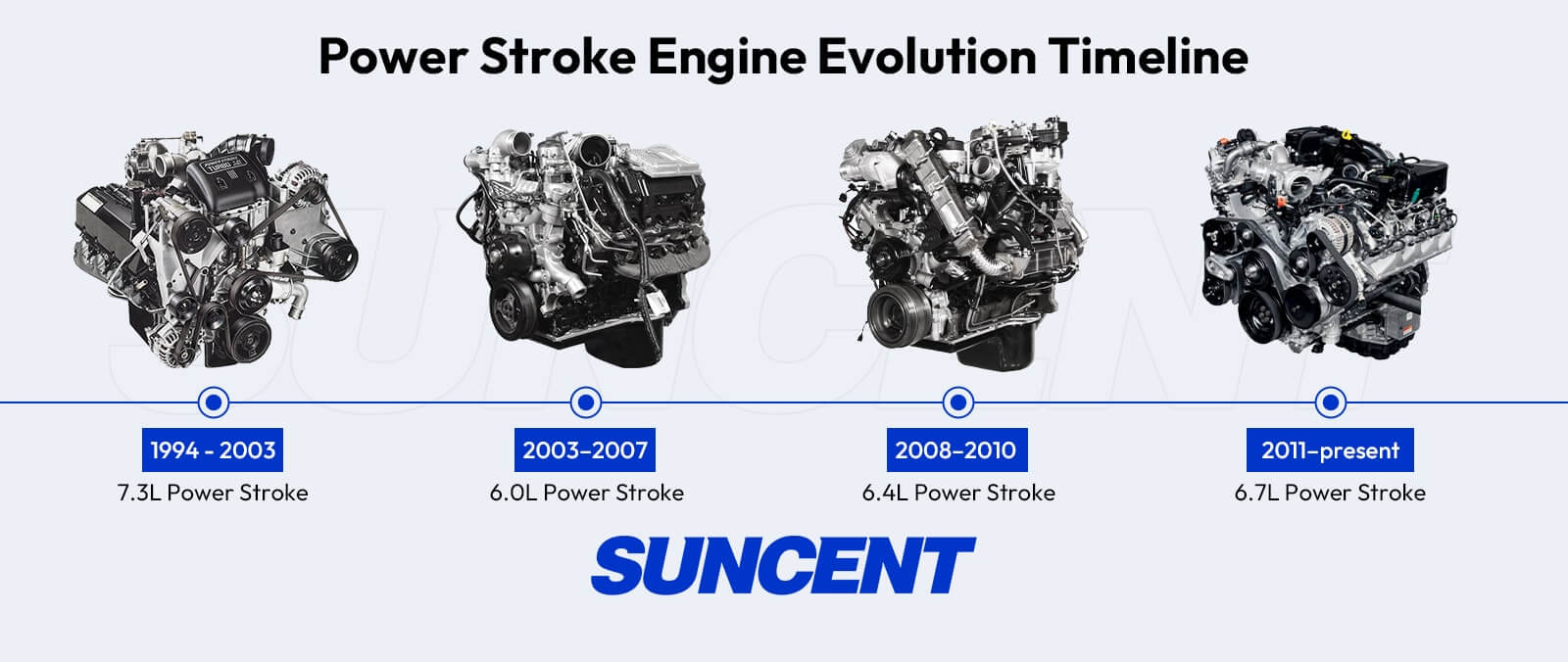
However, "Ford F-250 Diesel" is not a single configuration. Different model year F-250 diesel versions have been equipped with different Power Stroke diesel engines, including the classic 7.3L Power Stroke, and later the 6.0L, 6.4L, and 6.7L Power Stroke. Each generation of engine has its own strengths, common problems, maintenance priorities, and upgrade directions.
This article will systematically introduce the basics of the Ford F-250 Diesel, Power Stroke engine years, performance, towing capacity, fuel economy, common problems, upgrade suggestions, and how to choose the right diesel aftermarket products for the 6.0, 6.4, and 6.7 Power Stroke.
- The Power Stroke Legacy: The F-250 Diesel is defined by its Power Stroke engines, evolving from the legendary 7.3L to the modern 6.7L powerhouse.
- Modern Performance: The latest 6.7L High Output (HO) engine leads the class with 500 HP and a massive 1,200 lb-ft of torque.
- Towing Excellence: When properly equipped, it supports up to 22,000 lbs conventional towing and up to 23,000 lbs for gooseneck/5th-wheel setups.
- Engine Evolution: While the 7.3L is the reliability king, the 2017+ 6.7L versions offer the best balance of modern tech and heavy-duty capability.
- Buyer Beware: For used 6.0L or 6.4L models, prioritize inspecting the EGR, oil cooler, and fuel system; "bulletproofing" is often required for long-term use.
- Best For:Heavy-duty towing, commercial work, and long-distance hauling where maximum low-end torque is essential.
What Is a Ford F-250 Diesel? (Basic Understanding)
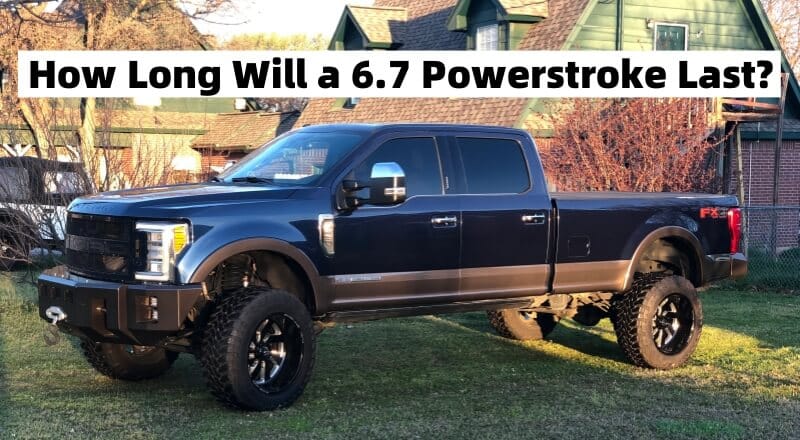
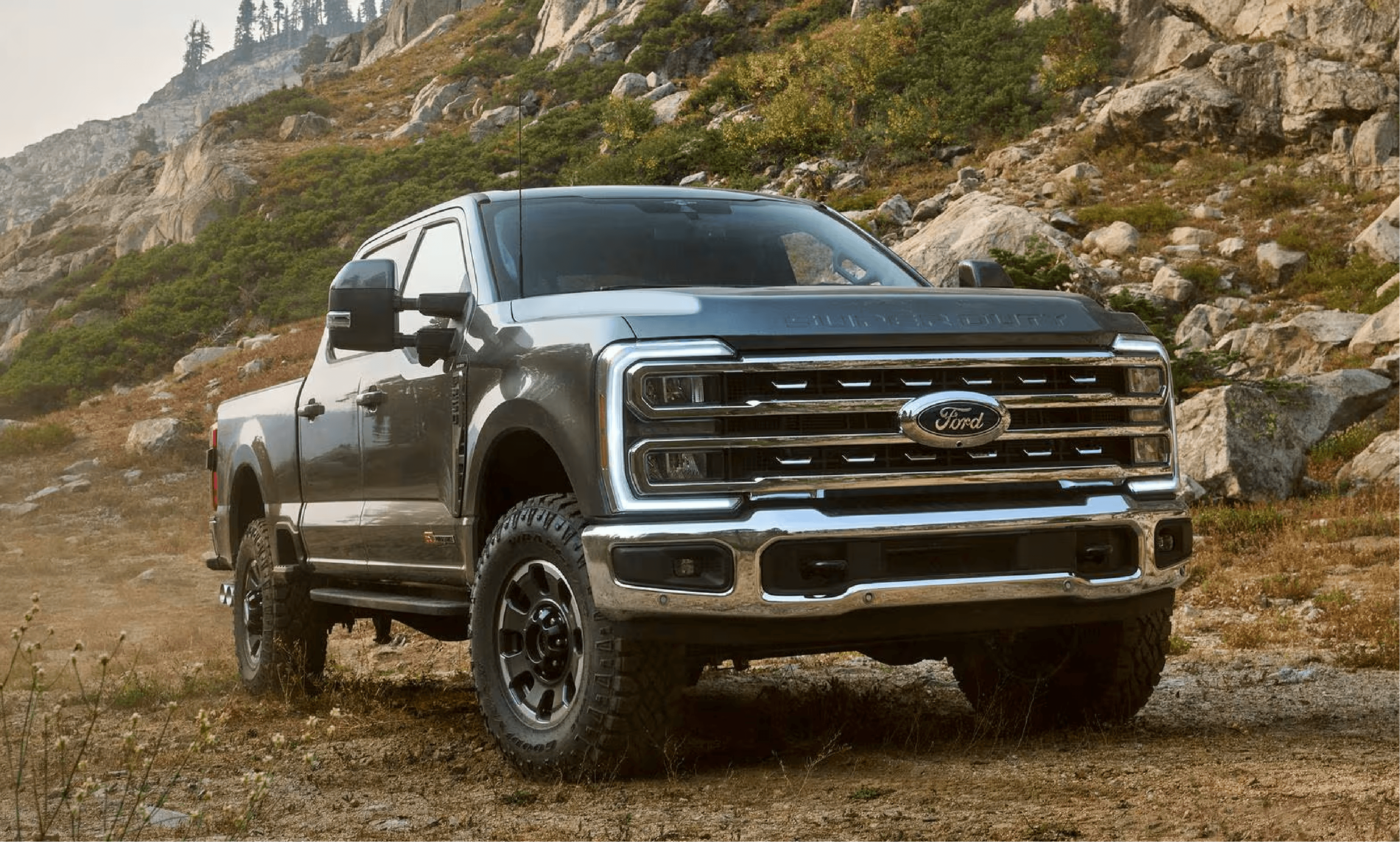
The F-250 is the core model among Ford's Super Duty trio (F-250 / F-350 / F-450). Compared to the entry-level F-150, the F-250 features a stronger chassis, a more robust suspension system, and a diesel engine specifically designed for heavy-duty applications. Its core competitiveness lies in its high torque output at low RPM, allowing it to maintain stable and efficient operation even when pulling several tons of weight.
In addition, the F-250 offers three cab configurations: Regular Cab, SuperCab, and SuperCrew (four full-size doors), as well as 6.75-foot or 8-foot bed length options, with a choice of two-wheel drive or four-wheel drive, adapting to a full range of needs from farm work to long-distance camping.
Ford F-250 Diesel Engine Options by Year (Engine Evolution)
Ford's diesel power technology has evolved from its century-long partnership with Navistar to the first in-house designed Power Stroke engine in 2011. The following table analyzes the main models of each generation. Special attention must be paid to the CP4.2 high-pressure fuel pump issue during the 6.7L era – this is a fault that all potential Ford Diesel buyers must take seriously.
| Year Range | Engine | HP / Torque | Key Features | Advice |
|---|---|---|---|---|
| 1994–2003 | 7.3L Powerstroke | 275 hp / 525 lb-ft | Reliability king. | Classic choice; focus is elsewhere. |
| 2003–2007 | 6.0L Powerstroke | 325 hp / 560 lb-ft | Strong aftermarket. | Check EGR, Oil Cooler, FICM . |
| 2008–2010 | 6.4L Powerstroke | 350 hp / 650 lb-ft | High power potential. | Needs maintenance; focus on DPF/EGR . |
| 2011–2014 | 6.7L Powerstroke | 400 hp / 800 lb-ft | Early in-house version. | Watch CP4 fuel system & turbo. |
| 2015–2019 | 6.7L Powerstroke | 450 hp / 935 lb-ft | Mature modern platform. | Top choice for used buyers. |
| 2020–Pres. | 6.7L Powerstroke HO | 500 hp / 1,200 lb-ft | Class-leading power. | Max capability; high price. |
Ford F-250 Diesel Performance and Capability
The performance core of the Ford F-250 Diesel revolves entirely around the powerful 6.7L Power Stroke® V8 turbocharged diesel engine. Unlike gasoline versions that pursue high-RPM power, the essence of diesel performance lies in "low RPM, high torque."
Currently, Ford offers two specifications:
- Standard Output: 475 hp / 1,050 lb-ft, sufficient for the vast majority of daily towing needs.
- High Output (HO) version (2023+): Through an upgraded water-cooled turbocharger and stainless steel exhaust manifolds, power is pushed to 500 hp and an impressive 1,200 lb-ft of torque.
Ford F-250 Diesel Towing Capacity
Towing is the soul of the F-250 Diesel. Towing capacities vary greatly between different generations of Power Stroke engines, as listed by engine below:
| Engine | Year Range | Conventional Towing (Gooseneck / 5th-Wheel) | Notes |
| 7.3L Power Stroke | 1994–2003 | 12,500–14,000 lbs | Chassis and brake limitations; not recommended to exceed 15k |
| 6.0L Power Stroke | 2003–2007 | 15,000–17,000 lbs (5th-wheel approx. 18k) | Engine itself is strong, but the automatic transmission is a weak point |
| 6.4L Power Stroke | 2008–2010 | 17,000–19,000 lbs (5th-wheel approx. 20k+) | Twin-turbo helps, but the emissions system holds it back |
| 6.7L Power Stroke (Standard Output) | 2011–2022 | 22,500–23,000 lbs (conventional) / 35,000+ lbs (5th-wheel) | Improved gradually over the years |
| 6.7L Power Stroke (High Output) | 2023–2026 | 22,000 lbs (conventional) / 40,000 lbs (5th-wheel / dual rear wheel) | Current strongest |
Ford F-250 Diesel MPG and Fuel Economy
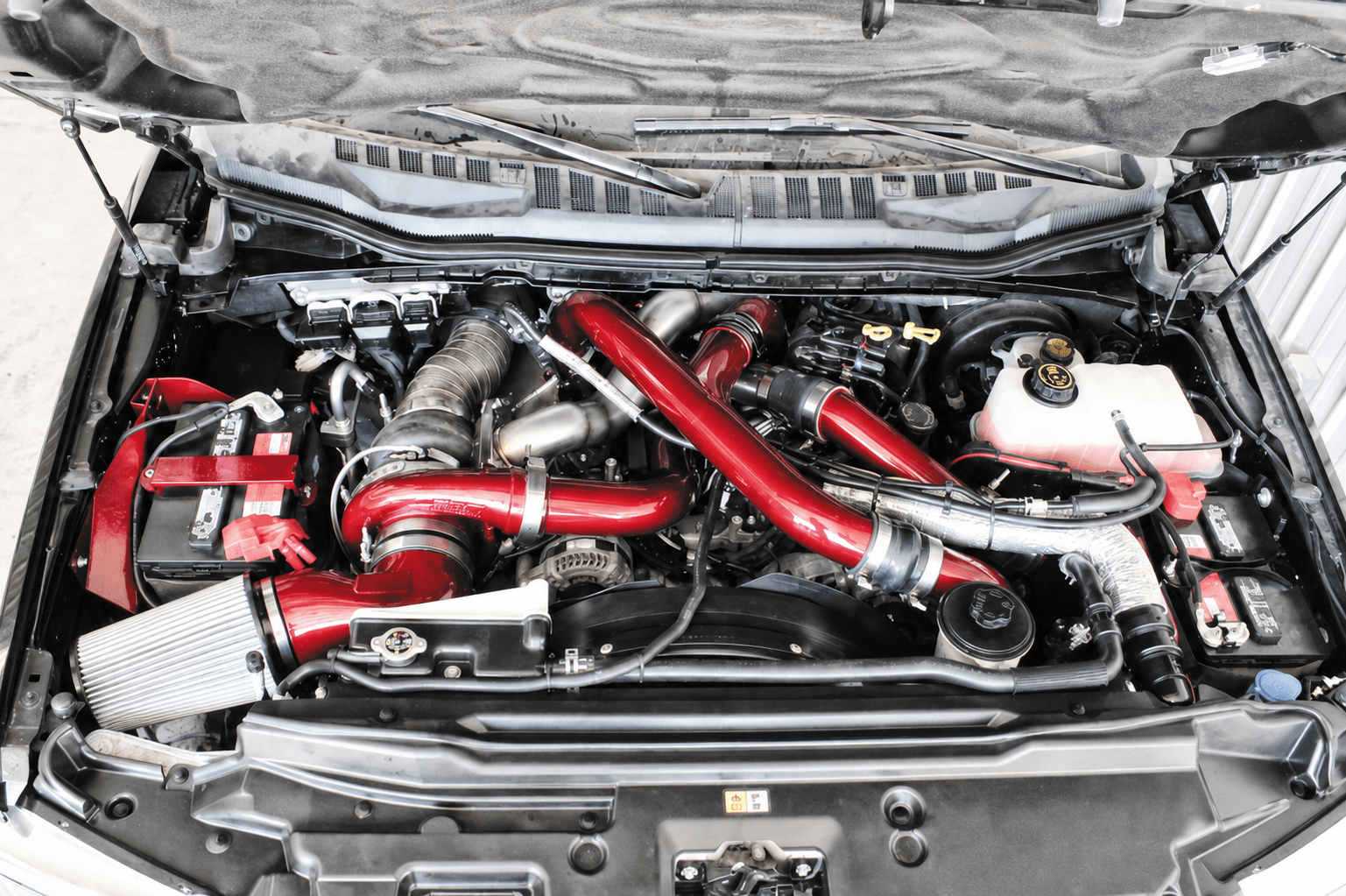
Although the EPA has not yet issued a unified fuel economy rating for the 2025 F-250 Diesel, actual data from earlier 6.7L models shows:
- Highway unloaded: can reach 20+ mpg.
- Heavy towing (23,000 lbs at 60–65 mph): approximately 14 mpg.
- City/combined driving: generally around 15–17 mpg.
In comparison, the gasoline version of the F-250 (7.3L V8) achieves about 11–13 mpg. The diesel's fuel economy advantage is clear, and with a standard fuel tank capacity of 34 gallons (optional 48-gallon extended tank), long-distance travel does not require frequent stops for fuel.
Ford F-250 Diesel Common Problems
CP4.2 High-Pressure Fuel Pump Failure
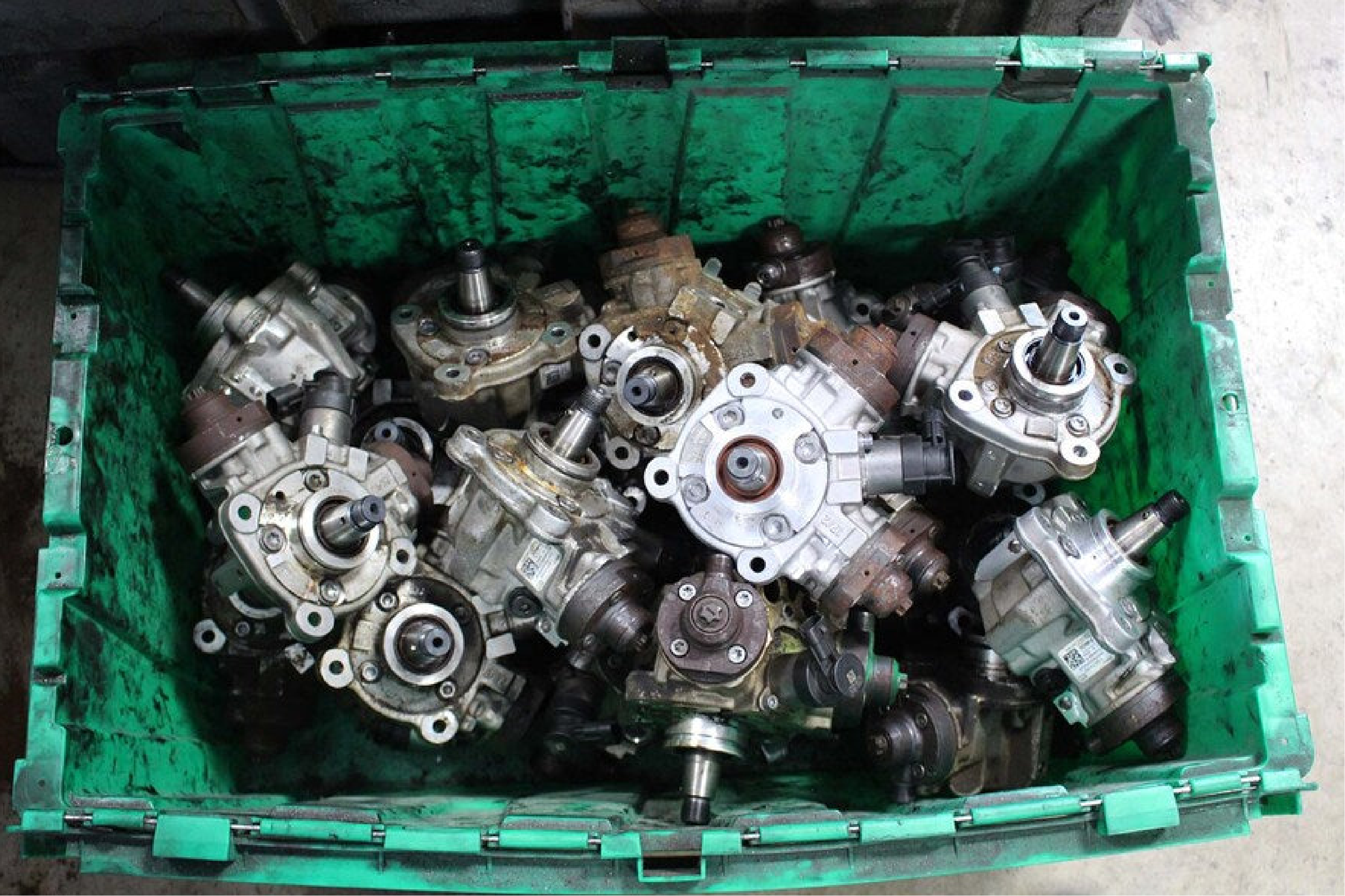
The Bosch CP4.2 high-pressure fuel pump found in the 6.7L Power Stroke (2011–2022) has a design flaw: its metal-on-metal roller/cam ring structure is prone to wear and fragmentation when fuel lubrication is insufficient, releasing large amounts of metal debris that contaminate the entire fuel system (injectors, fuel rails, tank, lines, etc.). Repair costs range from $9,000 - $14,000, making it the most fatal problem for the F-250 Diesel. One PowerStroke.org user reported a repair bill approaching $14,000.
Upgrade or maintenance directions include:
- Replace fuel filter every 15,000–20,000 miles, and periodically check the bottom of the filter housing for metallic reflective particles
- Use high-quality diesel additives to improve fuel lubricity
- Install a CP4 Disaster Prevention Kit, which can isolate metal debris after pump failure
- Ultimate solution: replace with a CP3 fuel pump conversion kit to eliminate the inherent defect of the CP4
EGR Cooler Leaks (Early 6.7L)
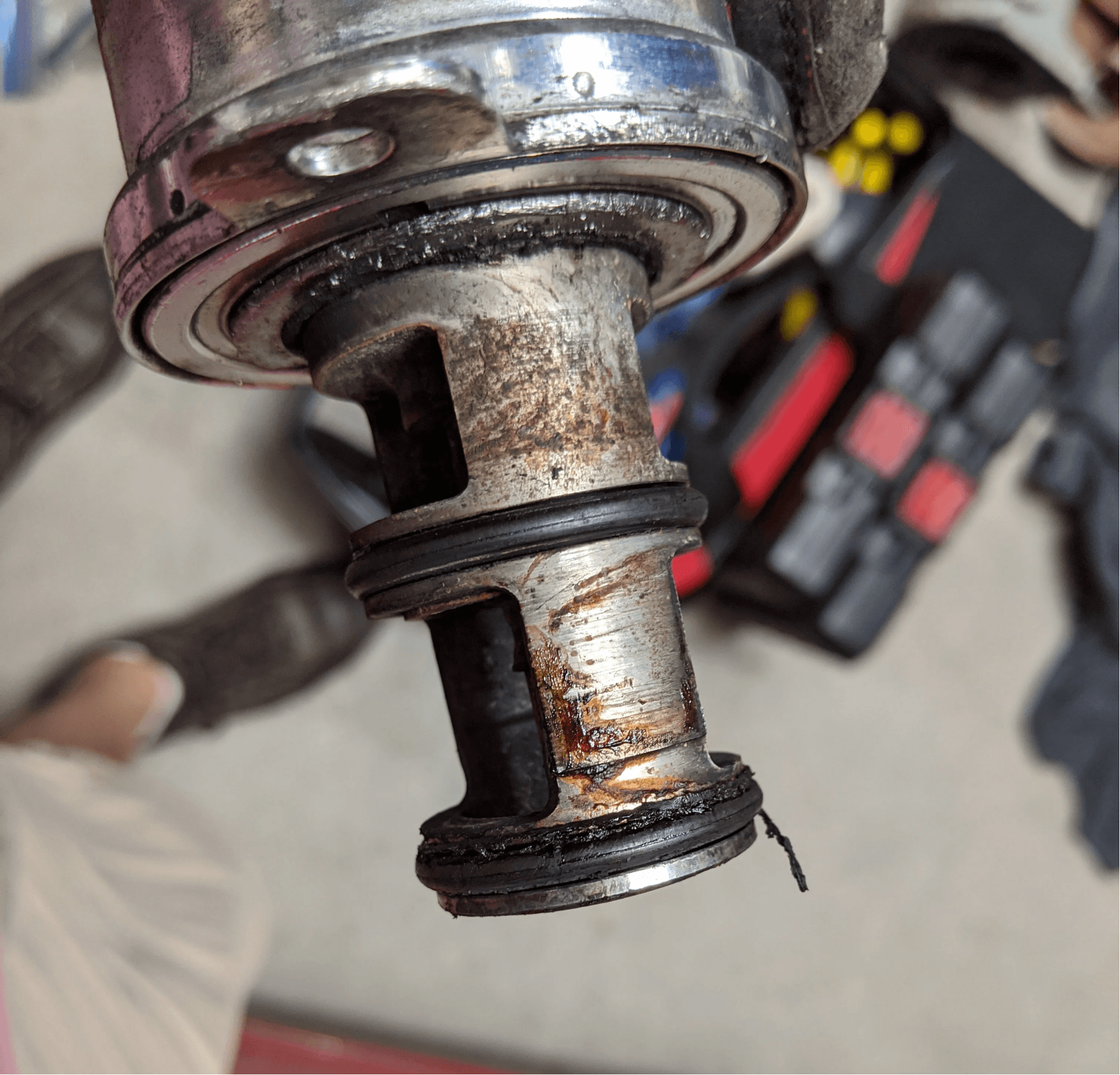
EGR system problems are widely discussed among 6.0L, 6.4L, and 6.7L Power Stroke users, especially the 6.0L and 6.4L. Common symptoms may include coolant loss, carbon buildup, reduced coolant, and white smoke from the exhaust. Replacing the EGR cooler costs approximately $800 - $2,000.
Upgrade directions include:
- Inspect the cooling system
- Replace or service the EGR cooler
- Check the oil cooler
- Consider EGR delete options in legally permitted off-road / competition-use scenarios
⚠️ Emissions system-related modifications may not be legal for public roads. Confirm local laws and regulations before purchasing and installing.
Ceramic Turbo Bearing Failure
The 2011–2012 model year 6.7L Power Stroke originally came with a Honeywell ceramic ball-bearing turbocharger that tends to fail prematurely within 40,000–60,000 miles, manifesting as a sharp whistle or screeching noise at idle or under acceleration. In severe cases, the turbo is ruined. After 2013, Ford switched to steel ball bearings, and the problem largely disappeared.
Upgrade or maintenance directions include:
- When buying a used 2011–2012 model, be sure to check maintenance records or perform a road test for turbo whine
- If the original turbo has failed, replace it directly with a 2013+ factory steel-bearing turbo
Cold-Side Charge Pipe Rupture
The factory cold-side charge pipe (from intercooler to intake manifold) on the 6.7L engine is made of plastic. Under high boost or extreme temperature changes, it can easily crack, causing boost leaks, sudden power loss, a hissing sound from the intake, and illumination of the check engine light.
Upgrade or maintenance directions include:
- Inspect the original plastic pipe for cracks or oil residue
- Replace directly with an aluminum Cold Side Charge Pipe
Cylinder Head Cracking
The cast iron cylinder heads on the first-generation 6.7L Power Stroke (2011–2014) can develop fine cracks near the exhaust valve seats due to thermal stress, leading to coolant entering the cylinders or loss of compression. Symptoms include unexplained coolant loss, white smoke, and engine misfire. In severe cases, cylinder head replacement is required, costing $3,000 - $5,000.
Upgrade or maintenance directions include:
- When buying a used F-250, try to choose a 2015 or later 6.7L (the second generation improved the cylinder head design)
- Regularly check coolant consumption rate and use coolant additive to inhibit corrosion
- If an early model already has head problems, upgrade to the 2015+ improved cylinder head (direct replacement)
- Install an EGT monitor when towing heavy loads to avoid prolonged excessively high exhaust gas temperatures
DPF and Regeneration Problems
DPF and regeneration problems are mainly concentrated in the 6.4L and 6.7L Power Stroke. The DPF captures diesel particulate matter, while regeneration is the process by which the system burns off accumulated soot using high heat. Common owner complaints include DPF clogging, limp mode, and warning lights.
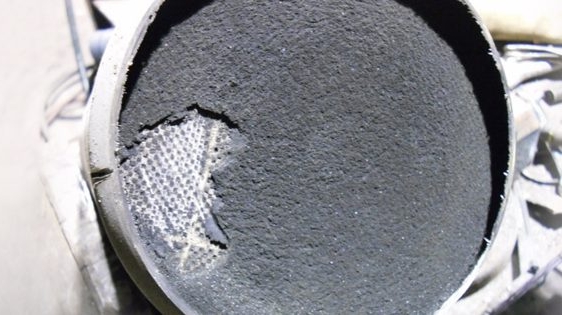
Upgrade or maintenance directions include:
- Avoid long-term short-distance, low-speed driving to ensure the DPF has enough time to complete active regeneration
- Regularly use highway cruising to help passive regeneration
- Use low-ash engine oil and high-quality diesel
- Consider DPF delete in legally permitted off-road / race-use scenarios; for on-road use, comply with local laws and regulations
Which F-250 Diesel Version Is Worth Buying?
Most Recommended F-250 Model Years
| Year | Engine | Reliability Rating | Key Highlights |
| 2002 | 7.3L | ★★★★★ | Legendary reliability, good for long-term collection |
| 2007 | 6.0L (late revision) | ★★★★☆ | Most stable year for 6.0L; only choose if it has completed "bulletproofing" modifications |
| 2009–2010 | 6.4L | ★★★★☆ | Relatively reliable emissions after-treatment |
| 2015–2019 | 6.7L (2nd generation) | ★★★★–★★★★★ | Sweet spot for 6.7L stability; dual fuel pump improvement / VGT turbo upgrade |
| 2020–2022 | 6.7L (3rd generation) | ★★★★★ | CP4 risk can be mitigated with prevention kit |
| 2023–2026 | 6.7L (5th generation) | ★★★★★ | Ultimate performance high output / new chassis / intelligent safety systems |
Model Years to Avoid
- 2011 (first-gen 6.7L): Very high CP4 pump risk, ceramic turbo defect, early cylinder head cracks – the most dangerous year.
- 2003–2004 (6.0L Power Stroke) : Many engine complaints, serious head gasket failure issues.
- 2008 (first 6.4L) : Early twin-turbo problems.
Used F-250 Purchase Checklist
- Fuel filter inspection (easiest low-cost warning) : Remove the fuel filter and use a flashlight to look for metallic reflective particles.
- Cold start test: Delayed start or hard starting may indicate fuel pump wear.
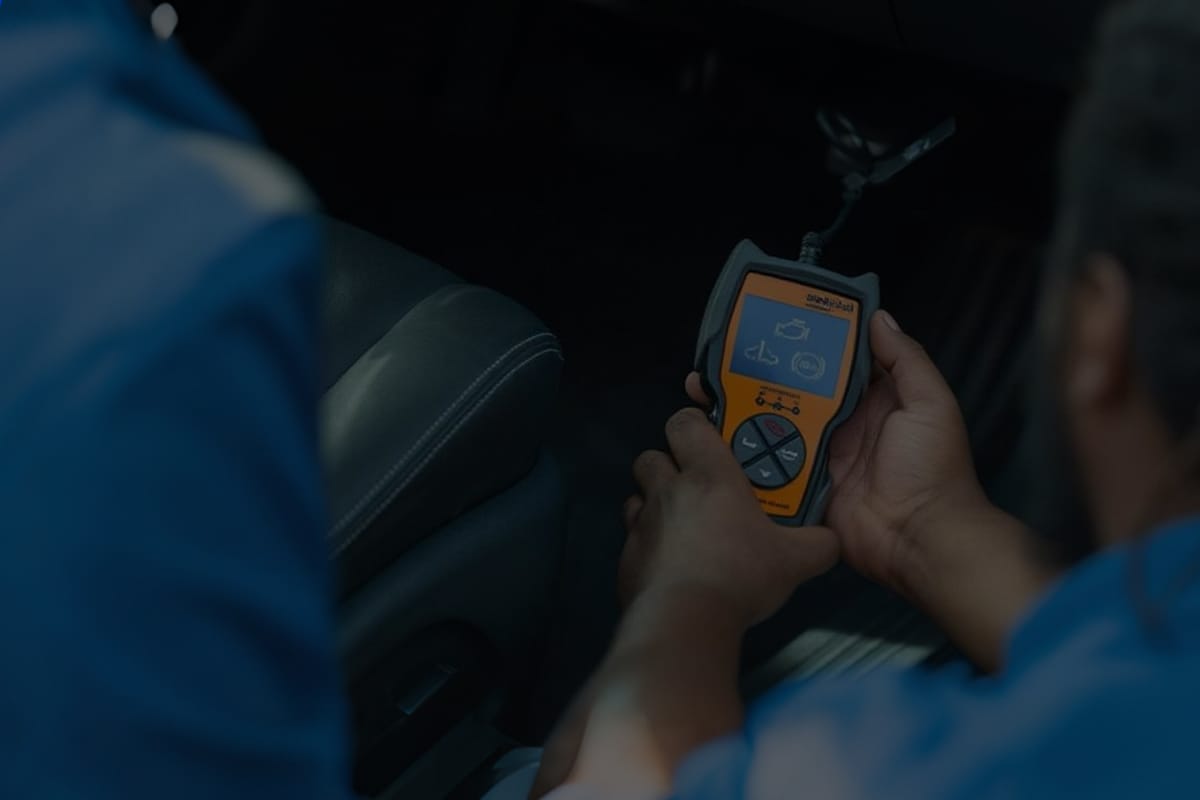
- OBD scan : Read engine fault codes, paying special attention to fuel pressure and EGR system codes.
- Check maintenance records : Verify whether the CP4 pump has been replaced or if a "CP4 Disaster Prevention Kit" has been installed.
- Turbo test: A sharp whine at idle or under acceleration is a prelude to early turbo failure.
Ford F-250 Diesel vs. Gas
The Ford F-250 comes not only in diesel but also in gasoline versions. Both diesel and gasoline have their own advantages; it is not a simple matter of one being definitively better.
| Comparison Item | F-250 Diesel | F-250 Gas |
| Towing capability | Better suited for heavy loads and long-distance towing | Sufficient for light to moderate towing |
| Torque | Stronger | Lower |
| Purchase cost | Typically higher | Typically lower |
| Maintenance cost | Higher | Lower |
| Fuel economy | More advantageous under heavy loads | Simpler for unloaded daily driving |
| Modification potential | Many diesel performance and emissions system upgrades | Mainly engine performance and off-road modifications |
| Suitable for | Commercial use, towing, diesel enthusiasts | Daily driving, budget-conscious, light work |
If you frequently tow heavy loads, drive long distances, or use the truck commercially, the Ford F-250 Diesel is worth considering. If you only tow occasionally and do mostly daily commuting, the F-250 gas may be more worry-free.
Ford F-250 Diesel Maintenance Tips
- Every 5,000 miles: Replace full synthetic engine oil (mandatory under heavy towing conditions), check tires, suspension system.
- Every 15,000 miles: Replace fuel filter, thoroughly drain the water separator.
- Every 30,000 miles: Replace engine air filter; replace diesel dual filters.
- Every 50,000 miles: Replace transmission fluid (TorqShift 10-speed) and filter, check differential oil.
- Every 100,000 miles: Flush cooling system, replace drive belt, tensioner, check turbo intake/exhaust seals.
Recommended oil specifications:
- Winter or cold climates: 5W-40 full synthetic
- Warm seasons or moderate climates: 15W-40 high-quality full synthetic
- Must meet Ford specification WSS-M2C171-F1 certification.