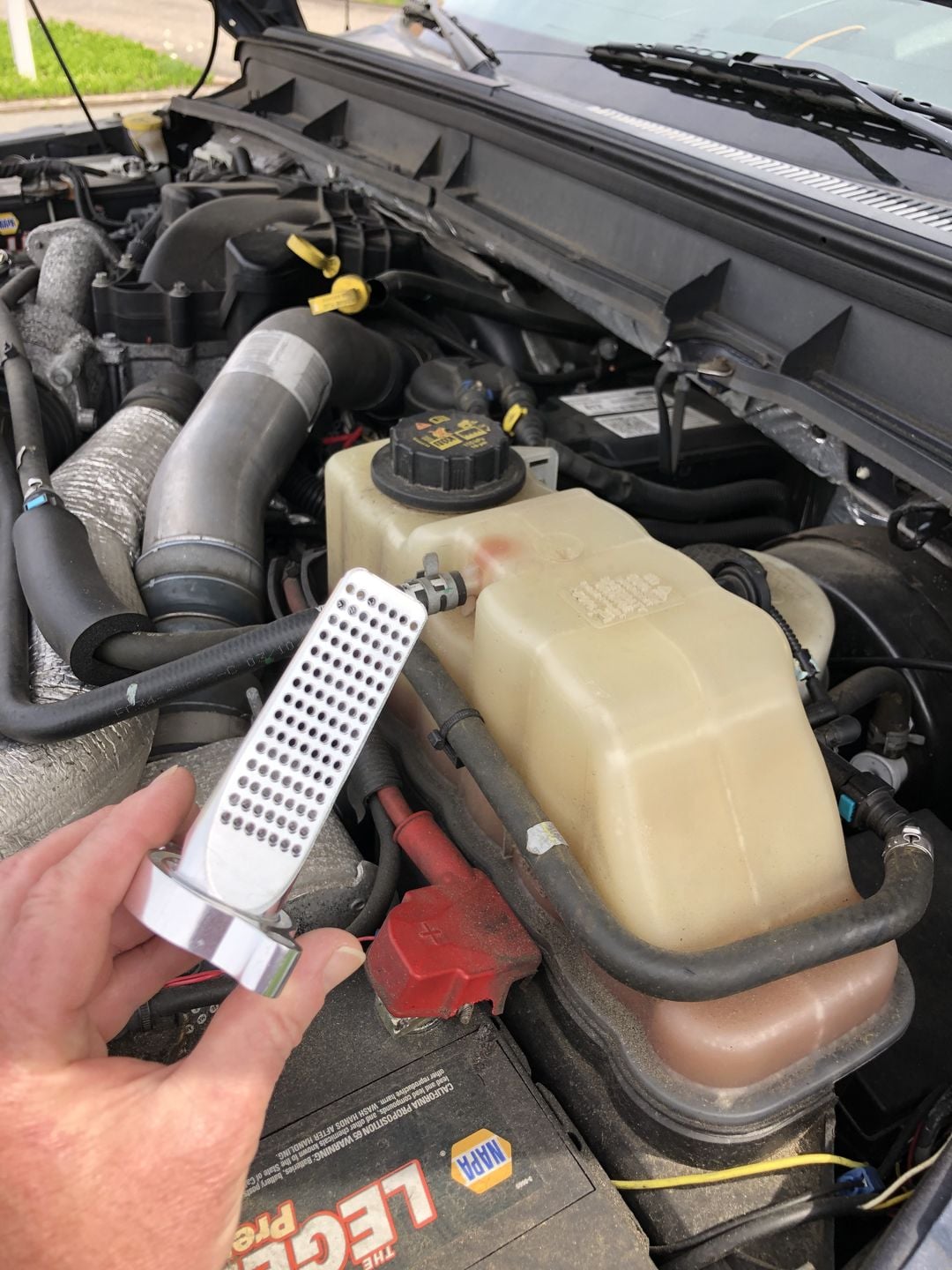
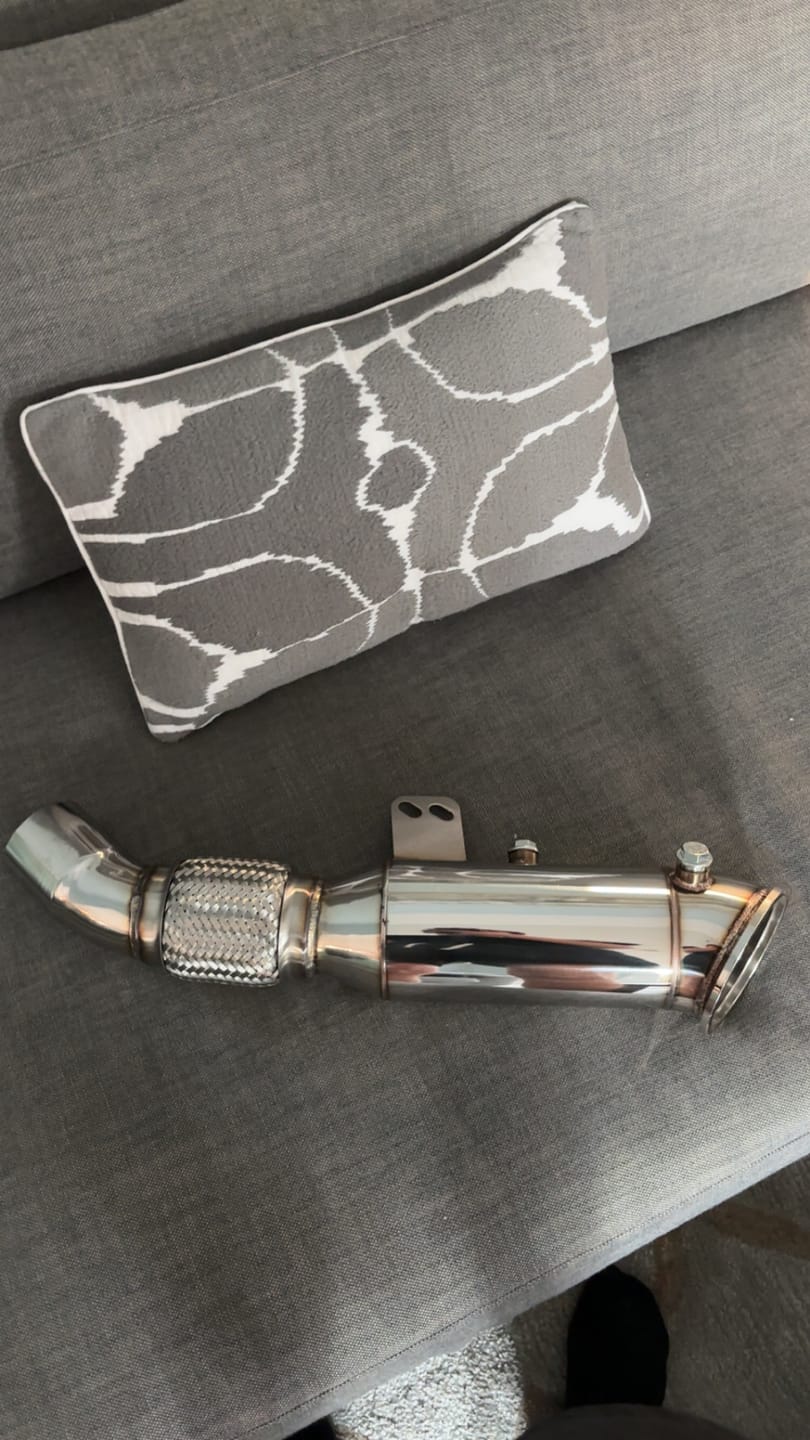
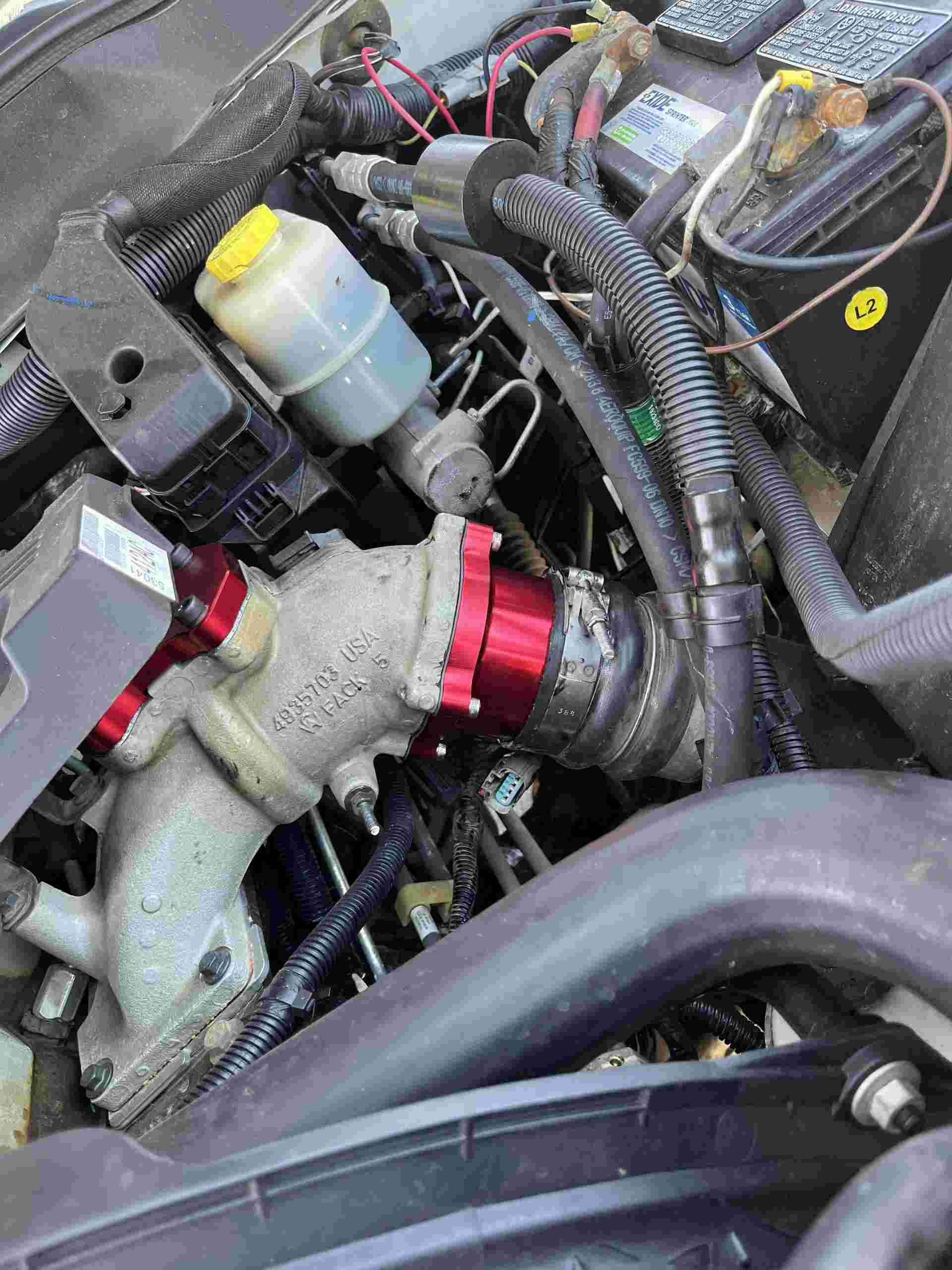
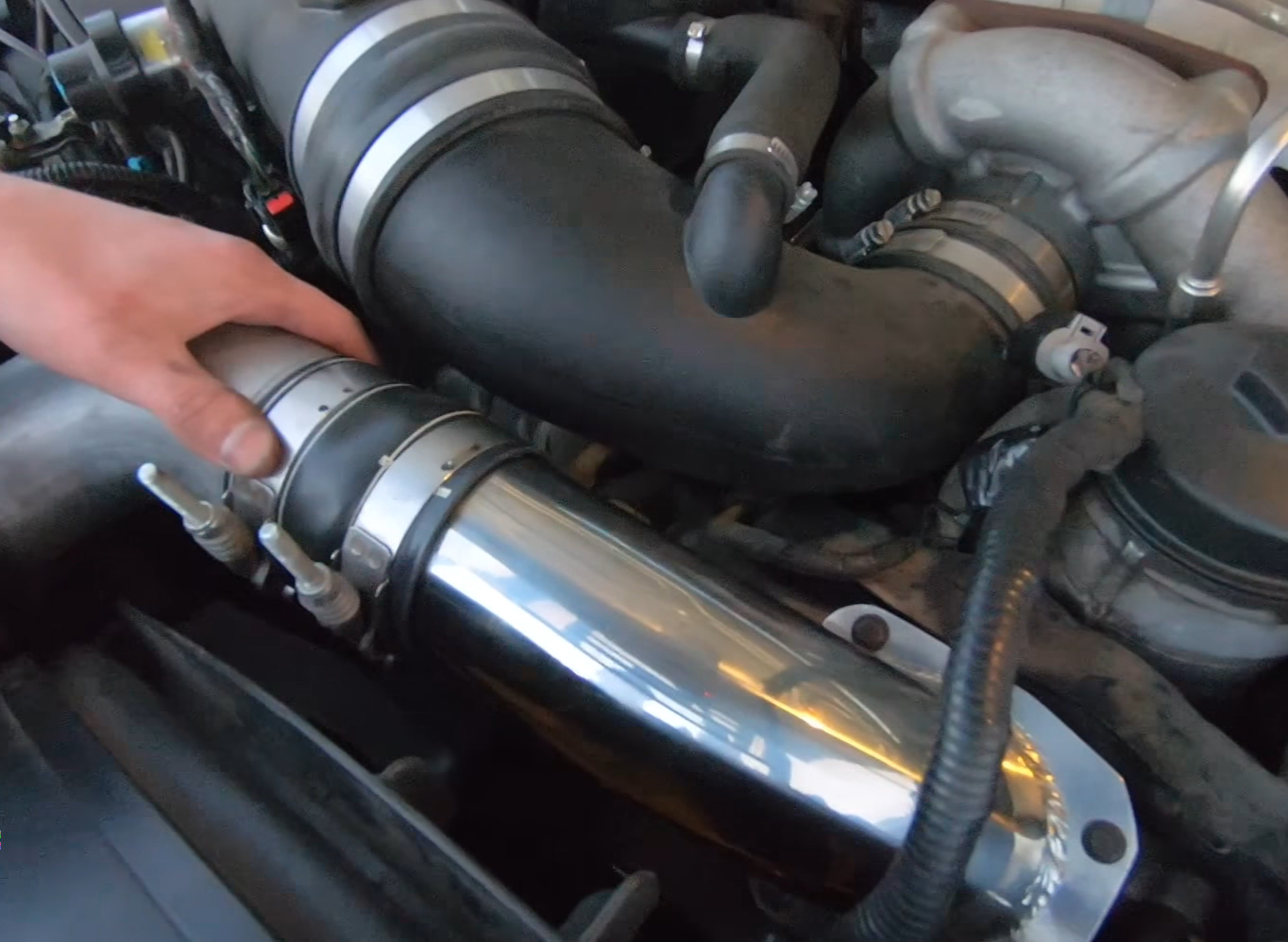
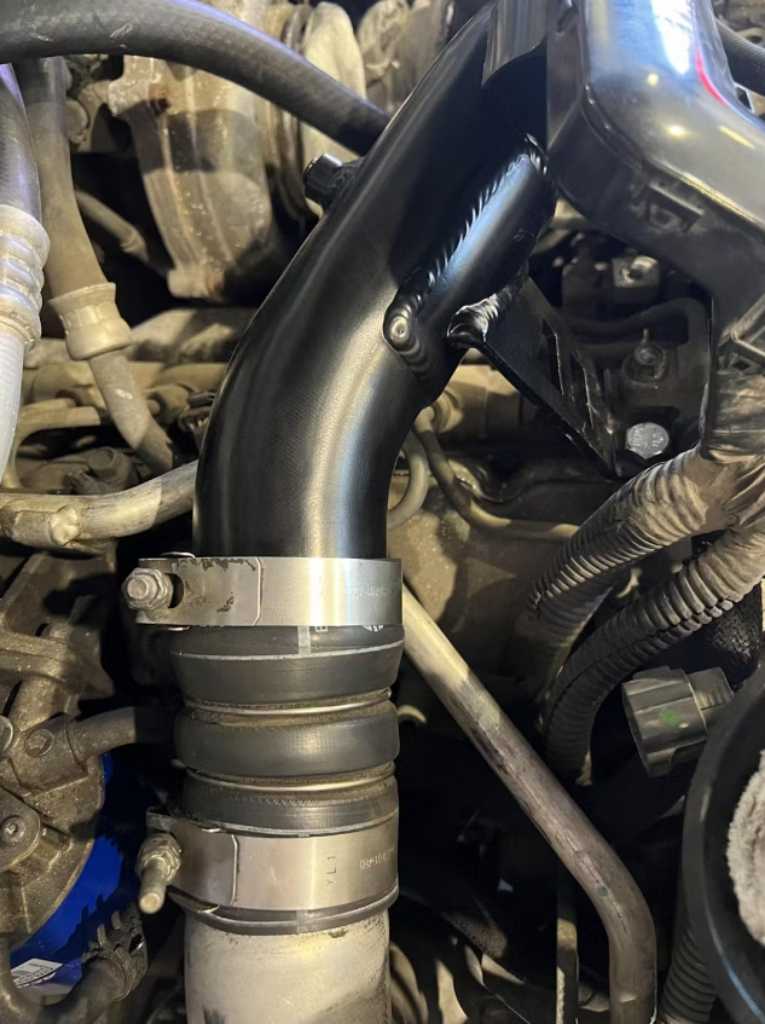
Still struggling with poor exhaust flow, frequent regeneration, and insufficient power? Purchase SuncentAuto's premium DPF delete kit—the best DPF removal for Powerstroke, Cummins, Duramax, and Ecodiesel.
Our DPF removal kit are crafted from corrosion-resistant stainless steel and designed for off-road performance:
✅ +20 hp increase ✅ +25 lb-ft increase in torque ✅ Up to 23% fuel savings
Buy now and enjoy free shipping, 45-day free returns, and expert support!
*Off-road/racing use only. Please check local emissions regulations before purchasing.*
 Check if this fits your vehicle
 Shopping for your {{ item.vehicle.year }} {{ item.vehicle.make }} {{ item.vehicle.model }} {{ item.vehicle.submodel }} {{ item.vehicle.engine }} {{ item.vehicle.trim }}
If This Fit Your {{ item.vehicle.make }} {{ item.vehicle.model }}
Shopping for your {{ item.vehicle.year }} {{ item.vehicle.make }} {{ item.vehicle.model }} {{ item.vehicle.submodel }} {{ item.vehicle.engine }} {{ item.vehicle.trim }}
If This Fit Your {{ item.vehicle.make }} {{ item.vehicle.model }}
 Doesn't fit {{ item.vehicle.year }} {{ item.vehicle.make }} {{ item.vehicle.model }} {{ item.vehicle.submodel }} {{ item.vehicle.engine }} {{ item.vehicle.trim }}
Universal Fit
Doesn't fit {{ item.vehicle.year }} {{ item.vehicle.make }} {{ item.vehicle.model }} {{ item.vehicle.submodel }} {{ item.vehicle.engine }} {{ item.vehicle.trim }}
Universal Fit
To optimize your diesel's performance, you must first understand the "emissions box" under your truck. Unlike gasoline 3-way catalysts, modern diesel systems rely on a three-stage filtration process:
| Engine Platform | Standard Configuration | Primary Failure Point |
|---|---|---|
| 6.7L Cummins (2007.5+) | Close-coupled DOC + DPF + SCR (late models) | Soot loading in DPF causing frequent active regen. |
| Powerstroke (6.4L/6.7L) | Dual-stage DOC/DPF canisters | High EGTs during regen cracking the DPF substrate. |
| Duramax (LML/L5P) | 9th Injector (Hydrocarbon Injector) + DOC + DPF | SCR/DEF sensor failures leading to "Limp Mode." |
| 3.0L EcoDiesel | Integrated DOC/DPF + SCR | EGR soot buildup combined with DPF restriction. |
In the world of diesel trucking, your pickup isn't just transportation—it’s a revenue-generating asset. However, as your odometer crosses the 100,000-mile mark, the factory DPF (Diesel Particulate Filter) system often transforms from an emissions component into a performance bottleneck and a financial drain.
A DPF delete kit is an aftermarket upgrade kit used to remove the original factory DPF system from diesel vehicles.
The DPF (Diesel Particulate Filter) is designed to capture particulate matter in exhaust gases to meet emission standards. However, over time, the DPF can become clogged, requiring cleaning or replacement. This can even lead to the following problems:
That’s why many diesel owners choose a DPF delete kit — a solution to unleash your engine’s real potential.
Using SuncentAuto's DPF delete kit, you can replace the restrictive factory DPF with a free-flowing straight-through or racing-grade exhaust pipe, allowing exhaust gases to escape freely. This is typically used in conjunction with ECU tuning to disable the regenerative cycle and prevent fault codes, thereby unlocking the true potential of the diesel engine.
Market data shows that in the secondary diesel market, trucks equipped with a DPF Delete Kit are more desirable and sell faster.
Eliminate Buyer Hesitation: Potential buyers dread the $3,000 - $5,000 price tag of imminent DPF replacement on high-mileage trucks. By installing a Suncentauto kit now, you remove that "ticking time bomb" for the next owner.
Performance Premium: A deleted truck offers smoother shifting and superior MPG. On trading platforms, "Already Deleted" is a high-intent keyword that attracts serious buyers willing to pay a premium.
For engines with over 150,000 miles, removing exhaust restrictions is vital for survival.
Protect Your Turbo: Removing DPF restrictions can lower EGTs by an average of 150°F - 200°F, significantly extending the life of your turbocharger.
Eliminate Limp Mode: For platforms like the 6.7L Cummins, Powerstroke (6.0, 6.4, 6.7L), Duramax (LML/L5P), and 3.0L EcoDiesel, our solutions permanently clear the "Regen" cycles and fault codes caused by aging hardware.
In summary, while removing the DPF can significantly improve performance, it is only suitable for off-road use.
Before choosing a DPF delete kit, the first step is to confirm your engine model, production year, and vehicle platform. SuncentAuto offers DPF removal kits for most mainstream diesel engines, including Powerstroke, Cummins, Duramax, and EcoDiesel.
When shopping, you can:
Use the side filters for a quick selection; or
Enter your Year, Make, and Model directly in the vehicle adapter to find a perfectly matching product.
| Brand / Engine Type | Model / Year Range | Available Products / Options |
| Ford Powerstroke | 6.7L Powerstroke (2011–2024) | Full DPF removal system, race pipe, downpipe-back, cat delete exhaust system |
| 6.4L Powerstroke (2008–2010) | Downpipe-back, DPF & Cat delete option | |
| 6.0L Powerstroke (2003-2007) | Cat & muffler removal option | |
| Dodge Cummins | 6.7L Cummins (2007.5–2024) | Full DPF removal system, race pipe, downpipe-back, turbo-back, cat delete exhaust system |
| Chevrolet Duramax | Duramax LB7 (2001–2004) | Downpipe-back exhaust system |
| Duramax LLY (2005–2006) | Downpipe-back exhaust system | |
| Duramax LBZ (2007) | Downpipe-back exhaust system | |
| Duramax LMM (2008–2010) | Downpipe-back exhaust system | |
| Duramax LML (2011–2016) | DPF & Cat delete option | |
| Duramax L5P (2017–2024) | Downpipe-back exhaust system, DPF & Cat delete option | |
| Ecodiesel | 3.0L EcoDiesel | DPF delete race pipe exhaust system |
A DPF delete is only as effective as its fitment. SuncentAuto pipes are CNC-bent and laser-cut to guarantee a 100% direct bolt-on experience, utilizing your truck’s factory mounting points without the need for welding or custom fabrication.
Say goodbye to the restrictive "factory bricks" that stifle your turbo's performance. SuncentAuto's high-flow T304 stainless steel piping is precision-engineered to withstand extreme thermal loads.
When paired with our EGR Delete Kit, it permanently lowers Exhaust Gas Temperatures (EGTs), thereby effectively safeguarding the intricate and complex valvetrain of your 6.7L engine.
You bought a Cummins for its reliability—don't let a clogged DPF take that away from you. Save yourself the $3,000 headache and switch to a high-flow system that lets your engine perform at its best.
To get the most out of your upgrade, we recommend a CCV reroute. It’s a simple addition that keeps oil vapors away from your intake, keeping your entire setup running clean and strong for the long haul.
The L5P is a powerhouse, but the 'Limp Mode' and sensor issues can be a real nightmare for owners who actually use their trucks for heavy towing.
Our solution uses precision engineering to bypass those emissions hurdles without triggering a single light on your dash.
Because heat is the 1 enemy in a Duramax engine bay, we highly recommend adding a Downpipe.
It’s a simple upgrade that maximizes heat dissipation, ensuring your engine stays healthy even when the job gets tough.
Your EcoDiesel shouldn't feel sluggish. Common soot-related intake failures are usually the result of a restricted factory setup, but our lightweight race pipes change the game by maximizing air velocity.
It’s the most effective way to solve soot-loading issues once and for all. We consider a Stage 1 Tune the perfect 'finishing touch' for this upgrade—it fine-tunes the engine’s logic to take full advantage of the bypass, giving you peak efficiency and a much smoother ride.
Selecting the right hardware is a balance between exhaust flow, sound profile, and your specific performance goals. Below are the primary pipe configurations for diesel platforms:
The ultimate solution for maximum exhaust velocity. By removing all internal baffles and filtration media, a straight pipe offers zero flow resistance. Ideal for users seeking the deepest, most aggressive diesel exhaust note and peak turbo spool speed.
Structurally identical to a straight pipe but engineered with reinforced hangers and high-grade T409/T304 stainless steel. These are designed to withstand the extreme thermal expansion encountered in track and high-load competition environments.
This kit bypasses both the Particulate Filter and the DOC (Diesel Oxidation Catalyst). Removing the diesel "two-way" catalyst alongside the DPF provides the most significant drop in Exhaust Gas Temperatures (EGTs), essential for high-horsepower tuning.
Replaces the DPF section while retaining the factory DOC. This configuration is preferred for daily drivers or heavy towing setups where a more refined sound is desired while still eliminating restrictive regeneration cycles.
A cost-effective way to improve scavenging efficiency and exhaust tone. It replaces the heavy factory muffler with a high-flow pipe section, providing a crisper sound without necessarily requiring a full emissions delete.
Summary and Recommendations
| Purpose / Scenario | Recommended Type | Primary Benefit |
|---|---|---|
| Competition / Max HP | Straight Pipe / Turbo-Back | 0% Flow Restriction / Max Spool |
| Heavy Towing / Daily | DPF-Only / Downpipe-Back | Lower EGTs / Balanced Sound |
| Extreme Durability | Race Pipe | High-Heat Structural Integrity |
| Budget Sound Mod | Muffler Delete | Enhanced Aggressive Tone |
For a complete upgrade, consider the All-in-one delete kit.
Common Installation Tools: Jack or lift, jack stand, ratchet wrench and socket, wrench, penetrant, protective gloves and safety goggles.
Step 1: Disconnect the negative terminal of the battery to prevent accidental electrical contact.
Step 2: Safely lift and securely support the vehicle.
Step 3: Remove the original DPF assembly.
Step 4: Install the removal tube, securing the flange to the bracket, maintaining clearance.
Step 5: Reconnect or replace the sensors.
Step 6: Tune the ECU, clear fault codes, and load the mapping.
Step 7: Start the engine and check for leaks or abnormalities.
Step 8: Test drive and monitor EGT, boost pressure, and oil pressure.
The above are general installation instructions for the DPF delete kit. For more detailed step-by-step instructions, please visit our Installation Guide page for the full content.
At SuncentAuto, we're committed to making your shopping experience worry-free.
Your diesel vehicle deserves the best. Upgrade now for more powerful performance, better fuel economy, and longer-lasting reliability!
What Is DPF Delete on Trucks - Benefits & Risks & Legality
How to Do DPF Delete: Detailed Step
Muffler Delete vs Straight Pipe Compatison 2025
No, they operate on completely different principles. Gasoline vehicles are equipped with a Three-Way Catalytic Converter (TWC) designed to manage Carbon Monoxide (CO), Nitrogen Oxides (NOx), and Hydrocarbons (HC) all at once.
In contrast, diesel engines use a Diesel Oxidation Catalyst (DOC), which is a "Two-Way" system. The DOC's primary job is to oxidize the soluble organic fraction of particulate matter and gas-phase hydrocarbons. Unlike a gas car's converter, the DOC cannot trap soot—that is the job of the DPF (Diesel Particulate Filter)—and it cannot reduce NOx, which is handled further downstream by the SCR (Selective Catalytic Reduction) system. Understanding this distinction is key to choosing the right bypass pipe for your exhaust setup.