 Contents
Contents
In the heavy-duty pickup segment, the 6.6L Duramax diesel engines powering the Chevrolet Silverado HD and GMC Sierra HD have long been known for their strong performance and dependable towing capability. However, while the LML Duramax version produced between 2011 and 2016 introduced significant improvements in power and emissions control, it also brought several common problems that have frustrated owners.
This article takes an in-depth look at the LML Duramax problems, common symptoms, and specific repair and prevention options to help you maintain your truck or avoid pitfalls when buying a used one.
What Is the LML Duramax? Model Years and Background
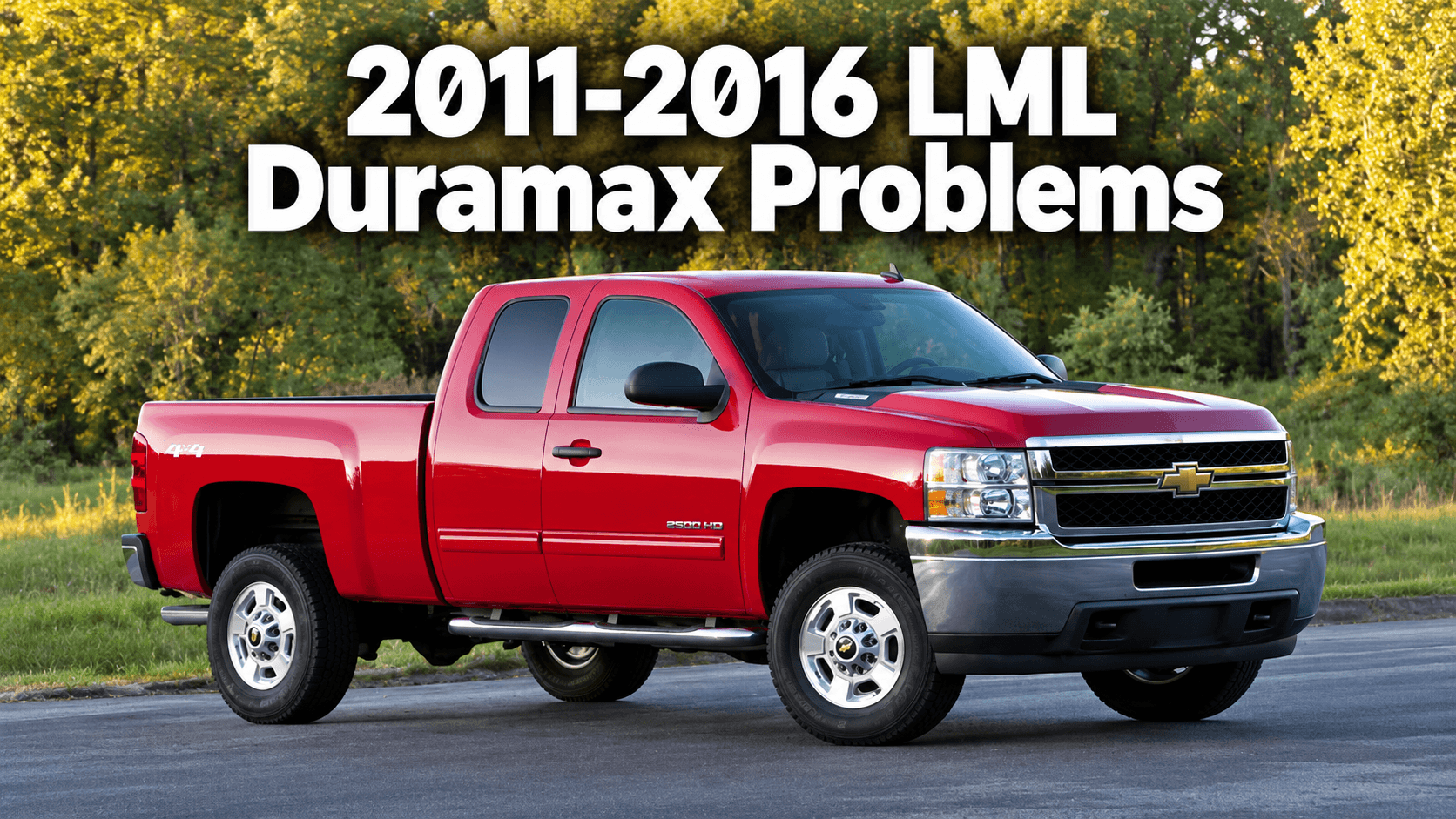
The LML Duramax is a 6.6-liter turbocharged V8 diesel engine introduced by General Motors (GM) in 2011. It was primarily installed in 2011–2016 GMC Sierra 2500HD/3500HD and Chevrolet Silverado 2500HD/3500HD pickups. It replaced the earlier LMM Duramax and was succeeded by the all-new L5P Duramax in 2017.
One of the LML’s major changes was the introduction of the Bosch CP4.2 high-pressure fuel pump, piezoelectric injectors, and more complex SCR/DEF emissions aftertreatment technology to the Duramax platform. These changes provided stronger performance while increasing the demands on fuel quality, sensors, and emissions system maintenance.
| Item | LML Duramax Specifications |
| Model years | 2011–2016 |
| Engine displacement | 6.6L (403 cu in) |
| Engine configuration | Turbocharged V8 diesel |
| Maximum horsepower | 397 hp |
| Maximum torque | 765 lb-ft |
| Fuel system | Bosch CP4.2 high-pressure common rail |
| Turbo system | Variable geometry turbocharger (VGT) |
| Common transmission | Allison 1000 six-speed automatic |
| Emissions system | EGR, DOC, DPF, SCR, DEF |
| Primary applications | Chevrolet Silverado 2500HD/3500HD, GMC Sierra 2500HD/3500HD |
For buyers shopping for a used diesel pickup, the LML's performance remains appealing. However, because these vehicles have now been in service for many years, fuel system repair records, emissions system condition, and overall maintenance history often deserve more attention than mileage alone.
What Are the Most Common LML Duramax Problems?
To help you quickly identify potential issues, here are the most common LML Duramax problems and their typical symptoms:
| Problem Type | Key Components Involved | Typical Symptoms |
| CP4 high-pressure fuel pump failure | Bosch CP4.2 Injection Pump | Sudden engine stalling, no-start condition, engine misfires, Check Engine light |
| Injector and 9th injector problems | Injectors & 9th Fuel Injector | Black/blue smoke, increased fuel consumption, overly frequent regeneration cycles, DTCs such as P026D |
| DEF and emissions system failures | DEF Heater, Pump, Reductant Tank | “Speed Limited Soon” warning, DEF warning light, unusual exhaust odor |
| Turbo and head gasket problems | VGT Turbo, Head Gaskets | Reduced power, severe turbo lag, abnormal coolant consumption, engine overheating |
| Sensor and control module problems | MAP Sensor, ECM / TCM | Harsh shifting, limp mode, weak acceleration |
Major Mechanical and Fuel System Problems
1. CP4 High-Pressure Fuel Pump Failure
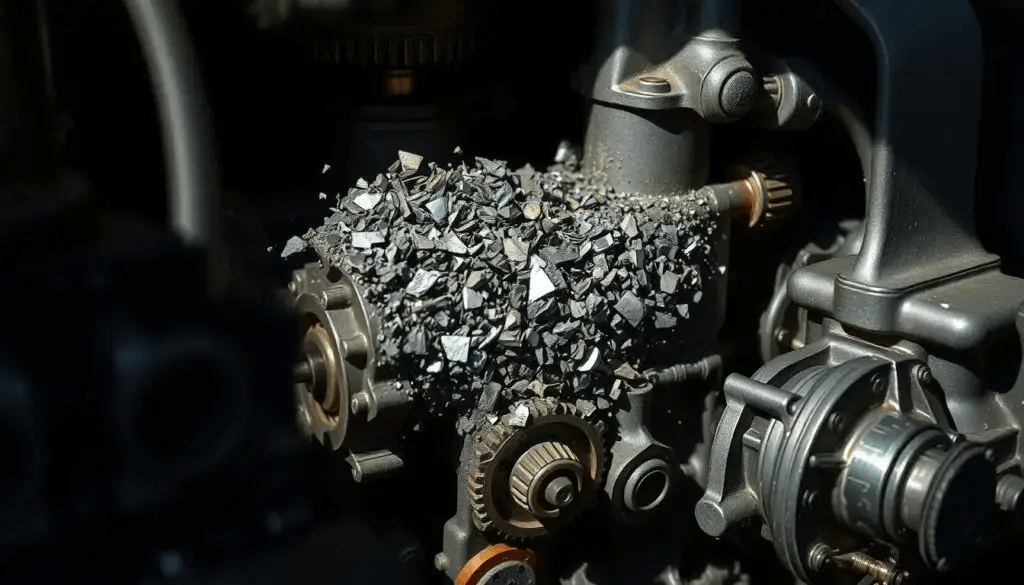
The CP4 fuel pump problem is the LML Duramax's best-known and most expensive defect. Because American diesel fuel has lower lubricity than European standards, the rollers and cam inside the CP4 pump are prone to metal-on-metal friction, causing metal to flake off and produce tiny particles.
- Symptoms: Sudden loss of power while driving, a no-start condition, severe hesitation during acceleration, metal particles found in the fuel filter, and related fault codes such as P0087 (Fuel Rail Pressure Too Low).
- Consequences: Metal debris travels through the fuel lines and contaminates the entire fuel system, damaging all eight injectors, fuel rails, and sensors.
- Repair costs: Once a failure occurs, thoroughly cleaning and replacing the fuel system typically costs several thousand dollars.
- Solutions: Owners often choose to install a CP3 Conversion Kit or a Disaster Prevention Kit to prevent metal debris from contaminating the entire system.
2. Injector and 9th Injector Problems
The LML uses high-pressure piezoelectric injectors, which respond faster but are extremely sensitive to fuel cleanliness. The LML also added a "9th injector" (Downstream Injector), which sprays diesel into the exhaust manifold to raise exhaust temperatures and burn off carbon deposits in the DPF. This injector operates under extreme conditions: high temperatures, heavy soot exposure, and repeated thermal cycling.
Failure symptoms: Carbon buildup clogs the injector, internal seals fail, and the injector stops responding to electrical signals entirely, triggering fault codes such as P0420. The dashboard may repeatedly display "regen in progress," but regeneration never completes.
3. Turbocharger and Head Gasket Problems
The LML Duramax uses a variable geometry turbocharger (VGT), which adjusts the position of its internal vanes to control boost at different engine speeds and loads. This system helps deliver good low-speed response and towing torque, but over time, the VGT mechanism, actuator components, and intake system can develop problems.
- Turbo carbon buildup: The LML uses a variable geometry turbocharger (VGT). Carbon buildup can cause the vane mechanism to seize, resulting in abnormal boost pressure or insufficient power.
- Head gasket: Compared with the previous-generation LMM, the LML received an improved gasket design. However, high cylinder pressures following heavy towing or high-power tuning can still cause the head gasket to fail, resulting in coolant leaks.
Maintenance advice: For Silverado HD and Sierra HD trucks used for prolonged heavy towing or high-load operation, regularly monitoring oil condition, intake system sealing, and coolant temperature can help identify potential head gasket and turbo problems early.
Emissions System and Sensor Failures
1. DEF (Urea) System Failures
The LML was the first engine in the Duramax family to use a DEF/SCR system. Its DEF injector is positioned upstream of the SCR catalyst and sprays a urea solution into the exhaust stream. The LML’s DEF system is known for crystallization problems: as urea dries around the injector nozzle, it forms hard white crystalline deposits that gradually block the nozzle, reducing or completely stopping injection.
The direct consequences of crystallization are: reduced NOx conversion efficiency → the ECM detects an abnormality → the dashboard displays "Exhaust Fluid Quality Poor" → a speed-limit countdown begins, first to 65 mph, then 55 mph, and finally 5 mph.
Notably, GM updated the DEF injector software on 2015–2016 LML models, adjusting exhaust temperature strategies during regeneration to help reduce crystal buildup. This is one reason later LML model years perform slightly better in emissions system operation than earlier years.
2. EGR Valve and Cooler
The LML's ECU is highly sensitive to EGR flow. Installing block-off plates without flashing a tune to disable EGR-related fault codes will immediately trigger persistent codes such as P0401 or P0404.
The greater risk lies in the EGR cooler. The LML's EGR cooler uses engine coolant to lower the temperature of recirculated exhaust gases. However, its internal core can crack after prolonged thermal cycling and corrosion, allowing coolant to leak into the intake manifold or exhaust system. If coolant enters the intake manifold, it can cause engine hydrolock—a failure mode that can completely destroy the engine.
Only a complete EGR delete kit, used in track/off-road applications, removes the cooler assembly. If you install only block-off plates, the cooler's leak risk remains.
3. DPF Regeneration Problems
The DPF captures diesel particulate matter and removes accumulated soot through regeneration. However, prolonged short-trip driving and frequent stop-and-go operation can prevent the system from completing its normal cleaning process.
Do not ignore a "clean exhaust filter" message on the dashboard. If the message appears frequently or is accompanied by a Check Engine light and reduced power, the DPF may already be severely clogged, or the conditions required for regeneration may not have been met. Professional diagnosis is necessary, as continuing to drive without addressing the problem may damage the expensive exhaust system.
When a clean exhaust filter message appears, follow the owner's manual for the corresponding model year. If the message repeatedly returns or is accompanied by a warning light and reduced power, the regeneration conditions and related components need to be checked. Continuing to drive should not be treated as a universal solution. In legal track/off-road applications, some owners also choose to install a DPF delete kit with dedicated tuning to eliminate this issue entirely.
4. ECM & TCM Electronic Control System Problems
Problems involving the LML's ECM (Engine Control Module) and TCM (Transmission Control Module) mostly manifest as electronic communication interruptions rather than the hardware itself burning out.
- Symptoms: Dashboard needles drop to zero, multiple warning lights illuminate simultaneously, and the Allison transmission becomes stuck in one gear and cannot shift up or down, accompanied by U-series communication fault codes such as U0101, U0140, and U0073.
- Diagnostic priorities: These problems are often caused by worn wiring, poor connections, or corroded ground wires. Before replacing expensive modules without proper diagnosis, check battery voltage, wiring connectors, and chassis ground points. Wiring is particularly susceptible to pinching and abrasion during rerouting after chassis repairs or an accident.
Differences and Considerations Across 2011–2016 Model Years
Choosing an LML Duramax involves more than comparing an "early model" with the "final model year." Different years have repair histories worth reviewing, but maintenance, operating conditions, and the actual condition of the vehicle are equally important.
| Model Year | Key Considerations | Buying or Inspection Advice |
| 2011 | First LML model year; review DEF system and glow plug repair history | Check cold-start performance, previous warnings, and repair invoices |
| 2012 | Early DEF and glow plug issues also warrant inspection | Confirm previous faults were repaired and check component and calibration compatibility |
| 2013 | Some vehicles fall within the scope of a later DEF reservoir special coverage bulletin | Do not skip DEF heater and temperature checks simply because the model year is newer |
| 2014 | Continue to assess fuel system and emissions aftertreatment condition | Review fault codes, regeneration performance, and towing or idling history |
| 2015 | Updated HD models still use the LML; watch for DEF issues and leaks around the coolant reservoir | Inspect the engine, aftertreatment system, and cooling system separately |
| 2016 | Final LML model year; this does not mean fuel system risks have disappeared | Verify the actual fuel system configuration, repair history, and coolant condition |
Prevention and Maintenance for LML Duramax
Given the LML Duramax's inherent weaknesses, regular, systematic maintenance and appropriate hardware upgrades can significantly reduce the likelihood of failures:
- Use high-quality fuel additives: Regularly add diesel fuel additives that improve lubricity to provide extra protection for the CP4 pump and reduce metal wear.
- Install a lift pump: The factory LML does not have an in-tank lift pump, so the CP4 must draw fuel on its own. Adding a lift pump from brands such as FASS or AirDog can reduce the load on the CP4 while providing excellent water separation and micron-level filtration.
- Replace the fuel filter regularly: Replace the fuel filter every 10,000–15,000 miles, and never use low-quality filter elements.
- Clean the MAP sensor: Every two oil services, remove the MAP sensor and use a dedicated cleaner to flush away carbon deposits.
- Upgrade to a CP3 or install a Disaster Prevention Kit: If you do not plan to switch to a CP3 pump, installing a CP4 Disaster Prevention Kit can trap metal debris when the pump fails, protecting the expensive injectors and fuel rails.
FAQs
Conclusion
The LML Duramax is a highly capable diesel engine. Its power output and towing capability were class-leading when it was introduced in 2011. However, it is also an engine that needs to be "fully understood."
LML Duramax Problems do not occur randomly. They are heavily concentrated around several known systemic weaknesses: the CP4 fuel pump's dependence on fuel lubrication, the DEF system's tendency to crystallize, the EGR cooler’s leak risk, and insufficient head gasket sealing margin under high loads.
If you already own an LML, the most practical maintenance strategy is to prioritize CP4 risk mitigation through a CP3 conversion or, at minimum, a Disaster Prevention Kit and lift pump; keep the emissions system clean and its software updated; and closely monitor the cooling system. If you are planning to buy a used truck, include potential CP4 and emissions system maintenance costs in your purchase budget and focus on these weaknesses during the pre-purchase inspection.
Understanding the problems is the first step toward solving them. The aftermarket has developed highly mature solutions for the vast majority of LML Duramax failures. The key is whether you take action before a failure becomes a disaster.