 Contents
Contents
Introduction
For owners of heavy-duty diesel pickups such as the Ford Super Duty, Ram HD, and Chevy Silverado HD, the vehicle is not just transportation, but a working tool for towing, hauling, and demanding operating conditions. Whether you are:
- A construction contractor idling for long hours on the job site,
- A rancher hauling horse trailers across state lines,
- Or a full-time off-road enthusiast traveling through remote trails,
you have likely encountered the “Achilles’ heel” of modern diesel engines: the emissions system. DPF (Diesel Particulate Filter) clogging leads to frequent regenerations, while the EGR (Exhaust Gas Recirculation) valve “chokes” the intake tract with oily carbon buildup, often putting reliability behind emissions compliance.
For this reason, more and more owners are looking into EGR Delete, DPF Delete, and matching tuning solutions. However, there is a dangerous misconception circulating in the community: can a simple physical hardware removal alone solve everything? In this guide, we will take a closer look at why a physical delete without tuning the ECU is not just a bad idea, but a trigger for mechanical disaster.
What Is an EGR Delete?
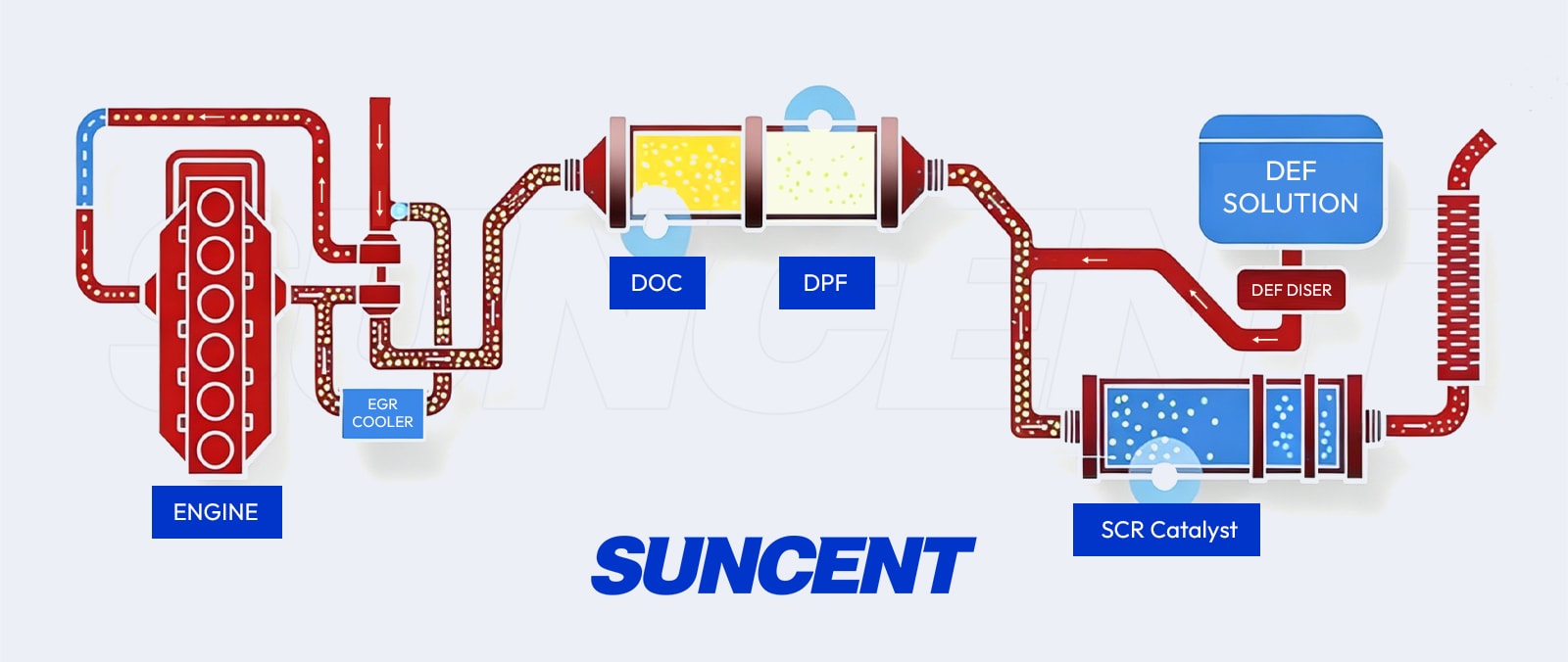
To understand the consequences of deleting it, we first need to understand how the EGR (Exhaust Gas Recirculation) system works. In stock 6.7L Cummins or Powerstroke engines, the job of the EGR system is to redirect a portion of exhaust gases back into the engine intake in order to reduce combustion temperatures and lower NOx emissions.
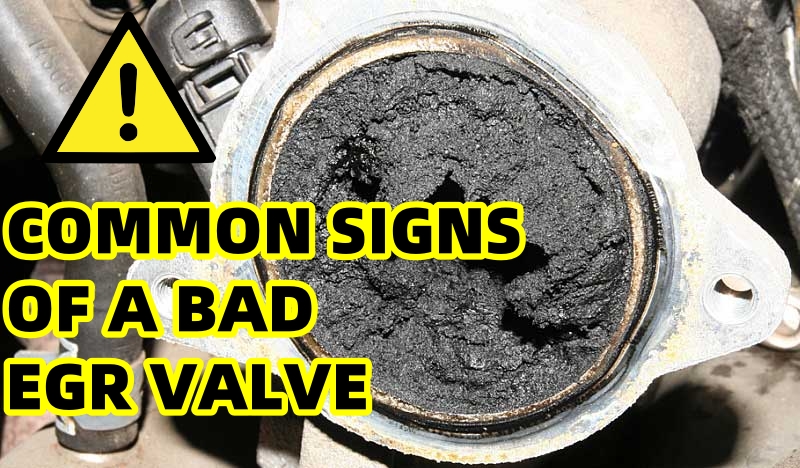
From an emissions standpoint, the EGR system serves a purpose, but the process itself is inherently “dirty.” The EGR system sends soot-laden exhaust gas back into the intake side, where it mixes with oily vapors from the crankcase ventilation system. Over time, this creates carbon buildup and sludge on the intake manifold, EGR valve body, throttle passages, and related components, eventually causing:
- Severe carbon buildup: Increased carbon accumulation in the intake system, reducing airflow efficiency
- Valve seizure: The EGR valve itself often fails or becomes stuck from carbon buildup, immediately triggering fault codes.
- Coolant-related issues: The EGR cooler is notorious for internal leaks, which can cause white smoke from the exhaust and, in the worst case, lead to valve damage or even engine failure.
An EGR Delete removes the valve and cooler, and uses dedicated hardware such as solid block-off plates to remove or bypass the EGR valve, cooler, and related piping. This ensures that only clean, cool, oxygen-rich air enters the cylinders, significantly reducing internal wear and allowing engine oil to stay cleaner for longer.
However, it is important to emphasize that the EGR system is part of the ECU control logic. If the related hardware is removed but the ECU is still monitoring and controlling EGR flow according to the stock logic, the vehicle will still usually throw codes, and may even affect torque management, throttle response, and overall drivability.
What Is a DPF Delete?
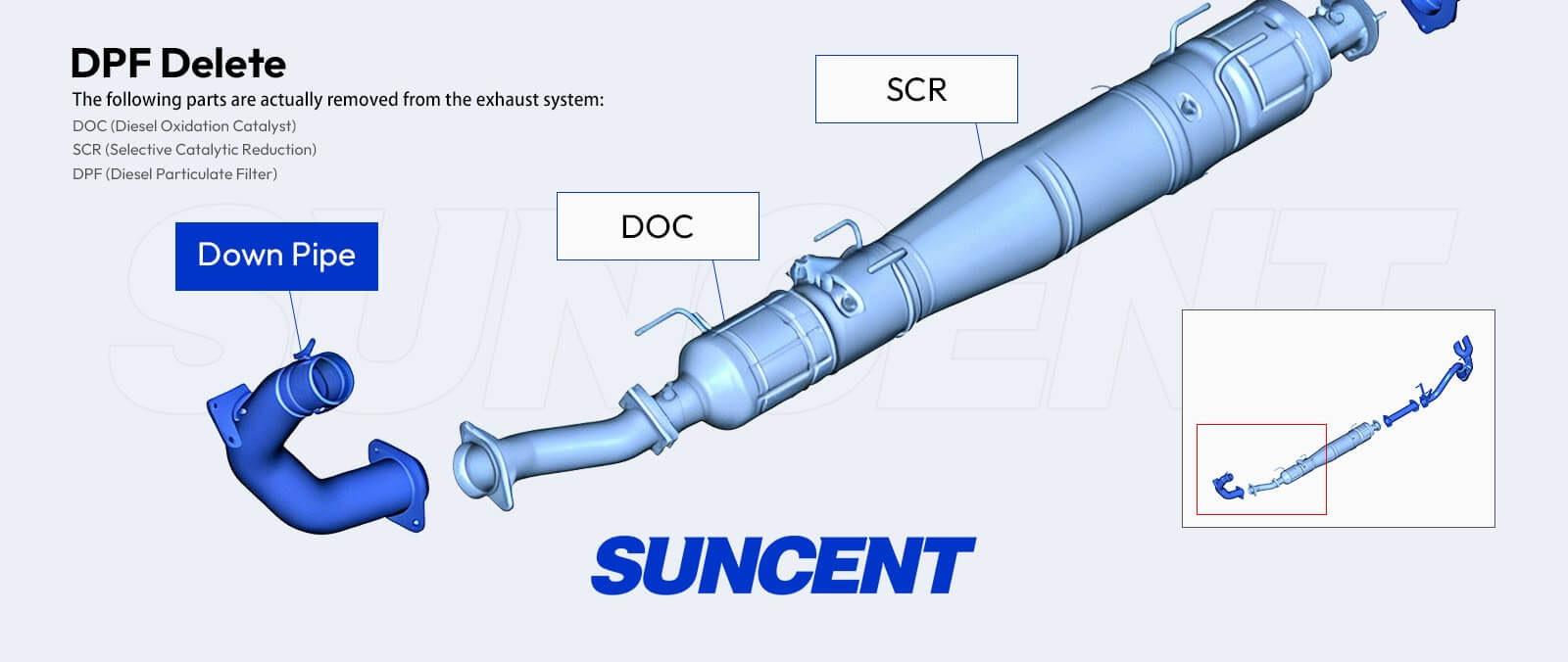
If the EGR system handles the air entering the engine, then the DPF (Diesel Particulate Filter) handles the exhaust gases leaving it. In the exhaust systems of vehicles such as the Duramax L5P or Powerstroke 6.7L, the DPF acts like a massive ceramic “mask,” designed to trap soot and particulate matter before the exhaust exits the tailpipe.
However, for owners operating in high-demand work environments—such as oilfield workers or heavy equipment haulers—this filter often becomes a constant source of frustration:
- The “regeneration” trap: When the DPF fills up, the ECU triggers a regeneration cycle, injecting extra fuel into the exhaust stream to burn off the soot under extremely high heat. This consumes significant fuel and may lead to fuel dilution in the engine oil.
- Exhaust backpressure: A partially clogged DPF increases backpressure, forcing the turbocharger to work harder and driving up exhaust gas temperatures (EGT).
- Expensive replacement cost: When the DPF eventually fails (which is almost inevitable), replacing it with a new unit can cost anywhere from $3,000 to $5,000.
A DPF Delete involves replacing this restrictive metal canister with a high-flow straight pipe or race pipe. By removing this bottleneck, the engine can finally breathe freely, lowering operating temperatures, improving throttle response, and significantly improving fuel economy.
But just as importantly, the DPF is not merely an “exhaust canister”—it is also part of the ECU’s aftertreatment strategy.
Once the DPF is physically removed while the ECU still continues to monitor differential pressure, exhaust temperature, and regeneration status according to the stock logic, the vehicle will quickly begin to experience trouble codes, failed monitoring, abnormal thermal management, or reduced-power operation.
What Happens If You Delete the DPF but Keep the EGR?
In pursuit of performance, some owners try a “compromise” setup: removing the DPF while keeping the EGR system. While this may seem like a cost-saving approach, it creates a technical imbalance that quickly harms engine health.
That is because the EGR and DPF were designed to work together in a symbiotic cycle controlled by the ECU. When you remove the DPF but keep the EGR, several key problems arise:
- Accelerated carbon buildup: Without the backpressure and heat management provided by the DPF, the EGR flow logic becomes distorted. This usually causes large amounts of soot to be routed back into the intake, causing the intake manifold to clog even faster than it would in the stock configuration.
- Abnormal exhaust gas temperatures (EGT): The EGR system depends on a specific exhaust temperature range to function properly. Removing the DPF significantly lowers exhaust temperature, which may prevent the EGR cooler from operating within its intended range, resulting in condensation and sludge formation in the intake tract.
- Confused sensor logic: Your truck’s computer expects a correlation between EGR flow and DPF pressure sensor readings. Once the DPF is gone, the ECU will often attempt to compensate by excessively cycling the EGR valve, causing premature mechanical failure of the valve itself.
In short, on a heavy-duty pickup such as a Ram 2500 Cummins, keeping the EGR active while the exhaust has already been “opened up” is essentially forcing the engine to operate in a state of choking and inefficiency, ultimately triggering the nightmare of “emissions system service.”
Why Is the Risk Highest If You Physically Delete the Hardware but Do Not Tune the ECU?
If you physically delete the system on a 6.7L Powerstroke or Duramax but skip the tuner (ECU tuning), the EGR, DPF, related temperature sensors, differential pressure sensors, regeneration strategies, thermal management logic, torque limiting, and on some platforms even turbo control are often all interconnected.
When the hardware is no longer there, but the ECU still believes those components are functioning normally, the vehicle ends up in a state where the “mechanical condition” and the “software understanding” are completely out of sync. At that point, the problems usually do not appear one at a time—they show up as a chain reaction.
1) Trouble Codes, Check Engine Lights, and Failed Monitoring Are Nearly Unavoidable
On most modern diesel platforms, the ECU continuously monitors:
- Whether EGR flow is within the expected range
- Whether DPF differential pressure is normal
- Whether exhaust temperature changes match aftertreatment logic
- Whether the regeneration process completes successfully
Once these critical inputs no longer match the ECU’s expected model, the vehicle will usually throw codes and illuminate the check engine light after one or more monitoring cycles. The exact code type and trigger timing vary by model, year, and ECU strategy, but the result is usually the same: the stock system identifies this condition as abnormal.
2) The Risk of Reduced Power or Limp Mode Increases Significantly
When the ECU determines that the aftertreatment system has failed, that sensors are abnormal, or that regeneration logic cannot be completed, many vehicles will enter a protective strategy. This protection may appear as:
- Restricted torque output
- Reduced throttle response
- Limited engine RPM
- Reduced-power operation or limp mode
For a daily driver, this is already a major inconvenience; for towing, heavy hauling, long-distance transport, or off-road use, these limitations directly affect the truck’s usability.
3) Regeneration and Thermal Management Logic May Still Continue to Intervene
Even if the DPF has already been removed, as long as the ECU has not been properly recalibrated, many platforms may still attempt to carry out aftertreatment-related thermal management or regeneration strategies. This means the ECU may continue to evaluate exhaust temperature, fueling, and aftertreatment status based on the stock model.
In this situation, the vehicle may experience:
- Unnecessary thermal management intervention
- Abnormal fueling or retained post-injection strategies
- Exhaust temperature control that no longer matches the actual exhaust configuration
- Abnormal drivability, fuel economy, and operating behavior
On some platforms, this kind of strategy mismatch may also increase the risk of oil dilution, especially after the vehicle has been operated in this abnormal state for some time.
4) On Some Platforms, Turbo and Torque Management Logic Will Also Be Affected
On certain diesel platforms that use a variable geometry turbocharger (VGT), emissions system data does not only affect trouble codes—it may also play a role in thermal management, boost control, and torque modeling. If the hardware state has changed but the ECU is still operating from the stock aftertreatment model, the following may occur:
- Boost buildup that no longer matches expectations
- Delayed throttle response
- Inconsistent torque delivery
- Unstable thermal control
There is no need to describe this as “it will definitely destroy the turbo,” but one point should be clear: without ECU calibration matched to the hardware state, the vehicle’s control logic cannot truly return to a stable condition.
There Are Not Only Advantages After a Delete
Although the advantages of a Diesel Delete Kit may seem obvious, this modification is not without trade-offs. Before deciding to move forward, you need to consider the following:
- Slower warm-up: Because the EGR cooler also acts as a heat exchanger, helping the engine reach operating temperature more quickly, removing it means your truck may take longer to “warm up” during cold winter conditions. For owners in severely cold northern climates, this is a minor inconvenience that needs to be weighed.
- Increased exhaust noise: Removing the DPF significantly changes the truck’s exhaust note. While many owners love the aggressive turbo whistle and deep rumble, it may be too loud if you use your truck as a quiet family commuter.
- Legal and resale risks: It must be clearly stated that this type of modification is generally labeled as “for off-road or competition use only.” In addition to its environmental impact, a deleted truck may fail emissions testing in certain regions, and depending on local regulations, the future resale process may become relatively complicated.
Conclusion: Never Stop Halfway
The reliability of a diesel engine depends entirely on the quality of the software that supports it. Whether on the job site or out on the highway, carrying out only the physical delete operation means, at best, you have completed only half of the job. If you want to fully unlock your truck’s true potential and avoid the risk of mechanical failure—or even complete breakdown—a professional tuner (that is, ECU rewriting) is an absolutely essential step.