 Contents
Contents
- Problem Definition: P2002 indicates that the diesel particulate filter (DPF) efficiency is below the preset threshold, failing to effectively filter particulate matter from exhaust.
- Severity: Medium to high. Long‑term neglect may lead to power loss, increased fuel consumption, trigger "limp mode," or cause permanent DPF damage.
- Urgency: Schedule an inspection within 1–2 weeks to prevent the issue from worsening.
- First Step: Use an OBD‑II scanner to confirm the code and read the data stream from the DPF differential pressure sensors (before and after the DPF).
- Repair Cost Range: From a free forced regeneration to over $4,000 for DPF replacement.
What Is the P2002 Code?
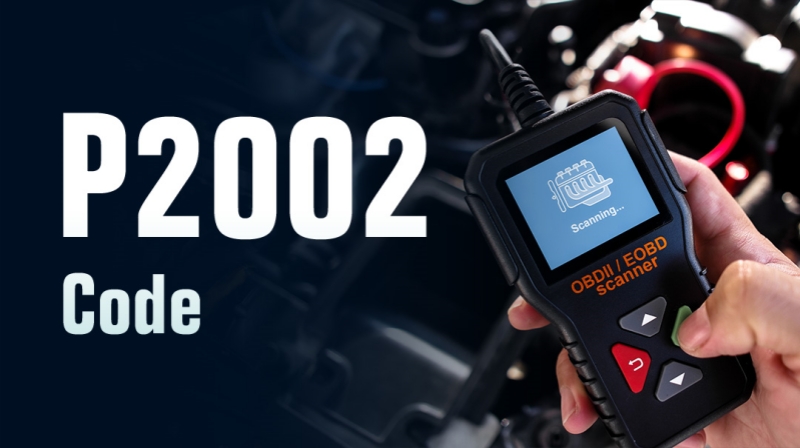
P2002 is a generic OBD‑II trouble code that stands for "Diesel Particulate Filter (DPF) Efficiency Below Threshold (Bank 1)." It is triggered when the engine control unit (ECU) detects that the DPF is unable to effectively filter particulate matter from the exhaust.
What Does "Bank 1" Mean?
The "Bank 1" in the code refers to the first bank of cylinders on the engine – the side that contains cylinder #1. For inline engines (such as common inline‑4 or inline‑6 diesel engines), there is only one bank of cylinders, so Bank 1 is that sole bank. For V‑type engines, Bank 1 is usually the bank on the right side of the vehicle (from the driver's perspective).
What Is the DPF and What Does It Do?
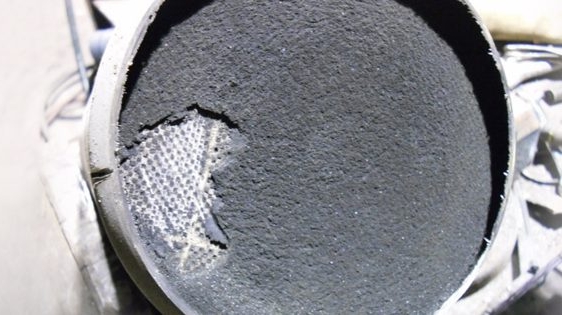
The DPF (Diesel Particulate Filter) is a core component of the diesel vehicle's emission system. Its main function is to trap and store soot produced during combustion, preventing harmful particulate matter from being released into the atmosphere. During normal operation, the DPF burns off the accumulated soot through a process called "regeneration" – where the ECU adjusts engine parameters to raise exhaust temperatures.
Why Is the P2002 Code Important?
A DPF fault not only increases harmful particulate emissions but also leads to reduced engine power and higher fuel consumption. More seriously, if this issue is ignored for a long time, the DPF or other engine components may suffer permanent damage, ultimately resulting in expensive repair bills.
Common Symptoms of the P2002 Code
If your vehicle triggers a P2002 fault code, you may experience one or more of the following symptoms:
- Check Engine Light Illuminates: The most direct signal – the check engine light or a dedicated DPF warning light on the dashboard will come on.
- Loss of Power: The vehicle may enter limp mode, restricting acceleration and overall power to prevent further damage.
- Increased Fuel Consumption: A clogged DPF makes the engine work harder, directly reducing fuel economy.
- Black Smoke from Exhaust: Excessive soot is expelled from the exhaust system, with visible black smoke coming out of the tailpipe.
- Emission Test Failure: A DPF fault causes the vehicle to exceed emission limits, failing annual inspections or emissions tests.
Common Causes of the P2002 Code
There are multiple reasons that can trigger the P2002 code. The most common include:
- DPF clogged or damaged – excessive soot or ash accumulation beyond regeneration capacity.
- Faulty DPF differential pressure sensor – providing incorrect data, causing the ECU to misjudge or fail to initiate regeneration properly.
- Exhaust system leaks – affecting pressure readings and leading to ECU miscalculations.
- Poor fuel quality – low‑grade diesel produces more soot, accelerating DPF clogging.
- Incomplete regeneration cycles – frequent short trips prevent the DPF from reaching the required temperature for regeneration.
- Dirty air filter – affecting the air‑fuel ratio and indirectly increasing soot production.
- Installation of non‑original or incorrect DOC/DPF components.
How to Diagnose the P2002 Code
Diagnosing the P2002 code requires a systematic approach, not merely clearing the code. The recommended diagnostic procedure is as follows:
Step 1: Read the Trouble Codes
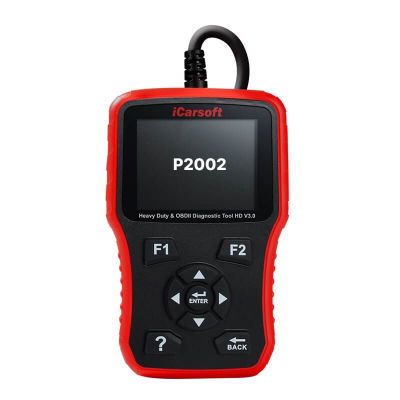
Use an OBD‑II scanner to read all stored codes. Not only check for code P2002, but also look for other associated codes (such as those related to the pressure sensor) to narrow down the problem.
Step 2: Read DPF Differential Pressure Sensor Data
Compare the pressure difference between the front and rear of the DPF. Under normal conditions, the pressure difference gradually increases as soot accumulates. Abnormally low or high readings can help identify the issue.
Step 3: Check DPF Temperature Sensors
Verify that the temperature sensors at the DPF inlet and outlet are functioning correctly, as this is critical for judging the regeneration process.
Step 4: Inspect the Exhaust System for Leaks
Check the connections between the DPF and exhaust pipes for any looseness or leaks.
Step 5: Check Soot Load Data
Use a diagnostic tool to read the DPF soot load data. Normally, the soot load should be less than 15 grams. If the load is too high, regeneration is required.
How to Fix the P2002 Code
The following repair solutions are ordered from lowest to highest cost and from simplest to most complex. It is recommended to try them in sequence:
Solution 1: Forced DPF Regeneration (Lowest Cost)
- Applicable when: The DPF is only mildly clogged and soot load is slightly above normal.
- Use a professional diagnostic tool to force‑start the DPF regeneration process. The ECU adjusts engine operating parameters to raise exhaust temperatures high enough to burn off accumulated soot. This is typically performed at a repair shop, with the cost mainly covering diagnostic labour.
- Cost: Approximately $80–$150 (diagnostic fee + regeneration service).
Solution 2: Check and Update ECU Software
- Applicable when: P2002 appears without any other physical fault indications.
- In some cases, P2002 may be a false alarm caused by ECU software issues. Check if there are any relevant Technical Service Bulletins (TSB) for your vehicle and update the ECU software if necessary.
- Cost: $0–$100 (depending on warranty coverage).
Solution 3: Check and Replace Faulty Sensors
- Applicable when: The differential pressure sensor, temperature sensor, or oxygen sensor is faulty.
- Sensor failure is a common cause of P2002. Use a diagnostic tool to check whether each sensor's data is within normal range, and replace any defective sensors.
- Cost: $100–$300 (including parts and labour).
Solution 4: Professional DPF Cleaning (Best Value)
- Applicable when: The DPF is clogged but not physically damaged, and soot/ash accumulation can be removed by cleaning.
- Remove the DPF from the vehicle and use specialised cleaning equipment for a deep clean to remove internal soot and ash deposits. This is much cheaper than replacing the DPF and offers significant results.
- Cost: $200–$500.
Solution 5: ECU Reprogramming / Tuning
- Applicable when: The DPF itself has no physical issues, but the regeneration logic needs adjustment.
- In certain cases, the ECU may need to be reprogrammed to adjust DPF‑related monitoring parameters or regeneration strategies.
- Cost: $200–$600 (depending on vehicle model and tuning complexity).
Solution 6: Replace the DPF (Most Thorough Solution)
- Applicable when: The DPF is physically damaged (e.g., cracked), severely clogged beyond cleaning, or has exceeded 80,000–100,000 miles of use.
- Replacing with a brand‑new DPF is the most thorough but also the most expensive solution.
- Cost: $1,000–$4,000+ (depending on vehicle model and part quality – aftermarket parts are cheaper, OEM parts are more expensive).
Alternative: DPF Delete
- Applicable only for: Off‑road or track‑use vehicles where local regulations explicitly permit it.
- By installing a DPF delete pipe and ECU programming to disable the DPF, the P2002 code can be permanently eliminated. This is a permanent solution that offers three major advantages: avoiding regeneration failure faults, reducing fuel consumption by 3%‑5%, and increasing engine horsepower and torque – saving long‑term DPF maintenance costs.
- Cost: $500–$1,500 (delete pipe + ECU tuning).
Estimated Repair Costs
| Repair Option | Estimated Cost | Time Required |
| Forced DPF Regeneration | $80–$150 | 1–2 hours |
| ECU Software Check/Update | $0–$100 | 1 hour |
| Sensor Replacement | $100–$300 | 1–2 hours |
| Professional DPF Cleaning | $200–$500 | 4–8 hours |
| ECU Reprogramming | $200–$600 | 2–4 hours |
| DPF Replacement | $1,000–$4,000+ | 3–6 hours |
| DPF Delete (off‑road only) | $500–$1,500 | 2–4 hours |
Note: The above costs are market estimates. Actual costs vary by vehicle model, region, and repair shop.
How to Prevent the P2002 Code
Prevention is better than cure. The following measures can effectively reduce the likelihood of encountering the P2002 code:
P2002 faults are often caused by poor driving habits and lack of maintenance. By following these points, you can thoroughly avoid recurring issues:
- Adopt good driving habits: Avoid prolonged short‑distance, low‑speed driving. Drive on highways for at least 20 minutes each week to ensure exhaust temperatures reach the required level for passive DPF regeneration.
- Use high‑quality fuel and engine oil: Low‑grade fuel and oil significantly increase particulate production, accelerating DPF clogging. Choose compliant, high‑quality consumables to reduce soot formation at the source.
- Perform regular preventive maintenance: Follow the vehicle's maintenance schedule to periodically check DPF status and sensor data. Address minor soot accumulation early to prevent severe clogging.
- Respond promptly to regeneration prompts: When the vehicle triggers a DPF regeneration reminder, complete the process immediately. Do not turn off the engine or interrupt regeneration midway, as this can cause soot build‑up and software errors.
Summary
The P2002 code is an important warning signal from the diesel vehicle's DPF system, indicating that the particulate filter's efficiency has dropped below the normal threshold. When you encounter this code, it is recommended to:
- Immediately use an OBD‑II scanner to confirm the code and read the pressure difference data.
- Attempt repair solutions in order from lowest to highest cost – starting with forced regeneration and progressing step by step.
- Decide whether to clean or replace the DPF based on its actual condition and mileage.
- Improve daily driving habits – drive regularly on highways, use quality fuel, and perform maintenance on schedule.
Timely addressing the P2002 code not only avoids expensive repair bills but also ensures that your vehicle maintains optimal power and fuel economy.