 Contents
Contents
When planning a commercial hauling operation, a winter snow contract, or calculating your potential revenue as an independent operator, everything hinges on one fundamental question: how many cubic yards in a dump truck? In the commercial logistics world, volume directly dictates your earnings. Whether you want to know how much dump truck drivers make, the hidden costs of dump truck insurance, or how to bypass heavy maintenance by upgrading your EGR/DPF systems, this guide breaks down the real-world numbers you need to survive and thrive as an owner-operator.
If you're looking to buy a rig to haul dirt, move construction debris, or lock down some lucrative commercial snow removal contracts before winter hits, the first thing on your mind is truck capacity. In this industry, payload is everything, and your haul volume directly controls your bank deposits. According to the latest real-world salary tracking on Indeed, the average company dump truck driver pulling a paycheck makes around $24.46 per hour, which shakes out to roughly $45,000 to $50,000 a year.
But hold up—if you step away from the company timecard and decide to call the shots as an owner-operator, your gross revenue can instantly skyrocket to anywhere from $65 to over $115+ per hour! That massive gap in income comes straight down to your truck's cubic yard capacity. The bigger the rig, the more material you move per trip, and the more leverage you have to demand top dollar from project managers.
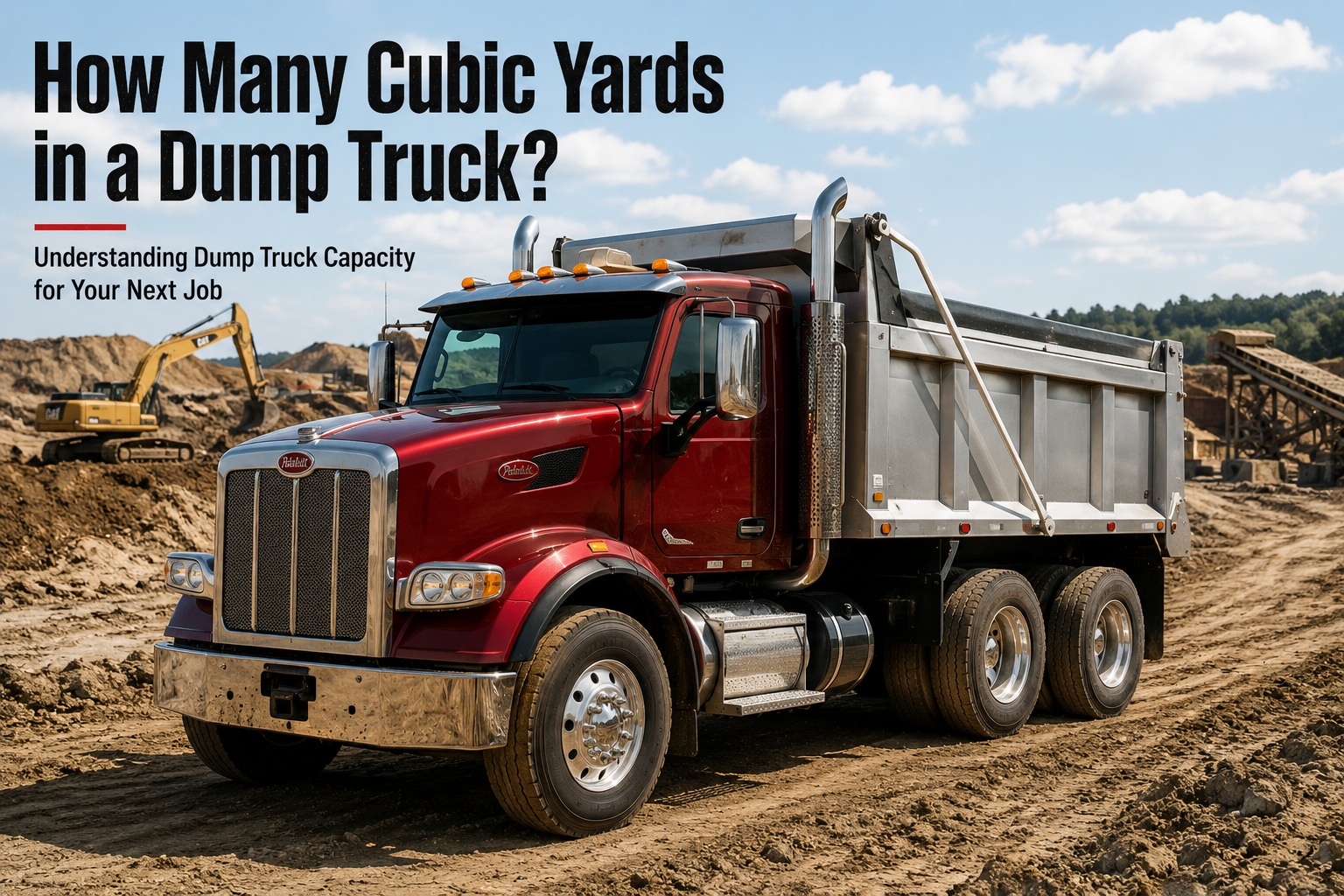
How Many Cubic Yards in a Dump Truck
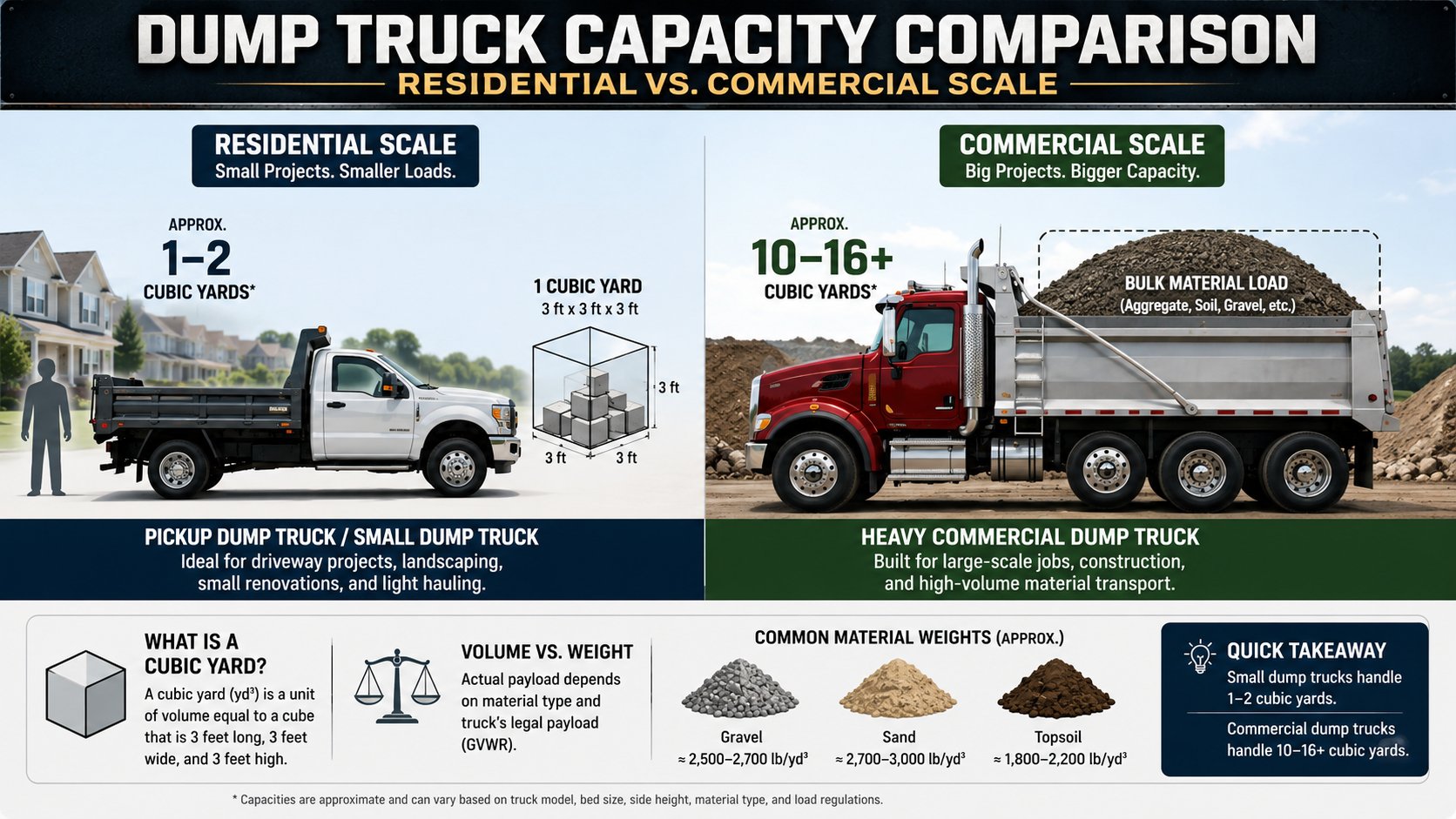
To put it simply, a "cubic yard" is just a block of space that measures 3 feet by 3 feet by 3 feet. As a rule of thumb, one cubic yard of material will pretty much fill the bed of a standard consumer pickup truck. However, dump trucks are built for heavy-duty commercial hauling, meaning their volume capacity is legally and physically tied straight to their gross weight ratings and your license requirements.
Do You Need a CDL to Drive a Dump Truck
This isn't a simple yes-or-no question. Whether you need a Commercial Driver's License (CDL) to operate a dump truck in the U.S. depends entirely on the vehicle's Gross Vehicle Weight Rating (GVWR). Let's lay out the real-world breakdown of how truck capacity, licensing, and actual hourly earnings line up in the industry:
| Truck Capacity / Classification | Typical Models | License Requirement | Average Driver Earnings (Real Market Rates) |
|---|---|---|---|
| Small / Light-Duty (2 to 4 Cubic Yards) | Chevy 3500 Flatbed Conversion, Ford F350/F450 1-ton dually rigs | Standard Driver's License (Non-CDL can legally operate) | Starting Out: Around $17 to $22 / hour. Mostly used for local topsoil deliveries, aggregate hauling, or residential/commercial lot snow plowing in the winter. |
| Medium-Duty (5 to 8 Cubic Yards) | Chevy Kodiak C4500/C5500, Ford F650, International CV Series | Class B CDL (Required if the vehicle's GVWR exceeds 26,000 lbs) | Steady Middle Ground: Around $20 to $28 / hour. Commonly seen in regional commercial aggregate fleets or municipal residential maintenance. |
| Heavy-Duty Commercial (10 to 16+ Cubic Yards) | Tri-Axle & Quad-Axle heavy haulers (Peterbilt, Kenworth, Mack) | Commercial Driver's License (CDL Class A or B) | Top-Tier Income:$30 to $35+ / hour working for a company; if you score a spot on union-backed or state/federally funded infrastructure projects (Prevailing Wage), your pay instantly jumps to $60 to $80 / hour. |
How Much Do Dump Truck Drivers Make
Looking at the breakdown above gives you a clear picture of the baseline. If you are a W2 company employee pulling a predictable wage, your take-home pay heavily depends on your location and experience. In high-cost-of-living regions or union strongholds like Chicago or the San Francisco Bay Area, veteran drivers start off making $30 to $34.50 an hour. When you factor in overtime, that time-and-a-half rate can easily hit $51+ per hour. On the extreme end, if you head up to remote haul roads or mines in Alaska to drive massive, multi-ton rigid off-road dump trucks, you can clear $80,000 to over $100,000+ a year without sweating.
How Much Do Dump Truck Owner Operators Make
That kind of cash sounds incredible, right? That is exactly why countless drivers take the plunge, drop their savings, and buy a truck to go into business for themselves. Independent owner-operators running their own rigs can generate jaw-dropping gross revenue. Out in the open market, they easily command $65 to $90 an hour. Many operators hauling hot asphalt or clearing heavy commercial parking lots during winter storms push their rates all the way to $115 or $150 an hour. Plus, most veterans enforce a "6-hour minimum" rule, meaning just turning the key ensures a guaranteed $690 minimum payout for the day.
However, the veteran haulers over on the Reddit Trucking Community are quick to offer a brutal reality check: "Never mistake gross revenue for net profit." An owner-operator bringing in a massive $150,000 to $280,000 a year in total gross income has to turn around and pay out of pocket for insane fuel costs, commercial insurance, and expensive engine breakdowns. Once the dust settles, their actual take-home net profit often hovers right around $20 to $30 an hour. In the trucking game, survival isn't about how much you gross—it's about how much you actually keep!
How Much Is a Dump Truck
If you want to run your own show, you need an asset first. Shopping the used market for a traditional, work-ready medium-duty truck—like an older Chevy Kodiak C4500—will require a baseline investment starting around $25,900 or more just to get rolling.
Unfortunately, the purchase price is only your first step down a financial rabbit hole. Because dump trucks spend their lives crawling through deep mud on construction sites, traversing jagged concrete ruins, or working under heavy stress in freezing winter storms, components wear out fast. Independent owners report that keeping a working rig mechanically sound easily racks up $50,000 a year in pure maintenance and repair bills!
On top of that, these rigs are absolute gas hogs. Hauling max payloads at low speeds means annual diesel costs routinely land between $30,000 and $50,000 (burning roughly $80 to $110 in fuel every single working shift). Toss in a fresh set of drive tires at $3,200, and these running costs can easily push a newly minted owner-operator straight into bankruptcy if they aren't prepared.
How Much Is Dump Truck Insurance
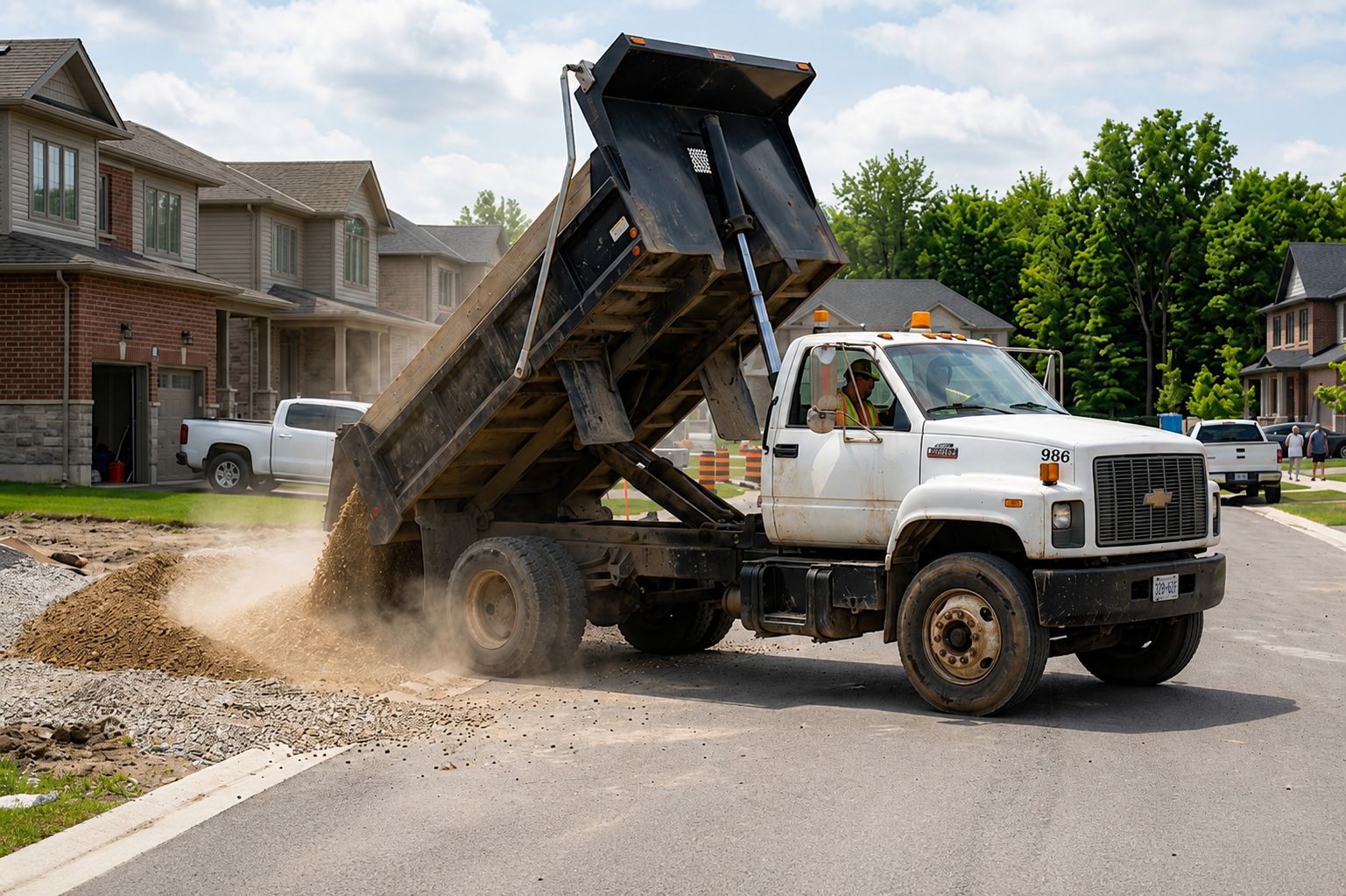
Beyond fuel and wrenching, the next inevitable financial hurdle you have to face is commercial coverage. Because dump trucks carry massive gross weights and operate in high-risk zones like tight jobsites or blinding midnight blizzards, insurance premiums are steep. The average cost for commercial dump truck liability insurance in the U.S. sits around $8,200 a year. No matter if you have a slow month with zero contracts, that insurance bill is due like clockwork, slicing away a massive chunk of an owner-operator's cash reserve.
How to Cut Operating Costs?
With overhead expenses running this high, how do the veteran owner-operators stay afloat and pull in serious profits year after year? They rely on four proven, money-saving strategies:
How Much Does It Cost to Rent a Dump Truck?
For a driver who is tight on cash or just breaking into the local hauling market, taking out a massive loan to buy a commercial rig introduces dangerous financial risk. Industry veterans will tell you to protect your capital and look into commercial rentals instead.
Right now, the going market rate to rent a medium- or heavy-duty dump truck runs around $80 to $120 an hour, or roughly $350 to $500 a day. The ultimate advantage here is running a lean, asset-light operation. You only rent the truck when you have a locked-in contract or a massive winter storm forecast on the horizon. This strategy completely bypasses the tens of thousands needed for an upfront vehicle purchase, eliminates the ongoing pressure of paying for year-round how much is dump truck insurance, and completely shields you from sudden, catastrophic engine repair bills. The rental company eats all the risk.
DIY Dump Bed Conversion on an Old Pickup Saves $17,000
If you already happen to have a 1-ton dual-rear-wheel pickup sitting in your driveway—such as a legendary 2006 Chevy 3500 powered by the 6.6L LBZ Duramax diesel—don't bother buying an old, worn-out Kodiak commercial truck on the used market. Those older dedicated commercial trucks offer terrible ride quality, and tracking down replacement OEM parts can be an absolute nightmare.
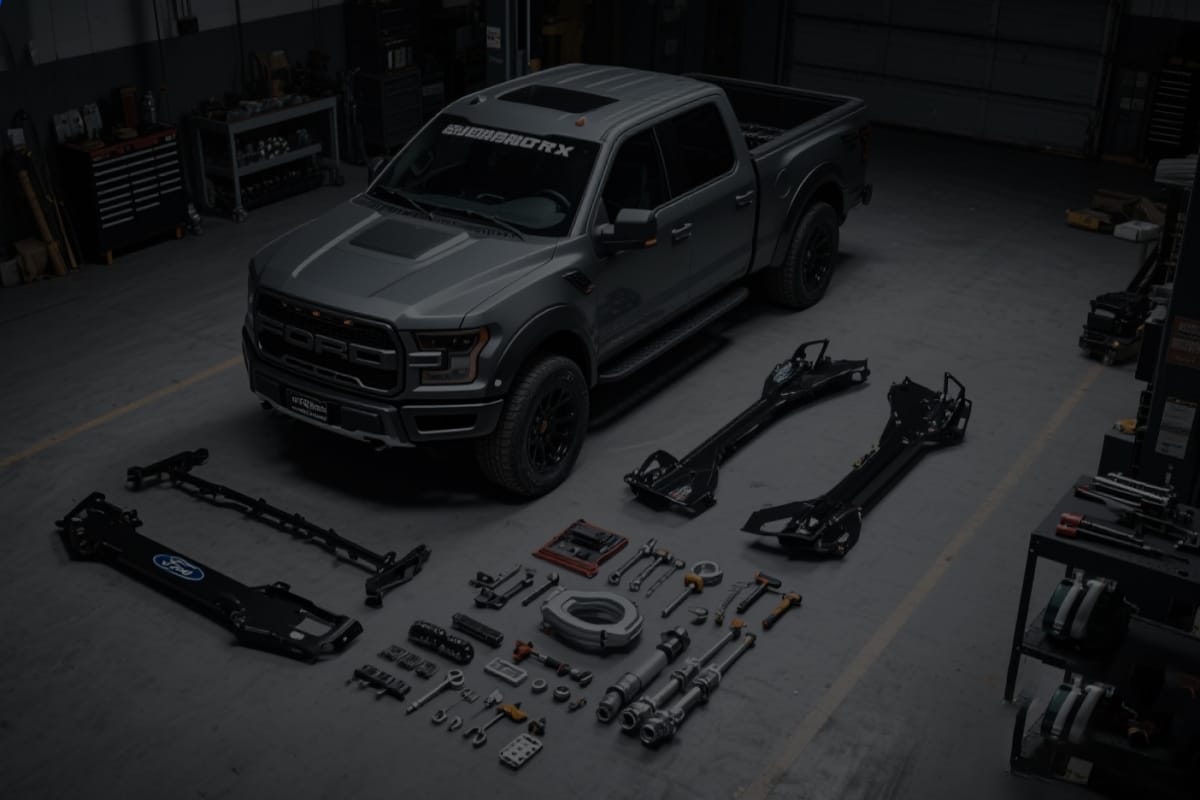
Instead, savvy fleet builders yank off the factory sheet metal pickup bed and buy an aftermarket steel flatbed dump kit equipped with a hydraulic hoist piston. Slap on some custom wooden side boards to increase your yardage capacity, bolt a salt spreader onto the tailgate, and you are ready to work. Sourcing the materials and performing the DIY flatbed dump conversion yourself typically costs between $7,000 and $9,000 total.
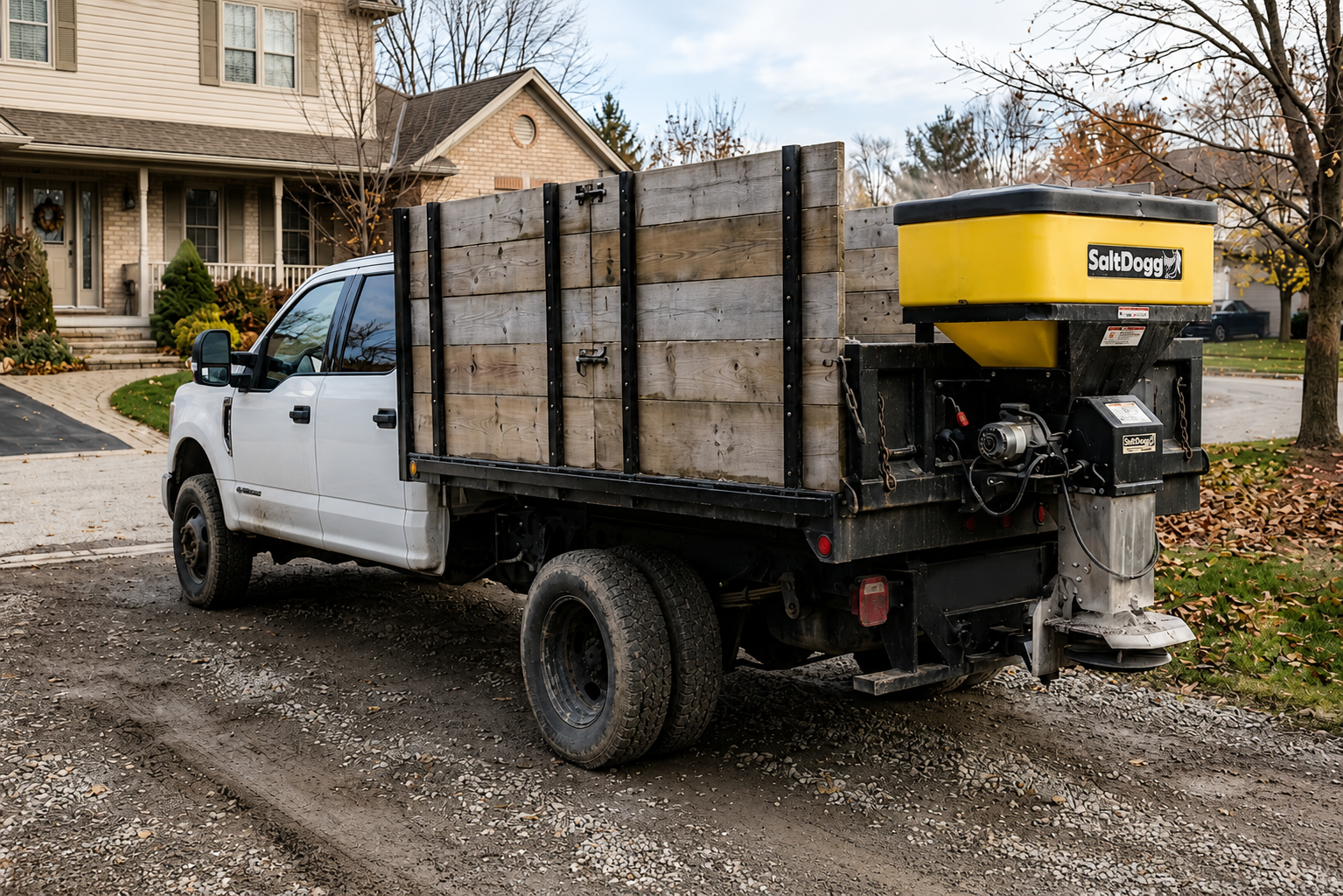
This single DIY move keeps over $17,000 of hard cash sitting in your bank account to use as liquid operating capital. Better yet, a nimble 1-ton truck can easily navigate tight residential driveways and compact commercial parking lots where a massive commercial tri-axle truck could never fit—allowing you to score high-margin localized accounts with incredible returns. If you want to see exactly how one North American fleet builder executed this blueprint before the winter rush, check out our step-by-step field guide: How to Build a Dump Truck for Snow Removal Using a Chevy 3500.
Eliminate Engine Downtime by Deleting Factory EGR, DPF, and CCV Systems
If you're already running a converted 1-ton pickup dump truck, slicing those five-figure annual repair bills requires dealing with your diesel engine's factory bottlenecks. Dump trucks spend most of their operational lives crawling across rough jobsites or idling endlessly to keep the cab warm during winter plowing operations—which is a worst-case scenario for a modern diesel engine. At prolonged low RPMs and low exhaust temperatures, factory emission control systems (EGR, DPF, and CCV) generate massive, aggressive soot accumulation.
Once these fragile emission components get choked out by carbon or suffer cracked hardware, the engine control module instantly triggers Limp Mode, cutting your speed and torque down to a measly 30%. Imagine losing your engine right during peak hours of a massive blizzard when you are billing by the hour—that sudden downtime can cost you thousands in lost contracts. To bulletproof their income, independent operators running in off-road, closed-course, or exempted vocational environments opt for hardware reliability upgrades:
- Eliminate Factory EGR Failures: OEM EGR coolers are notorious for cracking internally during extreme winter temperature swings. Swapping them out for heavy-duty, high-flow EGR delete kits keeps your engine breathing clean, blocking dirty, abrasive soot from entering the combustion chambers entirely.
- End DPF Clogging & Regen Hell: Because vocational dump trucks spend hours idling or creeping at low speeds, exhaust temps never get hot enough for the Diesel Particulate Filter (DPF) to burn off trapped carbon. This forces the truck into constant, fuel-guzzling active "Regen" cycles, destroying your fuel economy. If the filter chokes out completely, a trip to the dealer for manual baking or a replacement OEM filter drops a devastating $2,000 to $5,000 bill right in your lap. Integrating an aftermarket DPF delete pipe along with a clean tune clears out your exhaust path, instantly improves fuel economy by over 10%, and permanently defuses a mechanical ticking time bomb.
- Stop Turbo Sludge Accumulation: The factory Closed Crankcase Ventilation (CCV) re-routes oily crankcase vapors directly back into your turbo inlet. When that wet oil mist collides with dry EGR soot, it forms a thick, asphalt-like tar sludge inside your intake tract that erodes expensive turbo compressor blades. Installing a dedicated CCV/PCV Reroute Kit vents those wet oil vapors safely away from your clean air track, to wipe out your fleet's biggest hidden maintenance vulnerabilities.
Strategy 4: Obtain a CDL and Join a Union or Prevailing Wage Fleet
If you look at the reality of buying equipment, dealing with high repair bills, navigating custom fabrication, and paying massive monthly insurance premiums and realize it's just too much stress, there is a highly lucrative alternative. You can choose to eliminate all overhead and bankruptcy risks by going the corporate or union route.
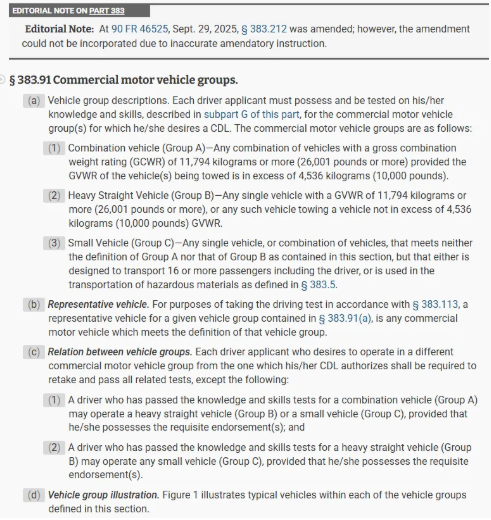
All it takes is studying up to secure a commercial driver's license by passing your state's FMCSA Commercial Driver's License (CDL) Exam for a Class A or Class B credential. Make sure to clear your Air Brakes Endorsement, maintain a clean driving record, and pass your regulatory DOT Medical Card Physical. With those credentials in hand, you can walk straight into major union fleets or heavy civil contractors handling federally funded highway expansions. You don't have to spend a single dime on equipment, tires, or fuel, yet you get to pilot top-tier heavy machinery while taking home a guaranteed $60 to $80 an hour in Prevailing Wage pay alongside excellent health and retirement benefits. (Of course, whether there are other hidden personal or lifestyle costs in corporate fleet work is a whole different conversation!)

Conclusion
At the end of the day, how many cubic yards a dump truck holds operates like a direct financial lever over your gross earning potential. But in this heavy-duty blue-collar industry, total gross doesn't mean much—what really matters is how much net profit you actually keep in your wallet. Whether you decide to pull a union card to drive a 16-yard tri-axle rig or build out a nimble 4-yard light-duty pickup conversion for local contracts, mastering your operating costs is the secret to staying profitable. By prioritizing proactive powertrain modifications and eliminating fragile emission components before they can trigger a shutdown, you can ensure your truck stays out on the jobsite bringing in revenue.