 Contents
Contents
- 6.7 Cummins HP & Torque by Year / Generation Overview
- 6.7 Cummins Horsepower and Torque: What Changed in Each Era?
- Standard Output (S.O.) vs. High Output (H.O.) 6.7 Cummins
- Core Technologies That Affect 6.7L Cummins Horsepower
- How to Increase 6.7 Cummins Horsepower: Modification Potentials
- Which 6.7 Cummins Horsepower Version Is Right for You?
- Conclusion
- FAQs
If you are considering buying a Ram heavy-duty pickup, or if you already own a 6.7L Cummins diesel engine, the question you most likely want to ask is: "How much horsepower does a 6.7 Cummins have?" The short answer is: the 2025–2026 High Output 6.7L Cummins turbo diesel engine can produce 430 horsepower and 1,075 lb-ft of torque, making it the most powerful factory 6.7L engine ever offered in a Ram 2500 or 3500 series pickup. But as every diesel enthusiast knows, the full answer is far more than just one number. Since its debut in 2007.5, the 6.7 Cummins has undergone a major evolution—horsepower increased from 350 to 430, torque broke through the 1,000 lb-ft mark, and emissions technology became increasingly complex. This article will cover everything from year-by-year specs, Standard Output vs. High Output versions, core technologies, and modification potential.
6.7 Cummins HP & Torque by Year / Generation Overview
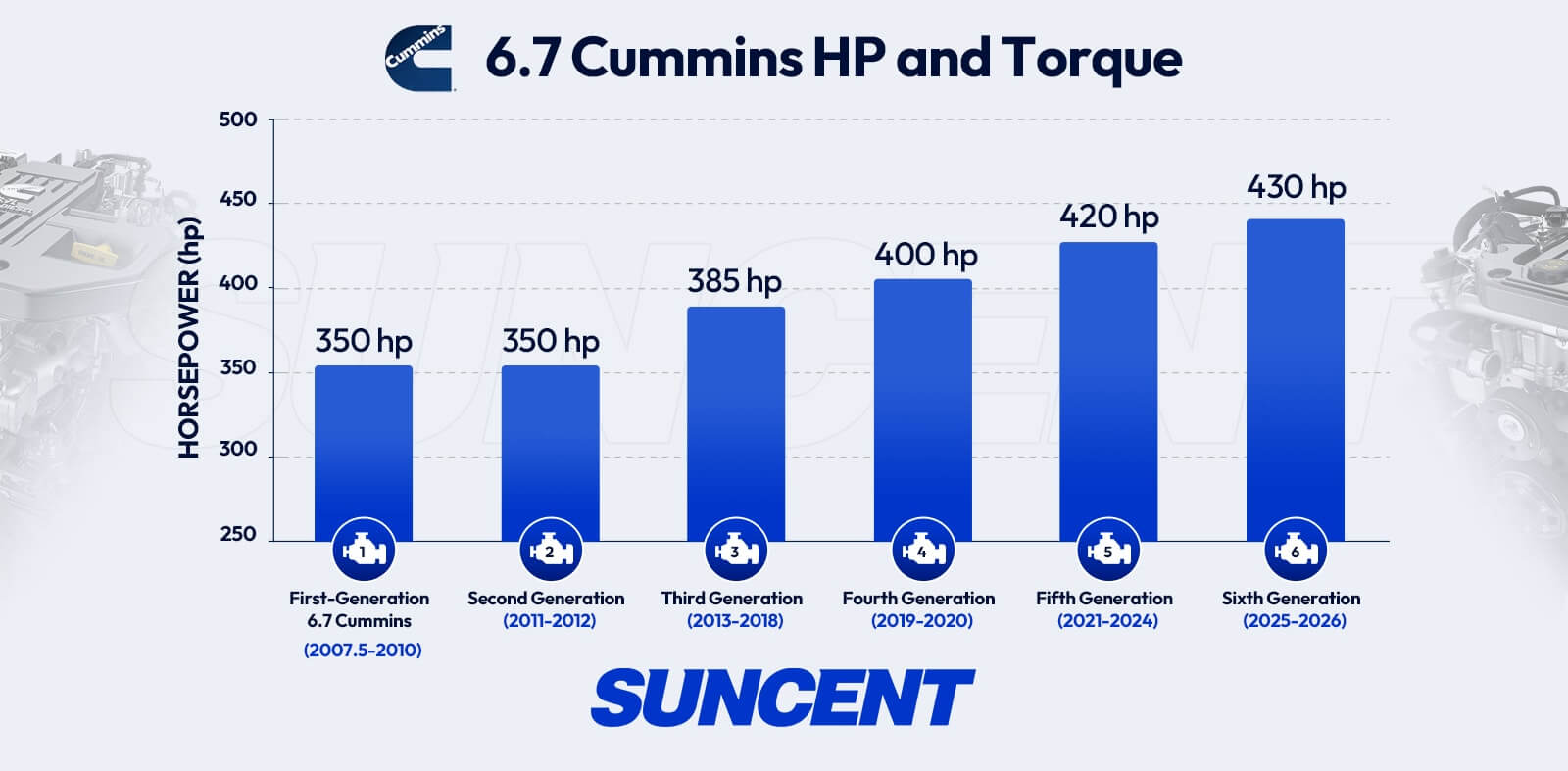
| Generation | Years | Horsepower | Torque |
| First-Generation 6.7 Cummins | 2007.5–2010 | 350 hp | 650 lb-ft |
| Second Generation | 2011–2012 | 350 hp | 800 lb-ft |
| Third Generation | 2013–2018 | 385 hp | 850–930 lb-ft |
| Fourth Generation | 2019–2020 | 400 hp | 1,000 lb-ft |
| Fifth Generation | 2021–2024 | 420 hp | 1,075 lb-ft |
| Sixth Generation | 2025–2026 | 430 hp | 1,075 lb-ft |
6.7 Cummins Horsepower and Torque: What Changed in Each Era?
1. 2007.5–2010: The Beginning of the Emissions Revolution
In 2007.5, Ram HD transitioned from the classic 5.9L Cummins to the 6.7L Cummins. Early stock 6.7 Cummins horsepower was about 350 hp with 650 lb-ft of torque – a solid start for the platform. Compared with the 5.9L, the 6.7L had larger displacement and stronger low-end torque. To meet strict U.S. EPA emissions standards, Cummins introduced the DPF, or diesel particulate filter, and EGR, or exhaust gas recirculation. As for technical changes, bore and stroke increased, and VGT, or variable geometry turbocharging, was introduced. The VGT not only improved response speed but also provided exhaust brake functionality, which was revolutionary at the time.
For used-truck buyers, the advantage of the early 6.7L is its relatively lower price and mature platform. The downside is that the emissions system and early calibration may require more attention.
2. 2011–2012: The Major Torque Increase Era
The focus of the 2011–2012 model years was not a major horsepower increase, but a significant torque increase. Representative output was about 350 hp / 800 lb-ft. This shows that the 6.7 Cummins was becoming increasingly focused on heavy-duty towing rather than simply chasing horsepower.
For American owners towing RVs, horse trailers, equipment trailers, or gooseneck trailers, the torque increase was more meaningful in real-world use than the horsepower number.
3. 2013–2018: The Arrival of SCR and Aisin
2013 was a turning point. Ram began offering the Aisin AS69RC heavy-duty transmission, which allowed torque to exceed 850 lb-ft for the first time and established the position of the "High Output" version. At the same time, to further optimize emissions and improve efficiency, SCR, or selective catalytic reduction, was introduced starting in 2013, requiring DEF, or diesel exhaust fluid.
For daily towing, the 2013–2018 6.7 Cummins was already very strong. However, from a maintenance perspective, components such as EGR, DPF, SCR, DEF, and NOx sensors could also become part of the long-term ownership cost.
4. 2019–2020: CGI Block and Thousand-Pound-Feet Torque
In 2019, Cummins gave the engine its biggest redesign since 2007. The core upgrade was the use of a CGI, or compacted graphite iron, block, which offered higher strength while reducing weight by about 60 pounds. Output reached 400 hp / 1,000 lb-ft, breaking the thousand-pound-feet torque barrier for the first time. At the time, this was the highest horsepower 6.7 Cummins available from the factory.
Note: The fourth generation, 2019–2020, used the Bosch CP4.2 fuel pump, which has a higher risk of failure. Used buyers should be cautious.
5. 2021–2024: CGI Block and Thousand-Pound-Feet Torque
Starting in 2021, the High Output, or HO, version saw torque further increase to 1,075 lb-ft, while horsepower reached 420 hp. The Standard Output, or SO, version remained at 370 hp / 850 lb-ft. This generation also replaced the older intake grid heater with a glow plug system, improving cold-start reliability. The fuel pump also returned to the more reliable CP3 pump. This generation achieved a strong balance among power, reliability, and daily drivability.
6. 2025–2026: The Latest 430 hp High Output Version
Starting with the 2025 model year, Cummins introduced the next-generation 6.7L Turbo Diesel Pickup Engine System for the 2025 Ram Heavy Duty. Official information lists the pickup High Output version at 430 hp / 1,075 lb-ft, while the Chassis Cab version is rated at 360 hp / 800 lb-ft. Cummins also noted that the horsepower increase for the 2025 model year is not just about the number itself, but also about optimizing the engine to work with the gear ratios of the 8-speed transmission.
Standard Output (S.O.) vs. High Output (H.O.) 6.7 Cummins
Many users searching for 6.7 Cummins horsepower will find inconsistent numbers: some sources list 370 hp, while others list 400 hp, 420 hp, or 430 hp. The reason is that the 6.7 Cummins is commonly divided into Standard Output and High Output versions across different years and models. The biggest difference between the two is not the engine itself, but the paired transmission and maximum pressure values.
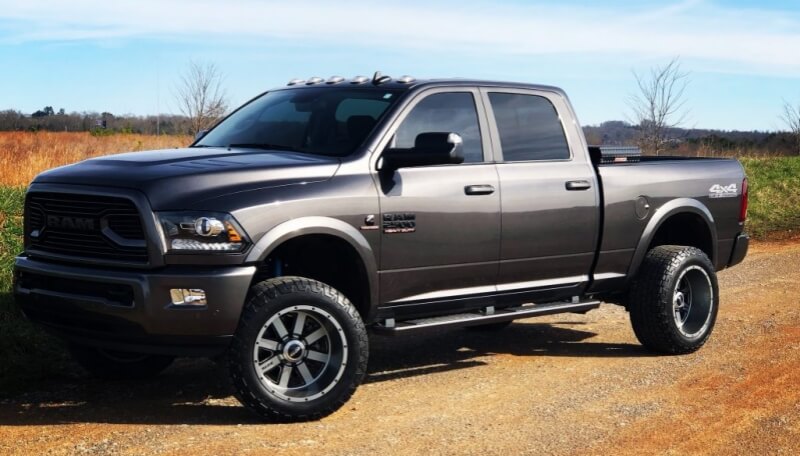
Standard Output: Usually found in the Ram 2500 and paired with the 68RFE transmission. Its horsepower is moderate and sufficient for daily commuting and medium-duty towing.
High Output: Offered only in Ram 3500 and higher models, and required to be paired with the Aisin transmission. The H.O. version has higher turbo boost pressure and different fuel injection strategies, specifically designed for extreme towing over 30,000 pounds.
The Chassis Cab version is usually found in the Ram 3500/4500/5500 Chassis Cab. Its output is usually lower than the pickup HO version, but it places more emphasis on commercial durability and sustained load operation.
Core Technologies That Affect 6.7L Cummins Horsepower
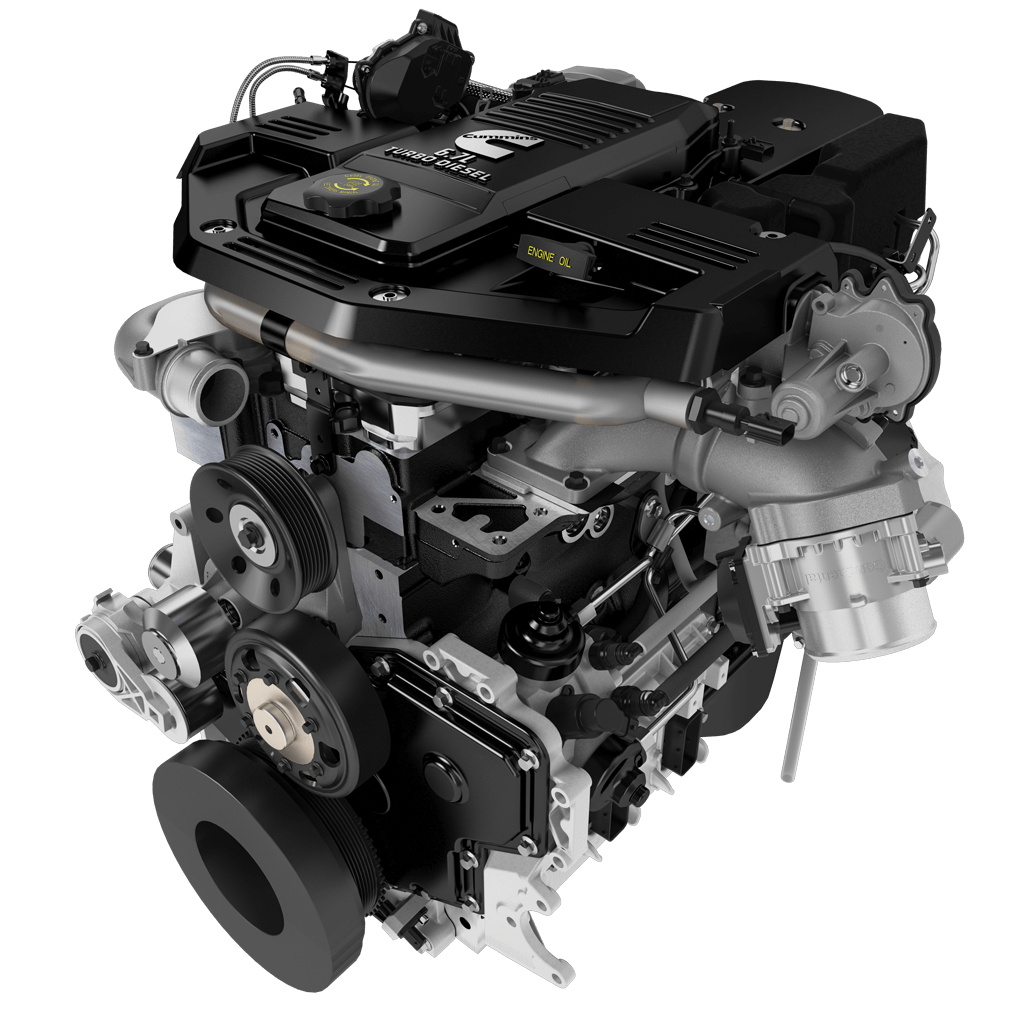
VGT Turbocharger: By changing the cross-sectional area of the exhaust flow path, it provides quick boost at low rpm and reduces exhaust backpressure at high rpm.
High-Pressure Common-Rail Fuel System: Modern Cummins engines use extremely high-pressure fuel injection systems, over 29,000 PSI, to ensure excellent fuel atomization and more efficient combustion and stronger power output.
Engine Computer (ECU) Tuning: The output of modern engines is heavily limited by software. Manufacturers protect the transmission and drivetrain by limiting the torque curve.
Emissions Systems: EGR, DPF, SCR, and DEF all affect engine thermal management, exhaust backpressure, regeneration cycles, and long-term maintenance.
Transmission Matching: The actual output of the 6.7 Cummins is affected by how much torque the transmission can handle.
Cooling System: High-horsepower diesel engines generate a large amount of heat while towing. The cooling system affects not only engine life but also sustained power delivery—that is, whether the engine can maintain stable output during long uphill climbs or heavy towing.
How to Increase 6.7 Cummins Horsepower: Modification Potentials
The 6.7L Cummins is often called a "performance monster" because of its high level of hardware overhead. Owners can achieve significant power gains with relatively moderate investment. Below is a staged upgrade plan for users pursuing performance beyond stock levels.
Stage 1: ECU Flashing / Performance Module (+80–150 hp)
The fastest and most cost-effective way to increase horsepower is to recalibrate the ECU through a handheld tuner or plug-and-play performance module. Platforms such as EZ LYNK provide comprehensive tuning systems. For pre-2013 trucks, a simple "delete tune" can increase power by 80–120 hp by turning off emissions-related fuel limits—because early 2007–2012 trucks did not have DEF and had fewer electronic restrictions, tuning is the simplest on these models.
Stage 2: Cold Air Intake + Exhaust + Tuning (+120–200 hp)
After ECU tuning, the next bottleneck is airflow. The factory intake kit and exhaust system are designed for quiet operation and emissions compliance, not maximum flow. Upgrading to a high-flow cold air intake can reduce intake air temperature and increase airflow.
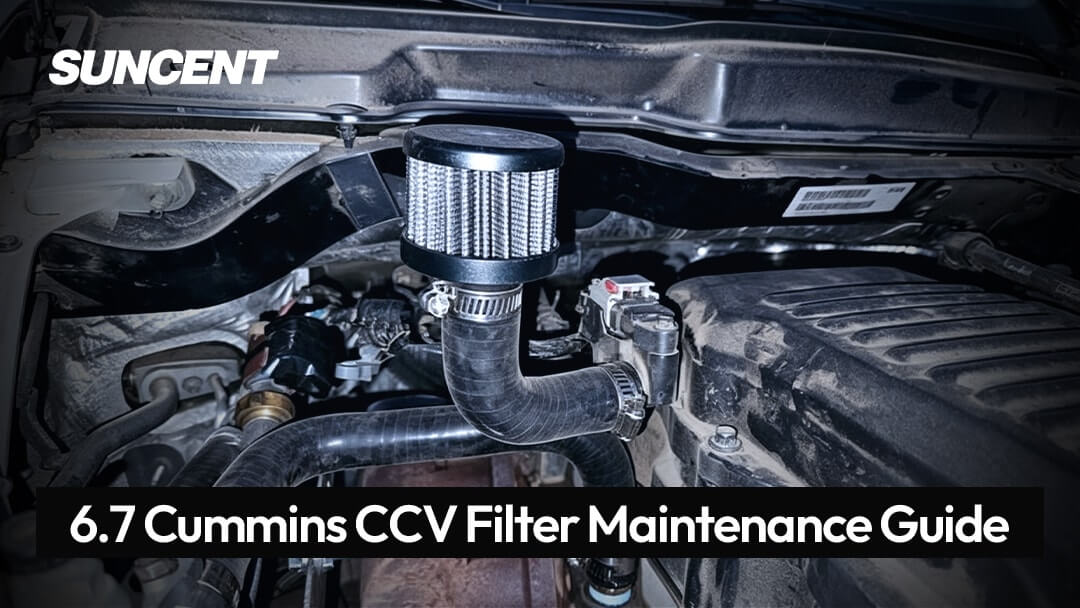
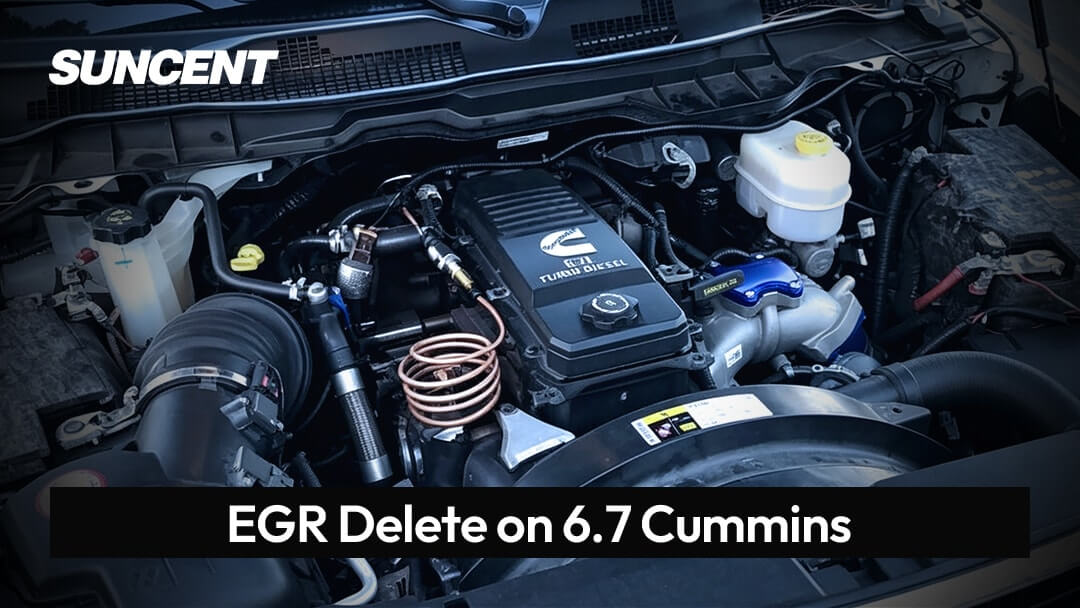
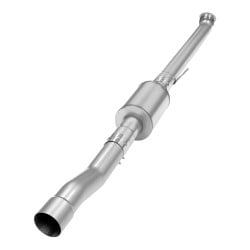
On the exhaust side, owners chasing maximum performance usually choose a straight pipe, paired with 4-inch or 5-inch turbo-back exhaust, greatly reducing exhaust backpressure and allowing the engine to breathe more freely. Going further, DPF Delete, and EGR Delete can completely remove restriction from the aftertreatment system while also avoiding high temperatures and fuel dilution caused by regeneration cycles. In addition, CCV Delete can route oil vapor out of the intake tract, reducing carbon buildup in the intercooler and intake manifold. Over the long term, this helps maintain intake efficiency and turbo response.
For 2013–2018 trucks, removing the DPF/DOC/SCR assembly, installing a straight pipe, and pairing it with race-level ECU tuning (by using an all-in-one delete kit) can greatly improve power and throttle response. A 5-inch exhaust is especially popular among Ram 3500 owners, significantly increasing flow under heavy load and producing the deep exhaust tone diesel enthusiasts like.
For our loyal blog readers, we're offering a 12% discount coupon code: BLOG12. Simply copy and use it!
Stage 3: Turbo Upgrade + Fuel System + Built Transmission (500+ hp to 1,200+ hp)
Beyond simple bolt-on modifications, major power increases require a larger investment. Upgrading the turbocharger—for example, using a VGT with a forged-milled compressor wheel or a compound turbo setup—can increase airflow and reduce turbo lag. On the fuel system side, upgrading to a dual CP3 pump kit or converting the problematic CP4.2 pump back to a CP3, especially for 2019–2020 trucks, can ensure the injection system can meet the increased demand. At these power levels, 600+ hp, the factory 68RFE transmission becomes a weak point. An upgraded torque converter, valve body, and internal components—or a swap to a built AS69RC—are needed to reliably send power to the wheels.
For most owners, Stage 1 or Stage 2 modifications, 500–650 wheel horsepower, provide the best balance: a significant performance increase without sacrificing reliability or daily drivability, while staying within the engine's safe operating range.
Which 6.7 Cummins Horsepower Version Is Right for You?
| User Type | Recommended Year Range | Reason |
| Budget buyer | 2007.5–2012 | Relatively low price and sufficient power, but emissions-system maintenance should be watched |
| Daily towing user | 2013–2018 | Stronger torque, more choices, suitable for RV and trailer users |
| User who wants 1,000 lb-ft | 2019–2020 | Entered the 1,000 lb-ft era, with a more modern platform |
| Buyer seeking strong factory HO power | 2021–2024 | 420 hp / 1,075 lb-ft, attractive in the used market |
| Buyer who wants the latest factory output | 2025–2026 | 430 hp / 1,075 lb-ft, paired with the new 8-speed automatic transmission |
| Commercial Chassis Cab user | 3500/4500/5500 Chassis Cab | Output is usually lower, but better suited for sustained commercial loads |
Used 6.7 Cummins Buying Guide: Years to Consider and Avoid
If you are shopping for a used 6.7L Cummins, many experts believe the 2013–2018 models strike the best balance among reliability, power, and tuning potential. These trucks have an SCR system, making them cleaner than pre-2013 models, but they are still relatively easy to modify, and the Aisin transmission option is far more durable than the 68RFE under heavy use.
For buyers who prioritize tuning simplicity, the 2007.5–2012 models, with no SCR and only a CP3 pump, remain very popular in the diesel community despite their older interiors and less refined emissions systems.
Caution: 2019–2020 – Bosch CP4.2 pump failure risk.
Sweet spot: 2021–2024 – CP3 pump returned, higher power (420 hp), avoids CP4 flaw.
Newest: 2025+ – Most powerful stock (430 hp), advanced emissions, fewer tuning options currently.
Conclusion
From 610 lb-ft in 2007 to more than 1,000 lb-ft today, the horsepower evolution of the 6.7L Cummins is a history of modern diesel technology development. Whether you are looking for a durable work truck or want to build a high-performance race truck, the 6.7L Cummins remains one of the most reliable options on the market today.
Tell us in the comments: what year is your 6.7 Cummins? What modifications have you done? Sharing your real-world experience can help other diesel owners make better decisions. If you are shopping for a used 6.7L or planning your next upgrade, be sure to carefully check the maintenance records—especially for 2019–2020 models equipped with the CP4 pump.