 Contents
Contents
- Quick Answer
- How Much Does It Cost to Replace an EGR Valve on Average?
- EGR Valve Replacement Cost by Vehicle Type
- EGR Valve Parts Cost vs Labor Cost
- Key Factors That Affect the EGR Valve Replacement Cost
- Why Is EGR Valve Replacement So Expensive?
- Signs You May Need to Replace EGR Valve
- How to Replace an EGR Valve? (Brief Procedure)
- EGR Valve: Clean or Replace?
- Clean, Repair, or Replace: Which Costs Less?
- How to Extend the Life of the EGR Valve? Maintenance Tips
- Extra: Will EGR Delete Solve the Problem?
- FAQs
- Conclusion
If your car's check engine light comes on, or a repair shop tells you that you need to replace the EGR valve, the first question you usually ask is not about how it works, but: how much will it cost? The EGR valve is essentially an exhaust gas recirculation valve. It redirects a portion of exhaust gas back into the intake system to reduce combustion temperature, thereby reducing nitrogen oxide (NOx) emissions. Understanding the EGR valve replacement cost, failure symptoms, and maintenance methods can not only help you save money, but also extend the life of your engine.
Updated on Jul 2, 2026 by SuncentAuto Staff with expanded EGR valve replacement cost ranges, diesel repair cost factors, DIY vs mechanic comparisons, DPF-related cost notes, and clean-or-replace guidance.
Quick Answer
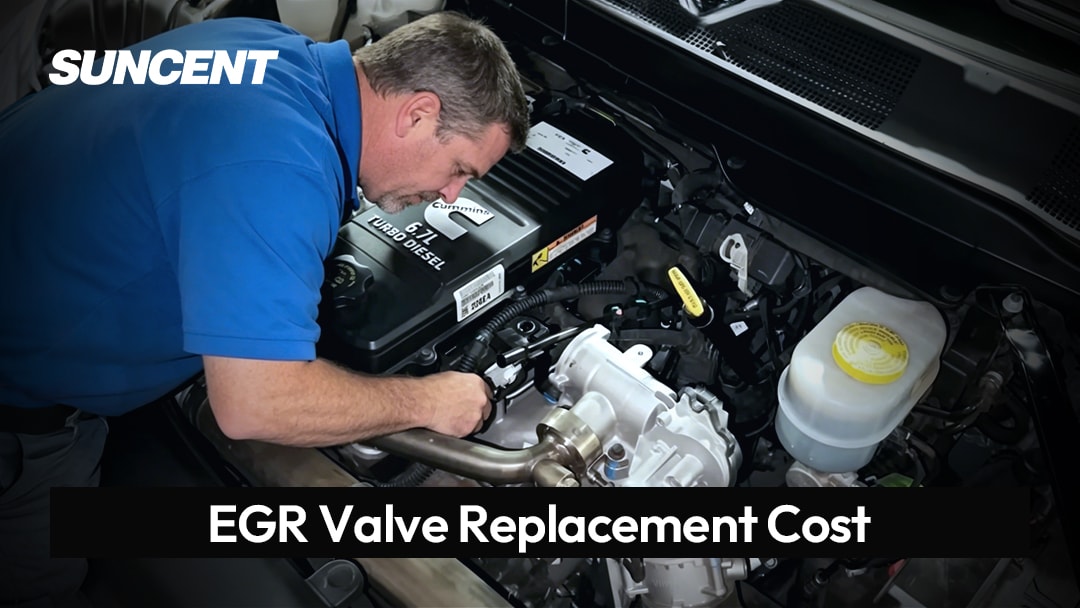
The average EGR valve replacement cost usually ranges from about $150 to $850 for many passenger vehicles. Diesel trucks, luxury vehicles, heavy-duty pickups, or engines with EGR coolers can exceed $1,000 because the job may involve extra labor, carbon cleaning, sensors, coolant lines, or related emissions-system checks.
If the valve is easy to reach, DIY replacement may only require the EGR valve price, gasket, and basic tools. If the valve is buried under intake parts or connected to a diesel EGR cooler, professional labor can make the repair much more expensive.
How Much Does It Cost to Replace an EGR Valve on Average?
According to 2026 market data, the average EGR valve replacement cost for most passenger vehicles is as follows:
Parts: $50 - $450
Labor: $100 - $400
Total: $150 - $850+
Note: The total cost for high-end pickups or high-performance diesel vehicles may exceed $1,000.
EGR Valve Replacement Cost by Vehicle Type
The numbers below give a practical way to compare EGR valve cost by vehicle type. The final price can still change based on your location, labor rate, part quality, and whether the EGR passage or related emissions components need extra work.
| Vehicle Type | Estimated Cost | Why the Cost Changes |
|---|---|---|
| Gasoline cars | $150–$600 | Parts are usually cheaper, and the valve is often easier to access. |
| Light trucks and SUVs | $250–$850 | Labor time may increase because of tighter engine bays or added intake components. |
| Diesel trucks | $500–$1,500+ | EGR coolers, soot buildup, coolant lines, and emissions components can increase parts and labor. |
| Luxury or imported vehicles | $600–$1,200+ | OEM parts, diagnostic time, and higher labor rates can raise the final bill. |
EGR Valve Parts Cost vs Labor Cost
When comparing estimates, separate the EGR valve price from labor and related repairs. A low-cost part can still turn into a high total bill if access is difficult or if carbon cleaning is required.
| Cost Item | Typical Range | What It Includes |
|---|---|---|
| EGR valve part | $50–$450+ | The replacement valve itself. Diesel, electronic, or OEM valves usually cost more. |
| Gasket and hardware | $10–$60 | New gasket, seals, bolts, or small hardware that should not be reused. |
| Labor | $100–$400+ | Time to access, remove, clean, install, and test the EGR valve. |
| Related cleaning or repairs | $50–$500+ | EGR passage cleaning, sensor inspection, cooler checks, or additional diagnostics. |
Key Factors That Affect the EGR Valve Replacement Cost
1. Vehicle Brand and Model
Ordinary family cars have relatively simple structures, clearly accessible EGR valve locations, and more affordable part prices, so the overall replacement cost is usually lower. In contrast, if it is a luxury brand, imported model, heavy-duty pickup, or commercial diesel vehicle, repair costs often increase significantly due to higher part prices and more complex structures.
2. EGR Valve Type
Some vehicles use relatively simple mechanical EGR valves, while others are equipped with electronically controlled EGR valves, or even systems linked with coolers, sensors, or more complex emissions control modules. The replacement cost of electronic EGR valves is usually higher because they contain more complex components and electronic control systems.
3. Part Quality
When replacing an EGR valve, owners usually choose between OEM parts, aftermarket parts, and parts from different brands. OEM parts are usually more expensive, but offer better fitment and reliability; aftermarket parts are cheaper, but may vary in durability and compatibility.
4. Whether Related Repairs Are Involved
Sometimes the problem is not just the EGR valve itself. It may also involve carbon buildup blockage, contaminated EGR passages, cooler failure, or sensor fault codes. If additional cleaning or related repairs are needed, the total cost will increase further.
On diesel vehicles, the wider emissions system can also affect repair decisions. If the truck has DPF warnings, repeated regeneration problems, or soot-related issues at the same time, it may help to compare the DPF filter cleaning cost before replacing parts blindly.
5. Gasoline vs Diesel Vehicles
Generally speaking, diesel engines are more prone to carbon buildup and have more complex structures, so the replacement cost is generally higher than for gasoline vehicles.
Why Is EGR Valve Replacement So Expensive?
EGR valve replacement can become expensive when the valve is difficult to access, the bolts are rusted, the EGR passage is packed with carbon, or the vehicle uses a diesel EGR cooler and related emissions components. In many cases, the repair bill includes more than the valve itself.
- The EGR valve may be buried under intake parts or engine covers.
- Diesel engines may require EGR cooler, coolant line, or sensor inspection.
- Carbon buildup may require manual cleaning before the new valve is installed.
- Rusty bolts or stuck gaskets can add labor time.
- Related codes may require additional diagnostics after replacement.
If the issue is part of a larger diesel emissions problem, DPF restriction can also add cost or diagnostic time. For a wider repair comparison, see our guide to DPF cleaner vs professional cleaning vs delete kit.
Signs You May Need to Replace EGR Valve
If your vehicle shows the following signs, the EGR valve may have a problem:
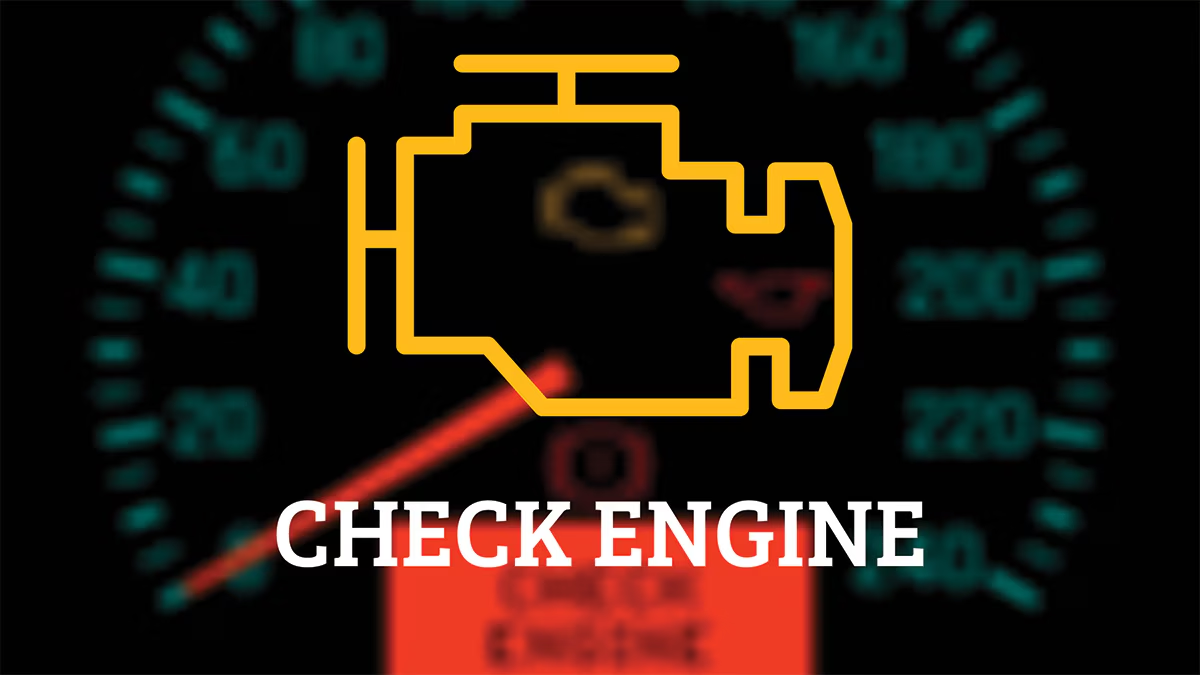
Check engine light comes on: Common codes include P0401 (insufficient flow) or P0402 (excessive flow).
Rough idle: The valve gets stuck open, causing too much exhaust gas to enter, making the engine prone to stalling.
Reduced fuel economy: Combustion efficiency drops, and fuel consumption increases noticeably.
Poor acceleration or knocking: A stuck valve causes the air-fuel mixture to become unbalanced, and you may hear a "clicking" sound during acceleration.
Black smoke from diesel vehicles: The diesel engine EGR valve gets stuck in the closed position, causing combustion chamber temperatures to become too high and increasing particulate formation.
How to Replace an EGR Valve? (Brief Procedure)
If you have some DIY hands-on ability, you can refer to the following steps:
Step 1. Safety preparation: Make sure the engine is completely cool. Disconnect the negative battery cable (to prevent accidental short circuits).
Step 2. Locate the EGR valve: Follow the intake manifold to find the EGR valve—usually a metal cylindrical or square component, with one or two metal pipes connected to the exhaust manifold.
Step 3. Remove accessories: Remove the intake pipe, wiring harness bracket, and other components covering the EGR valve.
Step 4. Disconnect connections: Unplug the electrical connector on the EGR valve. If it is a vacuum-controlled type, disconnect the vacuum hose.
Step 5. Remove the mounting bolts: Usually there are 2–4 bolts. Use a socket wrench to loosen them, taking care not to drop the bolts.
Step 6. Remove the EGR valve: Gently tap or pry it off and remove the old valve. The old gasket must be replaced and cannot be reused.
Step 7. Clean the mounting surface: Use a wire brush and carburetor cleaner to remove carbon buildup and old gasket residue from the intake manifold.
Step 8. Install the new EGR valve: Place the new gasket, install the new valve, and tighten the bolts to the specified torque (generally 20–30 N·m, do not overtighten).
Step 9. Reinstall components: Reconnect the electrical connector/vacuum hose, reinstall all accessories, and reconnect the battery.
Step 10. Clear the fault codes: Use an OBD diagnostic tool to clear the fault codes, then start the engine and check whether the warning light is still on.
This is only a brief overview. For detailed tools, safety steps, replacement time, and post-repair checks, read our full guide on how to replace an EGR valve.
EGR Valve: Clean or Replace?
This is one of the most difficult questions for many car owners when repairing their vehicles.
When Can You Try Cleaning First?
If the EGR valve is only stuck because of carbon buildup, and the valve body itself, motor, position feedback, and other components are not damaged, then cleaning first is usually reasonable. Especially when the problem is detected early, the fault code is not severe, and the vehicle symptoms are relatively mild, cleaning may be more cost-effective than direct replacement.
When Is Direct Replacement More Suitable?
If the fault code is P0404 or P0405 (circuit fault), or if the problem remains after cleaning and the valve body has obvious mechanical damage, direct replacement is more worthwhile.
Clean, Repair, or Replace: Which Costs Less?
Before paying for a new valve, compare the likely cause of the failure with the repair option. Cleaning is cheaper when carbon buildup is light, but replacement is usually the better value when the valve has mechanical or electronic failure.
| Option | Best For | Cost Impact |
|---|---|---|
| Clean the EGR valve | Light carbon buildup and no electrical failure | Usually the cheapest option |
| Replace the EGR valve | Mechanical damage, failed motor, bad sensor feedback, repeated codes | Higher cost, but more reliable when the valve has failed |
| Diagnose related parts first | Codes return after replacement or symptoms do not match the valve | Can prevent unnecessary part replacement |
If a diesel truck also has DPF clogging, frequent regen, or emissions-related warning lights, the repair decision may involve more than the EGR valve alone. In that case, compare DPF cleaner vs professional cleaning vs delete kit options before choosing the most expensive repair path.
How to Extend the Life of the EGR Valve? Maintenance Tips
Under normal conditions, the designed service life of an EGR valve is usually between 100,000 and 150,000 miles.
Maintenance tips
Regular highway driving: Long-term short city trips are likely to cause carbon buildup. Occasionally driving steadily on the highway helps use high temperatures to burn off some carbon deposits.
High-quality fuel: Use high-quality fuel and cleaning additives to reduce impurity deposits.
Change the oil and air filter regularly: Dirty oil produces more oil vapor, which enters the intake system through crankcase ventilation and worsens carbon buildup.
Avoid prolonged idling: When idling, the EGR valve opening is small and the exhaust gas flow speed is slow, making carbon deposits more likely to accumulate.
Extra: Will EGR Delete Solve the Problem?
Among some modification enthusiasts or diesel vehicle owners, " EGR delete" is seen as a once-and-for-all solution to carbon buildup and sticking problems. So is it really worth it? For the full background, read our EGR delete full overview. Let’s analyze the pros and cons from a neutral perspective.
EGR delete refers to physically removing the EGR valve and blocking the exhaust gas passage with a block-off plate, while simultaneously using ECU programming to disable EGR-related diagnostic codes. After it is completed, the engine no longer inhales any exhaust gas, and the combustion chamber contains only fresh air and fuel.
Why Do Some People Delete the EGR?
- Completely eliminate EGR valve carbon buildup, sticking, and similar faults.
- No need to regularly clean the EGR valve or intake system.
- Reduce carbon particles in the exhaust from entering the intake system, lowering intake manifold and piston carbon buildup.
- Improve combustion efficiency, theoretically providing a slight power increase.
Disadvantages and Risks of EGR Delete
- In the United States, the European Union, and most other countries and regions, removing emissions control systems from road vehicles is illegal.
- After deleting the EGR, NOx emissions will increase by more than 50%, making it almost impossible to pass any standard emissions test.
- Any emissions-related modification will void the factory powertrain warranty.
Local regulations must be followed before operating
Before deciding whether to carry out an EGR delete, be sure to check and strictly comply with the motor vehicle emissions regulations in your area:
Road vehicles: Nearly all forms of emissions system modification are prohibited.
Non-road use (such as farm machinery, track-only vehicles, closed-site construction vehicles): Some regulations provide exemptions for such uses, but local specific rules still need to be confirmed.
If you have already confirmed that your vehicle is used for closed sites, farms, mining areas, or racing purposes, and local laws allow it, then you need a high-quality delete kit. The SuncentAuto EGR delete kit is recommended. SuncentAuto's delete kit has been recognized by many users for its performance and reliability, while also providing technical support to help you complete ECU tuning.
If you are comparing EGR repair costs with emissions-system modifications, remember that EGR and DPF systems are separate but often connected in diesel trucks. Before making a decision, understand whether you can delete EGR without deleting DPF, what happens with an EGR and DPF delete without a tuner, and what DPF delete means on trucks.
FAQs
Conclusion
Although the EGR valve is a small component, it has a major impact on vehicle performance. For most vehicles, the cost of replacing an EGR valve is usually in the hundreds of dollars, but the actual price can vary significantly depending on the model, gasoline or diesel configuration, labor difficulty, and whether extra cleaning is required. If you notice increased fuel consumption or rough idle, you should get it diagnosed as soon as possible.