 Contents
Contents
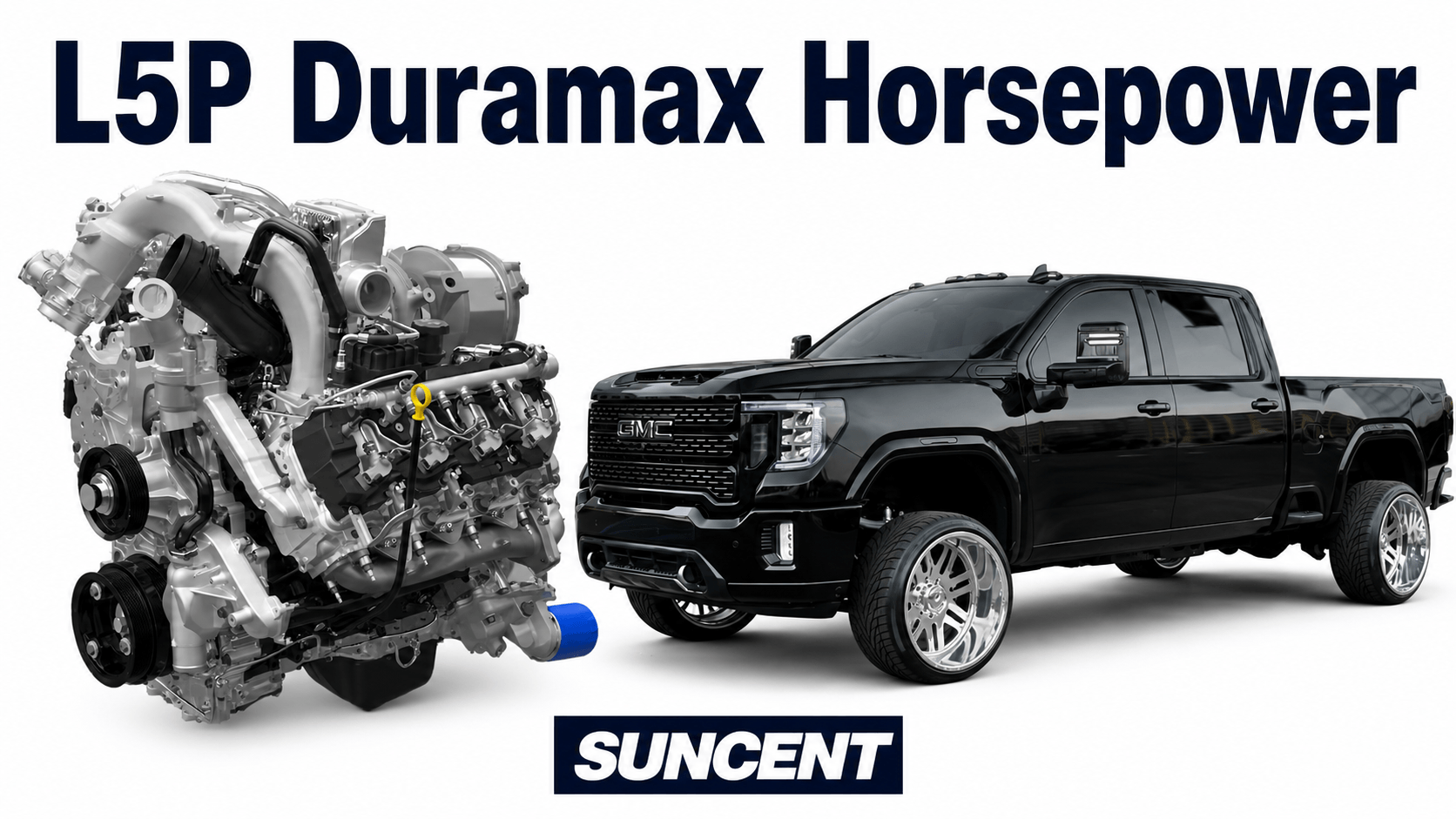
If you own a Chevy Silverado HD or GMC Sierra HD equipped with the L5P Duramax, or you are considering buying one, there is one question you definitely want answered: how much horsepower does a L5P Duramax have?
The answer is straightforward:
- 2017–2023 models: 445 horsepower / 910 lb-ft of torque
- 2024–2026 models: 470 horsepower / 975 lb-ft of torque
But if you only look at those numbers, you understand less than half of what this engine is capable of.
The L5P is General Motors' sixth-generation 6.6L Duramax diesel engine. When it debuted in 2017, it shocked the entire heavy-duty pickup truck market with its dominant performance figures. Compared with the previous-generation LML, which produced 397 hp and 765 lb-ft, the L5P gained 48 horsepower and 145 lb-ft of torque.
However, what truly made the L5P a "legend" in the diesel engine world is its seemingly limitless modification potential. From the factory-rated 445 horsepower to more than 600 horsepower after deleting and tuning, and even more than 900 horsepower with extreme modifications, the L5P's potential goes far beyond what you might imagine.
This article will break everything down for you: What are the exact factory output figures for each model year? How much power can you actually gain after deleting the emissions system? Which modifications offer the best value? What factors may quietly "steal" your horsepower? And what risks must you understand before going down this path?
L5P Duramax Factory Horsepower and Torque
Since the L5P Duramax was introduced in 2017, its factory power output has gone through two stages.
| Model Years | Horsepower (hp) | Torque (lb-ft) |
| 2017–2023 | 445 @ 2,800 rpm | 910 @ 1,600 rpm |
| 2024–2026 | 470 @ 2,800 rpm | 975 @ 1,550–2,850 rpm |
2017–2023 Models: 445 hp / 910 lb-ft
The L5P first appeared in the 2017 Chevy Silverado HD and GMC Sierra HD. It was factory-rated at 445 horsepower at 2,800 rpm and 910 lb-ft of peak torque at 1,600 rpm.
Compared with the previous-generation LML, which produced 397 hp and 765 lb-ft, the L5P gained 48 horsepower and 145 lb-ft of torque. It can deliver 90% of its peak torque at just 1,550 rpm.
2024–2026 Models: 470 hp / 975 lb-ft
Starting with the 2024 model year, GM upgraded the L5P's output to 470 horsepower and 975 lb-ft of torque. It can continuously deliver 90% of its peak torque between 1,550 and 2,850 rpm.
How Much HP Does a L5P Duramax Have After Deleting and Tuning?
A delete refers to removing or bypassing emissions-control systems such as the DPF, EGR, and DEF systems, combined with ECM tuning to release the engine's full potential.
Based on real dynamometer results and verified user data, an L5P that has been deleted and tuned may produce the following results:
| Tuning Level | Horsepower Gain | Total Crank Horsepower | Torque Gain | Best For |
| Street/Eco Tune | +100 hp | Approximately 545 hp | +180 lb-ft | Daily driving / Best fuel economy |
| Performance Tune | +150 hp | Approximately 595 hp | +240 lb-ft | Aggressive driving / Towing |
| Max-Effort / Race Tune | +200+ hp | 645+ hp | +350+ lb-ft | Maximum performance |
Overall, a fully deleted and tuned L5P Duramax typically produces between 550 and 600 crank horsepower, while an extreme setup can easily exceed 640 horsepower.
⚠️ One documented L5P equipped with a full-system delete, optimized intake and exhaust systems, and an aggressive maximum-effort tune produced an astonishing 594 wheel horsepower and 1,281 lb-ft of torque on a dynamometer. Assuming a 15% drivetrain loss, this equals approximately 700 crank horsepower. This result came from an extreme configuration involving a Race tune and upgraded hardware. It does not mean that every deleted and tuned L5P will reach this level. A typical L5P with a Street or Performance delete tune usually produces approximately 480–520 horsepower at the wheels.
Fuel Economy Improvement
⛽ After deleting the DPF, the troublesome active-regeneration cycles are eliminated. Highway fuel economy may improve by 3–5 MPG.
Why Does Deleting Increase Horsepower?
There are three core mechanical reasons why deleting the emissions system can produce such significant power gains.
Reduced Exhaust Backpressure
The DPF and DOC, or diesel oxidation catalyst, severely restrict exhaust flow. Once they are removed, exhaust velocity increases significantly, the turbocharger responds more quickly, and boost pressure increases.
Lower Intake-Air Temperatures
The EGR system directs hot exhaust gases into the intake manifold, increasing intake-air temperatures and reducing oxygen density. After deleting the EGR system, colder and denser air enters the cylinders, significantly improving combustion efficiency.
More Aggressive Fueling Strategies
Custom tuning allows more aggressive injection timing, fuel quantity, and boost control, fully utilizing the engine's mechanical potential.
The Costs and Risks of Deleting
⚠️ Every modification comes with a cost, and deleting is no exception. Before making a decision, make sure you fully understand the risks.
In the United States, removing an emissions-control system violates the Clean Air Act. In recent years, the EPA, or Environmental Protection Agency, has aggressively targeted businesses that provide delete services, and individual vehicle owners may also face substantial fines. In addition, deleting the ECU programming and emissions hardware will completely void the factory engine and powertrain warranty.
In states with strict emissions inspections, such as California, Colorado, and New York, a deleted truck is almost certain to fail its annual smog check.
Recommendation: If emissions regulations are relatively relaxed in your area, or your truck is already out of warranty and you plan to keep it for a long time, deleting may be an option worth considering. Otherwise, an emissions-compliant Emissions-Intact Tune is recommended. It can still deliver a substantial increase of up to 110 horsepower and 330 lb-ft of torque.
What Does a Complete L5P Delete Kit Include?
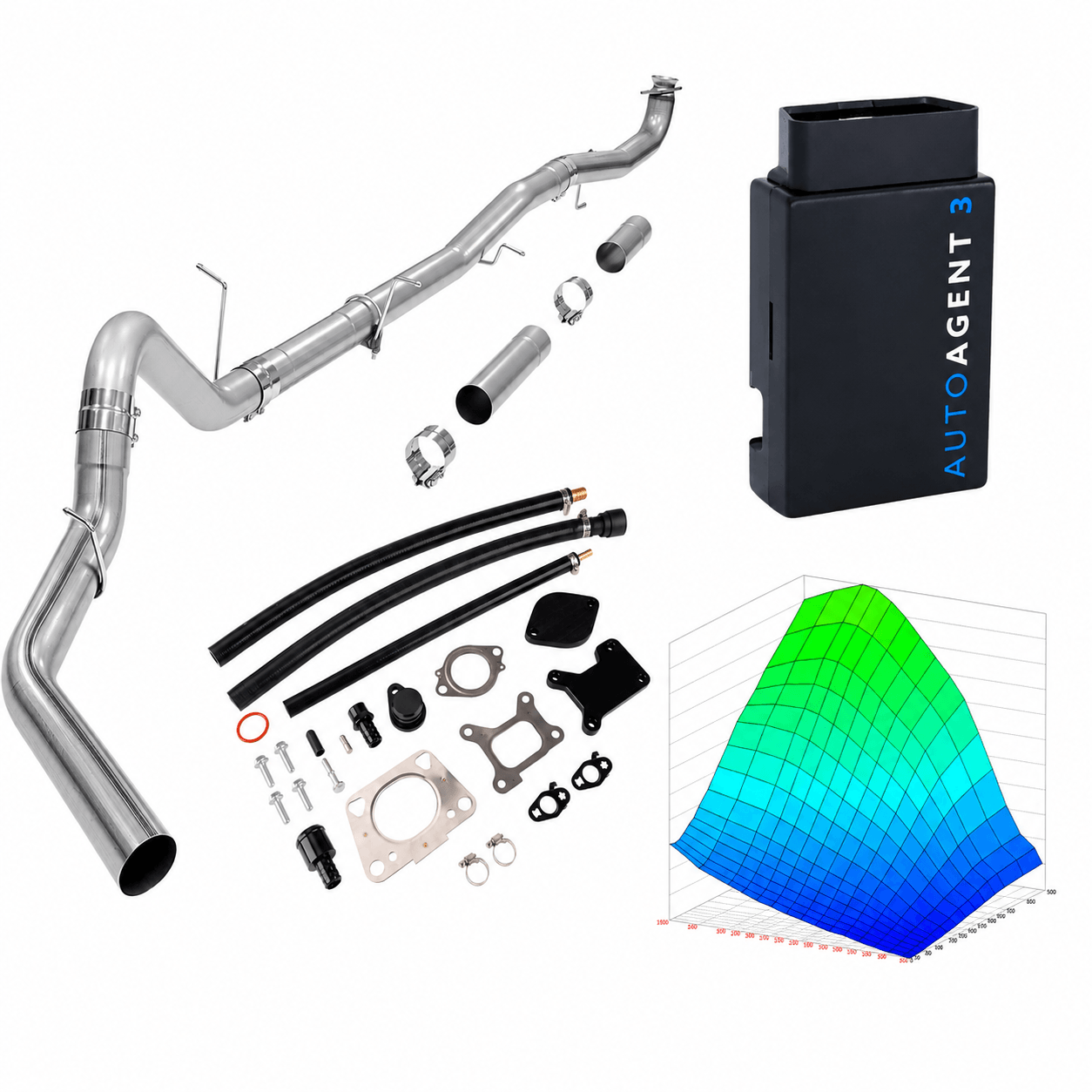
If you decide to take the delete route, a standard L5P All-In-One delete kit usually contains the following components:
| Component | Function |
| DPF Delete Pipe/Straight Pipe | Replaces the factory DPF and eliminates exhaust backpressure |
| EGR Delete Kit/Block-Off Plate Kit | Physically blocks the EGR passages and prevents exhaust gases from recirculating |
| ECM Tune File | Flashes the ECU, disables DPF/EGR/DEF monitoring, and optimizes fueling and boost |
| Optional 4-Inch or 5-Inch Full Exhaust System | Further reduces exhaust restriction and improves the exhaust sound |
Recommended Complete L5P Delete Kit
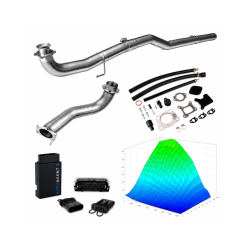
Complete hardware and tuning package: Includes a 4-inch race pipe (straight-through, no muffler), black EGR valve and cooler removal kit, 3.5-inch downpipe, EZ LYNK system, and access to 4 weeks of transmission tuning files—no need to piece things together separately after purchase.
Immediate Horsepower Boost: The stock L5P (2017-2023 models) produces 445 hp / 910 lb-ft; after removing the emissions system and completing the tuning, it easily surpasses 600 hp. This package's straight-through exhaust + EGR removal + downpipe combination is key to improving intake and exhaust flow and making the turbocharger respond faster.
EZ LYNK Intelligent Tuning: Equipped with EZ LYNK system, you can freely switch between different tune files within 4 weeks to find the power curve that best suits your driving habits.
Dedicated for Specific Car Models: Perfectly compatible with 2020-2023 GMC Sierra / Chevy Silverado 2500HD/3500HD. For more years, please visit the product page.
💡 Convenient Tip: Deleting the kit will result in multiple shipments. Please check all packages upon receipt.
👉 View all the latest offers and discount codes >>
How Much Horsepower Can Different Modifications Add?
In addition to deleting and tuning, several other modifications can further unlock the L5P's power. The following figures provide a reference for the potential gains from each modification:
| Modification | Horsepower Gain | Torque Gain | Best For |
| ECM Tuning—Software Only, Emissions Retained | +20–110 hp | +40–330 lb-ft | Owners who do not want to modify hardware |
| Cold-Air Intake System | +10–21 hp | +11–44 lb-ft | Owners looking for good value |
| Exhaust System—DPF-Back / CAT-Back | +15–30 hp | +20–50 lb-ft | Supporting other modifications |
| Complete Delete and Tune | +100–200 hp | +200–350 lb-ft | Owners seeking maximum gains |
| Upgraded Turbocharger | +50–200+ hp | +200+ lb-ft | Owners seeking extreme performance |
What Factors Affect L5P Horsepower?
Even after deleting and tuning your L5P, its actual power output may still be affected by several factors. Understanding these factors can help you maximize the engine's potential.
1. Tuning Quality
Even when two trucks have both been "deleted and tuned," the quality of the tuner can make an enormous difference.
- High-quality tune: Balances power, reliability, and drivability while keeping EGT under control.
- Low-quality tune: May be overly aggressive, resulting in excessive EGT or even engine damage.
Recommendation: Choose a professional tuner with extensive L5P tuning experience. Do not choose a cheap, generic "canned tune" simply to save money.
2. Fuel Quality and Filtration
The Denso fuel system used in the L5P is extremely sensitive to fuel cleanliness. Low-quality fuel can lead to clogged injectors, poor fuel atomization, and a sudden loss of power.
Recommendation: Always use high-quality diesel from a reputable fuel station and replace the fuel filter according to the required service interval, typically every 15,000–20,000 kilometers.
3. Intake-Air Temperature and Intercooler Efficiency
The higher the intake-air temperature, the lower the oxygen density and combustion efficiency. The factory intercooler pipes may expand or even leak under high-temperature conditions, resulting in the feeling that the engine has "lost power."
Upgrading the intercooler pipes can help maintain more stable intake-air temperatures and ensure consistent power delivery.
4. Oil Temperature and Engine Derate
When the oil temperature becomes too high, the ECM actively limits power output through a process known as “derating.” This causes actual horsepower to fall below the rated output. This is a GM protection strategy, but it is also one reason many owners feel that their trucks do not have enough power.
Upgrading the oil pan or adding an auxiliary cooling system can help reduce this problem.
5. Altitude and Atmospheric Conditions
At higher elevations, the air is thinner, and the turbocharger must spin faster to achieve the same boost pressure. As a result, actual horsepower at high elevations will be lower than horsepower measured at sea level.
A high-quality custom tune can be optimized for altitude.
6. Intake and Exhaust Restrictions
- The factory air filter may become a bottleneck under high airflow demands.
- The factory exhaust diameter may not be sufficient at power levels above 600 horsepower.
Recommendation: When horsepower exceeds 550 hp, consider upgrading the intake and exhaust systems to ensure that the engine can "breathe freely."
Conclusion
The L5P Duramax has progressed from 445 horsepower in 2017 to 470 horsepower today, giving it class-leading factory performance. However, its true appeal lies in its enormous modification potential. Whether you prefer keeping your truck completely stock, enjoy tuning, or are interested in extreme performance modifications, the L5P can satisfy your desire for horsepower. The key is choosing the correct modification path and a reliable tuning solution.
How are you planning to modify your L5P?
Whichever route you choose, make sure you work with a professional tuner and fully understand your local laws and regulations. Horsepower may be exciting, but safety, reliability, and legality are the foundations of vehicle modification.