 Contents
Contents
When your Ford Explorer's check engine light flashes and displays the P0403 code, it typically indicates a problem with the exhaust gas recirculation (EGR) control circuit. While this problem can affect engine performance and emissions, the fix may be as simple as cleaning a corroded connector or replacing a faulty valve. Understanding the P0403 code, its symptoms, and how to fix it is essential to ensure the performance and longevity of your vehicle. Here's everything you need to know.
- Code Meaning : P0403 indicates an electrical fault in the EGR (Exhaust Gas Recirculation) system "A" control circuit.
- Typical Symptoms : Check Engine Light on, rough idle or stalling, weak acceleration or hesitation, increased fuel consumption, and excessive emissions.
- Main Causes (Ranked by Frequency) : Carbon buildup causing the EGR valve to stick → electrical failure of the EGR valve itself → wiring/connector issues → vacuum line leaks → ECU/PCM failure.
- Diagnosis and Repair : Confirm the code with an OBD-II scanner → inspect wiring and connectors → clean or replace the EGR valve → clear the code and perform a road test to verify the repair.
- Severity and Cost: Moderate risk; prompt repair is recommended. Typical repair costs are about $80–$500, depending on the specific fault and vehicle model.

What Is the P0403 Code?
P0403 Definition: Exhaust Gas Recirculation "A" Control Circuit Malfunction.
The core function of the EGR (Exhaust Gas Recirculation) system is to first discharge exhaust gas and then reintroduce it into the intake manifold, lowering combustion chamber temperatures and thereby reducing harmful nitrogen oxide (NOx) emissions.
Simply put: the ECU (Engine Control Unit) sends a control command to the EGR system solenoid, but the electrical signal returned is abnormal—for example, there is no response, the voltage fluctuates abnormally, or the circuit has an open or short circuit. Once the ECU detects the abnormality, it stores the P0403 trouble code and turns on the Check Engine Light.
It is especially important to note that P0403 is an electrical fault code, unlike mechanical fault codes such as P0401 (insufficient EGR flow) or P0404 (EGR valve position deviation). It directly points to circuit problems—such as damaged wiring, solenoid failure, or connector corrosion—rather than physical blockage or valve wear.
Common Symptoms of P0403
Because P0403 is a circuit fault, symptoms may vary depending on the valve's failure position (normally open or normally closed). Some vehicles may only have a warning light with no obvious drivability issues, while others may experience noticeable driving problems.
Check Engine Light stays on or illuminates: The clearest fault signal.
Rough idle or stalling: If the EGR valve is stuck open, it can cause the idle mixture to become too lean, resulting in rough idling, stalling, or engine shutdown.
Weak acceleration or reduced power: The engine may show noticeable hesitation when accelerating under load.
Turbo lag (Diesel power): On diesel engines such as the Ford 6.0L Powerstroke, EGR circuit faults are often accompanied by slower turbo response.
Increased fuel consumption: Reduced combustion efficiency causes fuel consumption to rise.
Failed emissions test: Higher combustion chamber temperatures can cause NOx emissions to exceed limits.
Possible Causes of P0403
Understanding the root cause of the fault is critical for efficient diagnosis and repair. The following causes are listed from highest to lowest frequency based on actual repair cases:
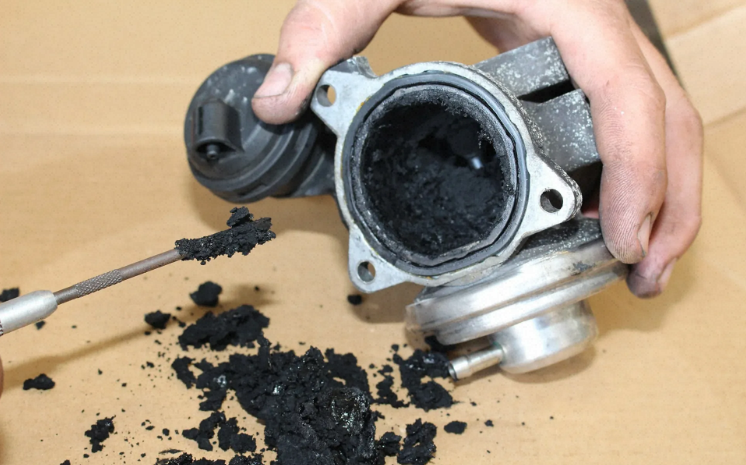
1. Carbon Buildup Causing the EGR Valve to Stick
After long-term use, a large amount of carbon can accumulate inside the EGR valve and around the valve seat, causing the valve core to stick or respond sluggishly. Although carbon buildup itself is a mechanical issue, it can indirectly cause abnormal electrical performance.
2. Electrical Failure of the EGR Valve Itself
The internal motor of the EGR valve may burn out, the solenoid may fail, or the position sensor may malfunction, preventing the valve from responding properly to ECU commands. This is the second most common cause after carbon buildup.
3. Wiring or Connector Problems
This is extremely common on older vehicles and trucks. Typical problems include:
- Wiring insulation melting near high-temperature exhaust components
- Corrosion of terminals inside the connector
- Broken or loose pins
- Worn or broken wiring harnesses
Ford vehicles are especially known for EGR-related wiring problems.
4. EGR Vacuum Line Leaks
Aging or cracked vacuum hoses or loose fittings can cause abnormal EGR valve operation.
5. ECU/PCM Failure
Internal damage or programming logic errors in the engine control module. This possibility should only be considered after all external components have been ruled out.
How to Diagnose the P0403 Code
Before blindly replacing expensive parts, follow the steps below to troubleshoot the fault step by step:
Tools Needed
- OBD-II diagnostic scanner
- Digital multimeter
- Electrical connector cleaner (electrical contact cleaner)
Diagnostic Steps
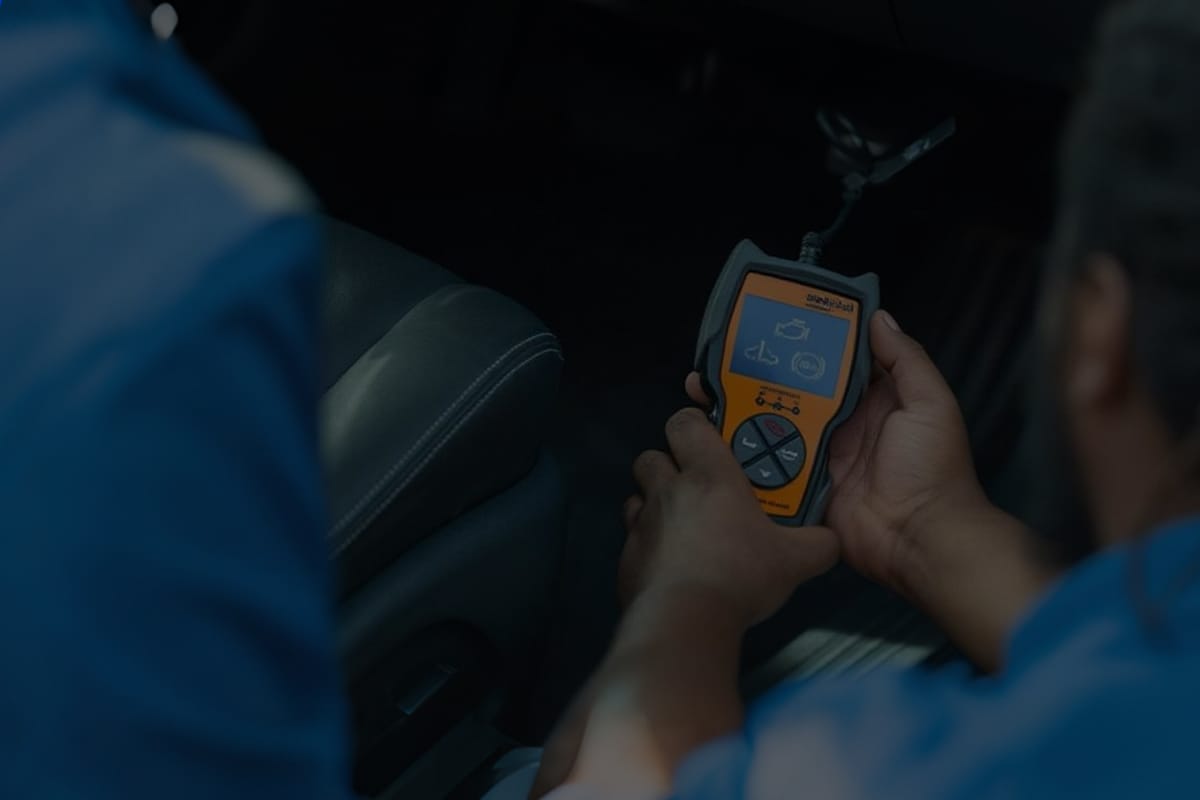
Step 1: Scan and Record Trouble Codes
Use an OBD-II scanner to read the system codes. If P0401 (insufficient flow) or P0402 (excessive flow) appears at the same time, it may indicate that both mechanical blockage and circuit problems are present.
Step 2: Visually Inspect the Wiring Harness and Connectors
Locate the EGR valve (usually on top of the engine or next to the intake manifold). Check whether the connecting harness is burned, peeled, or broken, and inspect the connector pins for bluish-green corrosion or oxidation.
Step 3: Use a Multimeter to Test EGR Valve Coil Resistance
Disconnect the EGR valve connector and use a multimeter to measure the resistance of the EGR valve solenoid coil:
Normal Value: Compare the measured resistance with the specification in the vehicle manufacturer's service manual. EGR solenoid or actuator resistance varies by vehicle and system design.
Abnormal Value: On an EGR solenoid or actuator that is designed for resistance testing, a reading near 0Ω may indicate an internal short, while an OL/infinite reading may indicate an open circuit. Confirm the result against the manufacturer's specifications before replacing the component.
Step 4: Check Control Circuit Voltage
Turn the vehicle key to the ON position (do not start the engine), and measure whether the power terminal of the wiring connector has 12V battery voltage and whether the control-side signal wire is normal.
P0403 Repair Solutions and Costs
Based on the actual problem found during diagnosis, the repair solutions and required costs are as follows:
| Solution | Applicable Situation | Estimated Cost (Parts + Labor) |
| ① Clean the EGR Valve | Carbon buildup causes the valve to stick or respond slowly (most common cause) | $80–$200 |
| ② Replace the EGR Valve | Cleaning is ineffective; motor burned out; internal position sensor failure | $150–$500 |
| ③ Repair Wiring/Connectors | Wiring insulation melted (especially near the turbo), terminal corrosion, broken pins | $100–$300 |
| ④ Replace the EGR Position Sensor | Sensor electrical failure while the valve itself is still good | $120–$250 |
| ⑤ ECU Software Update/Reset | Rough idle/acceleration hesitation after replacing the EGR valve; German and newer American vehicles | $100–$150 |
| ⑥ Replace the EGR Cooler | Cooler leaking or clogged (common on 6.0L Powerstroke) | $400–$900 |
| ⑦ EGR Delete Kit | ⚠️ Closed-course racing, off-road competition, or non-road use only | $500–$1200+ |
Note: Actual costs vary depending on vehicle model, region, and labor rates. Ford vehicle repair costs typically range from $300–$3,500. It is recommended to call a local repair shop first for an accurate quote.
⚠️ Special Warning About EGR Delete Kits
Some diesel owners may consider installing an EGR delete kit to completely avoid EGR system problems. The principle is: physically blocking EGR airflow with a bypass pipe or block-off plate, while writing a custom tuning program (Tuner) into the ECU to disable EGR-related fault monitoring logic, thereby permanently eliminating P0403 and related EGR fault codes.
Legal Risk: Under the U.S. Clean Air Act, removing or disabling emissions-control devices such as the EGR system on vehicles driven on public roads is illegal. This solution is limited to non-road use.
Brand-Specific P0403 Code Fixes
Different manufacturers provide different solutions for P0403 trouble code problems. Below is a brief overview:
Ford Explorer/6.0 Powerstroke: Usually requires an upgraded EGR cooler or intake manifold cleaning.
Dodge Charger (2015 and later): The TIPM module may need to be reprogrammed according to TSB 18-043-19.
Jeep Wrangler JK: Many owners overlook the EGR cooler, especially on lifted vehicles used for off-roading.
Audi Q7 TDI: Recalibrating the EGR system through dealer software is a common solution.
How to Prevent the P0403 Code from Returning
Preventive maintenance can help you avoid encountering P0403 again in the future. Here are some practical suggestions:
Clean the EGR system regularly: It is recommended to remove carbon buildup from the EGR valve and intake passages every 30,000 to 50,000 miles.
Use high-quality fuel and cleaning additives: High-quality fuel can effectively reduce carbon particles caused by incomplete combustion.
Drive regularly on the highway: Maintaining 20–30 minutes of highway driving helps increase exhaust temperature and promotes the exhaust system’s ability to burn off some small carbon deposits.
Address engine combustion death problems promptly: Death entering the combustion chamber will greatly accelerate clogging of the EGR valve and catalytic converter.
FAQs
Conclusion
The P0403 trouble code indicates an electrical fault in the EGR control circuit—usually caused by wiring problems, solenoid failure, or connector corrosion. Unlike mechanical fault codes such as P0401 (insufficient flow) or P0404 (position deviation), P0403 strictly points to a circuit problem.
Prompt diagnosis and repair are essential—ignoring this trouble code may lead to increased fuel consumption, excessive emissions, and even long-term engine damage.
If you are a DIY enthusiast, most P0403 problems can be solved at home by following the diagnostic process in this article with a multimeter and an OBD-II scanner. If the problem involves wiring harness repair or ECU-related work, it is recommended to leave it to a professional technician.