 Contents
Contents
P1406 is a diagnostic trouble code (DTC) that shows up when the car isn't happy with the position of the EGR (Exhaust Gas Recirculation) valve. In simple terms, the valve isn't moving the way it should — either it's not opening enough or it's not closing when the engine wants it to.
Fixing P1406 doesn't always break the bank: in 60% of cases, the root cause is easily removable carbon buildup. Other times, the EGR position sensor or wiring acts up, and repairs can run anywhere from $120 to $650, with heavy carbon blockage pushing things closer to $900.
Most people's first question is: "Can I still drive with this?" You can, but not for long. Engine code P1406 can cause rough idle, higher fuel use, and stalling if ignored. This guide breaks the whole thing down. It explains what the DTC P1406 means, symptoms, causes, diagnostics, repair options, costs, and prevention.
- P1406 means the ECM sees the EGR pintle in the wrong position.
- Carbon buildup, a stuck EGR pintle, a bad EGR position sensor, or wiring issues are common causes.
- Short drives are okay, but ignoring code P1406 can worsen idle, cause stalling, and increase fuel use.
- Proper diagnosis checks the valve, passages, wiring, live data, and vacuum operation.
- Off-road trucks can bypass recurring EGR issues using delete kits.
Looking for other trouble codes? Check the full OBD-II Codes List by SuncentAuto.
What Does P1406 Mean?
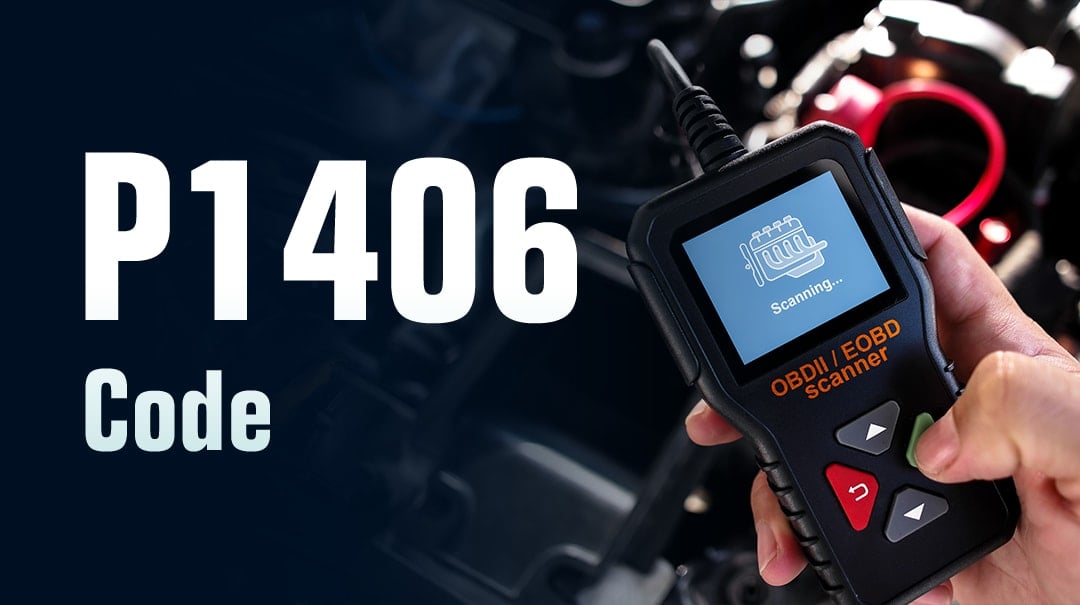
P1406 is the OBD code that indicates a "EGR Valve Pintle Position Performance" issue. In simple terms, the ECM commands the EGR valve to open or close — but the EGR position sensor reports something different. This mismatch triggers DTC P1406.
The EGR system recirculates exhaust gas to lower combustion temperatures and reduce NOx emissions. When the pintle sticks due to carbon buildup, or when the position sensor provides inaccurate readings, the ECM logs P1406 to avoid misfires, rough idle, or poor acceleration.
Different brands describe this code differently:
- Ford code P1406: EGR sensor "Out of Range."
- Chevy code P1406: EGR pintle stuck or incorrect feedback.
- GM code P1406: Faulty EGR position circuit.
Regardless of wording, the meaning stays the same — the valve isn't behaving.
Common Symptoms of P1406
When OBD code P1406 shows up, you'll probably notice a few things going wrong with your truck:
- Check Engine Light: This is usually the first obvious warning signal.
- Rough idle: The engine shakes or surges when stopped.
- Throttle feels off: Hesitates or stutters when you press the gas.
- Fuel mileage drops: More misfires = more wasted fuel.
- Hot engine spots: Especially near the intake or EGR area.
- Stalls at idle: Happens if the EGR pintle is stuck open.
- Funky exhaust smell: You'll notice a stronger diesel odor.
- Failed emissions test: NOx levels too high.
- RPM jumps: Engine speed fluctuates randomly.
- Odd noises: Clicking or tapping if the pintle isn't moving right.
These usually start small and get worse over time. Catch them early, and fixing the problem is way easier.
Possible Causes of P1406
Several things can trigger trouble code P1406, but these are the most common:
1. Carbon buildup inside the EGR valve
Soot blocks the pintle and prevents normal movement.
2. Faulty EGR pintle position sensor
The sensor misreads valve position, sending false data to the ECM.
3. Wiring or connector issues
Broken insulation, corrosion, or loose plugs alter sensor feedback.
4. Vacuum leaks (on vacuum-controlled EGR systems)
Leaking hoses stop the valve from opening/closing correctly.
5. Blocked EGR passages in the intake manifold
These are extremely common in older GM and Ford engines.
6. Poor-quality fuel
Leads to carbon buildup and increased soot.
7. ECM logic errors (less common)
A software update sometimes prevents repeat false triggers.
8. Aftermarket exhaust changes
These may impact EGR flow on some vehicles, triggering P1406.
9. Short trips or prolonged idling
The engine never reaches full operating temperature, creating soot and forcing repeated EGR activation.
Most vehicles develop multiple contributing issues, which is why good diagnosis is important.
How to Diagnose P1406
Here's the diagnostic flow most professionals follow when working with engine code P1406:
Step 1: Scan for related codes
Look for codes like P0401, P0403, P0404 - they help identify airflow or circuit problems.
Step 2: Check live data
Monitor EGR position command vs. actual position. Any major mismatch confirms sensor or pintle issues.
Step 3: Inspect connectors and wiring
Look for corrosion, carbon traces, melted plugs, or loose terminals.
Step 4: Remove the EGR valve
Inspect carbon buildup, soot clogging, and pintle movement.
Step 5: Test the EGR position sensor
A multimeter helps confirm if the sensor is giving accurate readings.
Step 6: Inspect vacuum lines
Vacuum leaks cause improper valve behavior on older engines.
Step 7: Check EGR passages
Intake manifold ports become clogged, especially on GM 3.8L, 5.7L, 4.3L, and Ford 4.6/5.4 engines.
Step 8: Command the EGR valve open using a scan tool
If the engine stumbles, the flow is good. If nothing happens, passages are blocked.
Step 9: Clear code and test drive
Two to three full drive cycles confirm the fix.
DIYers can handle cleaning, vacuum checks, and connector inspections.
Electrical diagnosis or ECM updates are better left to pros.
Repair Solutions for P1406
If you're wondering how to fix P1406, here's a breakdown of solutions based on the most common causes.
1. Clean the EGR valve and pintle
Carbon removal is the most common, most effective fix.
2. Replace the EGR valve
If the pintle is damaged or won't move freely, replacement solves the issue.
3. Replace the EGR position sensor
On some models, this sensor is built into the valve.
4. Repair wiring or connector damage
Fix corroded pins, broken insulation, or bent terminals.
5. Replace vacuum hoses
Cracked hoses cause wrong pintle movement.
6. Clean the EGR passages
Severely clogged passages cause repeat P1406 almost instantly.
7. Update ECM software
Some GM and Ford models benefit from a reflash.
8. Off-Road Option
For off-road diesel trucks experiencing recurring P1406 fault codes due to severe carbon buildup, SuncentAuto's EGR Delete Kit offers a long-term solution. These kits replace the carbon-depositing EGR system, eliminating the need for frequent cleaning and maintenance, and effectively controlling recurring EGR malfunctions.
Vehicles Commonly Affected by P1406
Not all vehicles experience P1406 equally. Here's an overview of makes and engines prone to this trouble code due to design, EGR placement, or driving patterns:
| Make / Engine | Notes |
| Chevy & GM (3.8L, 4.3L, 5.7L) | One of the most common platforms for EGR pintle issues. |
| Ford 4.6L & 5.4L | Vacuum EGR systems often fail due to carbon buildup. |
| Chevy Silverado / Suburban | Frequent wiring and sensor-related P1406 reports. |
| Pontiac & Buick 3800 engines | Intake passage clogs are extremely common. |
| Saturn models | EGR pintle sticking happens often. |
Understanding which vehicles are commonly affected helps anticipate repairs and maintain proper EGR operation.
Repair Cost Estimate
Here's what drivers typically pay to resolve code P1406:
| Repair | Cost Range |
| Scan + Diagnosis | $80–$150 |
| EGR Cleaning | $80–$160 |
| EGR Valve Replacement | $150–$400 |
| EGR Position Sensor | $120–$280 |
| Wiring Repair | $50–$200 |
| Intake Passage Cleaning | $150–$350 |
| ECM Reflash | $100–$180 |
These estimates give a realistic range for parts and labour. DIY repairs like cleaning or sensor replacement can reduce costs, while major EGR valve or intake work can push the total higher.
Prevention Tips for P1406
A few habits can drastically reduce the chances of OBD code P1406 coming back:
- Use high-quality fuel to lower soot production.
- Avoid excessive short trips that cause carbon buildup.
- Add periodic highway runs to burn off deposits.
- Clean the throttle body and EGR passages every 30k–40k miles.
- Replace vacuum hoses during major tune-ups.
- Inspect wiring whenever the EGR valve is serviced.
- Keep up with oil changes to prevent sludge buildup.
- Avoid prolonged idling, which traps carbon in the EGR system.
- Check for updates to ECM software to prevent false triggers.
Consistent maintenance reduces fuel waste, prevents emissions failures, and stops OBD code P1406 from returning.
FAQs About P1406
Conclusion
Trouble code P1406 isn't catastrophic, but it's a clear sign that your EGR system needs attention. Fixing it early keeps your engine smooth, efficient, and emission-friendly. Most repairs involve simple cleaning, a sensor swap, or wiring fixes — but ignoring OBD code P1406 only leads to rough idle, poor fuel economy, and repeat check-engine lights.
If you run an off-road setup, durable delete pipes, EGR delete kits, and tuners from SuncentAuto offer long-term relief from soot-related issues. Keep this guide saved, stay consistent with maintenance, and you'll prevent P1406 from coming back.
Legal disclaimer: EGR/DPF delete components are intended for off-road use only. They are not legal for on-road vehicles and must be used in accordance with local emissions laws.