 Contents
Contents
You're driving your diesel truck like any normal day when the check engine light decides to show up. Not exactly the kind of surprise anyone wants. You hook up a scanner to see what's going on, and there it is: DTC P2459 – DPF Regeneration Frequency Too High. Basically, your Diesel Particulate Filter is regenerating far more often than it should. It's not the end of the world, but it does mean the exhaust system is putting in more work than normal.
If ignored, engine code P2459 can lead to poor mileage, a stressed turbo, weak acceleration, and issues with sensors, EGR flow, or injectors.
In this guide, we'll walk through what OBD code P2459 means, why it shows up, the symptoms you shouldn't ignore, repair costs, and how to fix the root cause.
- P2459 means DPF regeneration frequency is too high.
- Short trips, tired sensors, EGR buildup, or turbo inefficiency are usually behind it.
- While short drives are manageable, ignoring the code can bring your mileage down. Eventually, this will put the vehicle into limp mode.
- A proper check involves looking at sensor data, exhaust flow, turbo health, and DPF/EGR cleanliness — not just clearing the code.
- Stay on top of maintenance and run good-quality diesel. This can dramatically cut down how often this issue comes back.
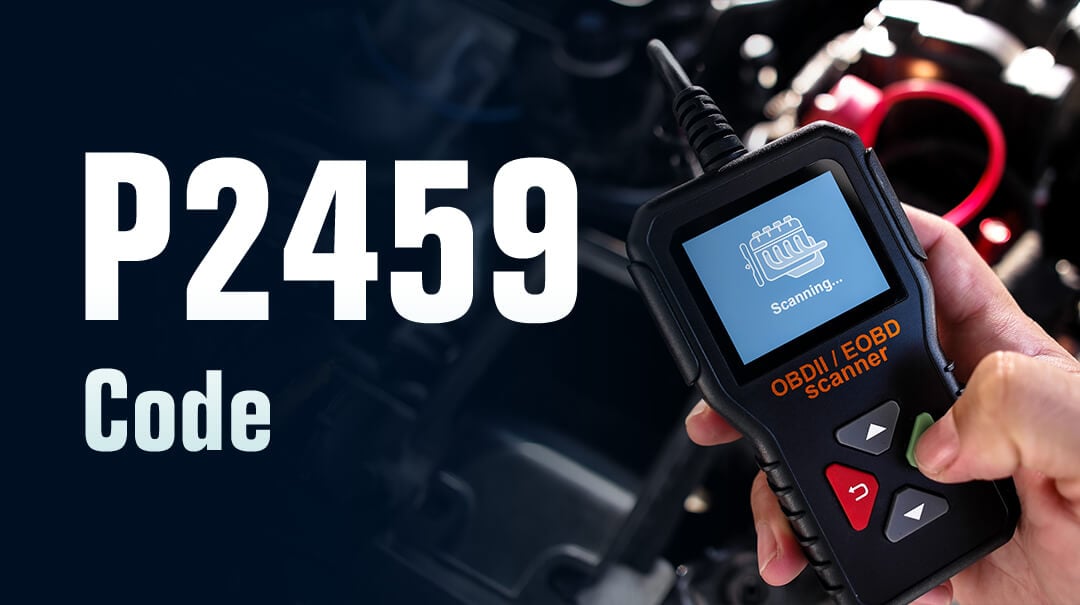
What Does P2459 Mean?
Trouble code P2459 appears when the truck's ECM detects regen cycles happening more often than expected. Normally, DPF regeneration occurs every 300–600 miles, depending on driving style, fuel, and engine load. When regen happens too frequently — sometimes under 150 miles — the ECM flags P2459 to prevent damage from thermal stress.
The DPF traps soot from exhaust gases. Regeneration burns the soot at high temperatures to keep flow and emissions in check. The ECM relies on DPF pressure and temperature sensors to monitor this. If it detects abnormal patterns, like repeated regenerations in a short distance, it triggers OBD code P2459 to alert you of potential issues.
Common Symptoms of P2459
Drivers often spot one or more of these signs when code P2459 appears:
- Check Engine Light (CEL): Usually the first clue.
- Frequent regen cycles: The DPF keeps cleaning itself too often.
- Fuel economy drop: Extra fuel gets burned during repeated regens.
- Strong diesel odour: Exhaust smells heavier from partially burned soot.
- High exhaust temperatures: Especially near the DPF and turbo area.
- Rough idle: Uneven engine performance due to soot accumulation.
- Limp mode: The engine may cut power to protect itself.
- Turbo stress: Repeated backpressure cycles can strain turbo vanes.
Sometimes you may even notice brief exhaust smoke after restarting, especially during back-to-back regens. These warning signs tend to show up before the DPF becomes severely restricted.
Possible Causes of P2459
Multiple issues can trigger engine code P2459, and sometimes two or more happen at the same time:
- Short trips: The engine never gets hot enough for passive regeneration.
- Faulty DPF sensors: Pressure or temperature sensors giving incorrect readings.
- Clogged EGR valve or cooler: Adds soot to the exhaust system.
- Turbocharger issues: Poor boost leads to incomplete combustion and extra soot.
- Exhaust leaks: Affect sensor readings and trigger repeated regen.
- Injector problems: Dirty or failing injectors produce excess soot.
- Low-quality oil: Increases non-burnable ash in the DPF.
- DPF near end-of-life: Accumulated ash triggers more frequent regeneration.
- ECM software glitches: Incorrect regen timing or thresholds.
- Cold weather: Prevents proper exhaust heating, forcing active cycles.
More than one issue can happen at the same time, which is why proper diagnosis is so important. For instance, a lazy turbo combined with a restricted EGR can produce an extremely high soot load.
How to Diagnose P2459
Here's the practical step-by-step path most techs follow when checking DTC P2459:
Tools Needed: OBD-II scanner, multimeter, IR thermometer, smoke tester, flashlight, and PPE.
Step 1: Scan for P2459 plus related codes like P2463 (soot load) or P2002 (DPF efficiency).
Step 2: Examine regen history and soot load; frequent regens under 100 miles confirm the issue.
Step 3: Inspect sensor wiring for frays, melted insulation, or corrosion.
Step 4: Test DPF pressure and temperature sensors for proper readings.
Step 5: Check the exhaust system for leaks, cracks, or disconnected sections.
Step 6: Inspect the EGR valve and cooler for carbon buildup.
Step 7: Monitor turbo boost during a controlled drive.
Step 8: Run a forced regen if safe, monitoring DPF pressure and temperature.
Step 9: Reset codes and verify results across 2–3 drive cycles.
Sensor replacements and hose fixes can be done at home. You need a professional for exhaust repairs, turbo work, and ECM updates.
Repair Solutions for P2459
Based on what the diagnosis shows, these fixes typically resolve OBD code P2459:
- Highway driving: A solid 20–30 minutes on open roads can complete regen for short-trip vehicles.
- Sensor replacement: Swap faulty DPF pressure or temperature sensors.
- Wiring repairs: Fix melted, frayed, or corroded connectors.
- Exhaust leak repair: Ensures accurate sensor readings.
- EGR cleaning or replacement: Improves airflow and reduces soot.
- Turbo and injector service: Restores efficient combustion.
- Professional DPF cleaning: Removes ash accumulation safely.
- ECM reflash: Updates software to correct regen thresholds.
- DPF replacement: For severely clogged filters beyond cleaning.
Pro tip: For off-road builds, SuncentAuto's DPF Delete Kits can help you cut down unnecessary regen cycles. This will help ease stress on the exhaust system. These setups keep things running cooler and reduce long-term strain on DPF-related components.
Vehicles Commonly Affected by P2459
These platforms see OBD code P2459 more often due to their regen strategies and usage patterns.
| Make / Engine | Notes |
| Ford Powerstroke | Frequent regen in city driving, especially with clogged EGR. |
| GM Duramax (LML, L5P) | Urban driving triggers repeated regen cycles. |
| RAM Cummins | Sensor hose blockages or soot buildup common. |
| Mercedes Sprinter | Short trips prevent complete passive regen. |
| VW/Audi TDI | City use triggers repeated DPF cleaning cycles. |
Fleet vehicles and delivery vans see P2459 more often due to idling, stop-start patterns, and poor exhaust temps.
Repair Cost Estimate
Here's what owners typically spend when fixing trouble code P2459:
| Repair | Estimated Cost |
| Scan & diagnosis | $80–$350 |
| DPF sensor replacement | $120–$350 |
| Exhaust leak repair | $100–$400 |
| EGR cleaning/replacement | $200–$900 |
| Turbo repair | $700–$2,500 |
| Professional DPF cleaning | $300–$800 |
| DPF replacement | $1200–$3,000+ |
DIY repairs like sensors or hoses cost $50–$150 in parts. Labour-intensive repairs naturally increase overall cost.
Prevention Tips for P2459
A few habits that keep your regen system healthy and prevent engine code P2459 from returning. For more OBD II Code references, see SuncentAuto's full list.
Start with the basics:
- Highway drives: Enable passive regen and reduce stress on DPF.
- Use quality diesel: Lower soot production.
- Warm engine before short trips: Promotes complete combustion.
- Regular air filter checks: Ensure proper airflow.
- Injector maintenance: Clean injectors reduce soot formation.
- Proactive sensor replacement: Avoid false triggers from faulty DPF sensors.
- Turbo inspection: Prevent incomplete combustion and excessive soot.
- Scan regen cycles periodically: Early detection prevents bigger problems.
- Avoid long idling sessions: Reduces incomplete regeneration.
- Use correct oil specification: Avoids non-burnable ash.
- EGR maintenance every 25k–40k miles: Clean or replace for city-driven trucks.
FAQs About P2459
Conclusion
Trouble code P2459 isn't the kind of issue that sends your truck to the scrapyard, but it is your diesel's way of asking for attention. Fixing it early keeps the turbo healthy, the DPF working normally, and your mileage steady. Whether the solution is a quick sensor swap or something deeper like EGR cleaning or turbo service, staying ahead of it saves money and avoids unnecessary stress.
If you're on an off-road setup, SuncentAuto offers reliable DPF Delete Kits that help reduce regen strain and improve flow. Keep up with routine checks and your diesel will stay predictable. Remember, DPF deletes are not legal for on-road use and must follow local emissions rules.