 Contents
Contents
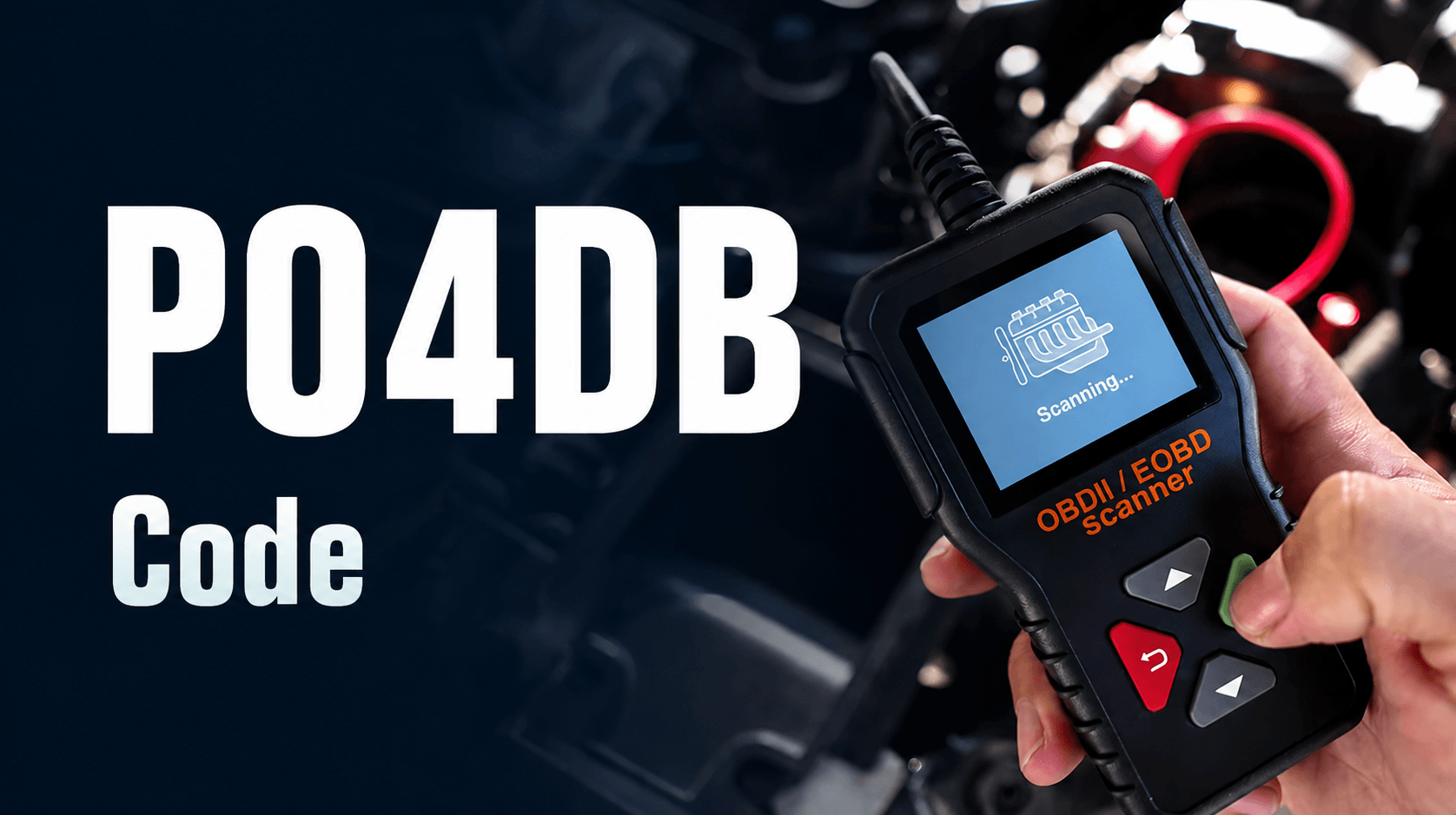
When the Check Engine Light illuminates on your vehicle's dashboard and an OBD2 scanner retrieves the P04DB trouble code, you may feel confused. What does this code mean? Is it safe to keep driving? How should you diagnose and repair it?
This article provides an in-depth explanation of the P04DB code, covering its official definition, common symptoms, possible causes, and targeted diagnostic methods for popular vehicle models. It will help you quickly locate the problem and avoid unnecessary repair costs.
What Does the P04DB Code Mean?
Most Common Meaning: Crankcase Ventilation System Disconnected or Malfunctioning
The official definition of P04DB is "Crankcase Ventilation System Disconnected." In most cases, especially on Ford and Lincoln vehicles, it indicates that the crankcase ventilation system has become disconnected.
The vehicle's computer, or ECU/PCM, monitors the integrity of the crankcase ventilation, or PCV, system. If the system detects that a crankcase ventilation hose is loose, physically disconnected, or that a sensor is not receiving the expected pressure or airflow signal, it will trigger this trouble code.
On some onboard diagnostic systems, you may also see extended codes such as P04DB:00-EC or P04DB-00-64. These codes all point to an abnormality in the crankcase ventilation sensor circuit.
Secondary Meaning: EGR Cooler Bypass Valve Malfunction
Although P04DB is most commonly found on Ford-family vehicles, other brands and diesel-powered vehicles may also report this code.
On some Volkswagen, Audi, Lincoln, and other vehicles, P04DB may also refer to a problem with the exhaust gas recirculation, or EGR, cooler bypass control circuit.
This situation is relatively uncommon. However, if your vehicle is not a Ford and no problem is found in the PCV system, you may need to investigate this area.
Common Symptoms of the P04DB Trouble Code
P04DB will not usually cause your vehicle to stop running immediately, but the changes in driving performance can be noticeable:
- Check Engine Light illuminated: This is the most direct sign. Some vehicles may also display a message such as "EGR System Fault."
- Reduced power and slow acceleration: The vehicle may feel weak, especially when climbing hills or accelerating hard.
- Rough or unstable idle: If a disconnected crankcase ventilation hose allows unmetered air to enter the intake system, effectively creating an additional air leak, the air-fuel mixture may become too lean and cause rough idling.
- Noticeably increased fuel consumption: The ECU may adjust fuel delivery to protect the engine or correct the air-fuel ratio, resulting in higher fuel consumption.
One situation requires special attention: some Ford owners report that this code appears more frequently during cold starts and that the warning light may turn off after the engine warms up. This often points to a software-related false warning rather than actual hardware damage.
Common Causes of DTC P04DB Code
To solve the problem, you first need to understand the underlying causes that can trigger P04DB:
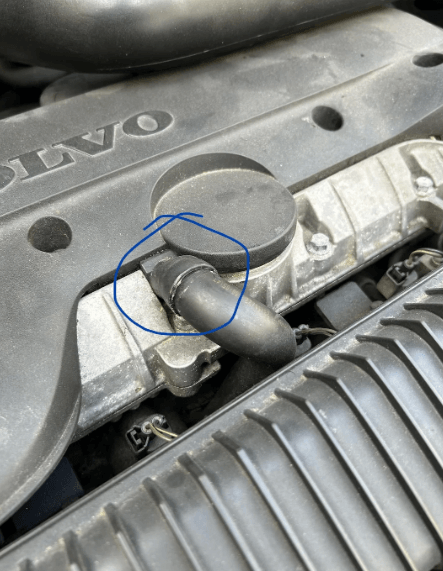
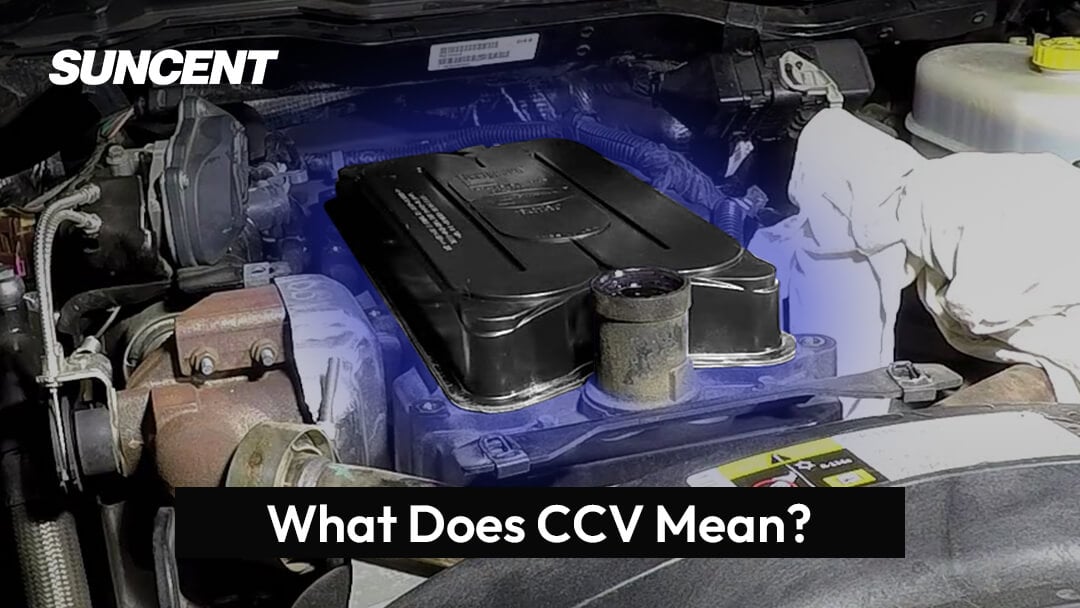
- Loose or disconnected PCV/CCV hose: This is the most direct cause. A retaining clip may come loose, the hose may crack, or the hose may not be fully inserted.
- Clogged oil separator or CCV filter: This can cause abnormal crankcase pressure.
- Stuck or damaged PCV valve: The valve may fail to open or may not close completely.
- Damaged crankcase ventilation pressure sensor: The sensor itself may fail and become unable to send the correct pressure-difference signal back to the ECU.
- Interference from aftermarket modifications, such as a catch can or aftermarket intake: Many owners experience P04DB after installing an aftermarket intake or oil-separation catch can because the original sensor circuit was not reconnected.
- Dipstick not fully inserted or loose oil filler cap: This is an easily overlooked detail. A dipstick that is not pushed completely into place can break the crankcase seal and cause abnormal pressure.
Diagnostic and Repair Guide for Key Vehicle Models
Ford Pickup Trucks: F-150, F-250, and F-350
Ford pickup trucks are among the vehicles most commonly affected by P04DB. This includes both EcoBoost gasoline engines and the 6.7L Power Stroke diesel engine, although the diagnostic approach differs between them.
- First confirm whether the PCM requires an update: Official TSBs cover certain 2017–2020 F-150 models with the 3.5L EcoBoost engine, 2019 F-150 models with the 2.7L EcoBoost engine, and 2014–2016 F-Super Duty models with the 6.7L diesel engine. A software update is often the final solution.
- Inspect the quick-connect fitting on F-150 2.7L and 3.5L EcoBoost engines: Check the plastic quick-connect fitting between the crankcase and intake pipe under the hood. This fitting may become brittle with age and is one of the most common physical failure points on gasoline models.
- Check the color of the PCV valve: A gray valve should be replaced with the updated version. A brown valve should be inspected using the normal diagnostic procedure.
- Inspect sensor hoses and seals: Make sure the crankcase pressure sensor hose is not disconnected or leaking. Also inspect the dipstick O-ring and the oil filler cap seal.
- Inspect the CCV system on 6.7L Power Stroke diesel engines: Check the CCV filter assembly and pressure sensor. A severely clogged filter may indirectly cause a pressure-difference fault.
Inspect the quick-connect fittings, hoses, and seals first. Then inspect the CCV filter. Finally, update the software. Do not begin by blindly replacing parts.
Ford EcoBoost Gasoline Vehicles: Escape, Focus ST, Mustang, and Explorer
Common model years include:
- 2015–2018 Escape with the 1.5L or 2.0L engine
- Focus ST with the 2.0L engine
- Explorer with the 2.3L or 3.5L EcoBoost engine
- Inspect the PCV hose and sensor connector: Pay close attention to the PCV hose connected to the intake tract and its sensor connector. Check whether they are loose, disconnected, or damaged.
- The production date is an important clue: Escape models produced before February 1, 2017, may require replacement of the crankcase pressure sensor and hose assembly, followed by PCM reprogramming. Explorer models produced before December 7, 2017, may qualify for a PCM reprogramming solution.
- Special attention for modified Focus ST and Mustang vehicles: First check whether an aftermarket intake system has left the sensor connector disconnected. This is a common cause of P04DB on modified vehicles.
Inspect the PCV hose and sensor connection first. Then use the production date to determine whether the sensor assembly needs to be replaced. Finally, update the software.
Dodge Ram 2500 and 3500 With the 6.7L Cummins Engine
The diagnostic priorities for the 6.7L Cummins diesel engine differ from those for Ford vehicles. The focus is more heavily placed on the sensor and wiring harness.
- Inspect the crankcase pressure sensor and wiring connector: Pay close attention to the crankcase pressure sensor located on top of the valve cover and its wiring connector. Check for oil contamination, corrosion, or looseness.
- Inspect the CCV ventilation hose: Check the rubber hose running from the crankcase to the intake pipe ahead of the turbocharger. Look for disconnection, cracking, or blockage.
- Inspect the CCV breather filter: If the filter was recently replaced, confirm that it was installed correctly.
- Software update solution: Official TSBs cover certain 2021–2022 Ram 2500 and 3500 models and clearly state that P04DB may be resolved through a PCM or ECM software update.
- Pay attention to the conditions that trigger the code: The code is more likely to appear during heavy towing or hard acceleration. If it appears only occasionally and engine performance remains normal, you may clear the code and monitor the vehicle first.
Inspect the sensor connector first. Then inspect the CCV hose and filter. Finally, update the PCM software.
💡 General Recommendation: Regardless of the vehicle, the diagnostic order should be:
Inspect physical connections, including quick-connect fittings, hoses, and sensor connectors → inspect filters and seals → update the software.
For these three vehicle categories, a software update is often the final and most effective solution. Do not begin by blindly replacing parts.
❓ Special Situation: Can a Tuner Solve P04DB After a CCV/PCV Delete?
P04DB is triggered when the PCM does not detect the expected pressure difference or signal from the crankcase ventilation system sensor.
If you only perform a physical delete, such as installing a CCV/PCV reroute or delete kit, the ECU will detect a disconnected sensor or abnormal pressure and will repeatedly report P04DB.
In this situation, a custom tune is required. It works by modifying the ECU logic and disabling monitoring of the P04DB DTC.
Once monitoring is disabled, the ECU will ignore the condition even if the sensor is disconnected or the signal is abnormal. The Check Engine Light on the dashboard will no longer illuminate.
The Trade-Offs Include:
- In some countries and regions, removing the crankcase emissions recirculation system, or performing a CCV delete, violates emissions regulations.
- The vehicle may fail an annual OBD inspection.
- You may lose access to official repair support because a dealership cannot perform a PCM update on top of an unofficial tuner program.
Recommendation
If you have a heavily modified vehicle, this approach is workable. If the vehicle is a daily-driven family vehicle, the official repair solution remains the safer option.
Common Misunderstandings and Repair Mistakes to Avoid
Misunderstanding 1: "Clearing the Trouble Code Means the Problem Is Fixed"
This is the biggest misunderstanding. P04DB is a continuously monitored fault. The PCM will test the system again under specific operating conditions.
Clearing the code only turns off the warning light. If the underlying problem has not been fixed, the warning light will return after driving for a while.
Misunderstanding 2: "Ford P04DB Always Means a Hose Is Disconnected"
On many Ford EcoBoost engines, all physical hoses are completely intact. The actual problem is that the PCM software strategy is too sensitive.
If you immediately replace the PCV valve, hoses, or oil separator, you may spend thousands of dollars and still have the same problem.
The Correct Approach: First use a diagnostic tool to determine whether P04DB is the only stored trouble code.
If it is, and your vehicle has a Ford EcoBoost engine, consider a PCM update first.
Misunderstanding 3: Ignoring the Dipstick and Oil Filler Cap
If the dipstick is not pushed fully into place after checking the oil, it can cause the crankcase to lose pressure. First confirm that both the dipstick and oil filler cap are properly sealed.
Misunderstanding 4: Clearing the Code and Ignoring the Warning After Installing a Catch Can
If a catch can modification causes P04DB, you need to install a fitting that is compatible with the original sensor circuit or use a dedicated sensor adapter extension harness. Simply clearing the code will not solve the issue, and the warning light will illuminate again.
Practical Recommendation: Diagnose From Lowest Cost to Highest Cost
Step 1: Free
Visually inspect all crankcase ventilation hoses. Look for obvious cracks, disconnection, or sludge buildup.
Step 2: Low Cost
Use a diagnostic scanner to confirm whether P04DB is the only trouble code.
Step 3: Potentially Free
If the vehicle has a Ford EcoBoost engine, check whether an applicable PCM update TSB exists. Some updates may be covered under warranty.
Step 4: Moderate Cost
Inspect and replace the PCV valve or ventilation hose if necessary.
Step 5: Higher Cost
Inspect the oil separator and crankcase pressure sensor.
Final Step
If none of the above solves the problem, only then should you consider more complex disassembly and repair work.
Conclusion
The P04DB trouble code primarily indicates a problem with the engine's crankcase ventilation system. Either the hardware is actually leaking, such as a broken hose or stuck valve, or the PCM software is too sensitive, which is especially common on Ford EcoBoost vehicles.
If you own a Ford EcoBoost vehicle, remember this golden rule:
Check whether the PCM needs an update before replacing hardware.
Countless vehicle owners have learned through expensive repairs that blindly replacing parts is unlikely to solve the problem.
If you drive another vehicle brand, follow this order:
Visual inspection → read the trouble codes → inspect the PCV system → inspect the sensor → update the software.
Work from low-cost inspections toward higher-cost repairs.
Most importantly, do not ignore the code, but do not let it frighten you either.
P04DB can be diagnosed and repaired. The key is following the correct path and avoiding unnecessary expenses.