 Contents
Contents
- What Does P0171 Mean?
- P0171 Code Core Causes: Why is Your Engine "Starving"?
- P0171 Code Symptoms: Recognizing Your Engine's "Body Language"
- 4. How to Troubleshoot the P0171 Code: Are There Differences Between Car Brands?
- 5. Related Codes: P0171 VS P0174 Code
- 6. Conclusion: Don't Ignore the "Chronic Inflammation" of Your Engine
When your On-Board Diagnostics system (OBD-II) flags a P0171 diagnostic code, it indicates that your engine is facing a classic technical challenge regarding its air-to-fuel balance. Whether you see it logged as P0171 or a common search typo like po171, the underlying physical fault remains the same: a lean fuel mixture.
What Does P0171 Mean?
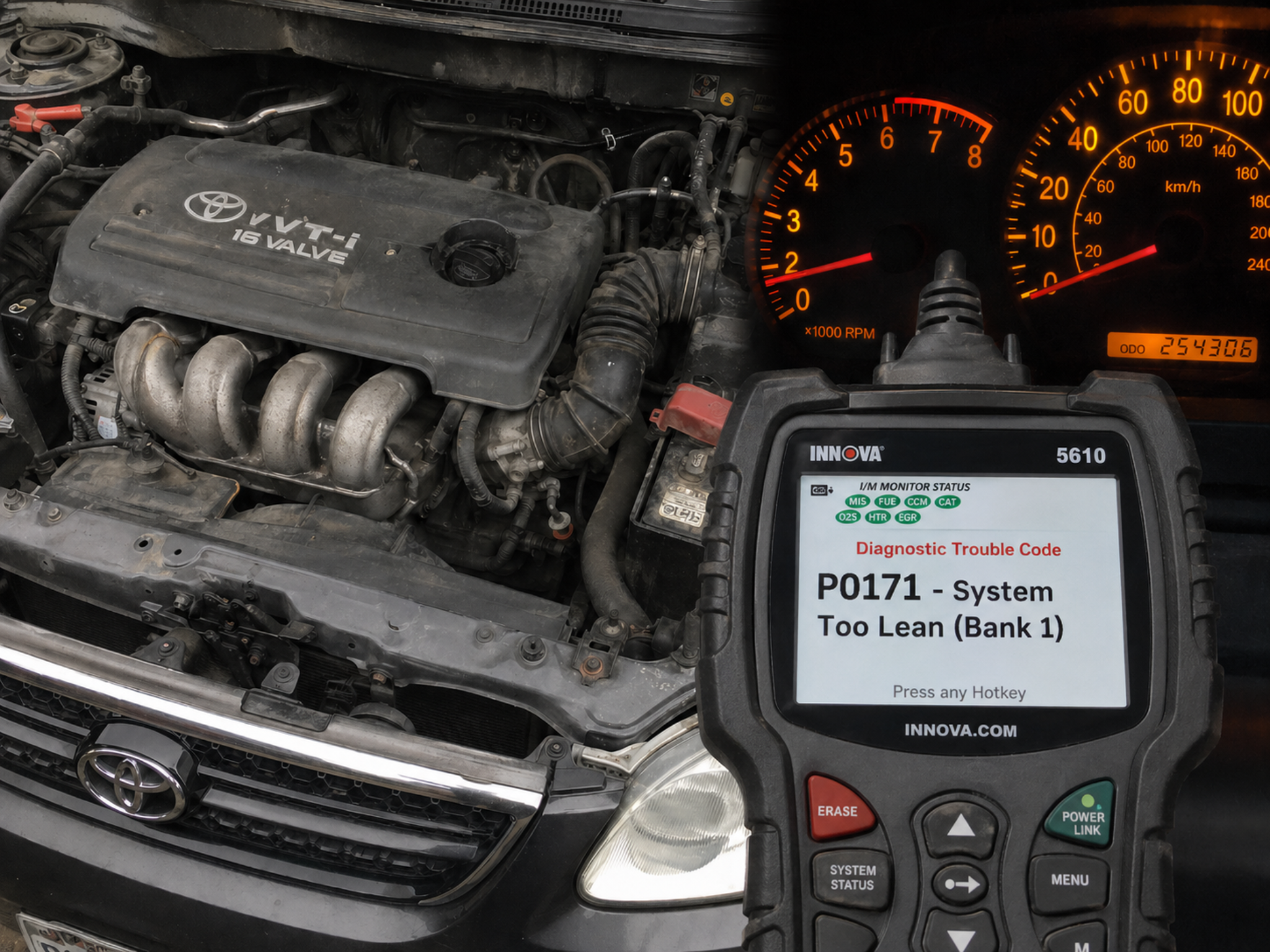
The official definition of the P0171 code is "System Too Lean (Bank 1)." In automotive terminology, a "lean" condition means that within the combustion chamber, the ratio of air to fuel is imbalanced—there is too much air and too little fuel (gasoline) for an efficient burn.
The Air-Fuel Ratio: The 14.7:1 Golden Rule
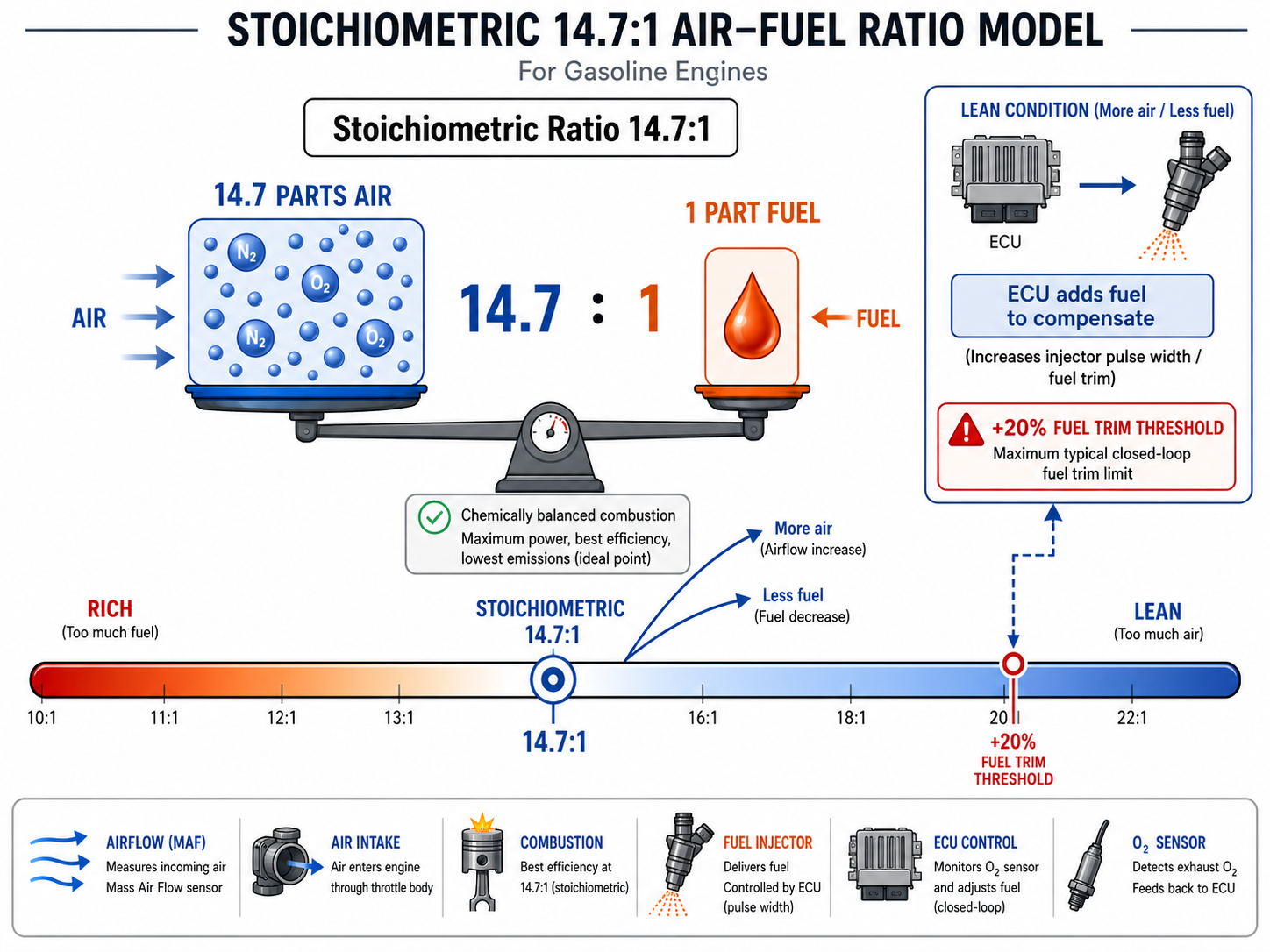
To ensure peak engine performance and longevity, the Engine Control Unit (ECU) constantly strives for a theoretical ideal air-fuel ratio, known as the stoichiometric ratio, which is 14.7 parts air to 1 part fuel.
- The P0171 Trigger Mechanism: When the ECU monitors feedback from the oxygen sensors and detects excessively high oxygen levels in the exhaust, it attempts to compensate by increasing fuel injection.
- Threshold for Failure: If this compensation exceeds a preset limit (typically +20% or more), the computer determines the system cannot self-correct the imbalance, subsequently illuminating the Check Engine Light and storing the P0171 code.
Common Misconception: Does the Code Equal a Bad Sensor?
Many vehicle owners instinctively replace the oxygen sensor the moment they see a P0171 code; however, this is often a waste of money. It is crucial to understand that the P0171 engine code is a measurement result, not necessarily the cause of the failure. The oxygen sensor is likely just faithfully reporting that there is indeed too much oxygen in the system. The root cause usually hides within intake leaks, a dirty mass air flow sensor, or a struggling fuel pump.
Common Search Mistake: P0171 vs. PO171
Users often make spelling mistakes when searching for this code. A common error is typing the number 0 as the letter O, which creates searches such as PO171, PO171 code, or code PO171.
Whether the code is written as P0171 or mistakenly typed as PO171, they refer to the same physical fault: the engine is running too lean, meaning there is too much air or not enough fuel in the air-fuel mixture.
P0171 Code Core Causes: Why is Your Engine "Starving"?
To effectively troubleshoot a P0171 code, one must understand the dynamic balance of the engine's Air-Fuel Ratio. A lean condition essentially boils down to two scenarios: "too much air entered" or "too little fuel was supplied". Below are the five core factors leading to this imbalance:
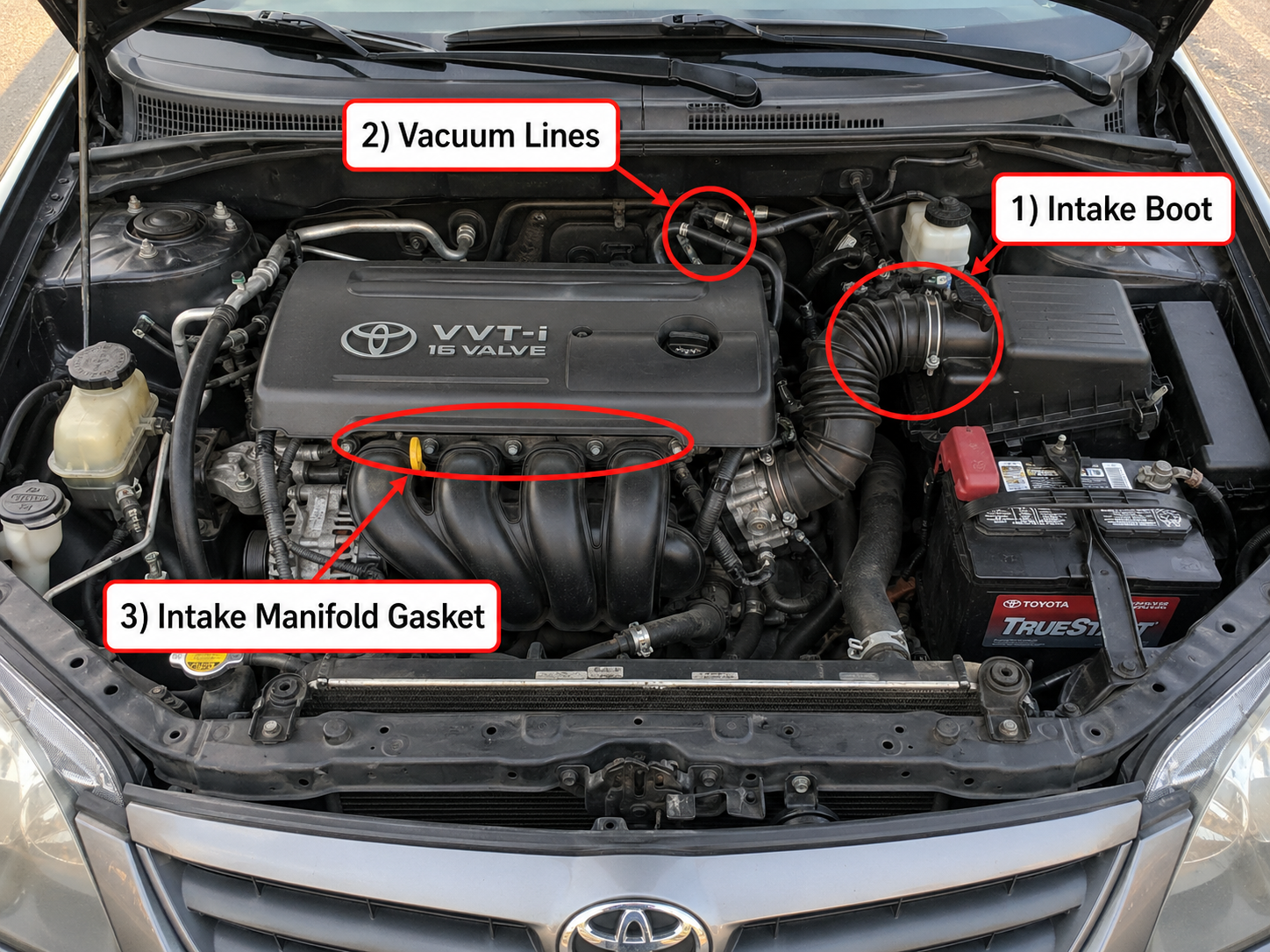
A. Intake System: Unmeasured "Phantom" Air (Vacuum Leaks)
This is the most frequent culprit behind a P0171. The engine breathes in extra air that hasn't been metered by the Mass Air Flow (MAF) sensor.
- Damaged Vacuum Lines: High engine bay temperatures cause rubber vacuum hoses to become brittle, crack, or fall off, allowing air to bypass sensors and enter the manifold directly.
- Ruptured Intake Boot: If the large rubber duct (Intake Boot) connecting the air filter box to the throttle body has cracks, air will "leak" in from here.
- Failed Intake Manifold Gaskets: Gaskets can deform or corrode over time, losing their seal and allowing external air to be sucked into the combustion chamber.
B. PCV System: The Uncontrolled Air Source
The Positive Crankcase Ventilation (PCV) valve is responsible for regulating crankcase gases.
- Stuck PCV Valve: If the PCV valve gets stuck in the fully open position due to carbon buildup, it acts like a "back door" that cannot be closed.
- Consequences: A large volume of unmetered air rushes in through the crankcase, directly diluting the mixture. This is a primary suspect for the P0171 code in many American vehicles.
C. Fuel System: Insufficient Delivery (Fuel Delivery Issues)
Even if the air intake is measured accurately, a lean trigger will occur if the fuel supply cannot keep up.
- Declining Fuel Pump Performance: The pump fails to provide the rated pressure, resulting in insufficient volume or poor atomization.
- Clogged Fuel Filter: Neglecting filter changes leads to restricted flow, causing a severe fuel shortage under high-load conditions.
- Clogged Fuel Injectors: Deposits from low-quality fuel can block the tiny nozzles, making the actual fuel spray less than what the computer commanded.
D. Sensor Issues: Misleading "Senses" (Faulty Sensors)
Sometimes the mechanical hardware is fine, but the computer is misled by incorrect signals.
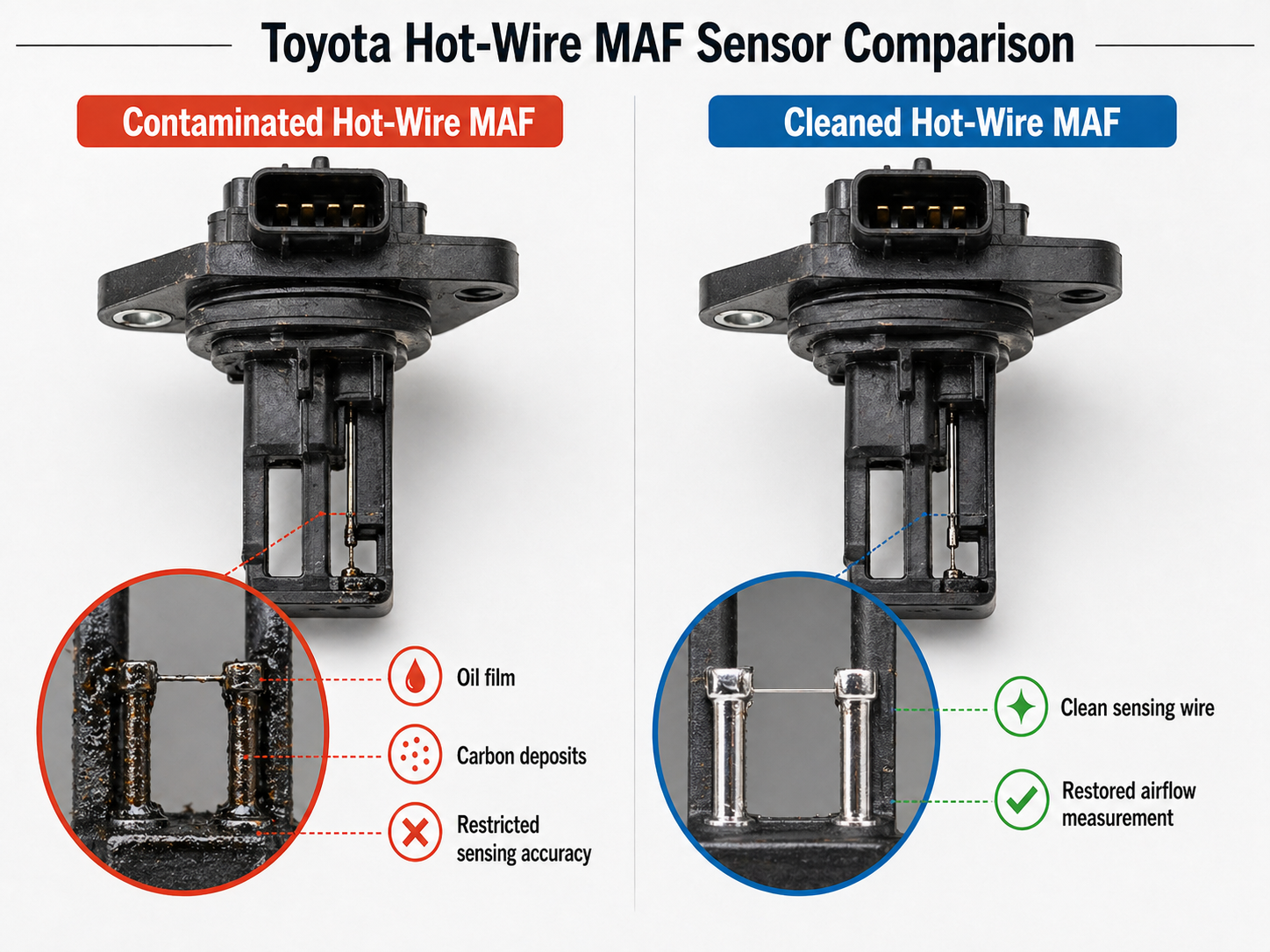
- Dirty MAF (Mass Air Flow) Sensor: This is the engine's "nose". Even a microscopic layer of oil or dust on the sensing wire will cause it to underreport air intake, leading the ECU to reduce fuel.
- Aging Upstream O2 Sensor: The oxygen sensor monitors exhaust gases. If it becomes sluggish or contaminated (silicone poisoning), it may falsely report high oxygen levels, inducing a P0171.
E. Exhaust End: Leaking Exhaust Manifolds
This is a frequently overlooked "stealth" cause for the po171 code.
- Leak Location: If there are cracks in the exhaust manifold or a leak at the gasket interface before the oxygen sensor, outside air can be "pulled" into the exhaust pipe due to exhaust pulses.
- False Signals: When the oxygen sensor contacts this outside air, it assumes the combustion was incomplete (excess oxygen), sending a false lean signal to the ECU. This is actually a "false lean" condition. If you suspect a leak, refer to our exhaust header leak repair guide or browse our performance exhaust manifolds.
P0171 Code Symptoms: Recognizing Your Engine's "Body Language"
When the air-fuel ratio is out of sync, your vehicle acts like an athlete struggling for breath and energy. Beyond the illuminated dashboard light, a P0171 condition manifests through several distinct physical symptoms:
1. Check Engine Light (CEL)
This is the most immediate signal. Your car's computer has detected that the Long Term Fuel Trim (LTFT) has exceeded its compensation limits and triggers the light to alert the driver.
2. Rough Idle & Shaking
Because there is too much air and not enough fuel, the mixture struggles to ignite steadily at low RPMs. You may feel a rhythmic shaking through the steering wheel or seat while stopped at a red light.
3. Hesitation & Power Loss
When you step on the gas for acceleration, the lean mixture lacks the explosive force required. You might experience a 1-2 second "lag" or a stumbling sensation as the engine gasps for fuel.
4. Poor Fuel Economy
It sounds counterintuitive—less fuel should mean better mileage. However, because the ECU is desperately trying to compensate for the lean condition by dumping extra fuel, your overall MPG usually drops.
5. Engine Noises (Knocking or Pinging)
A lean mixture burns faster and at much higher temperatures. This can cause pre-ignition, resulting in a metallic "tapping" or "pinging" sound, which can lead to physical damage to the pistons over time.
6. Hard Starting (Cold Starts)
Engines require a richer fuel mixture to start, especially when cold. If the system is already leaking air or lacking fuel pressure, the car may take multiple tries to crank or stall immediately after starting in the morning.
4. How to Troubleshoot the P0171 Code: Are There Differences Between Car Brands?
Troubleshooting a P0171 code (or po171) is like a detective game. While the fundamental principles are the same for all vehicles, different brands often have distinct "common failure points" due to their unique engineering and component suppliers.
General Troubleshooting Process (Applicable to All Models)
- Visual Inspection: Start by checking all vacuum lines and intake hoses for cracks, dry rot, or disconnections.
- Clean the MAF Sensor: Use a specialized MAF cleaner to spray the sensor’s fine wires. This is the most cost-effective and often fastest fix.
- Smoke Test: Injecting smoke into the intake system to see where it escapes is the "ultimate weapon" for locating tiny, invisible vacuum leaks.
- Analyze Live Data: Observe Fuel Trim values. If the values are high at idle but drop when you rev the engine, it usually points to an intake leak. If values remain high or worsen at high speeds, the issue is likely fuel delivery.
Brand-Specific "Common Issues" Analysis
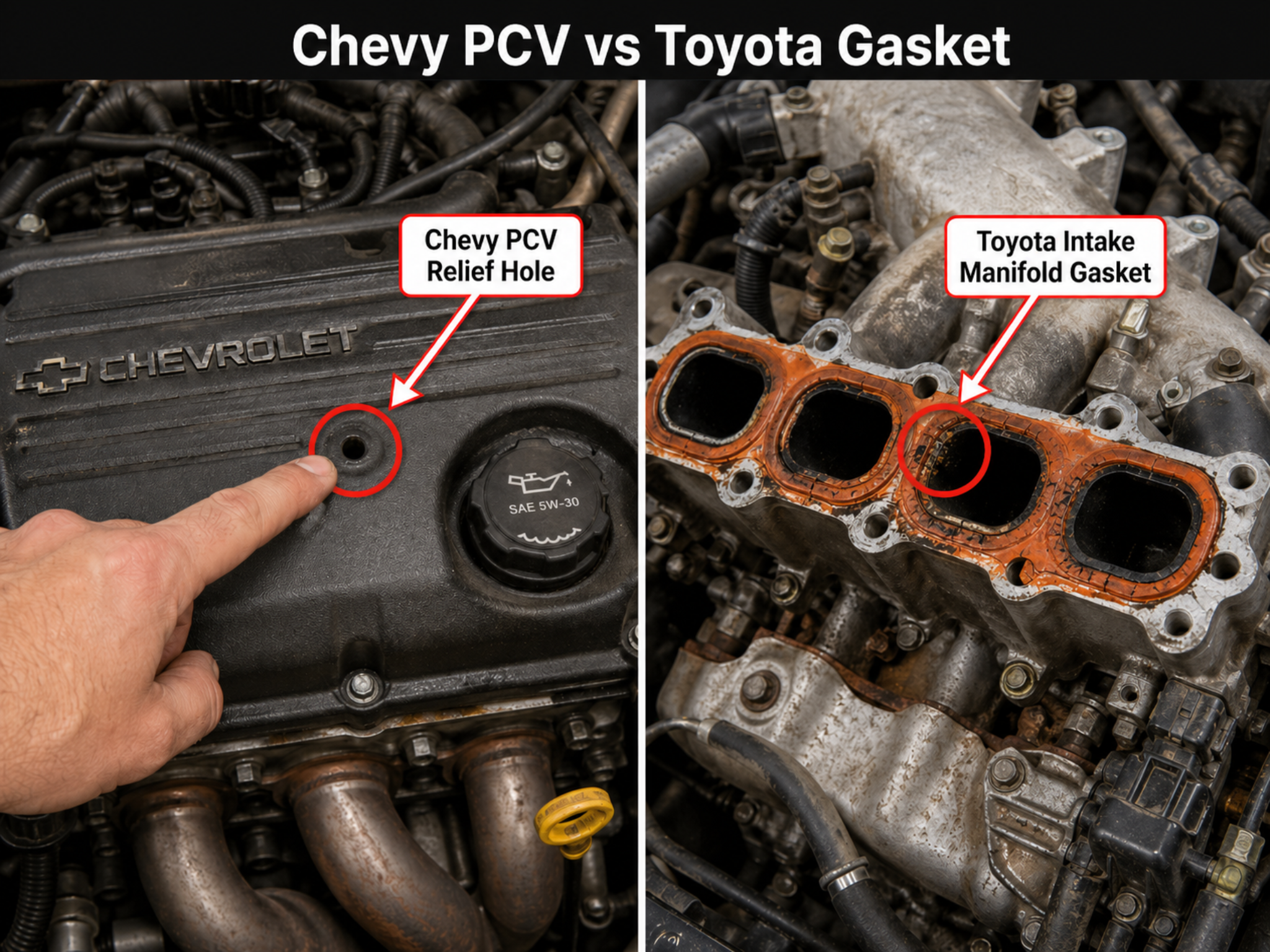
Different engines or models may require focus on specific areas. Here are the primary suspects based on vehicle make:
Chevrolet (Chevy / GM Vehicles)
- The Culprit: A ruptured PCV Valve diaphragm. On models like the Cruze or Silverado, the PCV valve is integrated into the valve cover. A torn diaphragm creates a massive vacuum leak.
- How to Check: With the engine running, place your finger over the small vent hole on the valve cover. If you feel suction or the whistling noise stops, the valve cover needs replacement.
Toyota
- The Culprit: Aging Intake Manifold Gaskets, especially on the Corolla and Matrix. The original orange rubber gaskets harden and shrink over time.
- How to Check: This leak is usually most prominent during a cold start (as the rubber expands once the engine warms up, temporarily sealing the leak). If the idle is rough when cold but stabilizes when warm, check the gaskets.
Ford
- The Culprit: Cracked Vacuum Hose Elbows (particularly the PCV hose). On larger models like the F-150, certain rubber elbows are hidden and prone to corrosion.
- How to Check: Inspect the U-shaped or L-shaped rubber connectors located behind the intake manifold. View our Ford collection for specific vacuum and intake parts.
Nissan
- The Culprit: Cracks in the Intake Boot (Air Duct). Nissan intake hoses are prone to developing fine cracks within the accordion-like folds due to engine torque and vibration.
- How to Check: Remove the boot and manually flex the folds to inspect for hidden tears.
5. Related Codes: P0171 VS P0174 Code
In real-world maintenance, a P0171 code rarely appears in isolation. When scanning your vehicle with an OBD-II tool, you will frequently find P0174 following closely behind. Understanding the relationship between these two codes is the key to quickly pinpointing the source of the fault.
What is the Difference Between P0174 and P0171?
- Definition: While P0171 indicates a "System Too Lean" condition for Bank 1 (the side of the engine containing cylinder number one), the P0174 code specifically refers to Bank 2.
- Vehicle Compatibility: You will only encounter a P0174 code on V6, V8, or other multi-bank engine configurations. If you are driving an inline four-cylinder (L4) engine, you will typically only see P0171.
Why Do They Often Appear Together?
If your scan tool shows both P0171 and po174 appearing as a pair, it actually provides a very valuable diagnostic signal:
- Common Leak Points (Shared Faults): If both banks report a lean condition simultaneously, the problem is likely located in a shared intake path.
- Shared Culprits: Common causes for dual codes include a dirty Mass Air Flow (MAF) sensor (which affects the air measurement for all cylinders) or a rupture in the main intake boot before the throttle body.
- Diagnostic Logic: In this scenario, you can largely rule out a failed gasket on a specific cylinder head and instead focus your inspection on the MAF sensor, the main intake tubing after the air filter box, and the primary PCV valve.
Dealing with Isolated Codes
If only P0171 (or only P0174) appears, you are likely dealing with a localized fault. This means only one specific bank of cylinders is being affected.
- Localized Inspection: You should focus on components unique to that side of the engine.
- Examples: Potential issues include a leaking intake manifold gasket on the Bank 1 side, a clogged fuel injector specific to Bank 1, or a faulty Bank 1 oxygen sensor that is "lying" to the computer.
Brand-Specific Diagnostic Correlations
p0174 ford / po174 chevy: On a Ford F-150 or a Chevrolet V8 pickup, seeing these two codes together often suggests that the main vacuum plenum or the MAF sensor needs cleaning or repair.
6. Conclusion: Don't Ignore the "Chronic Inflammation" of Your Engine
In summary, while the P0171 code is a common diagnostic trouble code, it should never be ignored. It acts as a form of "chronic inflammation" for your engine; if left unaddressed, it can eventually evolve into an incredibly expensive repair bill.
Key Takeaways for P0171 Maintenance
- Understand the Balance: A lean condition means the critical 14.7:1 air-fuel ratio is compromised.
- Start Simple: Always begin with low-cost solutions like cleaning the MAF sensor and performing a visual inspection of vacuum lines.
- Follow Brand Patterns: Be mindful of your vehicle's specific vulnerabilities, such as the PCV valve in a Chevy or the intake gaskets in a Toyota.
Ultimately, a po171 code is often caused by small issues—like aging seals or dirty sensors—rather than a catastrophic engine failure. By following a logical diagnostic path and considering related codes like P0174, most drivers can resolve the issue without unnecessarily replacing expensive components like oxygen sensors.