 Contents
Contents
- Key Specification Comparison: Exhaust Manifold vs. Headers
- What Is an Exhaust Manifold
- What Are Headers on a Car?
- In-Depth Difference Between Headers and Exhaust Manifold
- Manifold vs Headers: Which One Should I Choose?
- Buying Pitfalls for Headers
- Recommended Choice: SuncentAuto Exhaust Manifolds and Headers
- Conclusion
- FAQs
Many American car owners encounter one question when repairing or upgrading their exhaust system: exhaust manifold vs headers, which one should they choose? Here is the truth in one sentence:
If your goal is peace of mind, durability, and saving money, stick with the factory exhaust manifold; if you are pursuing horsepower gains, an explosive exhaust sound, then headers are your best choice.
This article will help you fully understand the difference between exhaust manifold vs headers from several aspects, including structure, performance, price, installation, suitable users, and buying pitfalls.
Key Specification Comparison: Exhaust Manifold vs. Headers
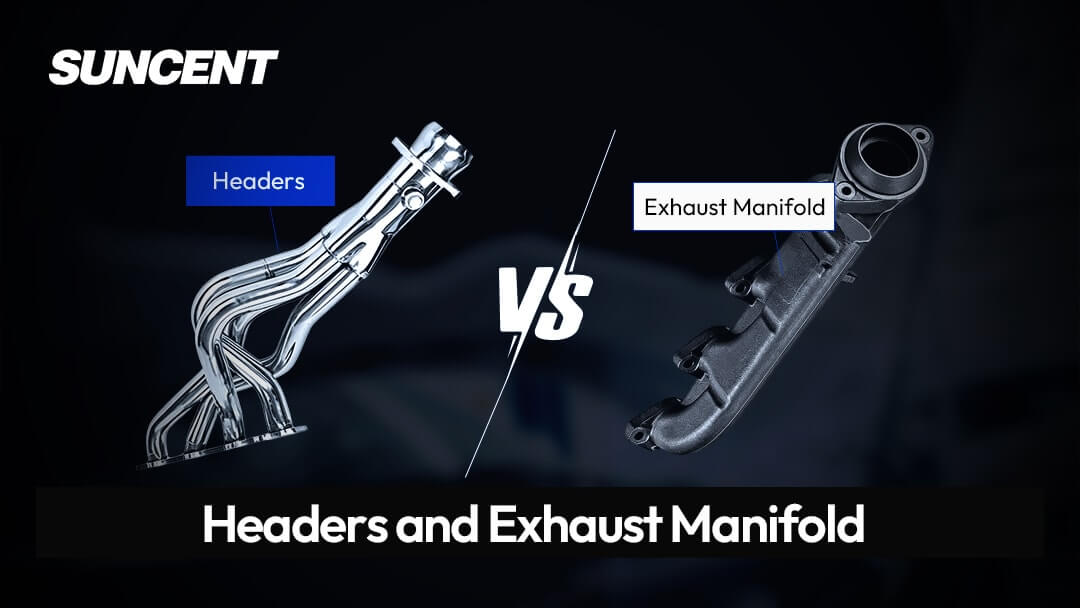
Before comparing headers vs manifolds in detail, here is a quick overview of the most important differences.
| Feature | Exhaust Manifold | Headers |
| Material | Cast iron | Thin-wall stainless steel or ceramic-coated tubes |
| Main Use | OEM replacement, daily repair | Performance upgrade, improved exhaust flow |
| Structural Design | One-piece, short and compact | Multiple independent tubes converging together |
| Performance Gain | Almost zero, factory baseline | Significant improvement, about 5–20+ horsepower |
| Sound | Quiet, deep | Loud, crisp, metallic |
| Weight | Heavier | Lighter |
| Installation Difficulty | Direct replacement, simple | Moderate to difficult, some vehicles require modification |
| Typical Price | Lower, $150–$300 | Higher, $200–$1,500+ |
What Is an Exhaust Manifold
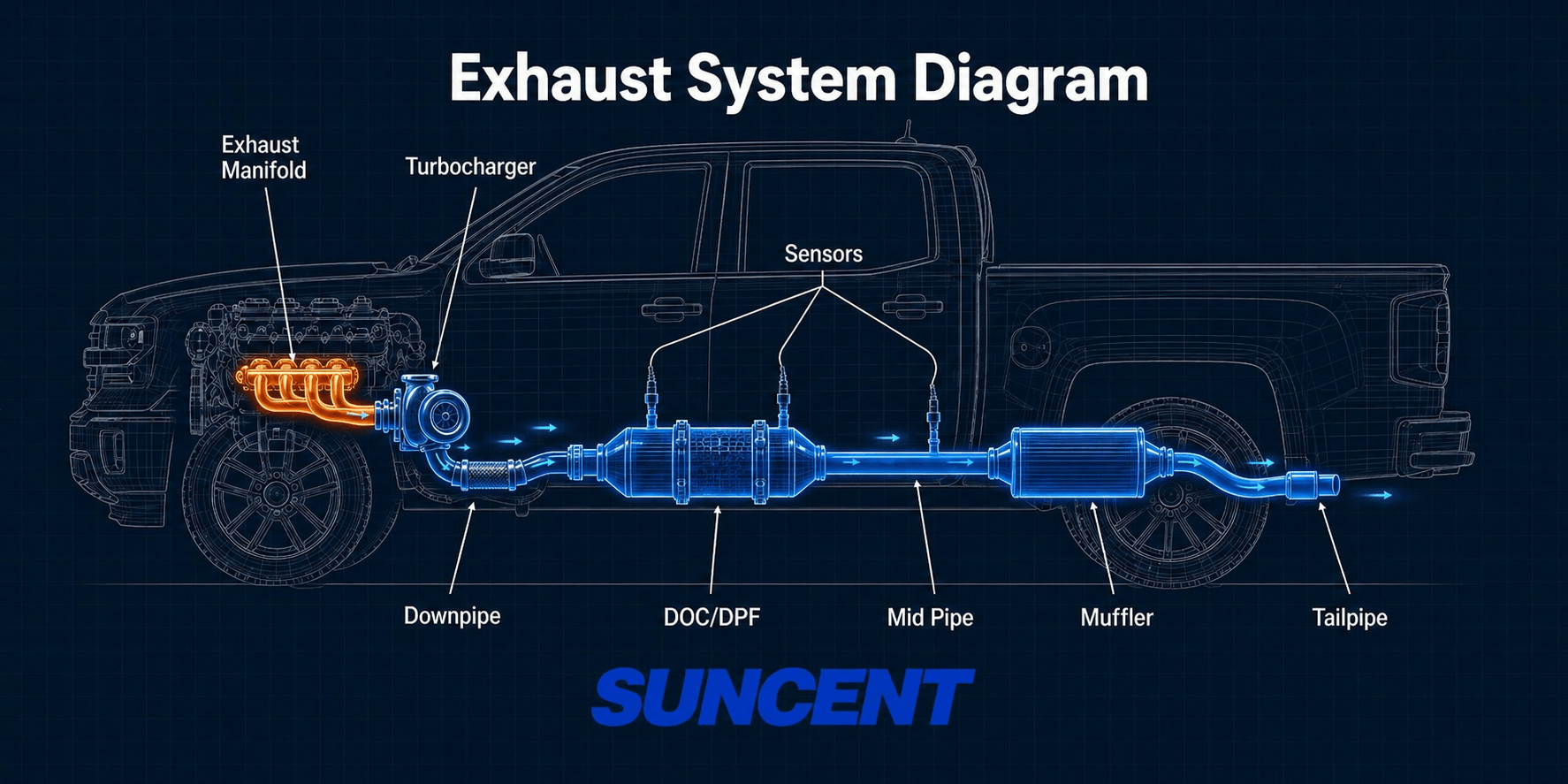
An exhaust manifold is a component installed by the factory on the engine cylinder head. Its task is simple: collect the exhaust gases from each cylinder, merge them into one main pipe, and then send them into the mid-section of the exhaust pipe. On most commuter cars in the United States, such as older Honda Civic or Toyota Camry models, and trucks such as factory Ford F-150 models, this is basically the standard factory component.
Simply put:
Exhaust manifold = the component responsible for collecting exhaust gases from each engine cylinder and sending them out.
Most original equipment manufacturer (OEM) exhaust manifolds are made of cast iron because cast iron is sturdy, affordable, quiet, and compact enough to fit in the confined space of an engine compartment. However, exhaust manifolds are not indestructible. Over time, thermal cycling, rust, broken manifold bolts, gasket failure, cracks, and deformation can all lead to exhaust leaks or a ticking sound.
What Are Headers on a Car?
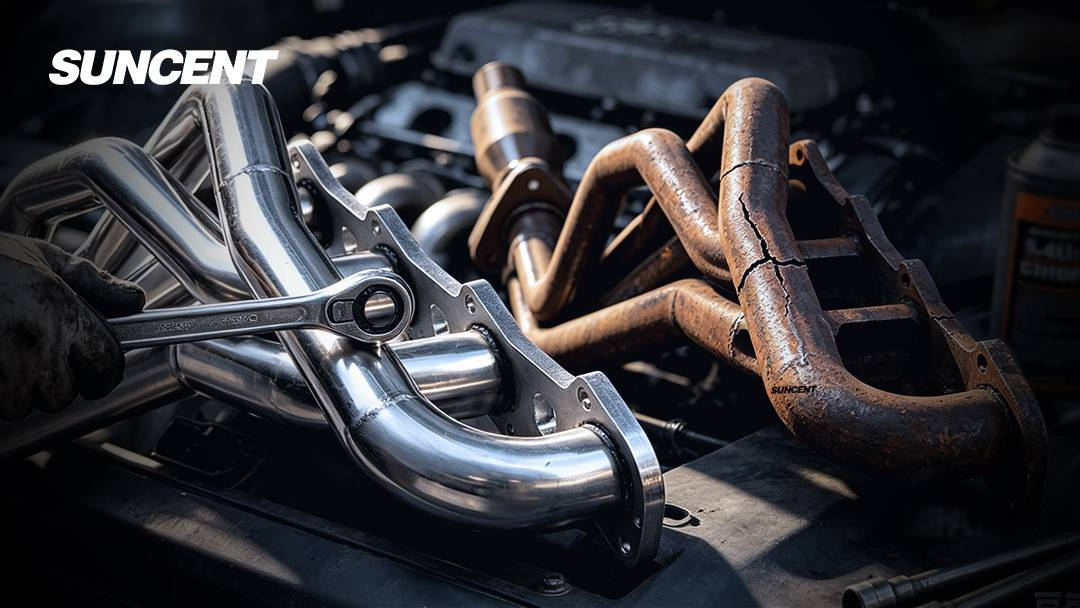
Headers, also called an exhaust header or high-performance exhaust manifold, are aftermarket parts that replace the factory manifold. Unlike the factory manifold, which uses a one-piece cast chamber, the exhaust header features an independent exhaust pipe for each cylinder, which ultimately converges into a single manifold. This design helps exhaust gases escape the engine more smoothly, thereby improving exhaust flow, throttle response, horsepower output, and exhaust note.
Exhaust headers are typically made of stainless steel, low-carbon steel, or ceramic-coated tubing. They are generally lighter and have less drag than cast iron manifolds, but are also more expensive, generate more heat in the engine compartment, and may require more careful installation.
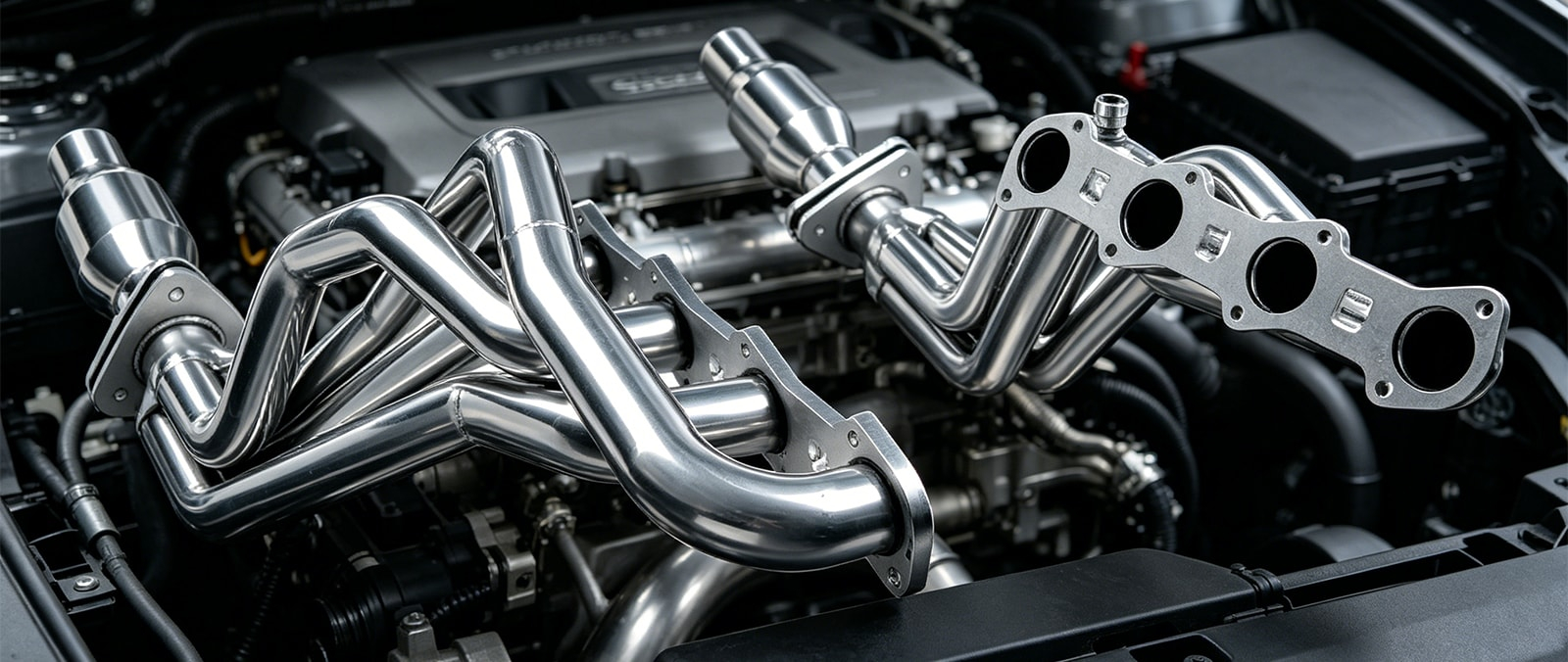
Common types include short exhaust manifolds, long exhaust manifolds, stainless steel exhaust manifolds, and ceramic-coated exhaust manifolds. Short exhaust manifolds are generally easier to install, while long exhaust manifolds typically offer higher performance potential but may present more installation compatibility and emissions challenges.
In-Depth Difference Between Headers and Exhaust Manifold
1. Design
The biggest header vs manifold difference is how each part handles exhaust gases.
Manifold: Uses a "shared chamber" design. Exhaust gases from all cylinders are squeezed into a small "box," causing the exhaust gases to collide with each other and create serious turbulence and backpressure.
Headers: Use an "independent runner" design. Each cylinder has its own dedicated long tube, and they only merge at the final collector. This design prevents exhaust interference between cylinders, using smooth mandrel bends to ensure each cylinder can fully clear exhaust gases before the next stroke begins.
2. Material
Manifold: Mostly made from heavy cast iron. Although it withstands high temperatures, it is extremely heavy.
Headers: Mostly made from stainless steel, such as 304/409 stainless steel, or mild steel. Stainless steel is lighter and has smoother inner walls.
💡 Driving Tip: If you live in Salt Belt areas such as the Midwest or Northeast, where winter road salt is severe, the corrosion resistance of T304 stainless steel headers will be the best choice to protect your investment.
3. Weight
Cast iron manifolds are extremely heavy; headers can usually reduce front-end weight by 10–20 pounds. However, for daily driving, this weight difference is usually less noticeable than the impact of power, sound, and installation cost.
4. Heat Management
Manifold: Thick walls and good insulation, but once heated, it dissipates heat very slowly.
Headers: Dissipate heat quickly, but because the tube walls are thin, they can increase under-hood temperature.
Solution: High-performance headers are usually recommended to use ceramic coating or heat wrap to protect plastic parts and wires inside the engine bay.
5. Performance
Manifold: At high RPM, airflow interference occurs, limiting high-RPM performance.
Headers: Headers optimize pulse frequency, and at high RPM you can feel a noticeable push of power. Common aftermarket headers usually add 5–20+ horsepower. If paired with a tune on a V8 engine, the improvement can be even more impressive.
6. Sound
An exhaust manifold is usually quieter, with a sound closer to factory. Its structure is thicker and shorter, providing some noise suppression.
Headers usually sound more noticeable, especially when paired with a performance exhaust. The sound becomes sportier, sharper, or more aggressive. However, headers are not the only component that determines sound.
7. Price and Installation Cost
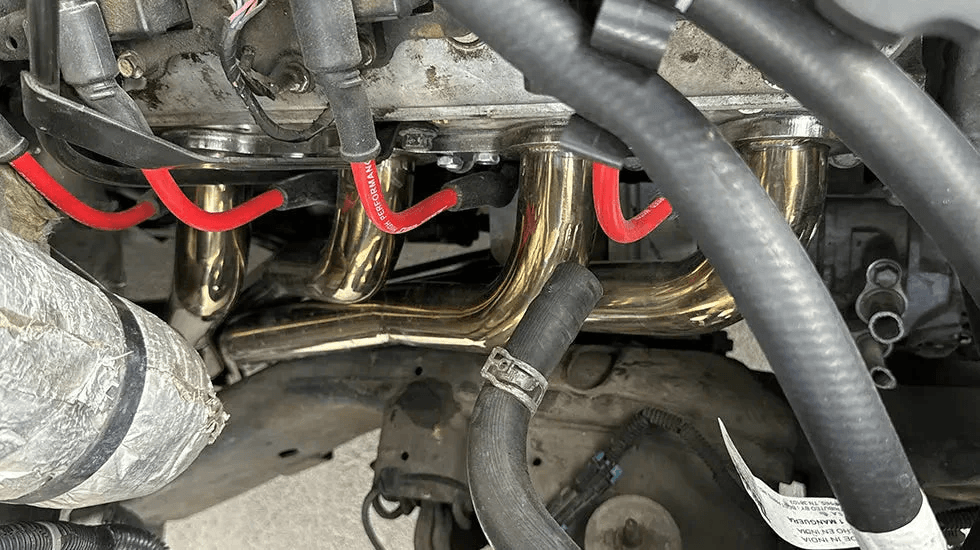
In an exhaust manifold vs header cost comparison, replacement exhaust manifolds are usually cheaper, with common models costing about $150–$300. Since they are direct replacements, labor costs are also relatively low. Headers cost much more. A quality set of headers usually costs between $200 and $1,500. Shorty headers usually take about 3–5 hours to install; long-tube headers may take 6–10+ hours, and some vehicles may require lifting the engine or modifying steering components.
8. Emissions
This is especially important for American users. A factory exhaust manifold is usually easier to keep emissions-compliant because it is designed according to the OEM system. Headers require caution. Some headers may not comply with emissions regulations in certain states. If you are in California or another state with strict emissions inspections, make sure to confirm before buying headers.
Manifold vs Headers: Which One Should I Choose?
1. When to Choose an Exhaust Manifold
If the following descriptions fit you, the factory manifold is your best choice:
Mostly daily commuting: You only need the car to reliably take you from point A to point B, and you do not want the exhaust sound to be too loud.
Pursuing maximum reliability: You do not want to check whether bolts are loose every once in a while, or worry about thin-wall tubes cracking.
Living in an area with very strict emissions laws: For example, California or New York. A factory manifold is the safest way to ensure you pass a smog check.
2. When to Choose Headers
If you have the following preferences, upgrade to headers without hesitation:
Pursuing horsepower and torque: You have already modified the cold air intake or mid/rear exhaust, and headers are the final step to unlock the power bottleneck.
Weekend player / track enthusiast: You enjoy the roar of a V8 or the crisp sound of a high-performance four-cylinder engine and want to show off your car at gatherings.
Pursuing handling: You are sensitive to vehicle weight and want to improve steering feel by reducing the cast iron weight at the front of the car.
Restoring and beautifying an old car: Your factory manifold is already rusty, and you want to replace it with a shiny stainless steel or ceramic-coated header to make the engine bay look more professional.
Quick Decision Table
| Your Pain Point / Need | Recommended Option | Reason |
| "I just want to fix the leak as cheaply as possible." | Exhaust Manifold | Parts are cheap, and installation cost is also low. |
| "I want my V8 to sound more aggressive." | Long-Tube Headers | This structure provides the most authentic muscle car sound. |
| "I live in Boston, and the roads are full of salt." | T304 Stainless Headers | Cast iron will rust through, regular steel will rot, and only 304 stainless steel can withstand it. |
| "I want performance, but I don't want major modifications." | Shorty Headers | Usually bolt-on, retains the factory catalytic converter, and offers the best balance. |
Buying Pitfalls for Headers
When buying headers, be sure to pay attention to the following points:
1. Strictly Confirm Fitment
The same vehicle model may not be compatible across different years, engines, or emissions versions. Do not just look at whether they "look similar"; you must match by vehicle. You can choose suppliers like SuncentAuto that offer a vehicle fitment tool.
2. Check Welding Quality
Headers are made by welding multiple thin-wall tubes to a flange. Cheap products often have uneven welds or pores. After dozens of extreme heat cycles, these low-quality welds are highly likely to develop tiny cracks. Once the welds crack, exhaust gas leaks before reaching the oxygen sensor, which will inevitably trigger the Check Engine Light.
3. Stainless Steel Grade
If you live in Snow Belt areas such as the northeastern or midwestern United States, material is the lifeline. Prioritize T304 stainless steel, which has higher nickel content and much better corrosion resistance than cheap T409 steel.
4. Flange Thickness
The flange is the sealing surface where the headers connect to the cylinder head. It is recommended to choose products with a thickness of at least 3/8 inch, about 9.5 mm. A flange that is too thin can easily warp under heat. Even if you use the most expensive gasket, it cannot completely solve the "tick-tick-tick" noise caused by an exhaust leak.
Recommended Choice: SuncentAuto Exhaust Manifolds and Headers
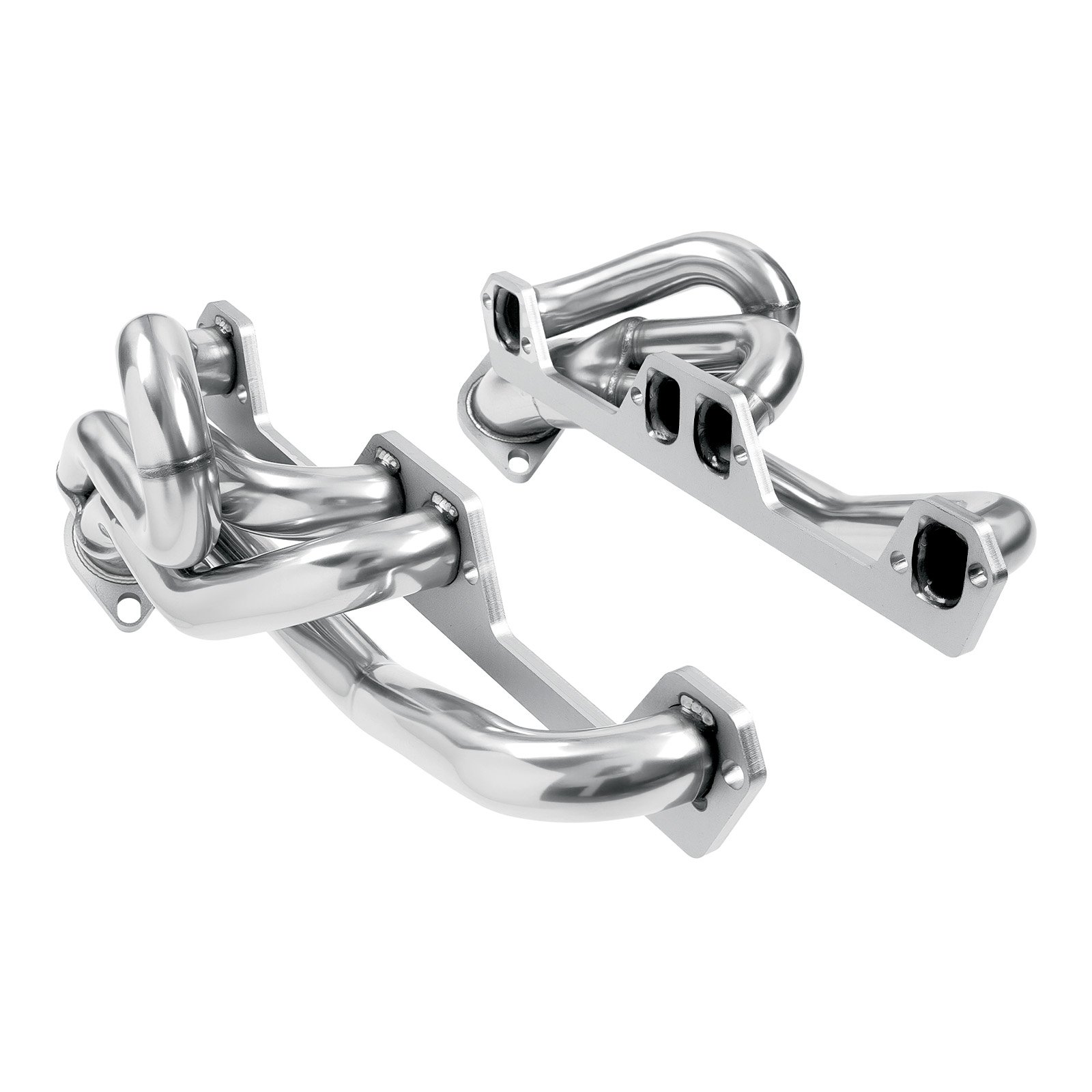
If you are comparing exhaust manifolds vs headers and want to balance repair budget, fitment, and performance improvement, SuncentAuto Exhaust Manifolds & Headers are an aftermarket option worth considering.
Compared with traditional factory cast iron manifolds, SuncentAuto offers multiple stainless steel exhaust manifolds and headers, covering brands such as Powerstroke, Chevrolet, Dodge, and Nissan. They are suitable for daily repair replacement, exhaust system upgrades, and some performance modification needs.
Why Choose SuncentAuto?
🔧 T-304 full stainless steel, salt-resistant and rust-resistant, suitable for Snow Belt areas.
🎯 CNC equal-length runners + 3/8'' thick flanges, reducing the risk of leaks.
📦 Includes gaskets and mounting hardware, ready to install out of the box.
🚚 Free shipping within the United States + 45-day returns, worry-free after-sales support.
💬 24/5 live customer service + vehicle fitment tool, helping avoid wrong purchases.
If you've read this far, congratulations! Our readers are eligible for a 12% discount on all items!
Conclusion
Choosing between an exhaust manifold and headers ultimately depends on your driving goals and budget.
Stick with the manifold if you prioritize reliability, quiet operation, low cost, and low maintenance. For daily commuting, regular driving, and work trucks that are never pushed to redline, a cast iron manifold is a smart and practical choice.
Upgrade to headers if you want noticeable horsepower gains, a deeper exhaust sound, and sharper throttle response. Quality headers from reputable brands can bring a 10–25 horsepower increase, even without tuning. If paired with a full exhaust system and professional ECU tuning, the gains can be greater.
No matter which path you choose, buy the right part the first time. Buying cheap, low-quality parts may cost you far more later in gaskets, rework labor, exhaust leaks, and Check Engine Light troubleshooting than the small amount you saved.
👉 Not sure whether your car should use a manifold or headers? Go to SuncentAuto, enter your Year/Make/Model, and the system will automatically filter compatible products.