 Contents
Contents
- Why 2003 Ford F-150 5.4 2V Daily Drivers Are Moving Away from the Factory Exhaust Manifold
- Exhaust Manifold vs Headers: Which Makes More Sense for Your 2003 Ford F-150?
- Short Tube Headers vs Long Tube Headers: Which One Should a 2003 Ford F-150 Choose?
- How to Choose the Right Headers for a 5.4 2V Engine: What to Check Before You Buy
- Conclusion
- FAQs
For many owners still driving a 2003 Ford F-150 5.4L 2V, this truck is the workhorse for daily deliveries, commuting, and family transportation. But as mileage climbs, the factory cast-iron exhaust manifold( header ) becomes prone to cracking or breaking studs, creating that familiar exhaust tick that not only makes your V8 sound rough, but also turns every drive into a frustration.
Based on our user research, more and more 2003 Ford F-150 daily-driver owners are no longer satisfied with patching factory parts and are choosing to upgrade directly tolong tube headers. Why? Because when comparing exhaust manifold vs headers, the answer becomes clear: a high-quality set of stainless steel exhaust headers can help address exhaust leak issues while giving this older 5.4 2V engine a more responsive feel and a far more engaging exhaust note.
If you are looking for a way to make your daily commute more enjoyable and give your truck more presence, or if you are trying to decide whether short tube headers or long tube headers are better for your needs, this guide will give you practical advice.
Why 2003 Ford F-150 5.4 2V Daily Drivers Are Moving Away from the Factory Exhaust Manifold
Many people think only race vehicles need truck exhaust headers. But for drivers who use a 2003 Ford F-150 5.4L Triton V8 every day, the factory exhaust manifold has three major weaknesses that gradually take the fun out of ownership.
1. Fixing the Exhaust Tick
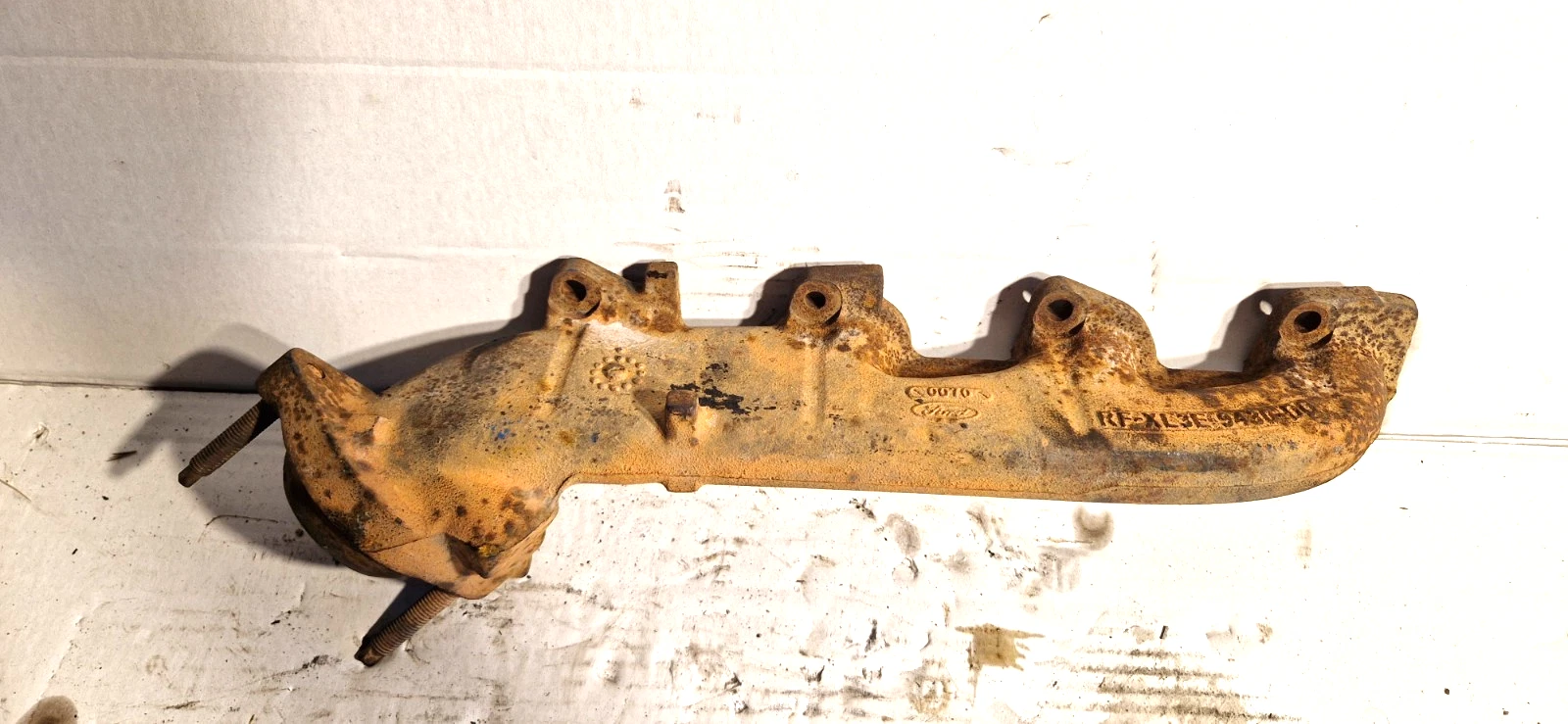
This is one of the most common issues on the 5.4 2V engine. After countless heat cycles from daily use, the factory cast-iron manifold can crack, and mounting bolts can break. That sharp ticking noise on cold startup is more than just annoying. It can also indicate exhaust escaping in the engine bay. Upgrading to stainless steel exhaust headers with a thicker, more stable 3/8" flange can provide a much stronger sealing surface than stock, helping your truck run cleaner and sound better.
2. Better Airflow and More Immediate Response
The stock manifold is restrictive by design. Exhaust gases compete for space inside a cramped passage, creating significant back pressure. During normal stoplight launches or highway passing, that can make the throttle feel sluggish. Headers are designed to reduce exhaust restriction through smoother tubing. Even without a deeper performance build, that improvement in breathing can make your 5.4 2V engine feel more lively than stock.
3. Bringing Back the V8 Sound You Actually Want
If your truck currently sounds too quiet and uninspiring, headers can change that. They help free up the deep V8 sound that the factory manifold tends to choke off. This is not just about volume. It is about getting a more aggressive, more refined exhaust tone that makes the truck feel more alive every time you accelerate.
Exhaust Manifold vs Headers: Which Makes More Sense for Your 2003 Ford F-150?
For 2003 Ford F-150 5.4 2V owners, the real question is often not whether to modify the truck, but what to replace the failing factory part with. When the stock manifold starts leaking, the real comparison becomes exhaust manifold vs headers.
If your truck is mainly used for daily driving, commuting, and occasional weekend hauling, the decision can be simplified.
If You Want to Keep Things Close to Stock, Stay with the Factory Manifold
- Maximum quietness: Thick cast iron absorbs more engine and exhaust noise.
- Less change required: It follows the stock exhaust routing and behaves like a direct replacement.
- A conservative choice: Best for drivers who do not care about sound, driving feel, or future upgrades and simply want the truck back on the road.
If You Want Better Overall Driving Quality, Choose Headers
According to our user research, most 2003 F-150 owners choosing stainless steel exhaust headers care about the everyday benefits they bring:
- More noticeable exhaust character: Your V8 sounds like a V8 instead of an overly muted daily driver.
- Smoother exhaust flow: Reduced back pressure can make throttle transitions feel more natural during commuting and passing.
- Better upgrade compatibility later on: Whether you plan to add a tune, intake, or cat-back exhaust later, headers create a stronger foundation for the build.
For most daily drivers, the real value of headers is not peak horsepower on paper. It is the difference you feel every morning when you pull away from a stop.
Short Tube Headers vs Long Tube Headers: Which One Should a 2003 Ford F-150 Choose?
This is the most important part of the guide. If you are comparing short tube headers, shorty headers, and long tube headers, here is the quick answer:
- If you want simpler installation, street use, and a more direct bolt-on style upgrade: choose short tube or shorty headers.
- If you want a more aggressive sound, a more serious upgrade path, and do not mind more installation effort: choose long tube headers.
Shorty Headers — The Balanced Choice for a Daily Driver ($174.99)
According to SuncentAuto product specs, this shorty header for the 1997-2003 Ford F-150 5.4L V8 uses 201 stainless steel, with 1.50" primary tubes and a 2.50" outlet.
- Why choose it: It is a practical option for daily drivers. Because the tubes are shorter, it generally works more closely with the factory exhaust path and usually requires less cutting and less movement of surrounding components.
- Sound character: More aggressive than stock, but not excessively loud. If your main goal is to fix an exhaust leak and improve the V8 sound without going too far, this is the easier entry point.

Long Tube Headers — The More Serious Upgrade for Drivers Who Want More ($259.99)
This is the model most favored in user feedback, fitting the 1999-2003 Ford F-150 5.4L Triton V8. It features 1-5/8" primary tubes and a 2-1/2" collector.
- Why choose it: Compared with short tube headers, long tube headers are better suited for owners who want a more noticeable exhaust-flow upgrade and a stronger overall modification feel. With 4 O2 sensor locations and 2 EGR locations, it also offers a more complete hardware layout for compatible applications.
- Sound character: Deeper, fuller, and more aggressive.
- Real-world consideration: Because long tube exhaust headers take up more space, installation can be tighter. If you are willing to put in more installation effort for a stronger upgrade experience, this $259.99 option offers strong value.
How to Choose the Right Headers for a 5.4 2V Engine: What to Check Before You Buy
If your truck is a 2003 Ford F-150 5.4 2V, make sure you look at these five points before placing an order.
1. Confirm Fitment First
This is the most important step. Based on the fitment information, the product must specifically support the Triton V8 5.4L (330 cid) engine.
- Important reminder: 2003 sits right at the transition point of the F-150 generation split. Your truck should be part of the 9th generation range (1997-2003), or the 2004 F-150 Heritage where applicable.
- Engine type matters: Make sure your truck is the 5.4 2V. If your vehicle uses the later 3V version, flange layout and fitment will be different.
Long Tube Header Fitment
| Year | Make | Model | Submodel / Engine |
|---|---|---|---|
| 1999 - 2003 | Ford | F-150 | Base, Lariat, XL, XLT, King Ranch |
| 1999 - 2003 | Ford | F-150 | SVT Lightning & Harley Davidson |
| 2004 | Ford | F-150 Heritage | XL, XLT, SVT Lightning |
| 1997 - 1999 | Ford | F-250 | Base, Lariat, XL, XLT |
| 1997 - 2003 | Ford | Expedition | 5.4L V8 Models |
2. Material Matters for Long-Term Durability
Whether you choose the $174.99 shorty headers or the $259.99 long tube headers, both options use 201 stainless steel.
For a daily-driven truck, stainless steel is not just about appearance. It matters because it holds up better against rain, road debris, mud, and corrosion over time. Compared with stock cast iron that is more prone to rust and fatigue, stainless steel exhaust headers are a stronger long-term solution for a working truck.
3. O2 and EGR Provisions Matter More Than Most Buyers Think
This is one of the biggest advantages of the $259.99 long tube headers. Based on the product specs, it includes:
- 4 O2 sensor locations
- 2 EGR locations
For a daily driver, you do not want unnecessary installation complications. Choosing headers with proper O2 and EGR provisions gives you a more complete starting point for installation and reduces the need for extra fabrication or workaround solutions.
4. Flange Thickness Is a Real Buying Point
The product uses a 3/8" head flange thickness.
This is more important than it sounds. A thicker flange is generally more resistant to warping under repeated heat cycles. On a 5.4 2V engine, that can mean better long-term sealing performance and a lower chance of dealing with the same kind of leak issues again.
5. Set Realistic Installation Expectations
Even though the long tube header uses a bolt-on mounting style, engine-bay space on a 2003 truck is still tight.
- Practical advice: During installation, you may need to temporarily remove components such as the starter or work around tight areas near the steering system. If you plan to install it in your garage, leave yourself enough time and do not expect it to be a quick afternoon job on a high-mileage truck.
Conclusion
For drivers commuting every day in a 2003 Ford F-150 5.4 2V, buying the right headers matters more than simply buying the most expensive option. If your goal is to move beyond the frustration of a leaking stock manifold and bring more V8 character back into your daily drive, upgrading to stainless steel exhaust headers can be a smart long-term move.
Final recommendation:
- If you want better value and simpler installation, choose the $174.99 shorty headers.
- If you want a more aggressive sound and a more serious upgrade path, and you are comfortable with more installation effort, choose the $259.99 long tube headers.