 Contents
Contents
- Exhaust Manifold Replacement Cost Breakdown (2026 Budget Reference)
- Key Factors Affecting the Total Price to Replace Exhaust Manifold
- Bad Exhaust Manifold Symptoms - How to Tell If It Needs Replacement
- Exhaust Manifold Repair or Replacement: Which Is Better?
- Can You Still Drive with a Bad Manifold?
- 5 Practical Tips to Save on Replacement Costs
- Exhaust Manifold Maintenance Tips
- Recommended Choice: SuncentAuto Exhaust Manifolds
- Conclusion
- FAQs
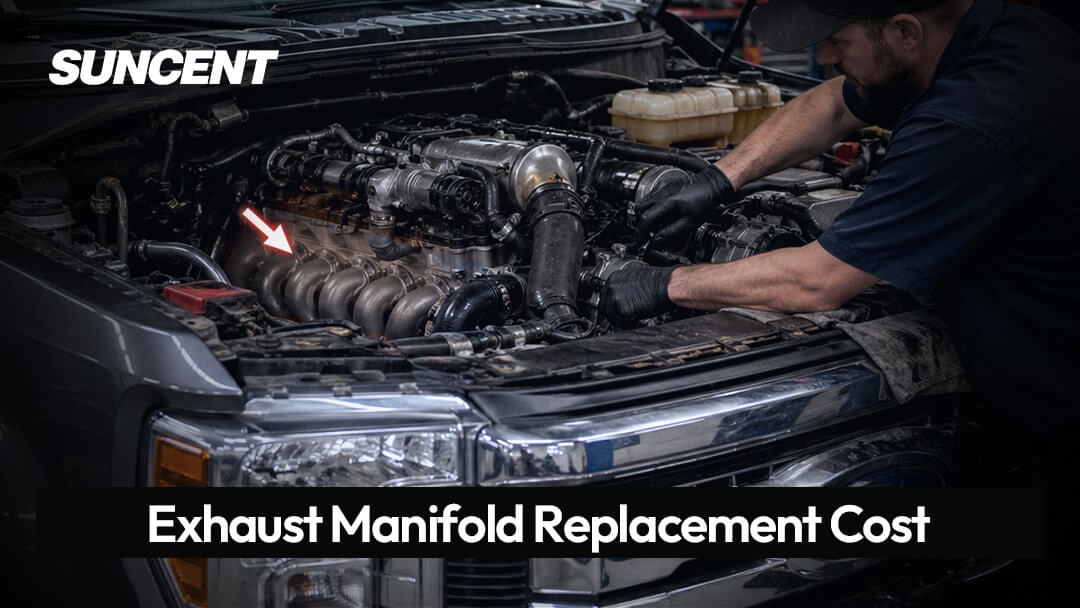
The exhaust manifold is the first point of contact for engine exhaust gases after they leave the cylinders. It must withstand prolonged high temperatures, high pressure, and repeated thermal expansion and contraction. Over time, it may develop cracks, warping, gasket failure, broken bolts, or poor sealing.
When a manifold fails, you might hear a distinct "ticking" sound coming from under the hood or notice an unexplained increase in fuel consumption. If you smell dangerous exhaust fumes inside the cabin, your primary concern is likely: "How much does it actually cost to replace an exhaust manifold?" Don't worry—after reading this article, you will have a clear idea of the exhaust manifold replacement cost.
- Replacement Cost: For most vehicles, professional exhaust manifold replacement typically falls between $800 and $1,600 . Simpler jobs may cost closer to $600, while trucks, V6/V8 engines, luxury vehicles, or jobs involving broken bolts or integrated catalytic converters can exceed $2,500.
- Hidden Costs: The most common and expensive extra expenses in this repair are dealing with rusted/snapped bolts and integrated catalytic converter replacements.
- Safety Hazards: A manifold leak not only increases fuel consumption; the most serious risk is exhaust gas entering the cabin, leading to carbon monoxide poisoning.
- Money-Saving Strategies: Prioritize checking for official recalls and choose high-quality aftermarket parts and independent repair shops to significantly reduce the repair price.
Exhaust Manifold Replacement Cost Breakdown (2026 Budget Reference)
Based on current market exhaust manifold price data and labor rates, here is a typical cost structure:
| Component | Budget Range | Notes |
| Exhaust Manifold Part | $150 – $1,200 | OEM is more expensive; Aftermarket offers better value |
| Gaskets and Hardware | $50 – $150 | Includes seals, reinforced studs, etc. |
| Labor Costs | $400 – $1,200 | Based on 3–8 standard labor hours |
| Estimated Total Cost | $600 – $2,550+ | Lower for sedans; higher for trucks/high-performance SUVs |
💡 The final exhaust manifold replacement bill often lands between $800 and $1,600, but on a luxury V8 can exceed $3,000.
Key Factors Affecting the Total Price to Replace Exhaust Manifold
The exhaust manifold replacement cost varies widely, from a few hundred to several thousand dollars. Understanding these key factors can help you estimate your budget more accurately and avoid being overcharged:
1. Parts Selection: OEM vs. Aftermarket
Original Equipment Manufacturer (OEM) parts are provided by the car manufacturer. While they ensure perfect fitment and warranty, they are usually the most expensive—often 30%-50% more than aftermarket parts. In contrast, aftermarket parts offer more flexible pricing; many high-quality aftermarket options now rival OEM in durability, though brand reputation should be carefully screened.
👉 Real-world example: A Ford F-150 owner on Reddit heard hissing and warbling sounds during acceleration, especially while towing. A well-reviewed local shop quoted $5,400 to replace both manifolds using new Ford OEM parts. The shop refused to use aftermarket components. While this is an extreme case (V8, both sides, dealership-level parts), it shows how quickly costs can balloon if you only consider OEM. 👈
2. Exhaust Manifold Material
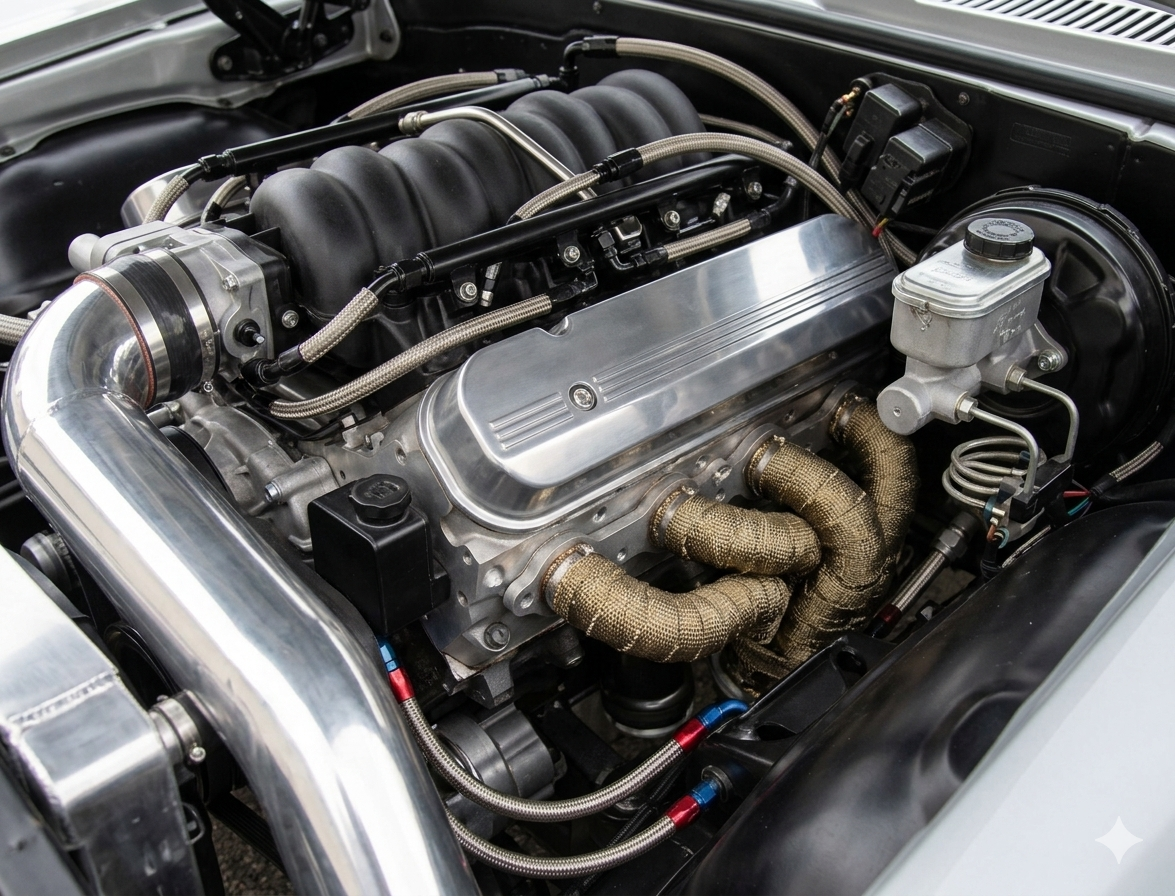
Cast iron is standard on most trucks and SUVs. While cheaper to manufacture, it is prone to cracking due to thermal expansion. Upgraded stainless steel or performance headers offer better corrosion and heat resistance but come at a higher cost.
3. Engine Layout
Inline-four engines usually have only one manifold located at the front, making it easy to remove and resulting in the lowest labor costs. However, V6 or V8 engines have two manifolds (left and right) often buried deep within a crowded engine bay. Due to the extremely cramped space, technicians must remove more surrounding parts, causing labor costs to multiply.
4. Labor Costs and Regional Differences
Labor makes up a large portion of the total bill. In 2026, hourly rates vary significantly between facilities; authorized dealerships usually charge much more per hour than independent shops. Additionally, your geographic location plays a role, as labor rates in major metropolitan areas with high living costs are generally higher than in rural towns.
5. Potential Extra Repairs (The Most Important Hidden Cost)
This is where many new car owners get caught off guard. In exhaust system repairs, the most volatile expenses stem from "hidden damage." Because the exhaust system is exposed to high heat for long periods, studs (bolts) become brittle and rust easily. Surveys show that over 60% of high-mileage pickups encounter broken bolts during manifold removal. If a snap occurs, extracting the bolt can add 2–4 hours of extra labor.
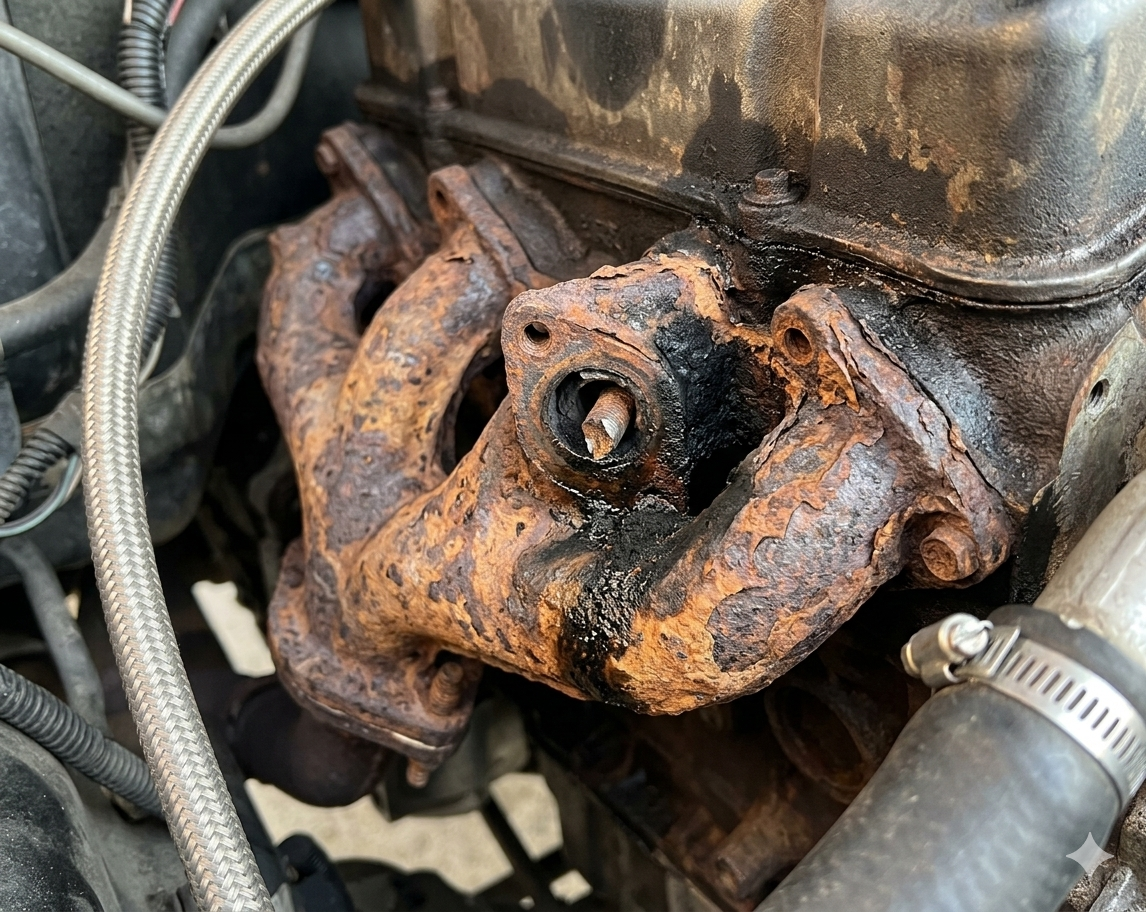
Furthermore, if the vehicle uses an integrated manifold and catalytic converter design, the entire unit must be replaced if damaged, which can drive costs into the thousands.
💡 Professional Advice:
When asking for a quote, be sure to ask: "Does the quote include new gaskets and hardware?" and "How is the extra fee calculated if a bolt breaks?" Confirming these details in advance will make you much more comfortable when the final bill arrives.
Bad Exhaust Manifold Symptoms - How to Tell If It Needs Replacement
A failing or leaking exhaust manifold is usually accompanied by several noticeable physical signs. If you observe the following during daily driving, your manifold likely has a crack or seal failure:
Abnormal Ticking or Tapping Sounds
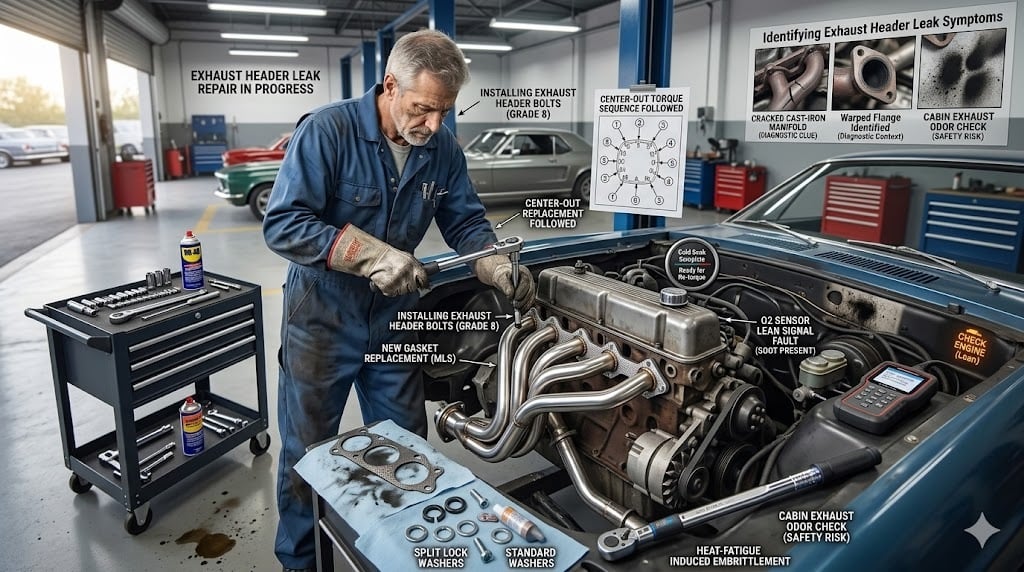
This is the most typical symptom of a leak. You will usually hear a rhythmic "ticking" from the engine bay during a cold start, caused by exhaust gas escaping at high speed through small cracks.
Obvious Exhaust Smell or Smoke in the Cabin
Because the manifold is in the engine bay, leaks allow untreated exhaust to escape and enter the cabin via the AC intake. If you smell strong gas or exhaust while idling, or see faint smoke under the hood, it is a serious risk for carbon monoxide poisoning and must be checked immediately.
Check Engine Light (CEL) Illumination
Modern cars monitor exhaust composition via oxygen sensors. If a manifold is cracked, outside air enters the exhaust stream and skews sensor readings, often triggering codes like P0171 (Lean Mixture) or P0300 (Random Misfire).
Decreased Engine Performance and Power Loss
A leak causes a drop in exhaust efficiency. You may feel sluggish acceleration or a lack of power when climbing hills. Additionally, fuel economy will worsen significantly.
Visible Physical Damage or Overheating
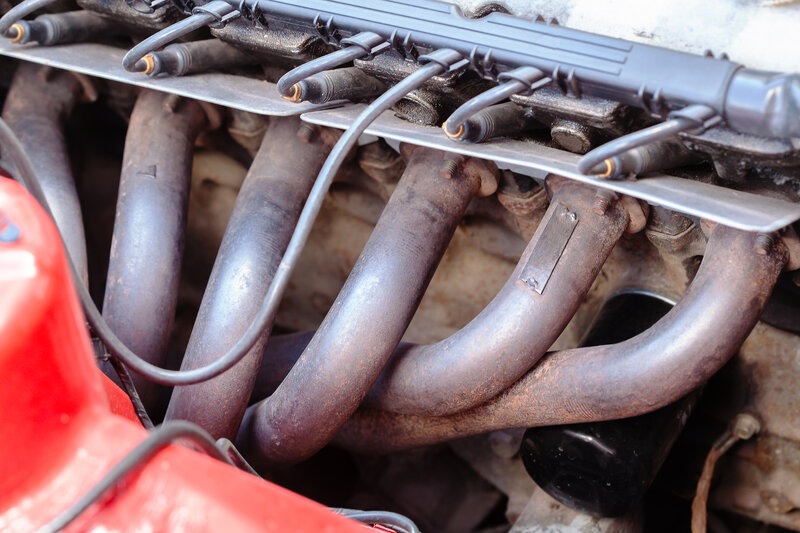
A healthy manifold is usually a consistent metallic or dull rust color. Black carbon soot deposits are "smoking gun" evidence of a leak. Additionally, high-heat leaks can melt nearby plastic wire harnesses, spark plug boots, or aluminum components.
Exhaust Manifold Repair or Replacement: Which Is Better?
Can you just fix it instead of replacing it? It depends on the damage.
✅ Suitable for Repair (Welding):
- A single small crack on a cast iron manifold.
- The crack is in a non-load-bearing area.
- The car has low value and you don't want to invest much.
Note: Welding costs about $150-$400 but may only last a few months to a year.
❌ Must Replace:
- Multiple cracks or a warped/deformed manifold.
- Stainless steel manifolds (welds often crack again quickly).
- Integrated manifold and catalytic converter units.
- Severe corrosion where there is no "good metal" left to weld.
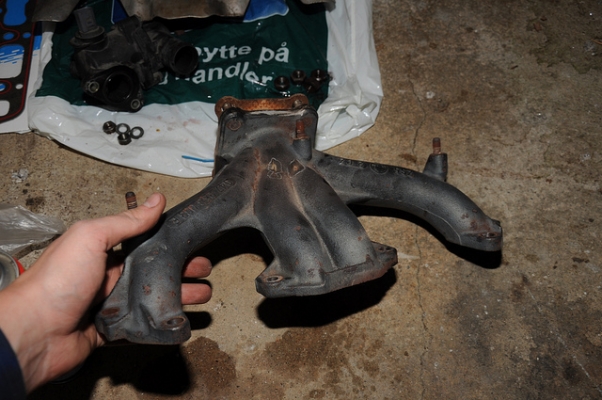
Recommendation: From an economic perspective, direct replacement is often cheaper than repeated repairs. Because labor is so expensive, if a weld fails shortly after, you will have to pay for the labor all over again.
Can You Still Drive with a Bad Manifold?
You can manage for a short time, but long-term delay is extremely dangerous:
- Carbon Monoxide Risk: Toxic, odorless gas entering the cabin can be fatal at high concentrations.
- Ruined Catalytic Converter: Leaks cause the engine to run "rich" (excess fuel), which can melt the converter, costing $1,500+.
- Melting Surrounding Parts: High-heat exhaust acts like a blowtorch on nearby wires and sensors.
5 Practical Tips to Save on Replacement Costs
1. Check for Recalls or Extended Warranties: Some models may have recalls, service campaigns, technical service bulletins, or extended warranty coverage related to exhaust leaks, broken manifold bolts, or emissions components. Always check your VIN on NHTSA.gov or with the dealer.
2. Get a Detailed Quote: Ensure the shop lists parts, hardware, labor, and the "broken bolt extraction fee" separately.
3. Purchase Aftermarket Parts Yourself: Buying brands like SuncentAuto from Amazon or local shops can be 1/2 or 1/3 the price of OEM.
4. Choose Independent Shops Over Dealers: A reputable independent shop can save you $300–$700 in labor differences.
5. DIY (Only for the Experienced): This saves $400–$1,000 in labor. However, if a bolt snaps in the cylinder head, the towing and specialized repair costs will far exceed what you saved.
Exhaust Manifold Maintenance Tips
- Gentle Starts and Shutdowns: Avoid aggressive driving immediately after a cold start. Let the car idle for a minute after long trips to cool down evenly.
- Inspect Hardware Regularly: Check for rusted bolts and tighten them to prevent leaks.
- Maintain Engine Mounts: Good mounts reduce the physical stress put on the manifold by engine vibration.
- Keep it Clean: Wash the underbody after winter to remove road salt and prevent chemical corrosion.
- Monitor Engine Health: Keep spark plugs and O2 sensors healthy to prevent abnormal exhaust temperatures.
Recommended Choice: SuncentAuto Exhaust Manifolds
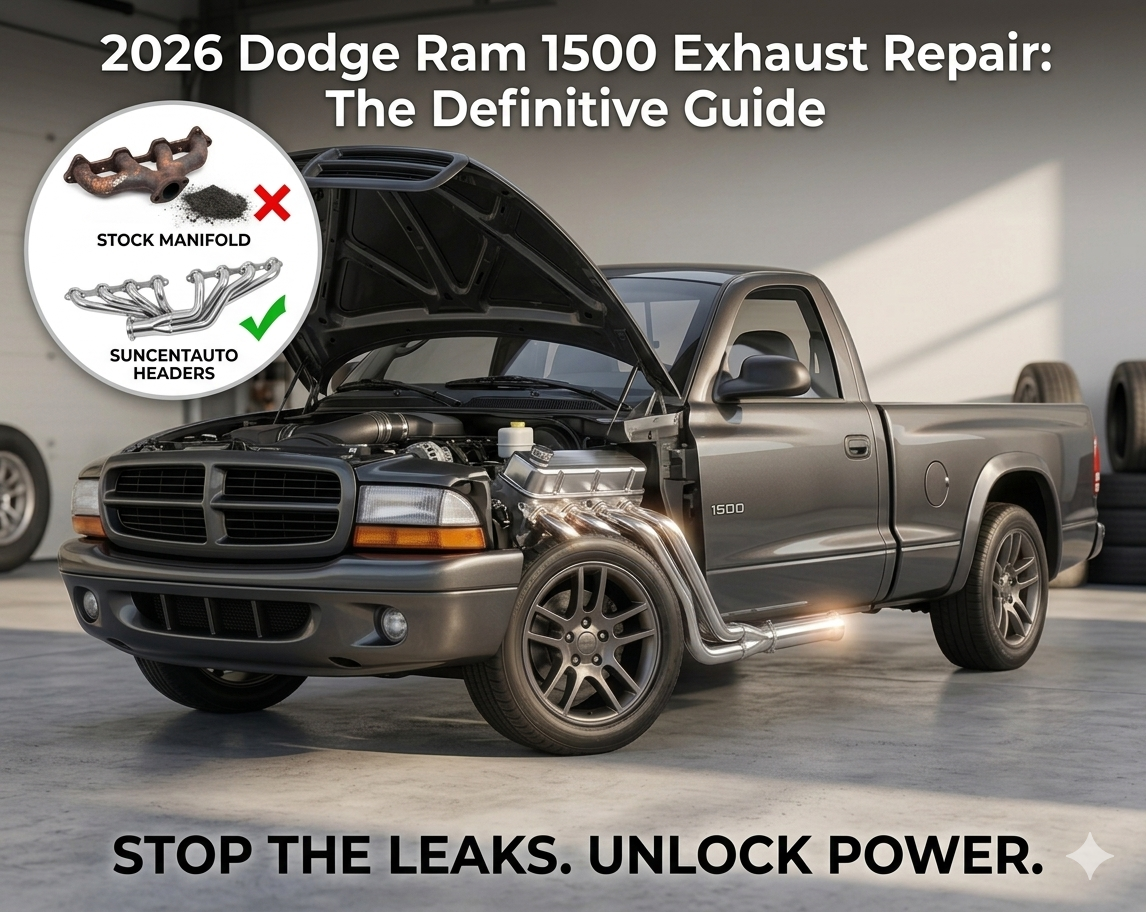
If your manifold is cracked, warped, or severely rusted, SuncentAuto Exhaust Manifolds & Headers are a reliable aftermarket choice for those balancing budget and durability.
- T-304 Stainless Steel: More heat-resistant and less prone to cracking than OEM cast iron.
- Wide Coverage: Products for Powerstroke, Chevrolet, Dodge, Nissan, and more.
- Vehicle Selector: Use their online tool to match your year, make, and model to avoid wrong parts.
- Free Shipping + 45-Day Returns: Reduces the risk of online shopping.
- Discounts: 10% off for new users; 12% off for our blog readers - BLOG12 .
Whether you're comparing the price to replace exhaust manifolds or looking for a manifold for trucks that won't crack, SuncentAuto is a reliable choice.
Conclusion
Replacing an exhaust manifold isn't cheap, but delaying it brings higher risks and costs. While a $1,000 average expense is painful, it is key to vehicle safety and performance. Always get a detailed quote before starting the work.