 Contents
Contents
Many people believe that an exhaust leak is merely a nuisance—making the car sound like a "broken tractor" or creating a noise issue that neighbors might complain about. In reality, it is a "silent killer" lurking under your chassis. The exhaust system is not just for noise reduction; it is a precision-engineered system for pressure management and exhaust gas filtration.
From a structural perspective, the exhaust flow follows this path:
Engine Combustion Chamber → Exhaust Manifold (Collects Waste Gas) → Catalytic Converter (Purifies Harmful Substances) → Muffler (Noise Reduction) → Tailpipe.
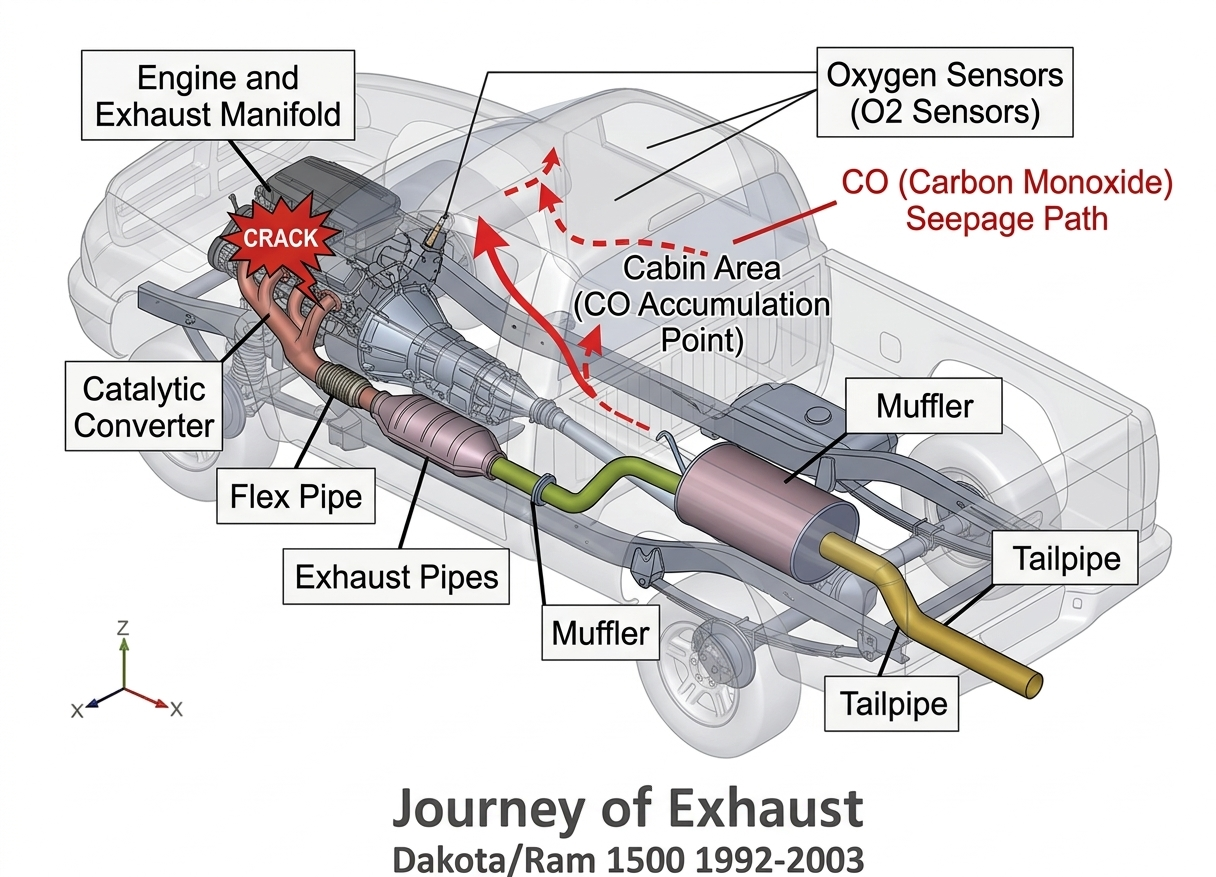
Once a crack appears anywhere in this path, you face the following critical risks:
- Lethal Carbon Monoxide (CO): Referencing a real experience from a Reddit user: "I always thought it was just a weird smell from the AC until I felt dizzy after driving for half an hour. I then discovered an exhaust manifold crack was spraying fumes directly into the AC intake." Carbon monoxide is colorless and odorless; having it enter the cabin is extremely dangerous.
- Plummeting Fuel Economy (MPG Drop): If the leak occurs before the Oxygen (O2) sensor, the sensor will mistakenly detect a "lean" condition (too much air), commanding the ECU to inject excessive fuel.
- Performance Loss: Severe exhaust leaks can lead to a 10% - 15% drop in fuel efficiency and a significant loss of power due to incorrect exhaust backpressure.
What to Do After You Discover an Exhaust Leak
When you hear an unusual "ticking" sound under the hood or a roar from the chassis, don't rush to hand over your money to a repair shop. Following this logic can save you hundreds or even thousands of dollars:
Step 1: Check Your Warranty Coverage First
In North America, the warranty period for emission systems is often longer than the standard bumper-to-bumper vehicle warranty.
- Federal Emissions Warranty: For core components like the Catalytic Converter and ECU, EPA regulations typically mandate coverage for 8 years or 80,000 miles. Since different automakers have varying warranty periods for other exhaust components, it is necessary to contact your specific vehicle provider for details.
- Aftermarket Warranty: If you recently purchased exhaust components from an online performance shop, they usually come with a warranty of one year or more. If a part cracks shortly after installation, prioritize contacting customer service for a replacement or refund rather than paying for repairs again.
Step 2: Choose the Right Repair Shop
For more comprehensive details on general costs, you can check our Exhaust System Repair Cost Guide.
Step 3: Compare Diagnosis and Repair Options
Choosing the right facility is crucial for both repair quality and your wallet. Not all shops are equipped or willing to perform localized repairs.
| Facility Type | Diagnostic Fee | Expertise | Recommendation Index |
|---|---|---|---|
| Dealership (4S) | $120 - $200 | Software matching, full assembly replacement | ★☆☆☆☆ |
| General Repair Shop | $50 - $100 | Routine maintenance, multi-point repairs | ★★★☆☆ |
| Muffler Shop (Specialized) | $0 - $50 (Often Waived) | Welding, custom piping, localized patches | ★★★★★ |
How Much Does Exhaust Leak Repair Cost in 2026?
Exhaust leak repair costs are not just a simple number; they are composed of three distinct parts: "Parts Cost + Labor Hours + Unexpected Complications."
1. Exhaust Manifold Repair and Replacement Cost
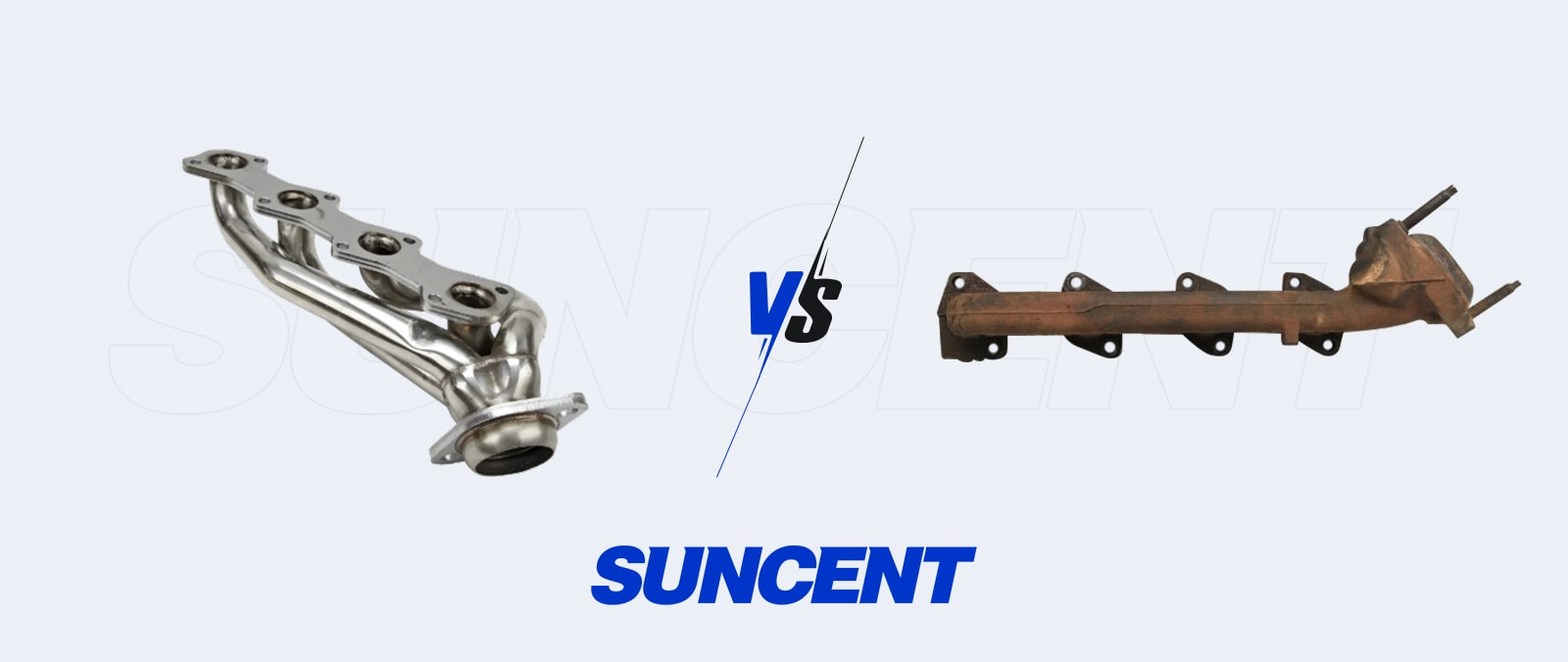
Manifold leaks are usually caused by gasket burnout or cracks resulting from the thermal expansion and contraction of cast iron parts.
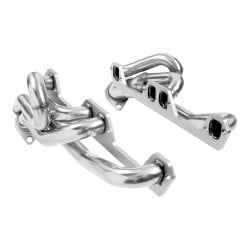
- Parts Cost (The Online Advantage): If you go to a dealership, an OEM manifold quote is typically between $400 - $600. However, on online platforms like SuncentAuto, you can find high-value replacements. For instance, performance-oriented 5.9 Magnum Headers not only fix leaks but also optimize exhaust efficiency for about half the price of OEM parts.
- The Labor "Assassin": Broken Bolts Exhaust manifold bolts are exposed to extreme temperatures for long periods and are highly prone to snapping during removal.
- Routine Labor: $200 - $450 (approx. 2-4 hours of labor).
- Unexpected Labor: In Reddit's r/MechanicAdvice community, countless owners complain: "A $300 job turned into a nightmare when three bolts snapped, and the mechanic charged an extra $400 for extraction." In "Rust Belt" regions, this risk is nearly 70%.
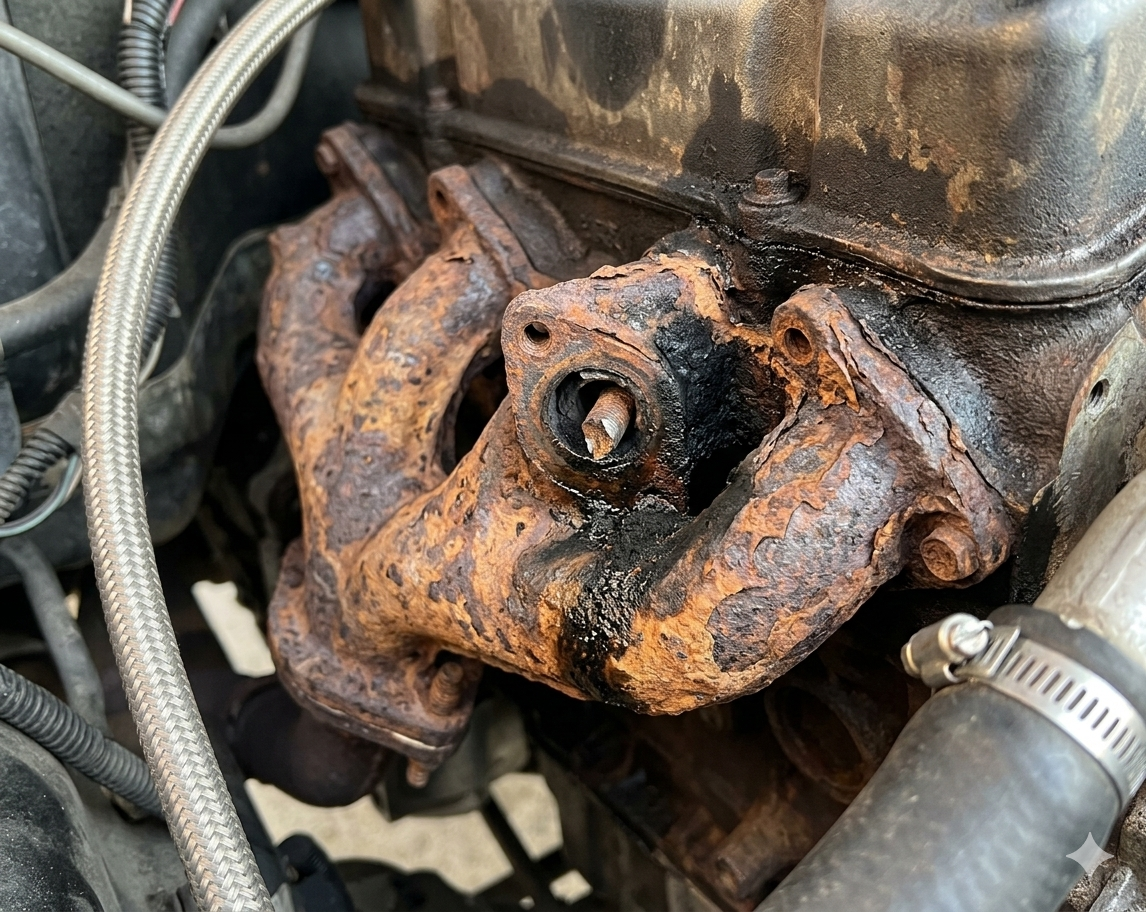
For specific troubleshooting and repair steps, please view our Exhaust Header Leak Repair Guide.
2. Catalytic Converter Leak Repair Cost
If the leak is located within the catalytic converter itself, "repair" almost always means "replacement."
- Cost Range: $900 - $3,500.
- Why so expensive? It contains precious metals like Platinum, Palladium, and Rhodium, which are highly valued.
- Compliance Costs: Replacement parts in California (CARB standards) can be 30%-50% more expensive than in other states due to stricter regulatory requirements.
3. Muffler and Flex Pipe Repair Cost
- Flex Pipe: This is a corrugated pipe designed to absorb engine vibrations and is highly prone to cracking. Repair shops typically quote $150 - $400 for replacement.
- Muffler:
- Welding Repair: If there is only a small hole rusted through the wall, welding at a professional muffler shop usually costs $80 - $150.
- Full Replacement: Parts cost approximately $100 - $300.
For a detailed price comparison of various muffler types, please read our Muffler Replacement Cost Guide.
2026 Exhaust Repair Cost Comparison Table
| Repair Item | Parts Cost (Self-Supplied) | Labor Cost (Median) | Total Estimate (DIY vs. Pro Shop) |
|---|---|---|---|
| Manifold Gasket Replacement | $20 - $50 | $200 - $400 | $220 - $450 |
| Exhaust Manifold Replacement | $150 - $300 | $300 - $600 | $450 - $900 |
| Muffler Hole Patch | $15 (DIY) | $80 - $150 | $15 - $150 |
| Flex Pipe Replacement | $40 - $100 | $100 - $200 | $140 - $300 |
What Happens If You Wait 6 Months to Fix an Exhaust Leak?
On Reddit, there is a classic debate: "My manifold has been leaking for six months; besides the bad noise, is it really necessary to fix it?" The answer depends on your patience and the thickness of your wallet.
Case Study: The Financial Bill of Procrastination
To visualize the impact of time on your bank account, we created this "Repair Cost Growth Table":
| Timeframe | Fault Status | Estimated Repair Cost | Potential Secondary Damage |
|---|---|---|---|
| Week 1 | Minor gasket leak (Ticking sound) | $200 - $400 | None |
| Month 1 | Leakage worsens; O2 sensor interference | $500 - $700 | Abnormal fuel trim, increased carbon buildup |
| Month 3 | Long-term "lean" burn causing high temps | $1,200+ | Catalytic converter overheating/melting |
| Month 6 | Acidic exhaust gas corrodes wiring harnesses | $2,500+ | Check Engine Light on, melted wiring, failed inspections |
Why Should You Act Immediately?
- Fuel Efficiency: An exhaust leak causes the ECU to misinterpret lean conditions, pumping extra fuel. You are essentially wasting 10% of your gas money daily—enough to buy a new manifold over six months.
- Personal Safety: CO can enter the cabin through firewall gaps. If you feel unexplained headaches or fatigue during long drives, it may be the onset of poisoning.
- Legal Risk: Excessive noise can lead to a Correctable Violation (Fix-it ticket), with fines reaching $200 in many states.
What Factors Affect Exhaust Leak Repair Cost?
Why did your neighbor pay only $300 for an exhaust repair while your quote came in at $800? Besides the location of the leak, these four variables directly determine your final bill:
1. Part Sourcing: Shop Markup vs. Buying Online
- Shop Markup: Most repair shops add a 30% - 100% markup when ordering parts to cover their procurement and inventory costs.
- Online Direct Purchase (SuncentAuto Advantage): By ordering directly through SuncentAuto, you skip the middleman. For high-performance replacement parts, you not only get wholesale pricing but also ensure precise fitment for your specific vehicle.
- Money-Saving Strategy: Ask the shop if they accept "Customer-supplied parts." Even if they slightly increase their hourly labor rate to compensate, your total expenditure can typically be reduced by 20% - 40%.
2. Damage Depth & Complications (Rust & Bolts)
- The Rust Belt Factor: If you live in northern regions, the degree of corrosion on underbody components can easily double the labor time required for a "simple" fix.
- Invisible Costs: When removing an exhaust manifold , if the brackets or heat shields are too rusted to be salvaged, the cost of replacing these small but essential components will be added to your bill.
3. Vehicle Layout & Engine Configuration
- Inline-4 (I4) Engines: These generally offer ample engine bay space and easy access, resulting in the lowest labor costs.
- V6/V8 Engines: Manifolds are often tucked into cramped spaces on the sides or bottom. For a V8 layout, the labor required to replace just one side can take 4-6 hours.
4. State-by-State Labor Rate Variance (2026 Data)
Exhaust repair is a labor-intensive project, especially when bolt extraction is involved. According to the latest 2026 industry data, labor rates for mechanics vary by 20% - 40% based on your geographical location.
| State | Avg. Labor Rate (per hr) | Basic Repair Est. (inc. parts) | Cost Level |
|---|---|---|---|
| Mississippi | $151.67 | $380 - $550 | Highest |
| Wyoming | $151.18 | $375 - $545 | Extremely High |
| Alabama | $149.58 | $360 - $530 | High |
| California | $145.20 | $450 - $900* | High (Regulatory Premium) |
| Nebraska | $147.41 | $350 - $520 | High |
| New York | $142.80 | $400 - $850* | Medium-High |
| National Average | $142.82 | $350 - $500 | - |
| Delaware | $142.15 | $340 - $490 | Medium |
| Florida | $142.74 | $340 - $495 | Medium |
| Ohio | $136.07 | $310 - $460 | Lower |
| Maine | $135.35 | $305 - $455 | Lower |
| Vermont | $127.15 | $280 - $420 | Lowest |
*Note: Total costs in California and New York often include a "Regulatory Premium" due to strict emissions laws requiring more expensive CARB-compliant parts.
How to Avoid Overpaying for Exhaust Leak Repair
Understanding the price variance between states is just the beginning. By using the right strategy, you can master your repair budget like a pro:
- Cross-State Thinking: As shown in the rate table, if you live near a state border (e.g., between Massachusetts and Vermont), driving an hour to a state with lower labor rates for non-emergency repairs can easily save you $100 - $200.
- Bypass Shop Markups with Online Sourcing: Many shops charge 1.5x to 2x the retail price for parts. By ordering in advance from SuncentAuto, you ensure wholesale pricing and part quality.
Strategy: Order performance-ready 5.9 Magnum Headers online for half the cost of a shop's OEM quote. Ask: "Can I supply my own high-quality parts?" - The "Muffler Shop" Secret: Avoid dealerships for metal exhaust work. Specialized Muffler Shops (e.g., Gregs Diesel) have specialized welding equipment to perform "localized surgery"—cutting out rust and welding in new pipe sections—saving you $200-$400 compared to replacing the entire assembly.
- Fix the Root Cause (Motor Mounts): Many recurring leaks or snapped exhaust manifold bolts are caused by worn Motor Mounts. If the engine shakes excessively under acceleration, it will pull on the exhaust flex pipes until they crack again.
- The "Emergency Kit" Strategy: Keep a $15 exhaust patch kit or high-temp sealant in your trunk. It can prevent a $200 noise ticket and give you enough time to drive to the shop instead of paying for a $150 tow.
Summary: Early Detection is the Only "Truth"
Even in the cheapest states, a basic exhaust repair starts at $280. If procrastination leads to snapped bolts or a melted catalytic converter, your bill will easily exceed $1,500 regardless of where you live.
Action Advice: The moment you hear an unusual noise, source your parts from SuncentAuto and contact a local Muffler Shop. It is always your most cost-effective path.