 Contents
Contents
- Why Consider Headers for a High-Mileage Daily Driver F-150?
- Often, the Starting Point for Headers Isn't an Upgrade Impulse—It's a Part Failure
- Since You’re Paying for the Repair Anyway, Why Not Upgrade?
- For a Daily Driver, It's Never About Memorizing Dyno Charts
- For a Daily Driver, This Change is More Real Than Paper Figures
- For Many 2003 F-150 Owners, Headers are Rarely the First Step
- It Marks Your Entry into the "Performance Phase," Even if You Aren't Racing
- High-Mileage F-150 Owners Usually Know Exactly What They Want
- Why Does SuncentAuto Make the Shortlist for Pragmatic Owners?
- Conclusion
- FAQs
For many owners still driving a 2003 Ford F-150, this truck has long been more than just a "commuter tool." It might have 200,000 miles on the odometer, the paint might have lost its luster, and the interior likely shows the marks of time—yet you still drive it every day to work, to the store, to pick up the kids, and even rely on it for hauling construction materials on weekends.
Especially for those with the 5.4L 2V engine, there is often a deep emotional connection. You know every quirk of its personality; you know exactly how it sounds during a cold start, you know when it feels "off," and you know that even though it’s old, it often feels more reliable and comforting than that "newer, more advanced" car in the driveway.
Why Consider Headers for a High-Mileage Daily Driver F-150?
In most American garages, vehicles have clear roles. There might be a 2024 Kia Telluride for family trips, a fuel-efficient small car for commuting, and then this old F-150. It isn’t necessarily the most expensive or the most prestigious vehicle in the household, but more often than not, it is the most hardworking, worry-free, and irreplaceable one.
This pickup has carried you through harsh winters, hauled countless loads, and stepped up when other cars let you down. Over time, your feelings for it become entirely different from how you feel about a new car:
- New Car: You’re afraid of breaking it, worried about affecting the warranty, and hesitant to mess with it.
- 2003 F-150: You’ve figured it out completely; there’s no psychological burden left, only the pure intention of long-term ownership.
Choosing Headers doesn’t represent a "tuning impulse"; it’s a commitment to "long-term ownership." When you realize this truck will stay in your family for many more years, a simple thought occurs: Since I’m going to drive it every day anyway, why not make it feel less muffled and sluggish? Why not make it sound like a real V8?
Often, the Starting Point for Headers Isn't an Upgrade Impulse—It's a Part Failure
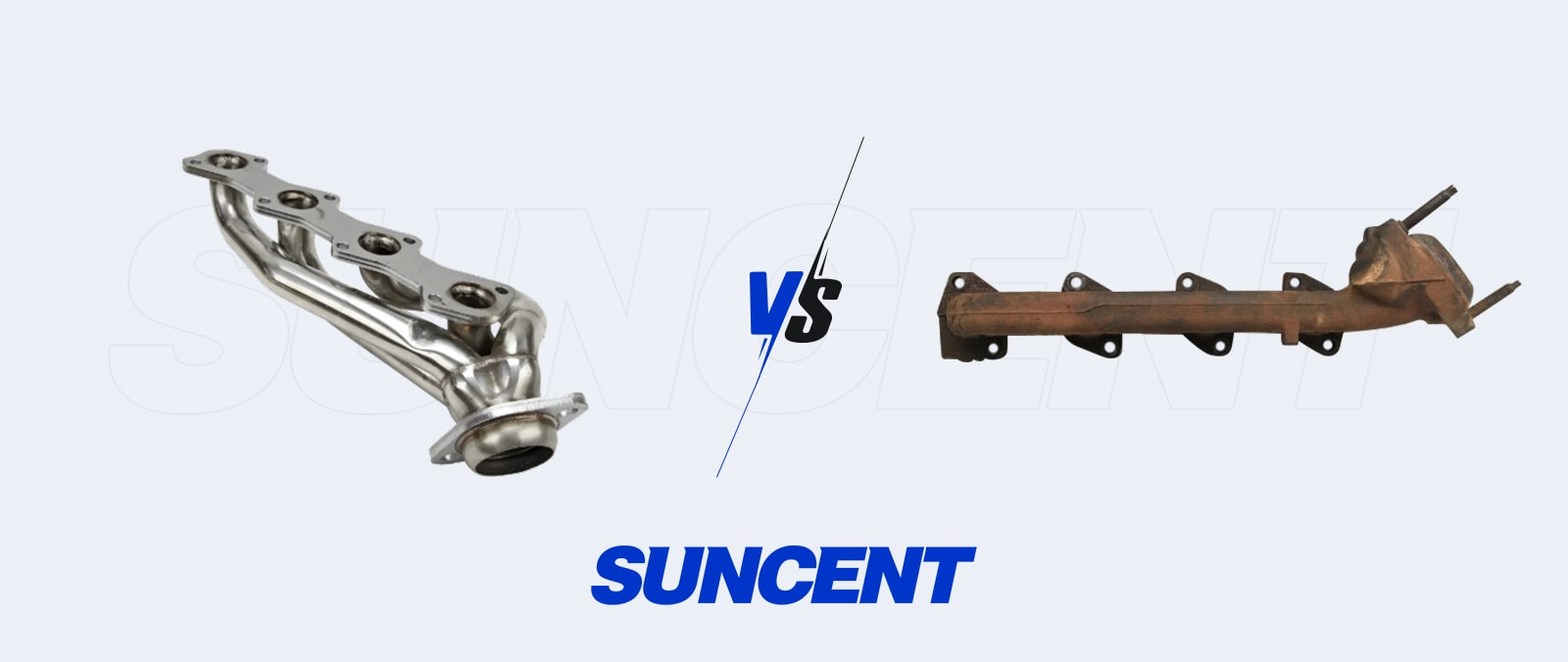
For many high-mileage 2003 F-150 owners, the journey doesn't start with "I want to upgrade performance." It starts with something much simpler and more annoying: one morning, during a cold start, you hear a "tick, tick, tick" coming from the engine bay.
At first, you might try to convince yourself, "It’s probably nothing, let's see how it goes." But a few days later, the sound is still there. It might quiet down once the engine warms up, but deep down, you already know the truth: it’s likely the classic issue of a warped manifold, broken bolts, or an exhaust leak.
Facing the "Fate" of the 5.4L 2V, You Have a Realistic Choice
Especially for 5.4L 2V owners, once the years and miles pile up, the durability issues of the factory manifold force you into a practical decision:
- Replace with Factory Parts: They are expensive, and you know the structural flaws still exist, meaning the same failure could happen again in the future.
- Upgrade to Headers: This completely solves the thermal expansion and contraction issues of the factory parts, improves exhaust efficiency, and makes the truck sound better in the process.
Since You’re Paying for the Repair Anyway, Why Not Upgrade?
This is when many owners start seriously researching Exhaust Manifolds vs. Headers. You know you aren't buying a "frivolous accessory"—you are addressing a mechanical failure that is already affecting your daily drive and perhaps even the air quality inside the cabin.
Since the labor costs are unavoidable, the old parts have to come off regardless, and you’ve already decided to spend the money on the repair, the thought naturally follows: Can I do better than just fixing it back to stock? Can I take this chance to make the truck more comfortable to drive?
Pragmatic Owners Don't Care About Ads—They Care About "Not Getting Stuck Mid-Install"
At this stage, owners don't care which brand has the flashiest marketing. They care about very realistic questions:
- Is this kit easy to install?
- Is the fitment precise?
- Will there be a missing gasket or bolt in the box?
This is why brands like SuncentAuto, which focus on a practical approach, end up on the shortlist for many old truck owners. For a daily driver, buying headers isn't just about sound and feel—it's about buying "certainty." When you've torn apart an old exhaust system, what you need most is a reliable set of parts that goes on smoothly so you can drive to work the next morning, not a "half-finished" project that leaves you stranded.
For a Daily Driver, It's Never About Memorizing Dyno Charts
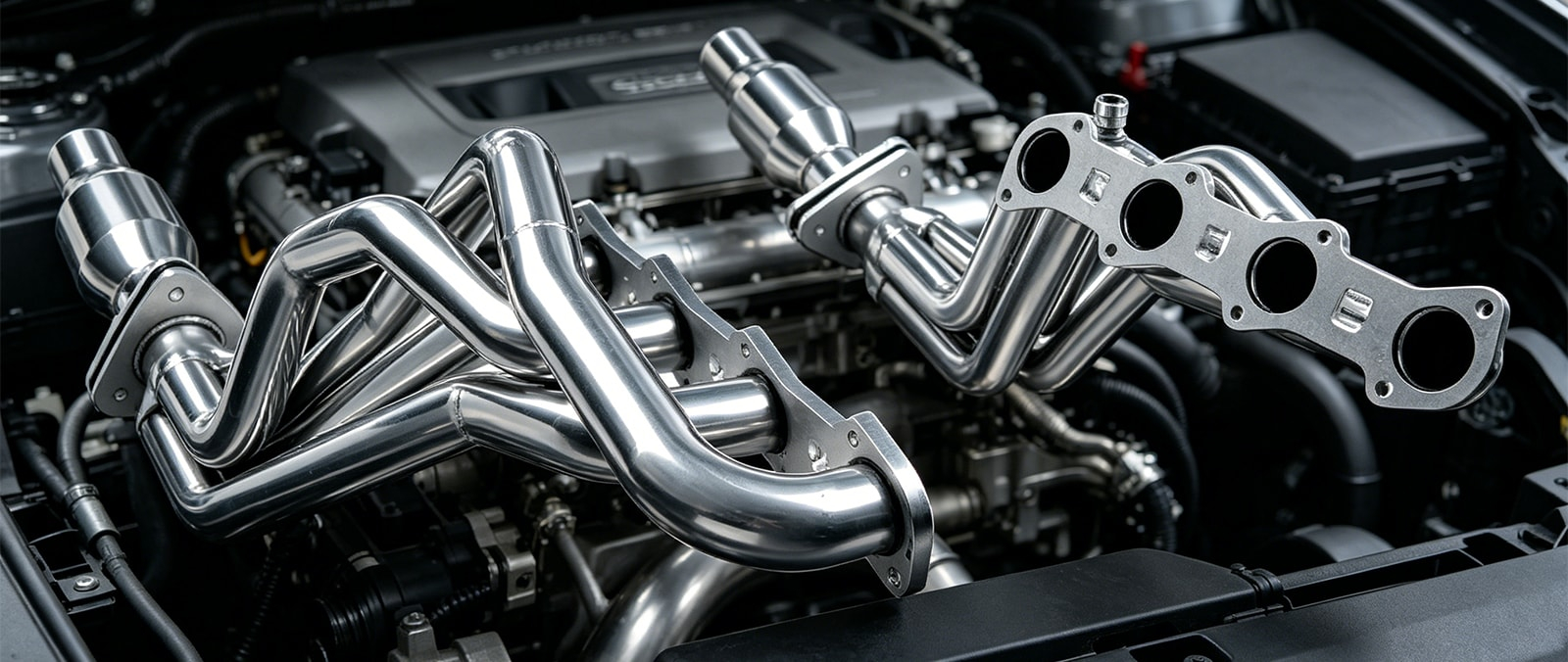
For someone commuting in an old pickup every day, you don't need to know exactly how many horsepower a kit adds. What you care about is whether the feedback from that 5.4L 2V engine feels "right" during the most ordinary moments of your daily life.
1. That Cold Start Moment—Stop Feeling "Stifled"
You start this truck every single day. If this 2003 F-150 is your daily driver, you know exactly what the factory setup sounds like, and you know if it has become muffled, scattered, or simply doesn't sound like a V8 anymore.
- More Than Just Noise: Most owners aren't looking for obnoxiously loud "straight-pipe" noise. They want something deeper, thicker, and with that classic old-school V8 rumble.
- Presence: After installing headers, that "stifled" feeling disappears. It’s replaced by a crisp, powerful idle. Simply put: it stops sounding weak and finally matches the character of the truck.
2. Pulling Away from a Red Light—No More Sluggishness
People who drive these trucks every day aren't thinking about peak power at the redline. They care about whether the truck feels "snappier" when they step on the gas.
- Life, Not the Racetrack: It’s that perfectly ordinary red light on your way to work. When the light turns green and you tip into the throttle, if the truck moves off more cleanly and effortlessly than before, you’ll notice that feeling every single day.
- No More "Slug": Sluggishness is the enemy of an old truck. Headers improve exhaust scavenging, letting the engine breathe better in the low-RPM range—this is the "real-world dividend" you’re actually looking for.
3. Highway Merging or Passing—Keeping Up with Your Intentions
When you're navigating an "old soldier" through modern traffic, the most exhausting thing isn't being slow—it’s the "delayed response."
- Response Over Speed: Especially when you know your truck so well, it’s frustrating when your input on the pedal takes half a beat to translate into action.
- Free Breathing: The point of upgrading to headers is letting the engine respond to your commands more instantly. That "ready-to-go" smoothness can make a 200,000-mile truck feel rejuvenated and give you more confidence behind the wheel.
For a Daily Driver, This Change is More Real Than Paper Figures
You don't need to go to a track or show off a modification list. Every time you fire up the engine, every time you wait at a light, and every time you merge onto the highway, you can feel that the money was well spent. For a 2003 F-150 that you drive every day, the best upgrade is the one you feel every single minute your hands are on the steering wheel.
For Many 2003 F-150 Owners, Headers are Rarely the First Step
If you look back at the evolution of an old pickup, the first things to change are usually the most visual and immediate.
Stage One: Vision and Convenience. Most people start with: a new head unit (to replace the outdated cassette player), LED lighting, new seat covers, or a set of tires and a leveling kit to make the truck look sharper.
Immediate Gratification: This is normal. These changes are fast, visible, and provide instant satisfaction when you look back at your truck in the driveway or sit inside the cabin.
From "For Others to See" to "For Me to Drive"
But once the aesthetics and entertainment are sorted, your focus on the 2003 F-150 shifts. You stop thinking about how it looks and start thinking about how it feels to drive.
- The Shift in Mindset: Adding headers represents your focus moving from "exterior and interior" to the mechanical soul, the driving feedback, and the exhaust note itself.
- A Deeper Connection: It's not just adding an "accessory"; it's optimizing the "breathing" of that V8 engine. It’s a natural progression: you first made it look the way you like, and now you’re making it drive the way you want.
It Marks Your Entry into the "Performance Phase," Even if You Aren't Racing
When headers enter your mod list, it means your understanding of your high-mileage truck has matured. You no longer worry about "keeping it stock." You think: "I’m going to keep driving this truck anyway, and it’s been so reliable—why wouldn't I make it smoother and more characterful?"
Making the "Old Pal" Drive Smooth and Sound Right
Ultimately, the appeal of headers for a daily driver isn't some ethereal "performance dream"—it's the quality of long-term companionship.
- Not for Showing Off: You don't need stickers on the hood or to brag at a car meet.
- Real Satisfaction: Your happiness comes from the fact that when you're weaving through traffic, your old F-150 feels more solid and responsive than before.
This transition from "visual upgrade" to "tactile upgrade" is the hallmark of a mature high-mileage owner. You realize that what truly brings joy every day isn't the decorative lights, but the authentic, smooth response of that V8 when you dig into the throttle.
High-Mileage F-150 Owners Usually Know Exactly What They Want
You might be well aware of the top-tier performance brands, and you might even be willing to spend big on a factory extended warranty for that 2024 Kia Telluride. But when it comes to the 2003 F-150 that has been by your side for 200,000 miles, your spending habits become extremely clear-headed.
The question isn't whether you know expensive brands are more famous; it’s a very realistic thought: "Does my daily workhorse really need me to pay for a brand premium worth thousands of dollars?"
For a Daily Driver, What Truly Matters is "Don't Let Me Get Stuck Mid-Install"
The worst part of modding an old truck isn't the hard work—it’s the "surprises."
- The Installation Nightmare: Imagine taking a weekend to tear out rusted factory manifolds only to find the new headers don't line up, or you're missing a gasket or a bolt.
- More Than Just a Bad Experience: For you, this isn't just a "failed mod"—it means you might not even have a vehicle to get to work the next day. This fear of getting "stuck mid-install" is the biggest pain point for old truck owners.
Why Does SuncentAuto Make the Shortlist for Pragmatic Owners?
This is exactly why a brand like SuncentAuto, which focuses on practicality, becomes the final choice for many 2003 F-150 owners. The reason is simple: it precisely hits the core needs of an old truck user:
- Precise Fitment, No Hassle: In the cramped engine bay of a 5.4L 2V, fitment is the lifeline. SA understands that old truck owners can't afford to waste time; investment in bolt-hole precision and foundational quality speaks louder than flashy slogans.
- Responsive After-Sales: Peace of Mind: If you find a missing part during installation or have any fitment issues, Suncent’s replacement and return policies aren't just a bonus—they are a "lifesaver" for old truck users.
- The Balance of Material and Price: You don't need aerospace-grade titanium; you need stainless steel that is corrosion-resistant, solidly welded, and meets standard specs. Keeping the price within a reasonable range while ensuring quality is the smartest investment for a multi-car household.
Coupons and Promotions: The "Final Push" for a Decision
To be even more practical, for a family maintaining three vehicles, coupons and promotional activities do influence the decision. This isn't about impulsive spending; it's because for a pragmatic owner, "getting a good value, a stable purchase, and having someone to call if things go wrong" is far more meaningful than a brand logo stamped on a part.
"When you're standing in the driveway looking at that F-150 ready for work, you don't need an expensive brand story—you need a set of headers that installs smoothly so you can head out tomorrow on time."
Conclusion
At the end of the day, the person who understands this truck best is you—the one holding the steering wheel every day. No matter how quiet that 2024 Kia Telluride is, or how rugged that 2005 Silverado might be, the 2003 Ford F-150 holds an irreplaceable spot.
Installing headers is about more than just fixing an annoying exhaust leak; it’s about letting the "old pal" who has weathered the storms with you rediscover its true V8 spirit. The best modification is always the one that makes you crack a smile every time you turn the key.
💬 Interaction Time:
How many miles does your 2003 F-150 have now? Is it still going strong, or are you currently dealing with that annoying "Tick"? Are you planning an exhaust upgrade for it this weekend?
Share your old truck stories in the comments, or let us know your thoughts on SuncentAuto upgrades!