 Contents
Contents
- Direct Answer: Can a Cracked Exhaust Manifold Cause a Lean Code?
- Common Symptoms of a Cracked Exhaust Manifold
- What Causes an Exhaust Manifold to Crack? Common Causes
- Can You Drive With a Cracked Exhaust Manifold?
- How to Fix a Cracked Exhaust Manifold & Repair Cost
- How to Avoid Cracking Again From the Source
- Conclusion
- FAQs
Can a cracked exhaust manifold cause a lean code? Yes, it can - especially if the crack is located before the upstream O2 sensor. This problem may appear to come from the "exhaust" side, but in reality, it can interfere with oxygen sensor readings and cause the vehicle's computer to make incorrect fuel-trim adjustments.
In this guide, we'll delve into the mechanics behind this issue and list key symptoms that help identify the crack. We've also included real-world repair experiences shared by owners in the Reddit community, providing repair solutions, cost estimates, and preventative tips to help you completely resolve the cracked exhaust manifold problem.
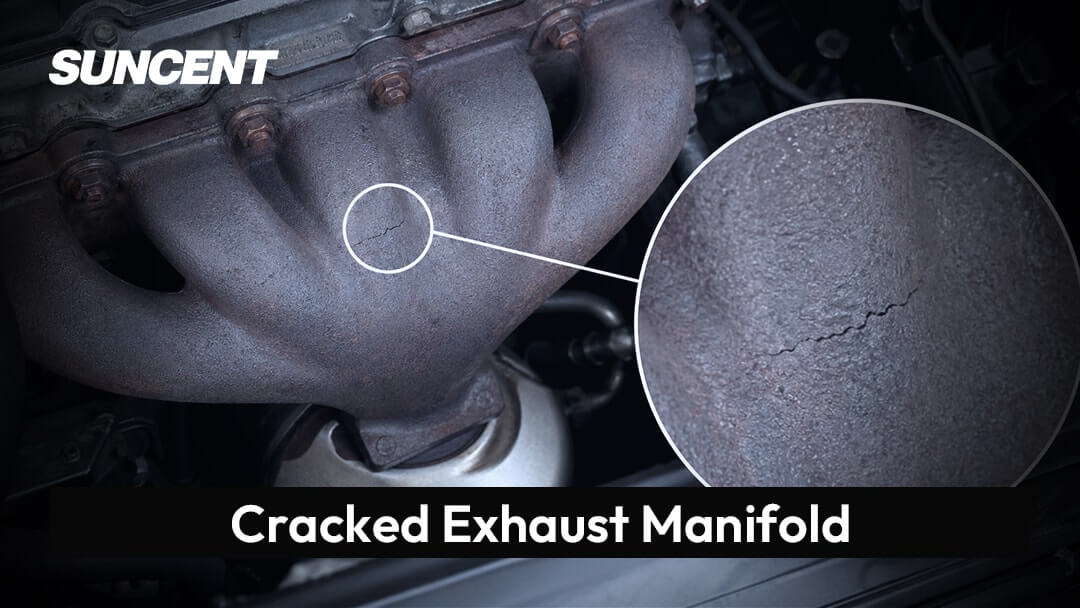
Direct Answer: Can a Cracked Exhaust Manifold Cause a Lean Code?
Yes. A cracked exhaust manifold can indeed trigger a lean condition code, especially when the crack is located before the upstream O2 sensor.
Why Does an "Exhaust Leak" Cause a "Lean Code"?
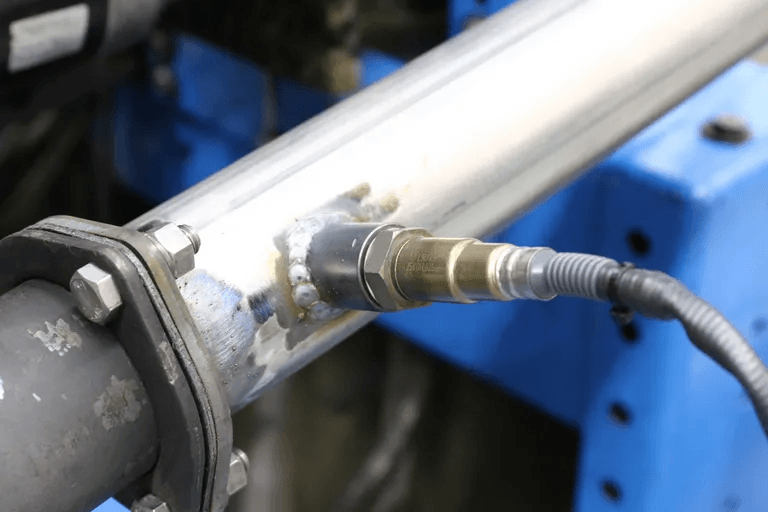
The core logic lies in oxygen sensor misinterpretation: after the exhaust manifold cracks, outside air may be drawn into the exhaust stream. Once the oxygen sensor detects this extra oxygen, it may mistakenly believe that the engine's combustion mixture is too lean. As a result, the ECU/PCM may trigger fault codes such as P0171 System Too Lean Bank 1 or P0174 System Too Lean Bank 2. P0171 itself means Bank 1 is running lean, which usually indicates too much air or insufficient fuel, and an upstream exhaust leak is one possible reason that can interfere with oxygen sensor readings.
However, not every cracked exhaust manifold will necessarily trigger a code. If the crack is very small, located after the oxygen sensor, or the amount of leakage is not enough to affect sensor readings, the vehicle may only show symptoms such as abnormal cold-start noise, a slight exhaust smell, or changes in fuel economy, without immediately turning on the Check Engine Light.
Why Does Your P0171 Keep Coming Back?
When many vehicle owners encounter P0171, they often habitually clean the MAF sensor, replace the intake manifold gasket, or replace the oxygen sensor. But if none of these fixes work, the root cause is often not on the "intake side," but on the "exhaust side." A leak in the upstream exhaust manifold or gasket is one of the most hidden factors that can cause the warning light to come back repeatedly.
On forums such as Reddit, many vehicle owners have shared similar experiences: "I tightened everything again, cleared the P0171 and P0174 codes, and after driving for 10 minutes, both codes came back again... It wasn't until I smelled exhaust in the engine bay that I found a hairline crack on the manifold."
Common Symptoms of a Cracked Exhaust Manifold
The symptoms of a cracked exhaust manifold are usually quite recognizable. Here are seven key signs to watch for:
1. Cold-Start Noise - A "Tick-Tick-Tick" Sound Like Lifter Noise
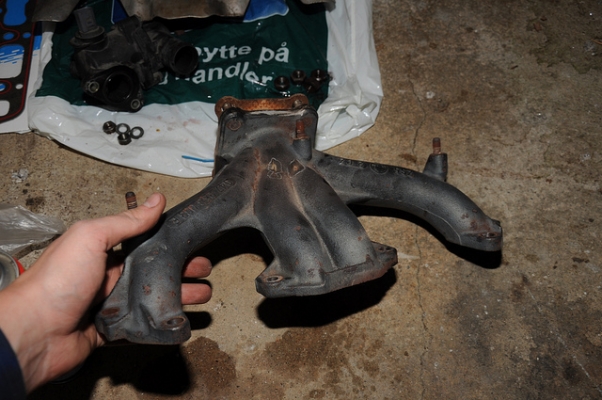
This is the most typical cracked exhaust manifold sound. During a cold start, the metal is still contracted, and the crack opens and closes with exhaust pulses, producing a noticeable "tick-tick-tick" sound or a "puff-puff" leaking sound. As the engine warms up and the metal expands, the gap in the crack becomes smaller, and the noise may become quieter or even disappear. If there is noise when the engine is cold and it disappears when the engine is warm, it is very likely an exhaust manifold issue. This is exactly why "a ticking sound caused by the exhaust manifold is usually loudest during cold start and becomes weaker or even disappears as the engine warms up."
2. Exhaust Smell in the Engine Bay
The exhaust manifold is usually located at the front or side of the engine. If a crack causes untreated combustion exhaust gases to leak out, you may smell a noticeable exhaust odor when opening the hood or window. The CDC reminds drivers that even small leaks in a vehicle’s exhaust system can cause carbon monoxide to accumulate inside the cabin, so if you smell exhaust inside the vehicle, the exhaust system should be inspected as soon as possible.
3. Loss of Power
A crack in the exhaust manifold can disrupt exhaust back pressure, interfere with the engine’s normal scavenging rhythm, and reduce engine efficiency. For turbocharged models such as the 2015 Ford F-150, this effect can be especially noticeable: because part of the exhaust gas that should drive the turbo leaks out through the crack, it may lead to insufficient boost pressure, or underboost, causing the vehicle to feel weak, sluggish, and delayed during acceleration.
4. Abnormal Increase in Fuel Consumption
As mentioned earlier, the crack may draw fresh outside air into the exhaust stream, causing the oxygen sensor to report a false "lean mixture" signal to the computer. To correct this signal, the computer may command more fuel injection to compensate for the extra oxygen. This additional fuel can cause fuel consumption to rise unexpectedly within a short period.
5. Dashboard Warning Light Turns On
As explained at the beginning, if the crack affects the upstream oxygen sensor readings, the vehicle may show P0171, P0174, P013x oxygen sensor-related codes, or in some cases, a misfire code.
6. Black Soot Marks Around the Exhaust Manifold
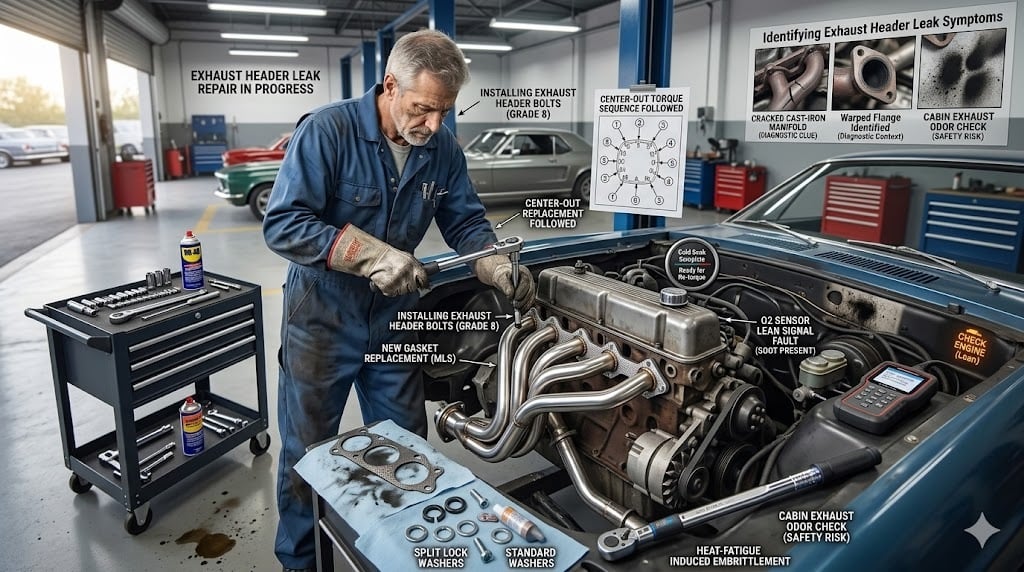
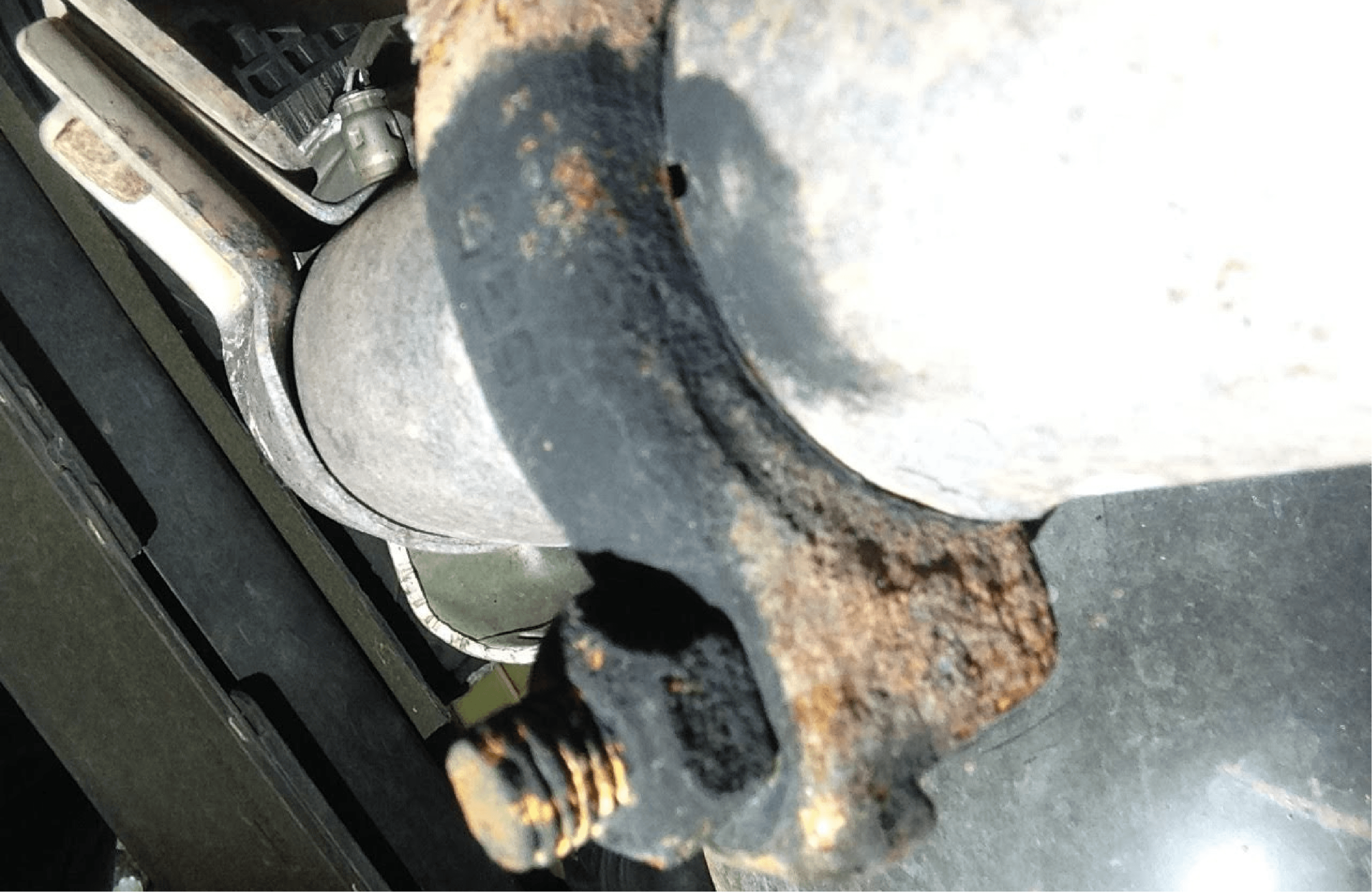
Hot exhaust gases carry combustion byproducts, which can gradually leave black carbon deposits around the crack. If you can see black soot marks around the exhaust manifold, gasket interface, or bolts, this is strong evidence that exhaust is escaping from a place where it should not leak. For many DIY vehicle owners, soot marks can be more useful than simply listening for noise.
7. Visible Crack
On many vehicles, the exhaust manifold is located at the front of the engine. With a strong flashlight and careful inspection, you may be able to see the thin crack directly.
What Causes an Exhaust Manifold to Crack? Common Causes
Understanding the root cause can help you prevent a newly installed part from failing again in a short period. Exhaust manifolds mainly crack for the following reasons:
1. Extreme Heat Cycling
This is the most fundamental cause. The normal operating temperature of an exhaust manifold can reach 1200°F, about 650°C. If the engine is frequently revved high or used for towing heavy loads, the manifold may even glow dark red. Going from cold to 1200°F and then back to cold again creates repeated metal fatigue from thermal expansion and contraction hundreds or thousands of times, eventually exceeding the fatigue limit of the material. Frequent thermal expansion and contraction are the enemy of cast iron materials.
2. Broken or Loose Manifold Bolts
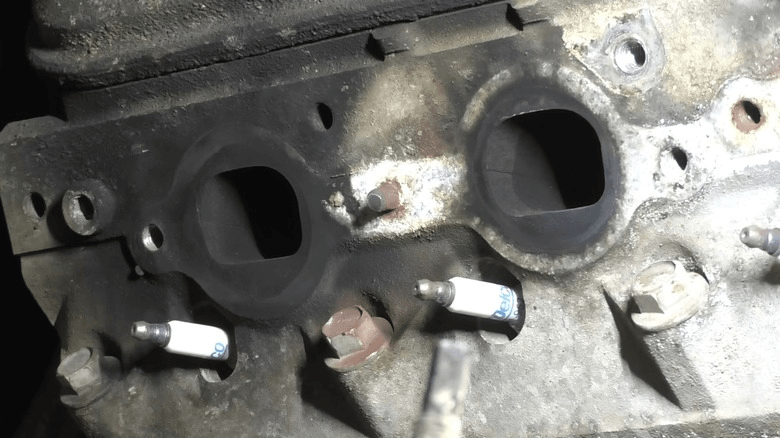
The exhaust manifold is pressed against the cylinder head by bolts. If some studs break, the clamping force becomes uneven, the gasket seal worsens, and the flange may also warp. Over time, the leak point can develop into a structural crack.
3. Clogged Catalytic Converter
When the catalytic converter becomes clogged, exhaust flow is restricted, causing exhaust system back pressure to rise sharply. This massive pressure and extreme heat can build backward inside the exhaust manifold, forcing the weakest area of the manifold to crack because it can no longer withstand the internal pressure.
4. Original Design Defects
On some vehicle models, exhaust manifold cracks are a "common problem." One of the most typical examples is the 2015 Ford F-150 — the original cast iron manifold can easily warp, crack, and leak under high exhaust temperatures, causing loss of power, annoying noise, and expensive repair bills.
Can You Drive With a Cracked Exhaust Manifold?
The simple and direct answer: you can drive, but it is strongly not recommended to drive like this long-term.
In the short term, within a few hundred miles, the problem may not be considered severe. But long-term driving or intentionally ignoring a small crack may lead to the following five serious consequences:
Exhaust Fumes Entering the Cabin: Toxic exhaust gases escaping from the crack may enter the cabin through the heater intake. Especially when idling while parked, carbon monoxide buildup can directly threaten the safety of passengers. As one Forester owner said on a forum: “There is exhaust smell everywhere. This is simply not safe.”
Loss of Power and Rising Fuel Consumption: Because the ECU keeps misinterpreting the signal and over-fueling, the vehicle may experience delayed acceleration, weak low-end torque, and abnormal fuel consumption, significantly reducing the driving experience.
Oxygen Sensor Poisoning: Long-term exposure of the sensor to abnormal exhaust gases may slow its response or cause it to fail completely. One F-150 owner shared: “I replaced the manifold at 80,000 miles, and now it failed again at 113,000 miles. This kind of repair costing more than $2,700 per side is a nightmare.”
Damage to the Catalytic Converter, the Most Expensive Chain Reaction: The extra oxygen drawn in through the crack can alter the oxidation-reduction reactions inside the catalytic converter, causing it to overheat, melt internally, or even become completely clogged. Replacement costs are usually between $1000 and $2000.
Failure to Pass Emissions Testing, or Smog Check: In states with strict emissions regulations such as California, any exhaust leak located before the catalytic converter can cause emissions readings to exceed limits, directly causing the vehicle to fail inspection because the OBD II monitors may not be ready.
How to Fix a Cracked Exhaust Manifold & Repair Cost
Below are three common exhaust manifold crack repair methods.
Option 1: Temporary Patch - Emergency Use Only, Not Recommended Long-Term
If your budget is extremely limited, or you only need the vehicle to last a few more weeks, you can use an ultra-high-temperature repair adhesive specifically designed for exhaust systems.
Cost: $15 - $30, DIY parts cost.
⚠️ Limitation: This method usually only lasts a few weeks to a few months. The intense thermal expansion and contraction of the exhaust manifold will quickly cause the adhesive to peel off. As Reddit users have commented: "This method won't last more than a few days because exhaust temperatures are far beyond what most adhesives can withstand."
Option 2: Professional Welding - Moderate Cost but Technically Demanding
If the crack is clear and the manifold itself is not severely warped, welding repair can be attempted. The technician usually needs to remove the manifold, preheat it, use a specialized nickel welding rod for cast iron, and then allow it to cool slowly to prevent cracking again.
Cost: $200 - $500, mainly labor and welding processing fees.
⚠️ Limitation: Only recommended for stainless steel manifolds. For the cast iron manifolds used in most household vehicles, because the material is brittle, new cracks can easily form around the weld, making it a solution that often treats the symptom rather than the root cause.
Option 3: Complete Replacement - The Most Reliable but Most Expensive Option, Recommended
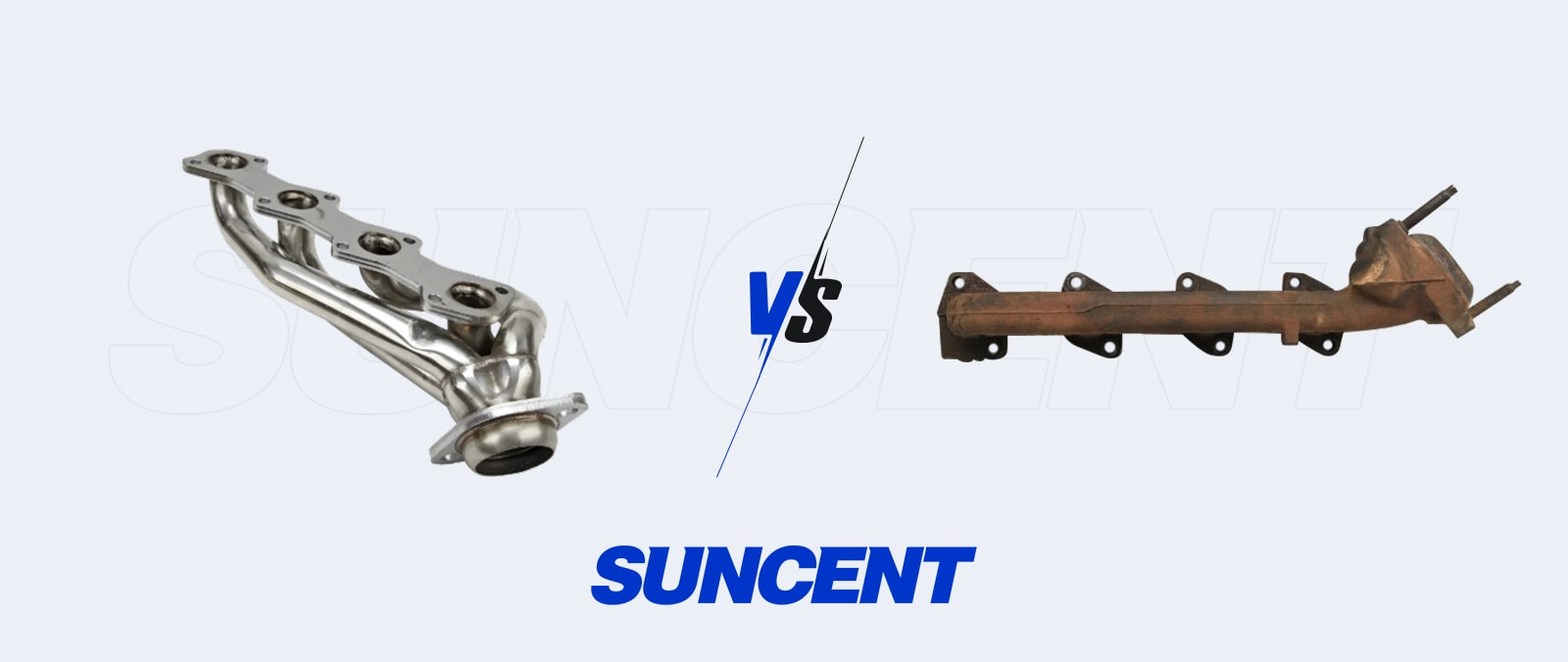
Replacing the part with a new one, usually an improved reinforced version, is the only ultimate solution. This usually requires removing the old manifold, cleaning the cylinder head surface, and replacing the sealing gasket and high-strength studs with new ones.
Cost: $600 - $1,500+.
Parts cost: $150 - $400.
Labor cost: $400 - $1,000+.
Why is it so expensive? The high cost of replacing a manifold mainly comes from labor time. As one Reddit technician shared: "Replacing the manifold isn't difficult. The difficult part is drilling out the broken bolts that are rusted deep inside the cylinder head, which often requires several extra hours of careful labor."
💡 Where to Buy a High-Quality Exhaust Manifold?
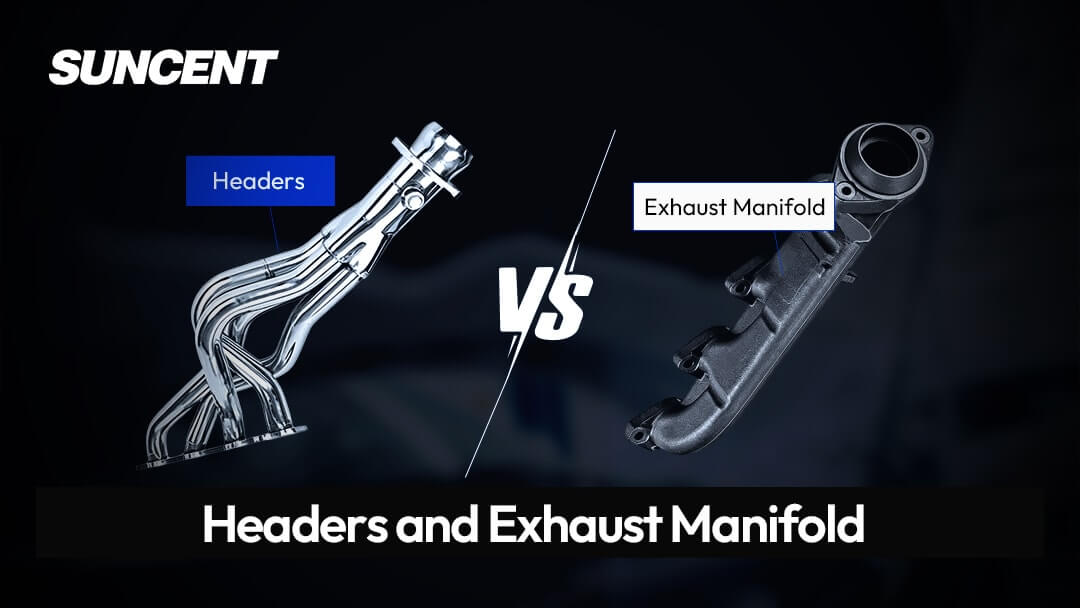
If you are looking for an aftermarket exhaust manifold suitable for daily repair replacement, SuncentAuto is a choice worth considering. SuncentAuto offers multiple exhaust manifolds and headers that fit common vehicles in the U.S. Users can use the vehicle selector tool to match the right parts by Year / Make / Model / Engine, reducing the risk of buying the wrong part.
Compared with ordinary replacement parts that only focus on low prices, SuncentAuto's advantages include:
Fair pricing: Dealer repair quotes can easily reach thousands of dollars, while buying from SuncentAuto directly helps cut out the middle layer.
High-quality T-304 stainless steel material: The products use heat-resistant and corrosion-resistant T-304 stainless steel construction, making them better suited for long-term exposure to exhaust heat and thermal cycling.
Precise fitment: SuncentAuto's exhaust manifolds are designed with accurate vehicle matching and include all required bolts and gaskets, making them convenient for DIY installation or installation by a repair shop.
Complete service support: Free shipping in the U.S., 45-day returns and exchanges, and after-sales assistance give you greater peace of mind when buying.

🎁 Reader Exclusive Benefit: If you are ready to place an order, don't forget to enter our exclusive discount code BLOG12 at checkout to enjoy a 12% discount!
🛠️ Repair Comparison Table
| Option | Cost | Expected Lifespan | Recommendation |
| Temporary patch | $15+ | Very short, 1-3 months | ⭐ |
| Professional welding | $200+ | Uncertain, depends on luck | ⭐⭐ |
| Complete replacement | $600+ | Long-term, more than 5 years | ⭐⭐⭐⭐⭐ |
How to Avoid Cracking Again From the Source
Exhaust manifold cracking sometimes cannot be completely avoided, but you can significantly reduce the chance of recurrence through proper driving habits, regular inspection, and choosing the right parts.
Start gently and avoid aggressive driving when cold: During cold starts, the metal temperature is extremely low, and sudden high load can cause the manifold to heat up rapidly. It is recommended to drive gently for a few minutes in winter or when the engine is cold, giving the metal a gradual expansion process.
Delay shutdown after high-load driving: After long highway driving, towing, or extended uphill driving, the manifold is at an extremely high temperature. Before parking, drive gently for a while or idle for 1-2 minutes to allow heat to dissipate gradually and reduce thermal stress shock.
Regularly inspect bolts and gaskets: Develop the habit of regularly checking exhaust bolts and gaskets. Once you hear a slight "tick" during cold starts, tighten or replace the hardware as soon as possible to prevent uneven heating at the leak point from developing into a structural crack.
Keep engine mounts in good condition: Damaged mounts can cause the engine to shake violently. This additional physical pulling force acts directly on the exhaust manifold and exhaust pipe joints, accelerating part fatigue and cracking.
Improve winter rust prevention and cleaning: In "Snow Belt" areas such as the northeastern United States, road salt corrosion is a major killer of bolts and flanges. After winter, the chassis and exhaust area should be rinsed promptly to reduce structural weakening caused by rust.
Choose high-quality replacement parts: If the manifold is already cracked, simple welding repairs are often difficult to make last. It is recommended to choose a Replacement Exhaust Manifold with good fitment and reinforced materials. Using high-strength stainless steel bolts instead of the original parts is an effective way to prevent cracking again.
Conclusion
A cracked exhaust manifold can cause a lean code, especially when the crack is located before the upstream oxygen sensor. It allows extra air to enter the exhaust stream, causing the oxygen sensor to misread the mixture as too lean, which can trigger fault codes such as P0171 and P0174.
However, a lean code is only a clue, not a final diagnosis. To determine whether the exhaust manifold is cracked, you also need to combine physical checks such as cold-start ticking sound, acceleration hissing, and exhaust smell.
If it is only a small crack, short-distance, low-load driving may still be possible as an emergency measure. But if you smell exhaust fumes, are preparing for a long-distance drive, have repeated fault codes, it is not recommended to keep delaying repairs.
For an exhaust manifold that is already cracked, warped, or severely rusted, replacing it with a high-quality, correctly fitting replacement exhaust manifold is usually more worry-free and can also help avoid repeat repairs.