 Contents
Contents
- What Does Deleting a Truck Mean?
- What Parts Are Changed on a Deleted Diesel Truck?
- Deleted vs. Tuned vs. Straight-Piped: What Is the Difference?
- Benefits of Deleting a Diesel Truck: Why Some Owners Consider It
- Is It Legal to Delete a Diesel Truck? Federal Law vs. State Inspection Reality
- How Can You Tell If a Truck Has Been Deleted?
- Should You Buy a Used Deleted Truck?
- How Much Does It Cost to Delete a Diesel Truck?
- What Can You Do Instead of Deleting?
- What Is Included in a Full Diesel Delete Kit?
- What Should You Know Before Making a Decision?
- FAQs
If you see "deleted," "fully deleted," or "tuned and deleted" in a diesel-truck forum or used-truck listing, you may be wondering: what does deleting a truck mean? The label alone does not tell you how far the modification went. What matters is which emissions systems were changed, what calibration is installed, and whether the truck is being evaluated for ownership, repair, resale, or parts.
Deleting a diesel truck generally means removing, bypassing, or disabling one or more factory emissions-control systems—most often the EGR, DPF/DOC, and SCR/DEF systems—and changing the engine calibration so the truck can operate with those systems altered. The exact setup varies, so a truck described as “deleted” is not automatically fully deleted.
- “Deleted” is an informal term. Ask exactly which systems were changed rather than assuming everything was removed.
- “Tuned” and “deleted” are not the same thing. A diesel can be tuned while keeping its emissions equipment intact.
- Used-truck buyers should verify the modification history. The tune, original parts, service records, and inspection status matter.
- In the U.S., federal law prohibits tampering with required emissions controls. State inspection rules add another layer of risk.
- Not every emissions-system problem requires deletion. Diagnosis, cleaning, repair, or replacement may solve the original issue.
The term is especially common around Cummins, Duramax, and Powerstroke trucks, where the emissions layout and tuning requirements can differ by engine generation and model year.

What Does Deleting a Truck Mean?
The word delete does not describe one standardized build. When someone asks “what does it mean to delete a truck?”, the more useful question is how much of the factory emissions system was changed. One truck may have only an EGR-related change, while another may have the main aftertreatment system and matching calibration altered as a complete setup.
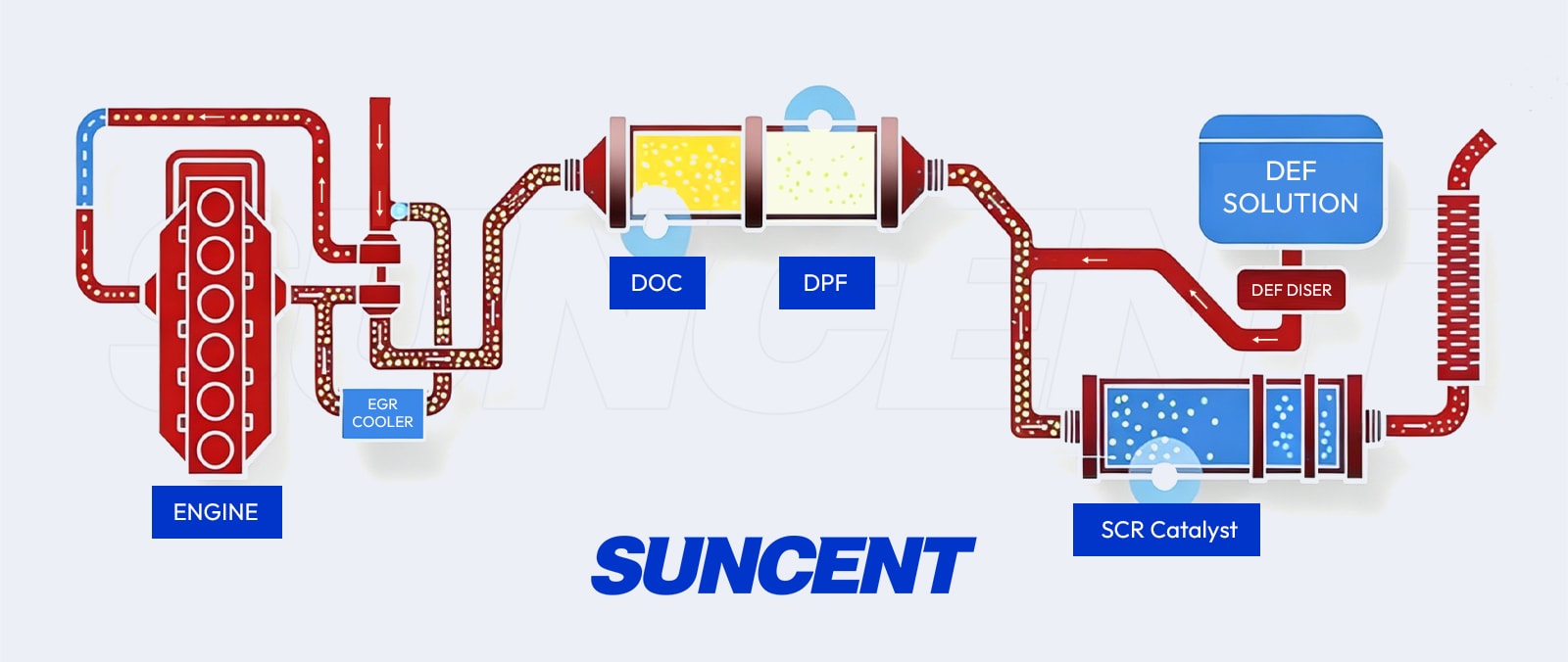
Modern diesel emissions systems work as a network rather than as isolated parts. The EGR changes what enters the engine, the DOC and DPF treat exhaust and particulate matter, the SCR system uses DEF to reduce nitrogen oxides, and the ECM/ECU monitors the entire process. This is why the word delete can describe several different setups.
What Does “Fully Deleted” Mean on a Diesel Truck?
In common diesel-truck usage, a fully deleted truck generally means the major factory emissions systems have been taken out of operation: the EGR is disabled or removed, the DPF/DOC aftertreatment section is removed or replaced, the SCR/DEF system is disabled or removed, and the ECM/ECU calibration is changed to match that hardware configuration. That is the practical meaning most owners intend when they say a truck is “fully deleted.”
Because fully deleted is owner shorthand rather than a standardized parts specification, two trucks described that way can still use different hardware and calibration strategies.
What Parts Are Changed on a Deleted Diesel Truck?
“Deleting a truck” is not one single modification. If you are asking how do you delete a diesel truck, the answer depends on the engine, model year, and how much of the factory system is being changed. The diagram below shows the main systems involved; the table explains what each one does and what changes in a full setup.
| System | Factory job | What changes in a full delete |
|---|---|---|
| EGR | Routes a controlled amount of exhaust back into the intake to help reduce NOx formation. | The EGR flow is blocked or the EGR hardware is removed/disabled, and the calibration is changed so the engine no longer relies on the factory EGR strategy. |
| DOC | Oxidizes hydrocarbons and carbon monoxide and helps support downstream aftertreatment. | The DOC is removed or replaced with the factory aftertreatment section when the full DPF/DOC/SCR assembly is taken out of service. |
| DPF | Captures diesel particulate matter and periodically regenerates to burn accumulated soot. | The DPF filter section is physically removed or replaced, and the calibration is changed so regeneration and DPF monitoring are no longer used. |
| SCR / DEF | Uses diesel exhaust fluid in the SCR catalyst to reduce NOx emissions. | The SCR/DEF dosing and monitoring functions are disabled or removed, including the related hardware/sensors required by that setup, with matching calibration changes. |
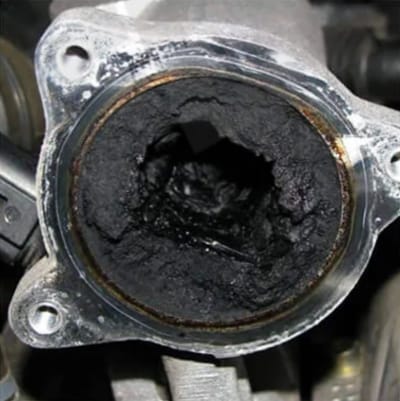
EGR (Exhaust Gas Recirculation)
EGR-specific trouble usually enters the conversation because of sticking valves, cooler issues, carbon buildup, or recurring EGR codes. If that is the problem you are trying to understand, the EGR delete guide goes deeper into the hardware, calibration, tradeoffs, and used-truck considerations without repeating them here.
DPF and DOC
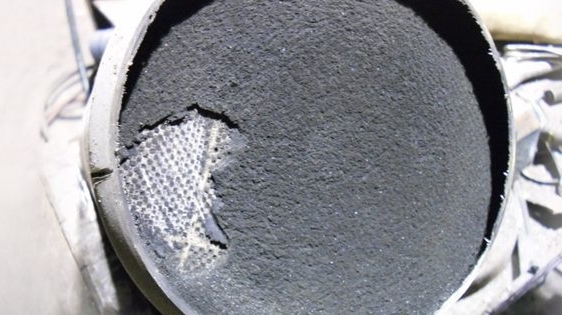
DPF questions usually start with frequent regeneration, a soot/ash loading issue, pressure-sensor data, or an expensive cleaning or replacement estimate. If your concern is specifically the filter and aftertreatment section, our guide to what DPF delete means on trucks covers that topic in more depth.
SCR and DEF
DEF/SCR questions are more likely to begin with dosing faults, crystallization, heater or pump problems, NOx-sensor issues, or a warning that can lead to derate. If you are trying to separate DEF, SCR, and DPF terminology, the DEF delete guide explains the differences in detail.
Can a Truck Be Partially Deleted?
Yes. A truck may have only one system changed while other factory emissions equipment remains. That is one reason the word “deleted” can be misleading in a used listing. For example, owners commonly ask whether they can delete EGR without deleting the DPF. The answer depends on the truck, calibration, remaining hardware, and intended use, so the exact setup matters more than the label.
Deleted vs. Tuned vs. Straight-Piped: What Is the Difference?
| Term | What it means | Typical status |
|---|---|---|
| Deleted | One or more factory emissions systems have been removed, bypassed, disabled, or altered. | Umbrella term — can describe a partial or full delete. |
| Fully deleted | The major emissions systems are taken out of operation and the calibration is matched to that configuration. | This is what owners normally mean by a full emissions delete. |
| Tuned | The ECM/ECU calibration has been changed. | Not a delete by itself. A tuned truck can retain all factory emissions equipment. |
| Tuned and deleted | The truck has emissions-related hardware changes plus a calibration designed for that configuration. | Can be partial or full; the installed hardware determines which one. |
| Straight-piped | The exhaust has been changed to a more direct pipe configuration. | Describes the exhaust layout only; it does not establish the EGR or SCR/DEF status. |
What Does Tuned and Deleted Mean on a Diesel?
In a used-truck listing, “tuned and deleted” tells you two things: the truck has non-stock calibration and it also has emissions-related hardware changes. It does not tell you whether the truck is partially or fully deleted. On some newer diesel model years, the ECU/ECM must also be unlocked before a non-stock calibration can be written. Depending on the platform, that may mean sending the module to a specialist for unlocking, or using a compatible unlock cable or access tool directly on the truck. This is a tuning-access step, not proof that the truck is fully deleted. For the software side, read Tune & Delete Explained.
Benefits of Deleting a Diesel Truck: Why Some Owners Consider It
Owners do not all arrive at this topic for the same reason. Some are chasing performance or sound, while others start researching deletion only after repeated emissions-system faults, regeneration problems, derate events, or a large repair estimate. Those motivations should not be confused with guaranteed outcomes.
1. Maintenance Problems and Downtime
For many work-truck owners, the practical concern is not peak horsepower—it is whether the truck can stay on the road. DPF warnings, abnormal regeneration, EGR faults, DEF-system warnings, sensor failures, or derate conditions can interrupt towing, hauling, farm work, construction schedules, and other jobs where downtime has a direct cost.
2. Performance and Towing Response
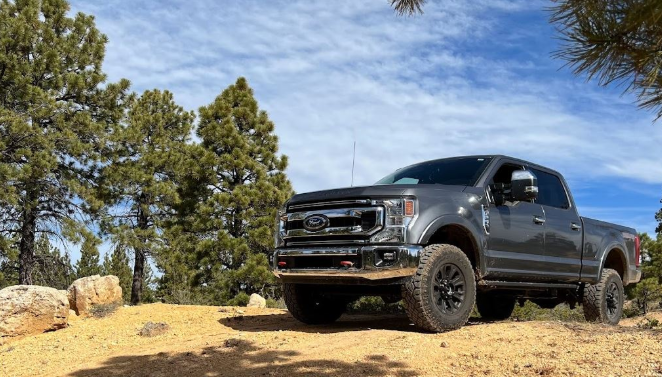
Some owners notice quicker turbo response, stronger towing response, or more power after a truck is modified. Most meaningful horsepower changes come from the calibration and the complete hardware/tuning combination, not from simply removing one emissions component. Real results depend on the engine, tune level, supporting hardware, load, and drivetrain.
| Platform / test | Published result | Context |
|---|---|---|
| 2017–2021 6.6L L5P Duramax Calibrated Power loaded chassis dyno | About 405 RWHP stock; up to about 550 RWHP with emissions-intact custom tuning and supporting intake hardware. | Large gains can come from calibration while the emissions equipment remains installed. That is why “deleted = +X horsepower” is too simplistic. |
| 6.7L Power Stroke highway MPG SuncentAuto owner-report roundup | Owner reports summarized around 15–16 mpg stock versus 19–21 mpg after DPF removal. | This is useful real-world context, but it is not a controlled A/B test; gearing, tires, tune, speed, load, and route can move the result substantially. |
| GM 3.0L Duramax dyno development Calibrated Power R&D | During development, pushing beyond roughly 300 hp began to negatively affect EGT and transmission temperature; the team settled around a +40 hp calibration for that stage. | More aggressive tuning can increase thermal stress. A delete should not be described as automatically lowering EGT by a fixed amount. |
Sources: Calibrated Power L5P dyno data; SuncentAuto 6.7 Power Stroke MPG report; Calibrated Power 3.0L Duramax development notes.
Taken together, these examples show why power, fuel economy, and EGT should be evaluated separately. MPG can change with regeneration frequency, load, gearing, tires, route, and tune level, while EGT depends heavily on fueling, boost, load, and sensor location. Model-specific data is more useful than one universal “delete gain” number.
3. Exhaust Sound
A more open exhaust can produce a deeper exhaust note and make turbo sound more noticeable. For some enthusiasts that is part of the appeal; for daily drivers, cabin drone, noise limits, and local rules may matter more.
Is It Legal to Delete a Diesel Truck? Federal Law vs. State Inspection Reality
The EPA’s aftermarket defeat-device guidance is the federal baseline: required emissions controls cannot legally be removed or rendered inoperative simply because a local area does not run annual emissions tests. At the same time, it is also true that some states have no periodic emissions test for registration, while others test only certain counties, vehicle types, fuels, or model years. That practical difference is one reason deleted trucks may be much more visible in some local used-truck markets than in others.
| 2026 example | Periodic inspection reality | What it does — and does not — mean |
|---|---|---|
| Mississippi | The Mississippi Department of Revenue states that emissions testing is not required as a condition of vehicle registration. | A private owner may not encounter a registration emissions test, but that does not create a federal exemption from anti-tampering law. |
| Florida | Florida abolished its statewide motor-vehicle emissions inspection program in 2000. | No statewide periodic emissions program is different from saying emissions tampering is legal. |
| Texas | Since Jan. 1, 2025, most non-commercial vehicles no longer receive a state safety inspection. Emissions inspections remain in designated counties, and Texas lists its standard OBD emissions test for gasoline-powered vehicles 2–24 years old; commercial vehicles retain inspection requirements. | Inspection exposure depends on fuel type, county, and commercial status. “Texas has no inspections” is too broad. |
| Colorado | Diesel emissions testing is required in specified counties and portions of several other counties, not statewide. | A truck can face different registration requirements depending on where in the state it is registered. |
Official references: Mississippi DOR; Florida Senate; Texas DPS; Colorado DMV. Rules change, so verify the current requirement for the vehicle’s registration location.
For the broader compliance discussion—including inspection, resale, and changing enforcement practices—see our 2026 diesel delete legality guide. The most accurate way to describe the issue is: federal legality is one layer; the frequency and type of state inspection are another.
How Can You Tell If a Truck Has Been Deleted?
A seller may disclose it, but sometimes a buyer discovers the modification later. Visual inspection can reveal missing factory aftertreatment canisters, altered exhaust sections, block-off hardware, disconnected connectors, or aftermarket wiring. Software-only changes can be harder to identify.
- Missing or replaced factory DPF/DOC/SCR canisters in the exhaust.
- EGR block-off hardware, removed cooler components, or obvious non-stock plumbing.
- Disconnected sensors, capped ports, altered connectors, or aftermarket wiring near the emissions system.
- Unexpected OBD readiness status, emissions-related codes, or calibration information that does not match a stock truck.
- A DEF system that is physically present but no longer dosing or being monitored as expected.
If a modified truck has warning messages or reduced power, the calibration and hardware should be evaluated together. Our explanation of diesel limp mode can help you understand why an ECM may limit power when it sees a serious fault or an unexpected system state.
Should You Buy a Used Deleted Truck?
Buying a used deleted truck is less about the label and more about risk you can document. A truck with clear records, known calibration support, a clean mechanical inspection, and the original parts accounted for is easier to evaluate than one with an unknown tune and no history. Also consider whether the truck fits your registration, inspection, warranty, and resale needs before treating the modification as a benefit.
Decide whether the truck's registration, inspection, towing, work, warranty, and resale situation fits your ownership plans.
Look for tuner information, calibration support, receipts, service history, and a clear explanation of when the work was done.
Engine, turbo, transmission, cooling, leaks, fault codes, and prior towing or performance use can matter more than the delete itself.
Have a specialist evaluate the mechanical condition and modification quality before money changes hands, especially when the history is incomplete.
Ask Whether the Original Emissions Parts Are Included
This is one of the easiest questions for a used-truck buyer to overlook. Original DPF/SCR assemblies, sensors, brackets, and related hardware may matter if the truck ever needs to be returned to its certified configuration, sold to a different buyer, or evaluated for parts value. If those parts have already been removed, do not automatically assume they are worthless; compare DPF recycling vs. OEM take-off value before disposing of an intact factory assembly.
Shopping specifically for a Ram heavy-duty diesel? A platform-specific used 6.7 Cummins buying guide can help you narrow the inspection to the engine generation and model year you are considering.

How Much Does It Cost to Delete a Diesel Truck?
Cost varies sharply by engine and model year because the price is not just the exhaust hardware. EGR parts, DPF/DEF exhaust components, tuning, ECM/ECU access, security-gateway work, and labor can all change the final budget. As a broad 2026 reference, parts and tuning can start around $500 on some older platforms and exceed $6,500 on late-model trucks with more complex ECM requirements. Installed totals can range from roughly $900 to $9,500+ depending on the platform and shop work involved.
| Example platform | Approx. parts + tuning budget | Why the range changes |
|---|---|---|
| 2011–2019 6.7L Power Stroke | $1,120–$2,000 | Model year, exhaust configuration, tuner/tune package, and optional transmission tuning. |
| 2007.5–2018 6.7L Cummins | $970–$1,760 | EGR hardware, exhaust section, tuner choice, and calibration support. |
| 2017–2026 L5P Duramax | $2,500–$6,500+ | Late-model ECM unlocking/swapping and calibration services can cost more than the exhaust hardware itself. |
These are budgeting examples rather than quotes. For model-year tables, labor ranges, hidden costs, and DIY-versus-shop comparisons, see the full guide to how much it costs to delete a diesel truck.
What Can You Do Instead of Deleting?
If your search started with a fault code, failed regeneration, EGR problem, DEF warning, or a repair estimate, first determine whether the root problem can be repaired with the emissions system intact. Depending on the diagnosis, that may include sensor repair, EGR service or replacement, forced regeneration, DPF cleaning, or DPF replacement. If EGR symptoms are the starting point, our guide to bad EGR valve symptoms can help narrow the diagnosis.
| If your main problem is... | Start by checking... | Why it matters |
|---|---|---|
| DPF warning / frequent regen | Soot load, ash load, differential-pressure data, temperature sensors, driving cycle and engine condition | A filter problem may be serviceable without changing the emissions configuration. |
| EGR code / rough running | EGR valve, cooler, passages, wiring, sensors and related trouble codes | An EGR-specific fault can sometimes be repaired directly. |
| DEF / SCR warning | DEF quality, pump/injector operation, NOx sensors, heater circuits and SCR-related codes | One failed component can create a system-wide warning or derate condition. |
| More performance | Emissions-compliant parts and calibrations approved for your vehicle and jurisdiction | Performance goals and emissions troubleshooting are two different problems. |
For a deeper DPF decision tree, compare DPF cleaner, professional cleaning, and DPF-related options before assuming removal is the only path.
What Is Included in a Full Diesel Delete Kit?
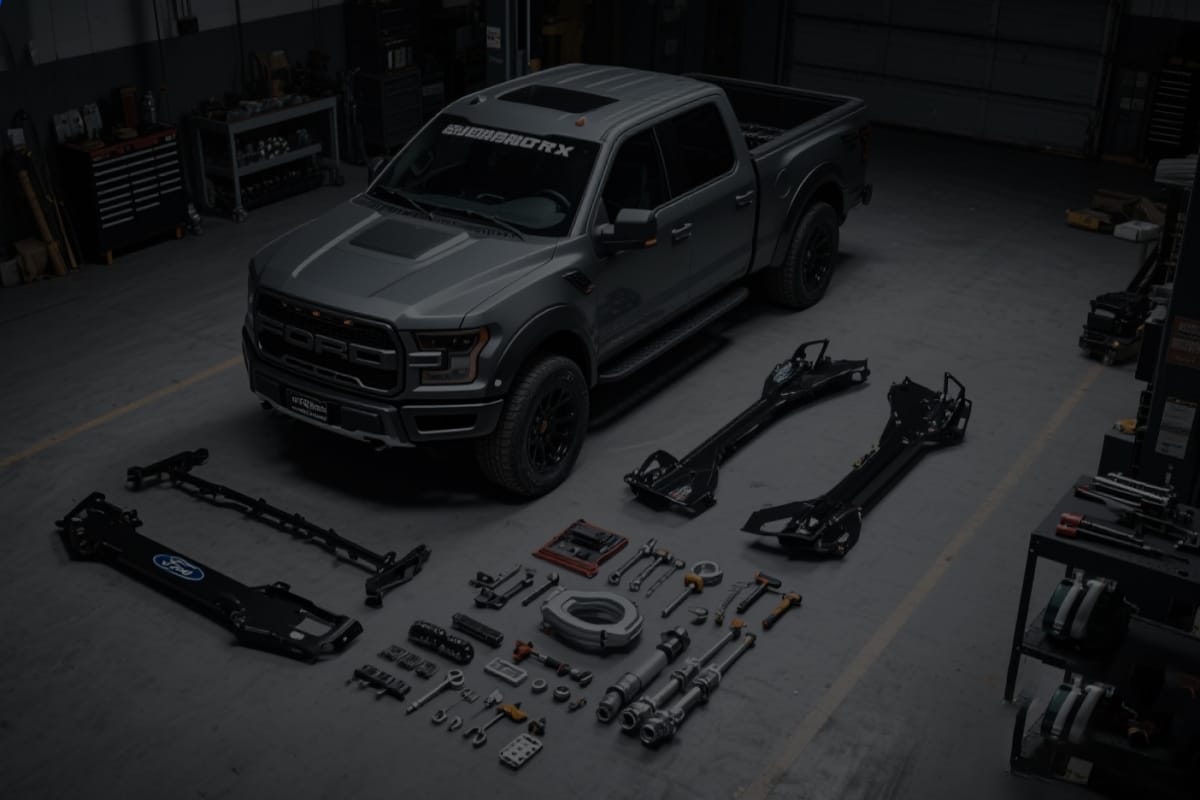
If you are comparing parts for a lawful competition, testing, or other permitted application, the useful distinction is package breadth and vehicle fitment. A full package groups the compatible hardware and calibration support for a specific engine and model year so you do not have to piece together unrelated components individually.
Before purchasing or installing emissions-related hardware or software, verify that the intended use is lawful for your vehicle and jurisdiction. Product labeling such as “off-road” or “race use” should not be treated as a substitute for checking applicable emissions law.
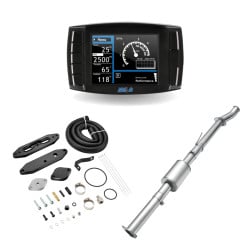
SuncentAuto also organizes diesel parts by vehicle platform and fitment, which is more useful than choosing a component based only on a generic “delete kit” label.
What Should You Know Before Making a Decision?
The answer to what does deleted mean on a truck changes from a simple definition into a practical ownership question once money is involved. For an owner with a fault, diagnosis comes first. For a used-truck buyer, documentation and mechanical condition matter most. For someone comparing parts, vehicle-specific fitment and the legal limits discussed above should guide the next step.
In other words, the value of the word “deleted” is limited unless you know the truck's actual configuration and history. That information is what determines repair options, return-to-stock difficulty, inspection exposure, resale flexibility, and real ownership cost.