 Contents
Contents
Is the 6.7 Cummins prone to the P003A code at high mileage? You bet. Many owners start hitting this wall after the 100k-mile mark, often seeing the P003A and P2262 codes pop up together. When you’re dealing with low boost, black smoke, sluggish throttle response, or a flakey exhaust brake, you’re likely staring down a VGT actuator issue, carbon-fouled turbo vanes, or a calibration ghost. Should you rush to swap the turbo, or is there a low-cost DIY fix? Stick with this guide—it might just save you a grand or two.
What Does the P003A Code Mean on a 6.7 Cummins?
In 6.7 Cummins speak, the P003A code is the ECM’s way of saying: "The VGT (Variable Geometry Turbo) actuator isn't where I told it to be." Essentially, the computer commands the turbo vanes to a specific position, but the actual feedback doesn't match the command. This doesn't automatically mean your turbo is toast. More often than not, you're looking at a bad actuator, carbon-locked VGT vanes, loose wiring, or a turbo that was replaced but never properly calibrated.
P003A / P2262: Common Symptoms & Diagnostic Cues
If the P003A code shows up solo, the truck might just throw a Check Engine Light (CEL) and drive normally for a while. But if it’s paired with codes like P2262, P00AF, P226C, or P0299, the VGT system is actively failing to control your boost pressure. Use the table below to gauge what's happening under your hood:
| Symptom | Potential Cause | Priority |
|---|---|---|
| Check Engine Light (CEL) | Early stage actuator/sensor signal | Medium |
| P003A only (Power feels normal) | Actuator relearn/calibration/intermittent electrical | Medium |
| P003A + P2262 | Turbo not building boost; VGT sticking | High |
| Sluggish throttle/Low-end lag | VGT vane position inaccurate | Med-High |
| Weak climbing/towing power | Insufficient boost under high load | High |
| Excessive black smoke | Air/fuel ratio mismatch due to boost lag | High |
| Exhaust brake erratic/failed | VGT actuator/vane instability | High |
| Code returns after clearing | Intermittent actuator failure, carbon, or wiring | High |
| Limp mode | ECM engine protection triggered | Critical |
| Turbo noise/grinding/oil leaks | Internal mechanical turbo failure | Critical |
If you're only seeing the P003A code and the truck drives fine, don't write off the turbo yet—start with basic DIY checks like inspecting the electrical plugs, wiring, and boost tubes for leaks. However, if P003A is paired with P2262, black smoke, no boost, or an exhaust brake failure, don't drag your feet. Perform a VGT actuator sweep test, check for mechanical vane sticking, and do a boost leak test. At this point, taking it to a specialized diesel shop is the smart play.
How to Fix P003A Code: 6.7 Cummins Troubleshooting
We’ve broken the repair process into three strategic tiers based on urgency and budget: roadside emergency handling, low-cost DIY diagnostics, and long-term repair decisions.
3.1 Roadside Survival: What to do when the code pops mid-trip?
If the P003A code appears on the highway, mountain passes, or remote areas, your priority isn't a permanent fix—it's getting to safety.
Step 1: Rapid Assessment
- Dash Status: Is it just a CEL, or are you in Limp Mode?
- Boost Levels: Can the truck still build boost, or is the pedal dead?
- Black Smoke: Excessive smoke during acceleration suggests an air-fuel mismatch.
- Exhaust Brake: Flaky performance here is a smoking gun for VGT actuator/vane failure.
- Noises: Listen for high-pitched screaming, grinding, or metallic scraping (STOP immediately if heard).
- Visuals: Check for loose turbo actuator plugs, melted wiring, or blown charge pipe boots/clamps.
Step 2: Decision Matrix
| Status | Action Plan |
|---|---|
| P003A only, power feels normal | Finish light-duty tasks; avoid heavy towing/climbing. Inspect at home. |
| P003A + P2262, but some boost remains | Reduce load immediately. Drive slowly to a safe spot; do not clear-and-drive. |
| No boost, black smoke, limp mode | Towing is highly recommended. Do not risk engine damage. |
| Screaming/Grinding noise or oil leak | Tow it. Do not turn the key. |
3.2 Home Diagnostic: Low-Cost DIY Steps
Do not throw a new turbo at the truck yet. Follow this logic:
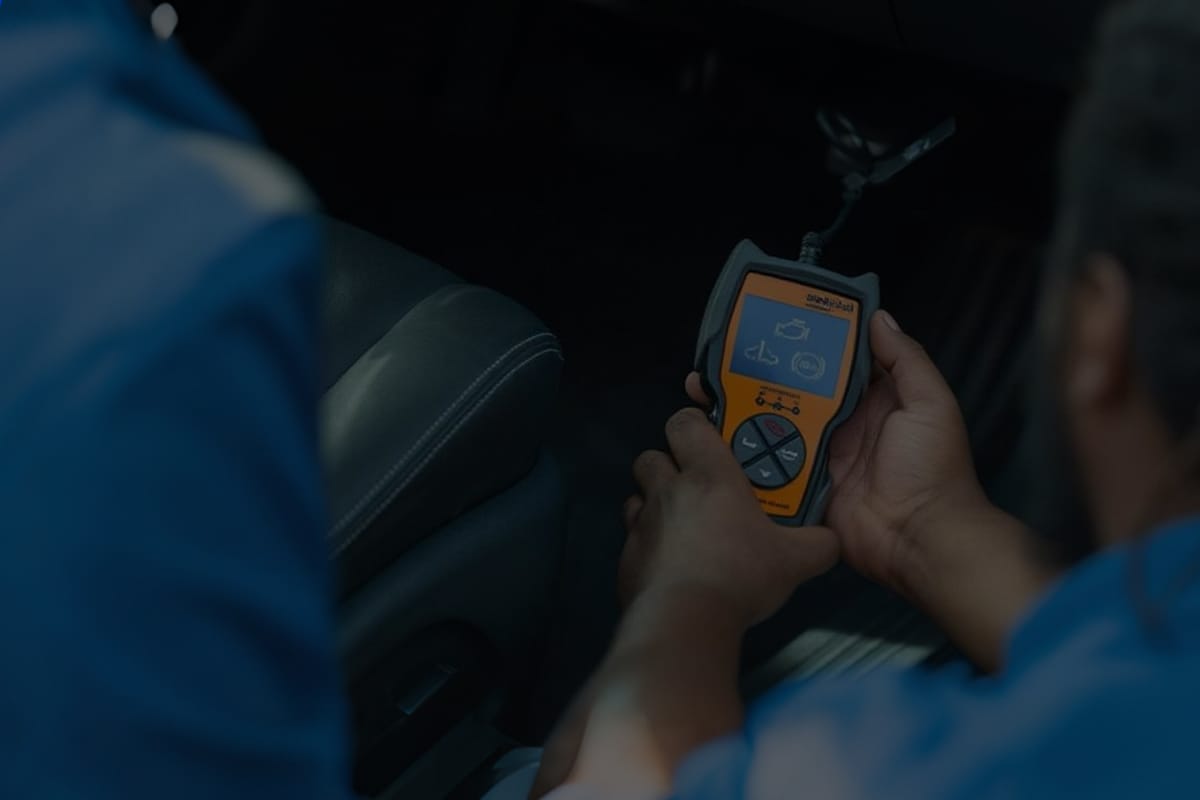
- Step 1: Log all codes. Grab freeze-frame data; look for clusters (P2262, P0299, P00AF, etc.).
- Step 2: Check voltage. Low battery voltage or bad grounds make electronic actuators act erratic.
- Step 3: Inspect wiring. Look for corroded pins, water intrusion in the actuator plug, or heat-damaged wire loom.
- Step 4: Boost leak test. Inspect all CAC boots, clamps, and charge pipes for oily residue or cracks.
- Step 5: Exhaust leaks. Check the manifold and up-pipe for soot stains; leaks here ruin turbo response.
- Step 6: Bidirectional scan. Use a tool capable of a VGT sweep test to see if commanded position matches actual position.
- Step 7: Check VGT arm (Experienced only). If you pull the actuator, the VGT arm should move like butter. If it's gritty or stuck, you have carbon buildup.
3.3 The Repair Decision: Shop vs. Replacement
If the code keeps coming back, you're faced with a cost-benefit decision.
| Option | Pros | Cons |
|---|---|---|
| Shop Diagnostic | Avoids "parts-cannon" spending; confirms root cause. | Labor/diag fees; may still lead to turbo replacement. |
| Replacement Turbo | Fixes the whole system; quick return to work. | High upfront cost (~$1,850+); overkill if just an actuator. |
| New Actuator Only | Lower cost; fixed easily if arm moves freely. | Won't solve internal carbon/vane seizing. |
| Turbo Cleaning | Cheapest; preserves original hardware. | Labor intensive; no guarantee of long-term success. |
Pro Tip: Before pulling the trigger on a replacement turbo, confirm: Year compatibility, specific 6.7 config, core charge policies, and—most importantly—ensure you have a plan for the post-install calibration/relearn procedure.
How to Prevent Recurrent P003A Codes
Preventing the P003A code isn't about resetting the ECM—it's about mitigating the root causes: soot buildup, actuator stress, improper cold-idle habits, and boost leaks. Here is your proactive maintenance playbook.
4.1 Proper Oil Selection
Using the wrong oil won't trigger a P003A immediately, but incorrect viscosity or degraded oil will accelerate deposit formation within the turbo system and engine components.
| Model Year | Oil Recommendation | Critical Note |
|---|---|---|
| 2018 & Older | Follow owner’s manual (often 15W-40) | Don't assume new-gen specs apply to your older engine. |
| 2019+ Cummins | 10W-30 or 5W-40 Synthetic (Cold climates) | Stellantis warns against 15W-40; it causes hydraulic lash adjuster deposits. |
4.2 Minimize Prolonged Idling
Long idle times and stop-and-go driving keep Exhaust Gas Temperatures (EGTs) low, leading to incomplete combustion and heavy soot accumulation. For the VGT turbo, this carbon locks the vanes and nozzles, eventually pinning the actuator. If you’re a contractor or tow rig, avoid excessive idling. Take the truck out for a high-load, highway-speed drive regularly to reach full operating temperature and "burn off" the carbon.
4.3 Smart Exhaust Brake Usage
The exhaust brake cycles the VGT vanes. Using it regularly keeps the mechanical assembly moving and discourages seizure. Warning: If you are already experiencing P003A/P2262, do not attempt to "force-clean" the turbo by repeatedly toggling the exhaust brake; this can cause further damage to an already failing actuator or vane set.
4.4 Wiring & Plug Inspection
The actuator sits in a high-heat, high-vibration zone. Inspect the harness at every oil change:
- Check for loose/corroded pins.
- Look for heat-hardened or frayed wire insulation.
- Ensure the harness isn't resting against hot exhaust components.
- Maintenance Interval: Inspect every oil change; if you frequently tow or idle, check every 5k–7.5k miles.
4.5 Emission Systems & Tuning
While 6.7 Cummins delete kit can significantly reduce soot-related issues, these are strictly for off-road use only. Always verify your local emissions laws and federal regulations before altering the emissions control system.
5. Year-Specific Diagnostic Focus
While a P003A is universal, certain model years have recurring "weak points." Use this to narrow your search:
| Model Year | Primary Focus Areas |
|---|---|
| 2007.5–2012 | Harness aging, plug corrosion, and heavy VGT carbon buildup. |
| 2013–2018 | Actuator failure, calibration errors (P00AF/P226C). |
| 2019+ | P003A + P2262 clusters, boost leaks, and improper oil usage. |
| Tuned/Deleted | Verify tune logic, boost system integrity, and mechanical arm movement before blaming software. |
Final Note: For high-mileage work trucks where downtime is expensive, a professional diagnostic or a pre-emptive quality turbo replacement is often more cost-effective than weeks of chasing intermittent electrical ghosts.