 Contents
Contents
In the diesel community, nothing is more heart-stopping than the sudden glow of the DPF (Diesel Particulate Filter) warning light on the dashboard. Based on our observations, when owners set out to fix the problem, they aren't just worried about a clogged filter—they are worried about the massive hidden costs behind it.
One pickup owner on Reddit put it bluntly: "I don't care what chemicals are in that can; I just want to know if I can fix it myself for $50, or if I have to spend $500 at a pro shop, or even $2,000 to 'solve' it permanently so my truck stops throwing me into that damn Limp Mode."
How do you find the balance between maintenance costs and vehicle reliability (Downtime Cost)? If you are stuck at the crossroads of "trying a spray-in cleaner" or "finding a local professional shop," determining the true condition of your rig is the first step toward saving a lot of wasted money.
What Diesel Owners Need to Know Before Choosing a DPF Fix
Most owners are looking for an immediate solution to their current problem, asking questions such as:
- "Will it work immediately after I spray it?"
- "Do I need to perform a forced regeneration?"
- "Is the blockage caused by soot or ash?"
- "Should I buy a cleaner or find a local shop for cleaning?"
Based on the severity of the blockage, we have outlined three different solutions below.
Spray-In DPF Cleaner — The Lowest Barrier DIY Emergency Fix
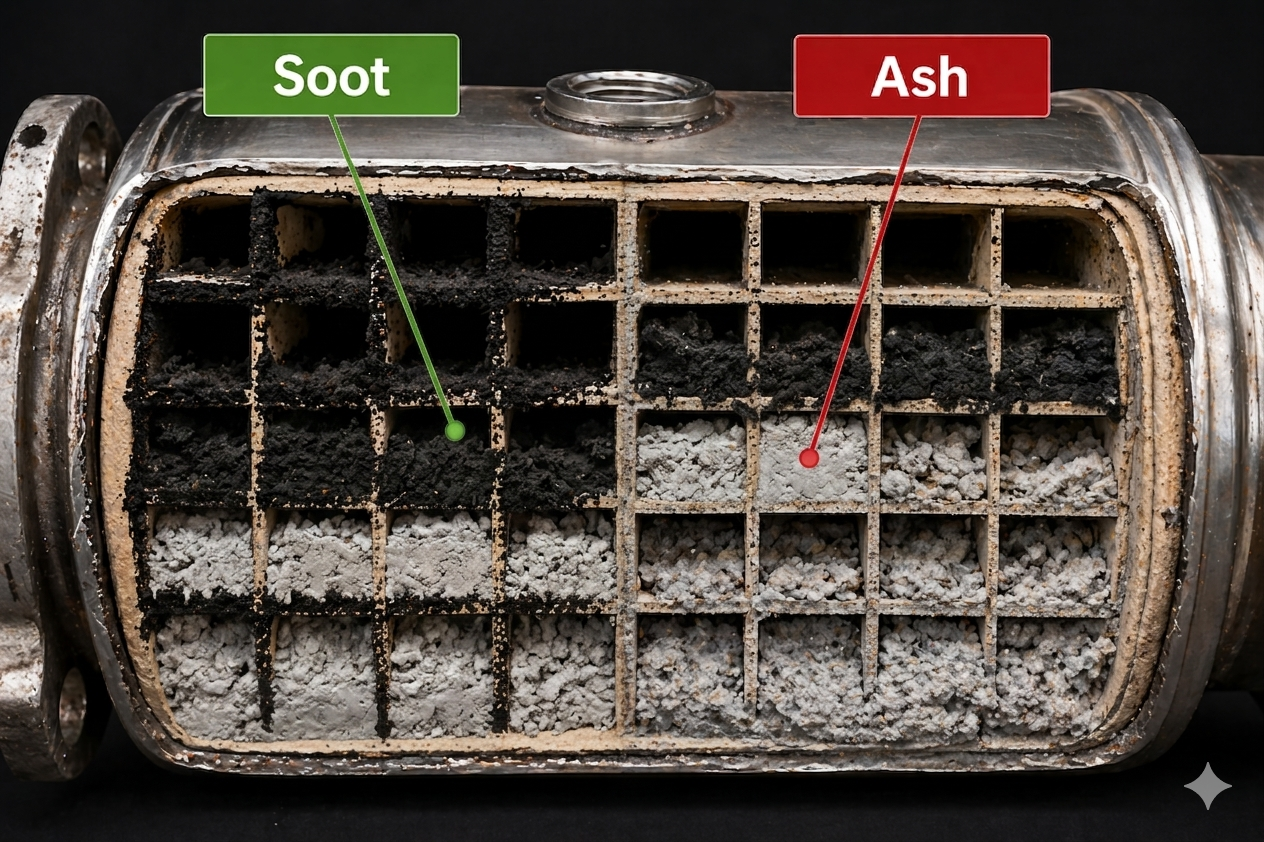
A bottle of solvent costing just a few dozen dollars—the DPF cleaner—is often the most tempting option. These products are generally divided into "fuel additives" and "sensor-port spray-in (On-truck)" types. For many owners who have just seen the dashboard light up, this is the "trial and error" stage with the highest return on investment.
It handles Soot by lowering its ignition point, helping the vehicle burn off carbon deposits through "passive regeneration" while driving. However, it cannot handle Mineral Ash. This is an incombustible substance formed by the combustion of additives in engine oil and fuel. As one veteran mechanic noted: "Ash is like stones at the bottom of the filter; no matter how good the chemical spray is, it cannot 'burn' them away."
Core Value & Application Scenarios
- Target Audience: City commuters, daily school runs, or owners of newer trucks used primarily for short-distance grocery trips.
- Best Timing: Vehicle mileage is within 60,000 - 80,000 miles, where low-speed driving has prevented sufficient exhaust temperature, causing light carbon buildup.
Main Advantages:
- Ultra-Low Cost: A single treatment costs only $20 - $80.
- Convenient Operation: No major disassembly required; it can be sprayed directly through the pressure sensor port.
Risk Warning: Avoid "Secondary Damage"
Warning: Many DIYers are too impatient. If cold liquid is sprayed directly into the exhaust system while it is still too hot right after engine shutdown, it can easily trigger Thermal Shock, causing the internal ceramic carrier to crack. Once the filter core shatters, you won't be facing a $50 cleaning fee, but a replacement bill worth thousands of dollars.
Overall: Spray-in cleaners are excellent preventative maintenance tools. If you simply want to alleviate a minor clog and extinguish the warning light, it is well worth a try. However, if your truck has already stepped into the high-mileage phase, you need to consider a deeper solution.
Professional DPF Cleaning Near Me for High-Mileage or Severe Blockage
When your truck crosses the 80,000 - 100,000 mile mark, or you find that the effects of spray-in cleaners only last for a few weeks, it is time to search for "DPF cleaning near me." At this stage, the problem has evolved from "soot accumulation" to "ash buildup."
Why is 80,000 - 100,000 Miles a Watershed Moment?
- The Ash Critical Point: In this mileage range, the ash generated by engine oil combustion typically occupies 30% - 50% of the physical space in the DPF. This physical blockage is irreversible; no chemical agent can flush it out.
- Negative Impact of Cleaners: Frequent and excessive use of spray-in chemicals can make the internal DPF carrier brittle. If chemical residues are not fully discharged with the exhaust, they may combine with ash to form a "cement-like" hard substance, completely ruining the filter.
The Core Value of Professional Cleaning Services
Compared to the hit-or-miss nature of DIY, the Off-truck (Disassembly) service provided by local professional shops is a true "Deep Reset":
- Complete Ash Removal: Pro shops use a Thermal Kiln for high-temperature baking, combined with high-pressure air or pneumatic/aqueous cleaning equipment to physically blow stubborn ash out of the honeycomb pores.
- Precision Testing: They perform a Backpressure Test to ensure that the flow rate after cleaning is restored to over 95% of factory standards.
- Root Cause Diagnosis: Often, frequent DPF clogging is just a symptom. Professional technicians can help you identify if underlying issues—like EGR valve carbon buildup or sensor drift—are causing the problem, preventing the tragedy of "clogging again right after cleaning."
Target Audience & Cost Profile
Target Audience: Vocational haulers living in cities with strict emissions inspections (e.g., California, New York, Colorado) or those who need to maintain original factory emission standards. For more details on strict enforcement, see: Is It Legal to Delete a Diesel Now? 2026 Guide.
Vehicle Status: High mileage, abnormal regeneration frequency (e.g., triggering every 100 miles), and no plans for large-scale modifications.
Estimated Costs (Based on High-Inspection Cities):
- Single Service Fee:$400 - $650 (Cleaning only).
- Total Expenditure: Including disassembly, installation, gasket replacement, sensor calibration, and necessary diagnostics, total costs in high-cost cities usually range between $900 - $1,400.
Benefits: This "deep surgery" usually buys your DPF another 30,000 - 50,000 miles of smooth operation. It is the best solution for extending system life while staying compliant.
Expert Advice: If your truck has exceeded 100,000 miles and has never had a deep clean, stop wasting money on sprays. One professional Off-truck clean will do more to save your power and fuel economy than ten cans of cleaner.
DPF Delete Kit for Long-Term Relief in Extreme Use Cases
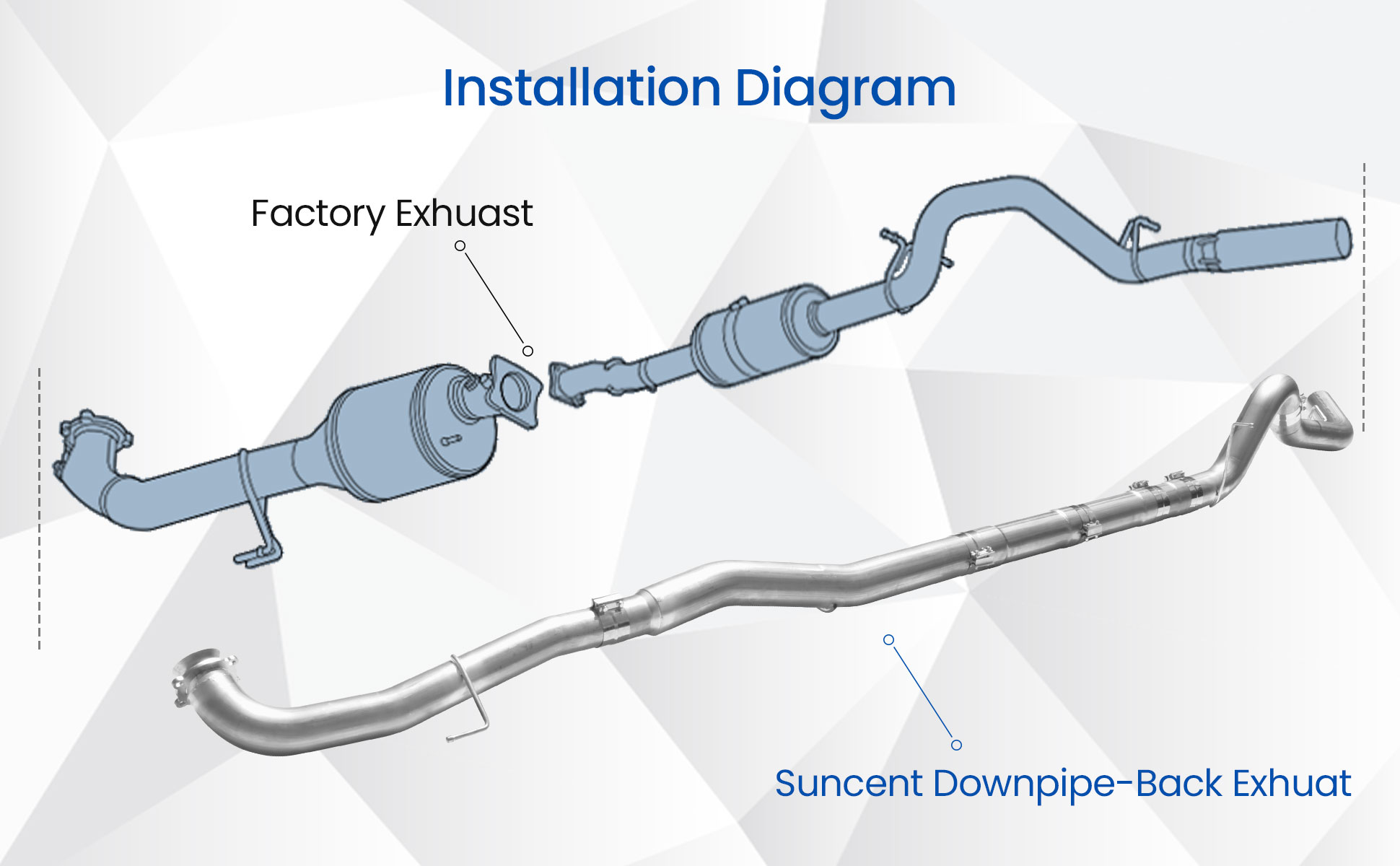
For a segment of diesel owners, the DPF system is no longer an environmental helper—it has become a "stumbling block" to productivity. When the costs of cleaning and repairs climb year after year, and the vehicle frequently enters Limp Mode leading to costly downtime, a DPF Delete Kit becomes the ultimate exit strategy for those seeking maximum reliability.
Eliminating the Failure Point at the Source
This solution involves the physical removal of the DPF filter (replacing it with a Delete Pipe) and reflashing the vehicle's computer with an ECU Tuner to permanently disable the regeneration cycle. This means your truck will no longer require Diesel Exhaust Fluid (DEF), nor will it suffer from sudden power restrictions caused by DPF clogs.
Who Needs a Delete Kit?
In specific industries, the maintenance difficulty of the DPF system often outweighs its operational value:
- Farm & Ranch: Users who frequently tow heavy trailers, transport livestock, or operate machinery on private land. Due to long-term low-speed, high-load conditions, exhaust temperatures remain extremely low, causing the DPF to "conk out" during critical harvest moments. This severely impacts work efficiency and often requires an expensive tow for repairs. (See our specialized RAM 6.7 Cummins Delete Guide for heavy-duty solutions).
- Oil, Gas & Mining in Remote Areas: Trucks working in extreme cold (such as North Dakota or Canadian oil fields) often require long periods of idling to maintain cabin temperature. Extended idling is the #1 killer of DPFs. In these "service vacuum zones" far from professional repair shops, a delete is a necessity for survival.
- Heavy Hauling & Construction: For vehicles operating strictly on-site or frequently climbing steep grades, removing the DPF can release suppressed torque and significantly improve fuel economy by 5% - 15%.
Cost Analysis: High Upfront Investment vs. Long-Term Gains
While it has the highest single-event cost, from a Total Cost of Ownership (TCO) perspective, it is a bill-killer for many professional owners:
- Initial Investment: A diesel delete kit including a high-quality straight pipe, EGR delete kit, and an advanced Tuner typically ranges between $1,500 - $3,000.
- Long-Term Economy: Although the initial layout is large, it completely eliminates all subsequent cleaning fees ($500+ per session), sensor replacement costs, DEF fluid expenses, and the potential income loss from downtime. As one Texas rancher put it: "A delete kit is expensive, but knowing I won't be stranded in a pasture at 3 AM because of an exhaust sensor makes it worth every penny."
Reality Check: Essential Reminders
Before deciding on this path, owners must be soberly aware of the trade-offs:
- Legality & Compliance: Under federal law, removing emission systems for vehicles driven on public roads remains illegal. This solution is strictly intended for Off-road, racing, or specific vocational use.
- Warranty Voidance: This level of modification will typically result in the immediate voiding of the engine's original factory warranty.
- Technical Dependency: Must be paired with high-quality tuning. For complex engines, professional guidance is crucial—check out the L5P Duramax Delete Buying Guide for technical details.
Summary Advice: If your truck is a tool for making money and you spend most of your time in remote construction sites or farms far from the city, a DPF Delete Kit offers more than just a horsepower boost—it is a "no-fail" commitment to your livelihood.
DPF Cleaner vs. Professional DPF Cleaning vs. DPF Delete Kit: Cost, Downtime, and Long-Term Value
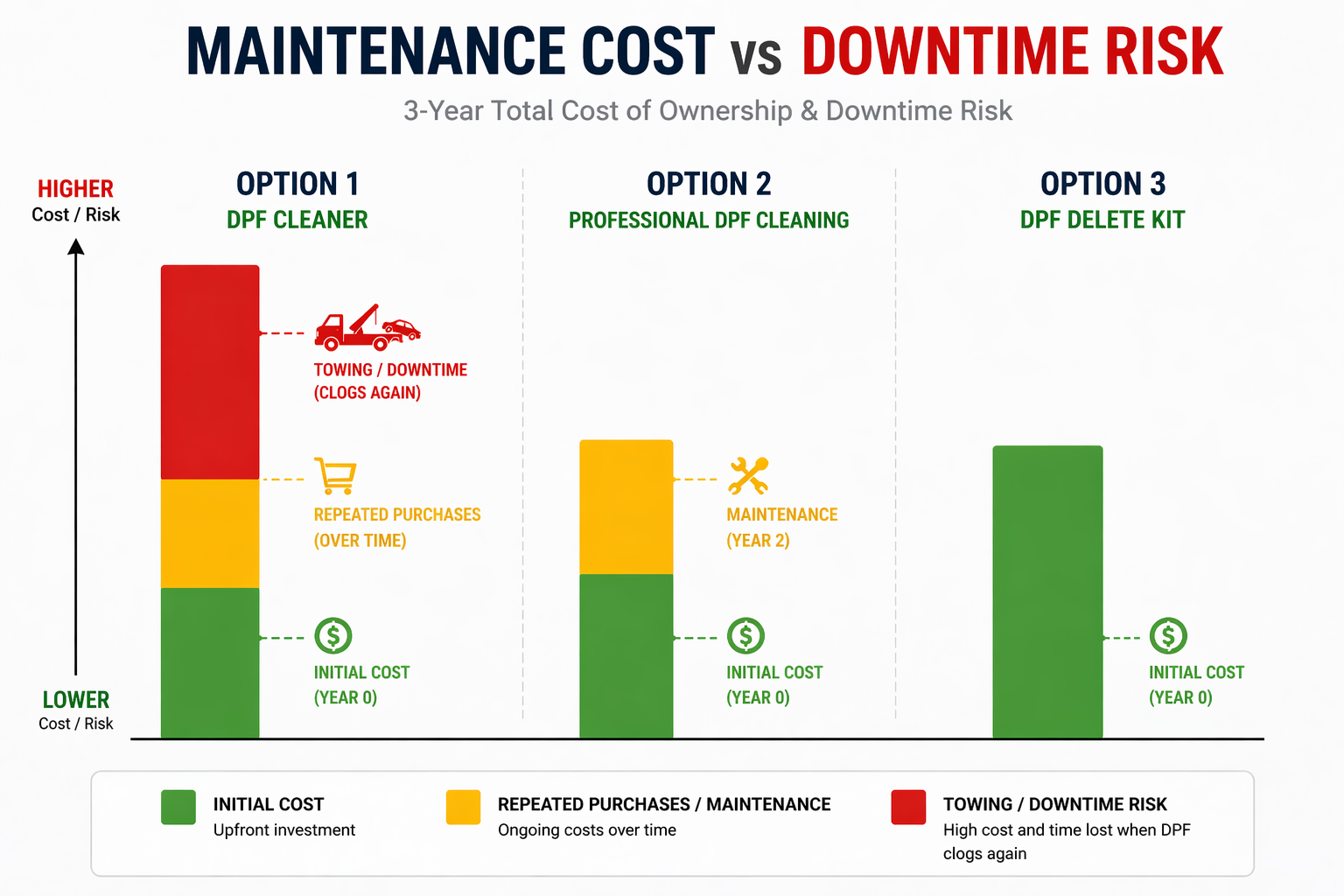
Before making a final decision, truck owners should not just stare at the immediate bill. Instead, you should calculate the "Total Cost of Ownership (TCO) for the next three years." Often, the cheapest solution upfront turns out to be the most expensive in the long run. To help you clear up the math, we’ve organized the following comparison table:
| Dimension | DPF Cleaner (DIY) | Local Professional Cleaning | DPF Delete Kit |
|---|---|---|---|
| Upfront Cost | Ultra-Low ($20 - $80) | Medium ($900 - $1,400) | High ($1,500 - $3,000+) |
| Maint. Frequency | High (Preventative use) | Low (Every 30k-50k miles) | Zero (One-time) |
| Long-Term Value | Low (Can't solve Ash) | Medium (Compliant & extends life) | Highest (No maint./DEF fees) |
| Downtime Risk | High (Frequent errors) | Medium (1-2 day service) | Ultra-Low (No more Limp Mode) |
| Best Match | City commuters / New trucks | Vocational haulers / Strict Law | Farms, Mining, Remote heavy-duty |
How to Calculate the "Payback Period"?
If you own a 2018 RAM 3500 and drive over 20,000 miles a year, if you own a heavy-duty truck like a Ford Super Duty (refer to our 6.7 Powerstroke Delete Guide), choosing a Delete Kit might cost you $2,000 today. However, by improving fuel efficiency by about 10% (avoiding fuel-heavy regen cycles) and eliminating DEF fluid costs, you usually reach the "break-even" point within 18 to 24 months. In contrast, frequently buying DPF cleaners or paying for professional shop visits might feel easier on the wallet now, but the total expenditure over a 200,000-mile engine life could be significantly higher.
Expert Avoidance Guide
Before you swipe your credit card, please verify these three points, as they could change your entire repair plan:
- Diagnosis First, Cleaning Second: Often, a clogged DPF is just the "scapegoat." If your EGR valve is leaking oil, fuel injectors have poor atomization, or your Turbo is leaking oil, the engine will act like a "smoke factory." Without fixing these root causes, any cleaning method will fail within weeks.
- Beware of "Thermal Shock": Again, when using a spray-in DPF cleaner, monitor exhaust temperatures via OBD. Spraying cold liquid onto hot ceramic can crack the core. If you're unsure of the process, consult a technician.
- Tune Quality Dictates Life: If you choose a delete kit, pair it with a reputable Tuner (like EZ Lynk or EFI Live). Poor-quality tunes will cause embarrassing black smoke and potentially damage engine valves through uncontrolled EGTs (Exhaust Gas Temperatures).
Conclusion: How to Choose Between DPF Cleaner, Local DPF Cleaning, and a DPF Delete Kit ?
Choosing a solution is essentially a trade-off between Legality, Budget, and Reliability:
- Limited budget and minor symptoms: Start with a high-quality DPF Cleaner. If the light goes off and regen intervals stabilize, it was just a temporary soot buildup.
- Seeking compliance and long-term ownership: Search for local Professional Cleaning. This is the most scientific way to maintain the vehicle's resale value and pass inspections.
- Extreme environments and productivity-first: If your truck works in a farm, construction site, or mine, and you cannot afford downtime, a DPF Delete Kit is the only way to say goodbye to the repair shop and reclaim original power.
No matter which path you take, remember: Maintenance is the soul of a diesel engine. Timely intervention is always cheaper than searching for a tow truck number after your rig has already conked out.