 Contents
Contents
- What Is an F250 Delete Kit?
- Why Do Owners Consider an F250 Delete Kit?
- Risks That an F250 Delete Kit May Bring
- DPF-Only Delete vs. Full Delete, or All-in-One
- Real-World Performance After Deleting: Horsepower and Fuel Economy
- Why Are DPF-Only or EGR-Only Deletes Not Recommended?
- Legal Alternatives: How Can You Solve the Problem Without Deleting the Emissions System?
- F-250 Delete Kit Buying Guide
- Conclusion
- FAQs
Many F-250 diesel owners search for an F250 delete kit usually not because they wanted to modify the truck from the beginning, but because the vehicle has already encountered issues such as DPF clogging, EGR failure, DEF/SCR warnings, regeneration failure, power loss, or excessively high repair costs. Once a problem occurs, owners can easily start looking for a "one-time solution."
This article will start from scratch and systematically explain the components of an F-250 Delete Kit, why owners consider deleting emissions systems, the legal and practical risks involved, the difference between a partial delete and a full delete, real owner driving data, a buying guide, and legal alternatives.
⚠️ Important Legal Disclaimer
Before going into detail, please note the following legal facts: This guide is for informational and educational purposes only and does not constitute any modification advice or encouragement.
Under the U.S. Clean Air Act, tampering with or disabling motor vehicle emissions control systems, including DPF, EGR, and DEF/SCR systems, is illegal. In technical terms, delete kits are only legal for off-road, track, or competition vehicles, and these vehicles must not be driven on any public roads.
What Is an F250 Delete Kit?
Simply put, an F250 delete kit usually refers to a kit used to remove, replace, or bypass certain emissions control systems on a Ford F-250 diesel truck.
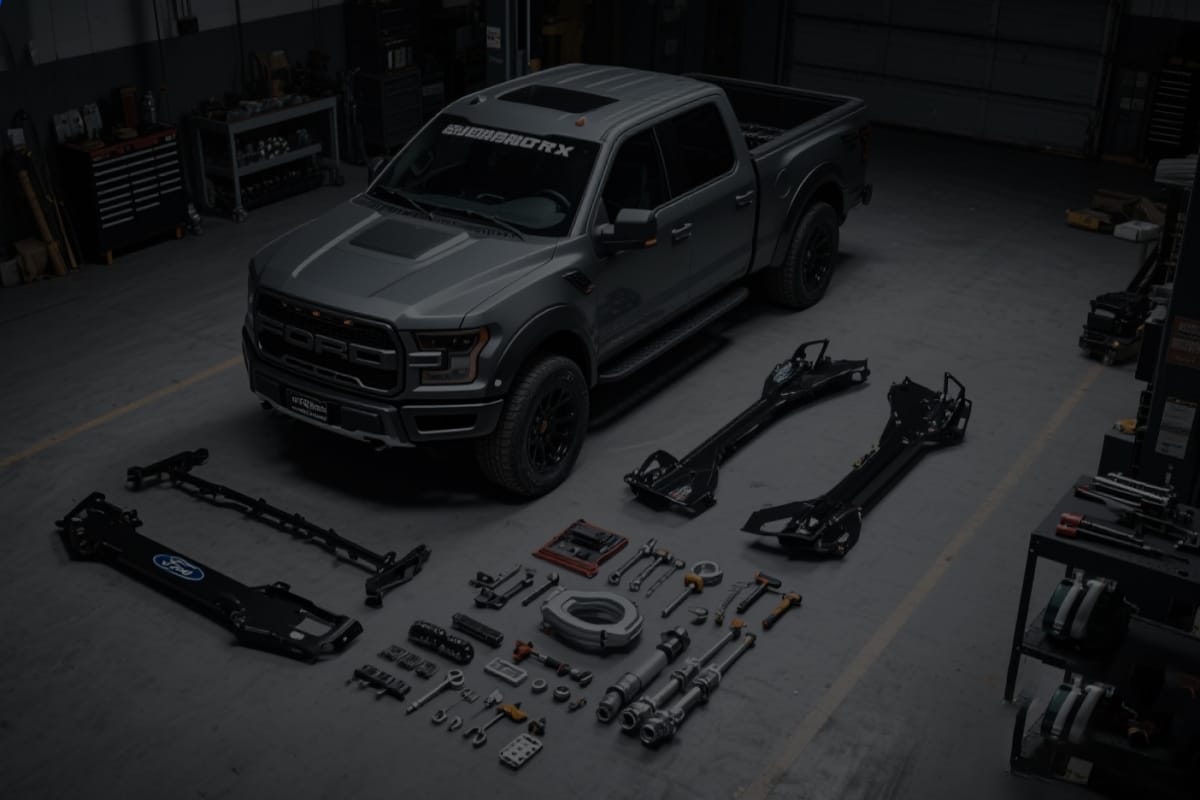
A complete F-250 Delete Kit usually includes the following components:

(1) EGR Delete Kit
This includes block-off plates, coolant bypass fittings, gaskets, and bolts. After installation, it completely cuts off the path for exhaust gas to recirculate back into the intake, preventing fresh intake air from being contaminated by exhaust gas.
(2) DPF Delete Kit
The core component is a DPF straight pipe, usually a 4-inch or 5-inch stainless steel pipe, used to replace the factory DPF and DOC section. After the DPF is removed, exhaust backpressure drops significantly, the turbo spools earlier, and exhaust gas temperature decreases.
(3) DEF/SCR Delete Kit
This includes the hardware and programming changes required to disable the SCR system, stop DEF injection, and remove related lines and nozzles.
(4) Tuner and Programming
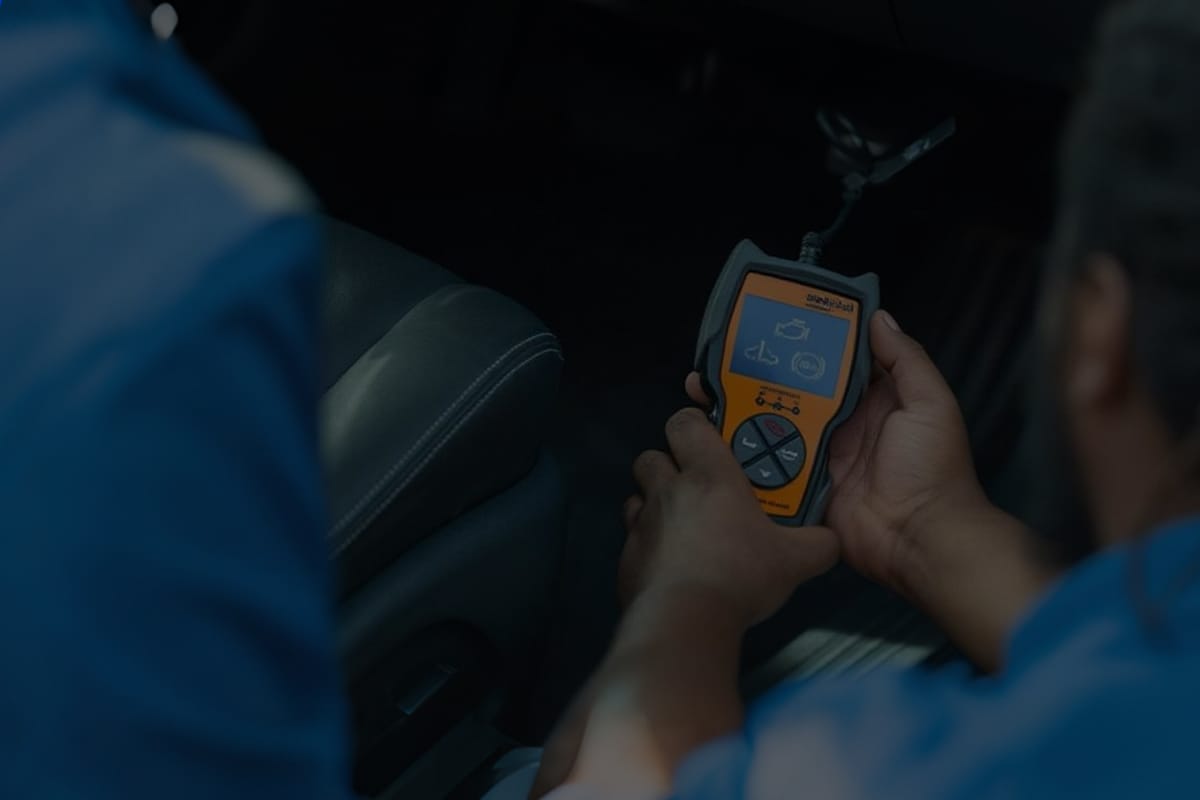
This is the most critical part of the entire setup. If the physical components are removed without flashing the software, the PCM, or Powertrain Control Module, will continue to monitor signals from the DPF differential pressure sensor, EGR position sensor, NOx sensors, and other components. This will inevitably trigger fault codes, and in serious cases, the truck may be forced into limp mode with restricted vehicle speed.
Why Do Owners Consider an F250 Delete Kit?
The modern 6.7L Power Stroke diesel engine used in the F-250 is undoubtedly powerful, but in order to meet increasingly strict EPA emissions standards, the factory equips it with three major exhaust aftertreatment systems: DPF, or diesel particulate filter; EGR, or exhaust gas recirculation; and DEF/SCR, or urea injection. It is exactly these three systems that create real frustrations for many owners in daily use.
DPF System: Frequent Regeneration That Costs Money and Attention
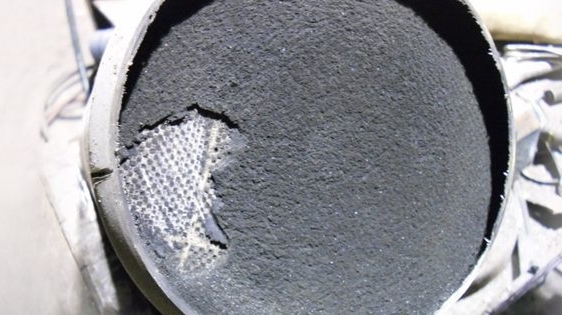
The diesel particulate filter (DPF) captures soot from exhaust gases. When the DPF becomes clogged, the engine must burn off this soot through a "regeneration" process—which requires exhaust temperatures to reach approximately 1100°F or higher, causing the engine control unit (ECU) to inject extra fuel. The problem is: if a truck is frequently driven at low speeds, on short trips, in stop-and-go traffic, or idling for extended periods, the DPF may not reach the regeneration temperature. Soot accumulates, eventually causing the engine malfunction light to illuminate and the vehicle to enter a torque-limiting limp mode. At this point, the owner must either drive on the highway for passive regeneration, go to a repair shop for forced regeneration, or replace the entire DPF.
Replacing a diesel particulate filter (DPF) can cost over $2,000 for parts alone, and easily exceed $3,000 with labor costs. In contrast, a complete DPF removal kit typically costs only about half that—a direct economic reason why many owners consider removal kits.
EGR System: Carbon Buildup Is a "Chronic Disease"
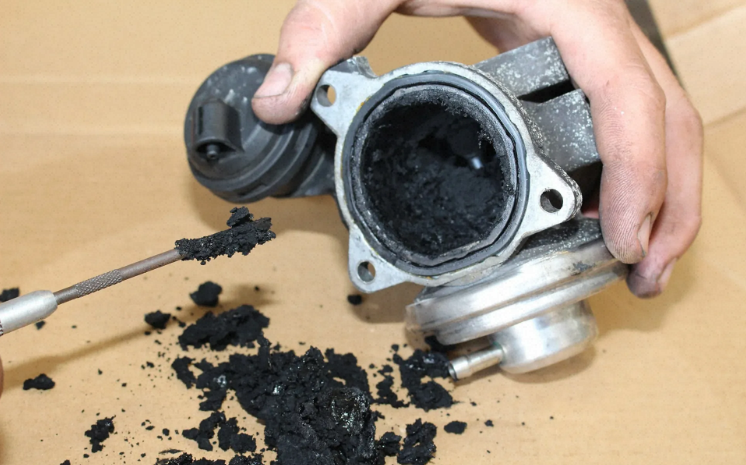
EGR sends some exhaust back into the intake to lower combustion temperature and reduce NOx. But soot particles in that hot exhaust gradually deposit on intake valves, the throttle body, EGR cooler, and intake manifold walls. Over time, carbon thickens, narrowing the intake passage. Valves may not close fully due to coking, leading to rough idle, weak acceleration, and higher fuel consumption. Cleaning EGR carbon requires disassembling the intake system, with labor easily reaching thousands of dollars. If the EGR cooler cracks and coolant enters the cylinders, the consequences are even worse.
DEF/SCR System: A Maintenance Headache Like a "Snow Machine"
DEF (diesel exhaust fluid, or urea) is sprayed into the exhaust pipe to convert NOx into nitrogen and water. But when exhaust temperature is low, DEF easily crystallizes at the nozzle tip, clogging it. Also, the DEF pump, heating elements, level sensors, and NOx sensors have a relatively high failure rate. A system warning can trigger torque reduction or even limit the number of remaining starts. Owners must add DEF every 3,000–5,000 miles – an extra expense of about 2–4 per gallon, and an additional daily hassle.
Common Pain Points
Many owners report the F-250 feels "heavy" and "sluggish," especially during hard acceleration or climbing hills – like the engine has power but can't fully deliver it. Once the emissions system is removed and paired with performance tuning, the same engine can release an extra 50–150 horsepower, with noticeably sharper throttle response and turbo spool.
Risks That an F250 Delete Kit May Bring
Deleting the emissions system may appear to solve problems such as DPF regeneration and EGR carbon buildup, but the three major risks it brings are also real and direct — especially in terms of law, warranty, and daily reliability.
Legal Risk
In January 2026, the U.S. Department of Justice, or DOJ, announced that it would no longer pursue criminal prosecution for emissions tampering. This means owners do not need to worry about imprisonment. But this absolutely does not mean delete kits are now legal. The EPA still retains the authority to impose civil fines for emissions tampering, and each non-compliant vehicle may face substantial penalties. More importantly, smog testing and random roadside inspections in states such as California, Colorado, and New York are completely unaffected by DOJ policy. Once a violation is discovered, a fine and a mandatory restoration notice may arrive together.
Vehicle and Warranty Risk
As soon as a Ford dealer or the PCM detects that the emissions system has been tampered with, the factory powertrain warranty is immediately voided. During resale, a pickup with a delete history will also be difficult to sell in states with strict emissions rules.
Usage Risk
Many people think that once the delete is done and the software is flashed, the job is complete. In reality, things are not always that smooth. If the hardware installation is incomplete — for example, only replacing the DPF straight pipe without modifying the EGR — or if the flashed program is too aggressive, various problems may occur: excessive exhaust gas temperature, harsh shifting, black smoke, and even forum complaints that "fuel economy got worse after the delete."
DPF-Only Delete vs. Full Delete, or All-in-One
Many owners who do not fully understand delete systems mistakenly believe that simply buying and installing a DPF straight pipe, or delete pipe, will solve everything. That is not the case. This section specifically explains the fundamental difference between a partial delete and a full delete.
| Option | Result | Pros and Cons |
| Hardware only, no tuner | ❌ Check engine light + torque limiting, basically unable to operate normally | Completely impractical |
| Tuner only, factory hardware retained | ✅ Lower legal risk, small power gain of 20–40 HP | Physical pain points of the emissions system, such as regeneration and carbon buildup, still remain |
| DPF delete + tuner, EGR retained | ⚠️ Eliminates DPF regeneration and torque limiting, but EGR carbon buildup still remains | The intake side will still gradually clog, and carbon buildup can later cause unstable idle and power loss |
| EGR delete + tuner, DPF retained | ⚠️ The intake is cleaner, but DPF regeneration will still burn fuel and cause torque limiting; the urea system, if equipped, still remains | Solves the source of carbon buildup, but fuel consumption and regeneration concerns are not solved; if the DPF clogs, it is still a problem |
| Full delete, hardware + tuner | ✅ Completely eliminates all emissions restrictions, with the most obvious power and fuel economy improvements, 50–150 HP and 2–5 MPG | Highest legal risk, warranty voided, difficult resale |
Real-World Performance After Deleting: Horsepower and Fuel Economy
Based on data from multiple aftermarket suppliers and forum user feedback, a 6.7L Power Stroke F-250 paired with a full delete package and a well-matched custom tune generally shows the following performance:
Horsepower gain: 30–150 HP, depending on how aggressive the tune is and the supporting hardware. Under a standard daily tune, most users report a gain of 50–100 HP and noticeably improved throttle response.
Fuel economy improvement: Highway fuel economy improves by about 2–5 MPG, while city mixed driving improves by about 1–3 MPG.
Subjective driving experience: Throttle response becomes more sensitive, turbo boost builds faster, and the engine feels more composed when towing trailers.
These cases remind us that the benefits of a delete kit depend heavily on how complete the setup is and the quality of the tuning. Not everyone can achieve the ideal result.
Why Are DPF-Only or EGR-Only Deletes Not Recommended?
Real-world modification cases show that only deleting the DPF while keeping the EGR, or only deleting the EGR while keeping the DPF, can only solve half of the problem. The other half of the pain points will continue to exist like a "chronic disease":
Deleting DPF but not EGR: You no longer have to deal with regeneration fuel burn and torque limiting, exhaust backpressure is also reduced, and turbo response becomes quicker. However, the EGR system is still pulling soot back into the intake. Carbon buildup on the intake manifold and the backs of the valves will become thicker and thicker. Sooner or later, the intake system will need to be disassembled and cleaned, and carbon buildup may even cause poor valve sealing and idle vibration.
Deleting EGR but not DPF: The intake path becomes clean and the carbon buildup problem is gone, but DPF regeneration still burns fuel regularly, and short-trip driving can still easily clog the DPF. The DEF system, if equipped, is also still present, so urea crystallization and sensor failures remain.
Legal Alternatives: How Can You Solve the Problem Without Deleting the Emissions System?
For an F-250 used on U.S. public roads, prioritizing legal repairs and compliant maintenance is usually the safer choice.
Compliant High-Flow Intake
Replacing the intake with a high-flow intake kit can improve intake efficiency without violating emissions regulations. These products can usually add a small amount of horsepower and improve throttle response while fully retaining the factory emissions control logic.
CCV System Upgrade
The crankcase ventilation, or CCV, system sends oil-containing vapor back into the intake system. Over time, this can form oily sludge on the inner walls of the intake manifold, EGR valve, and intercooler. Installing a CCV reroute kit, which routes crankcase vapor outside instead of back into the intake, can effectively reduce oil contamination in the intake system and therefore reduce EGR carbon buildup. Without removing or disabling the EGR, this is a legal maintenance-type upgrade.
DPF-Back Exhaust
A DPF-back exhaust refers to replacing the exhaust piping starting from the rear of the DPF, without removing or modifying the DPF itself. This upgrade can improve exhaust flow, reduce exhaust backpressure, and bring a deeper, richer sound, while remaining fully legal because it does not touch any emissions control device.
Quality Replacement DPF
When the factory DPF needs to be replaced due to aging or severe clogging, choosing a high-quality aftermarket DPF instead of a cheap, low-quality part can significantly improve regeneration frequency and fuel economy.
Compliant EGR Cooler Upgrade
The factory EGR cooler is prone to cracking and leaking due to high-temperature thermal cycling stress. Replacing it with a reinforced compliant EGR cooler that uses thicker tube walls and improved welding techniques can greatly improve reliability and fundamentally solve EGR cooler failure without deleting the entire EGR system.
OEM or Compliant Replacement Sensors
DEF system NOx sensors, urea quality sensors, DPF differential pressure sensors, and similar components are common failure points. Replacing them with OEM or verified compliant replacement sensors can restore normal system operation and avoid torque limiting and check engine lights. This type of repair falls under standard maintenance and does not involve any modification.
F-250 Delete Kit Buying Guide
Note : This guide is only intended for readers who still have modification intentions after fully understanding the legal risks. The following content is for technical reference only.
1. Confirm the Year, Engine, and PCM Version
Different model years of the F-250 have major differences in emissions hardware and software, so a compatible kit must be selected.
| Year | Engine | Emissions System | Notes |
| 2008–2010 | 6.4L Power Stroke | DPF + EGR | High EGR cooler failure rate, paired with older ECU |
| 2011–2014 | 6.7L Power Stroke | DPF + EGR | The most mature delete range |
| 2015–2016 | 6.7L Power Stroke | DPF + EGR + DEF | First-generation DEF, requires full SCR disabling |
| 2017–2019 | 6.7L Power Stroke | DPF + EGR + DEF | Requires model-year-specific tune files |
| 2020–2022 | 6.7L Power Stroke | New-generation integrated emissions | Limited delete compatibility |
| 2023–2025 | 6.7L Power Stroke | Enhanced ECU encryption | Deleting is extremely difficult, with only a very small number of available solutions |
Key reminder: The 6.7L Power Stroke has four different ECU generations: 2011–2014, 2015–2016, 2017–2019, and 2020+. Choosing the wrong year may cause tune flashing failure or even PCM damage.
2. Brand Recommendation and Material Selection Points
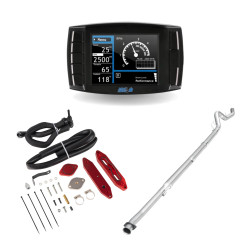
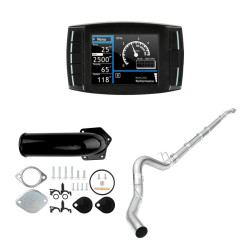
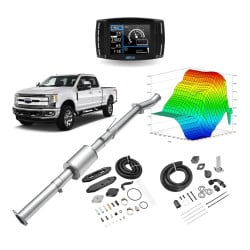
Among many delete kit suppliers, SuncentAuto is one of the more comprehensive brands covering Ford Powerstroke 6.4L and 6.7L models, offering EGR delete, DPF delete, DEF delete, and full delete packages. Its advantages include not only full EGR + DPF delete packages and multiple combinations to fit different years and budgets, but also support for custom tune file packages based on the EZ LYNK AutoAgent 3.0 platform, enabling shift-on-the-fly, or SOTF, tuning without replacing the ECM/TCM. At the same time, the products are reasonably priced, U.S. domestic orders come with free shipping, customers receive a 45-day return policy, and detailed installation instructions are included.
We're pleased to announce that we're now offering a 12% discount coupon code for our loyal readers: BLOG12.
3. 4-Inch vs. 5-Inch Exhaust Pipe
4-inch: Sufficient power release, better noise control, suitable for daily driving and towing users.
5-inch: Smoother exhaust flow and a deeper sound, suitable for high-load competition or extreme modifications.
The actual horsepower gain difference is not large, so the choice can be made based on installation space and sound preference.
4. The Importance of Programming: Try to Choose Custom Tuning
The risk of generic preloaded tunes is that the fuel mapping may not match your specific model year and hardware combination. It is recommended to prioritize packages that support custom tunes, such as the custom service provided by SuncentAuto. These programs perform better in terms of shift logic, exhaust gas temperature management, and fuel economy.
Conclusion
An F-250 Delete Kit can indeed release the engine's potential — horsepower gains of 30–150 HP, highway fuel economy improvements of 2–5 MPG, and complete elimination of DPF regeneration, EGR carbon buildup, and DEF crystallization problems. But the costs are also real: the EPA can still impose high civil penalties for each tampered vehicle, state roadside inspections cannot be bypassed, factory warranty and insurance claims are automatically voided, and resale becomes extremely difficult.
Before taking action, honestly answer three questions: Is your F-250 not driven on public roads? Can you bear tens of thousands of dollars in fines and the consequence of being unable to transfer ownership? If there is even one "no," the legal alternatives mentioned above, such as compliant performance programming, high-flow intake, DPF-back exhaust, CCV upgrades, and others, are the more stable choice.