 Contents
Contents
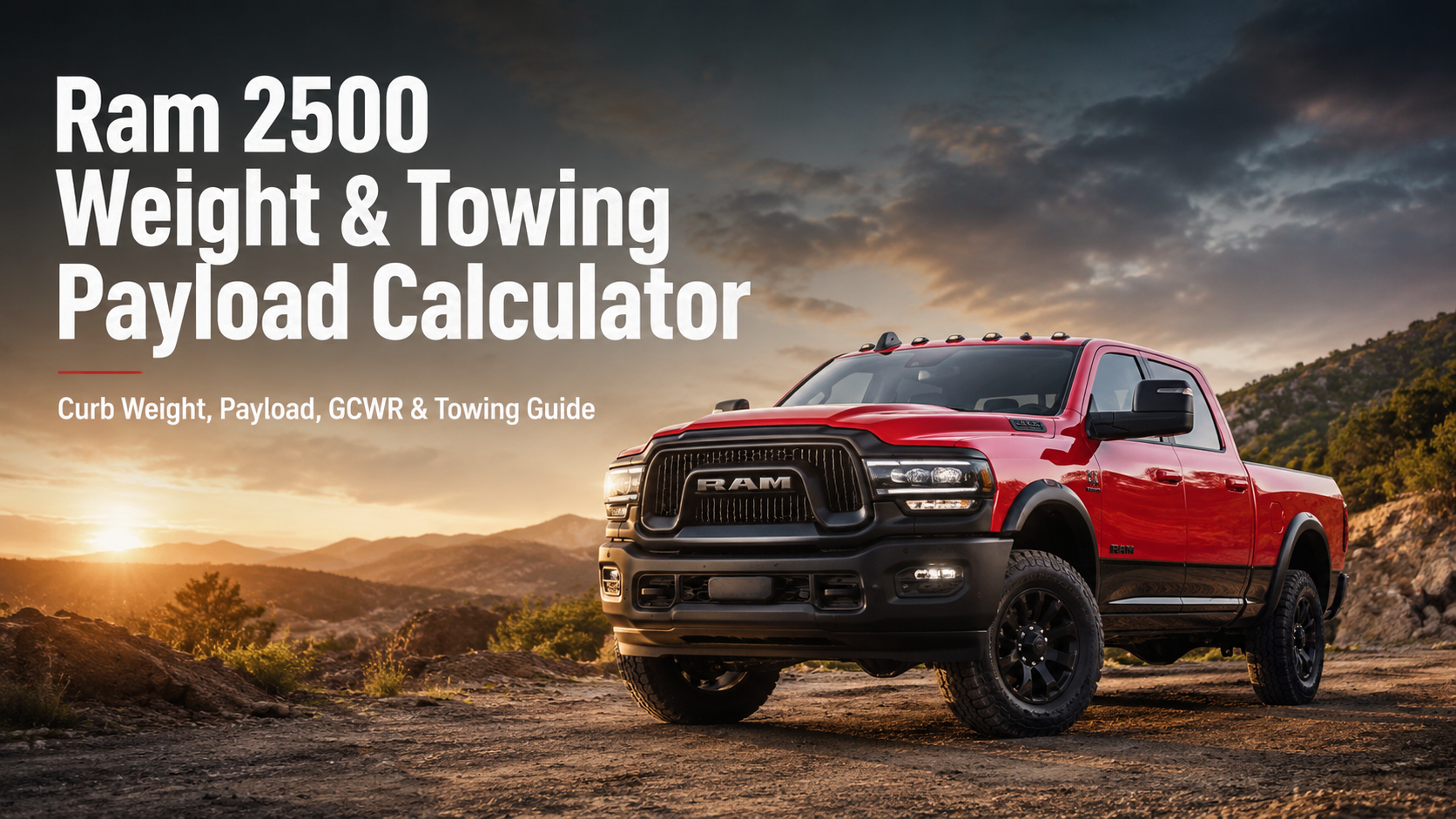
The Ram 2500 is built for serious towing, hauling, jobsite work, and long-distance heavy-duty use. But before you hook up a trailer or load the bed, you need to know one number first: how much your truck actually weighs.
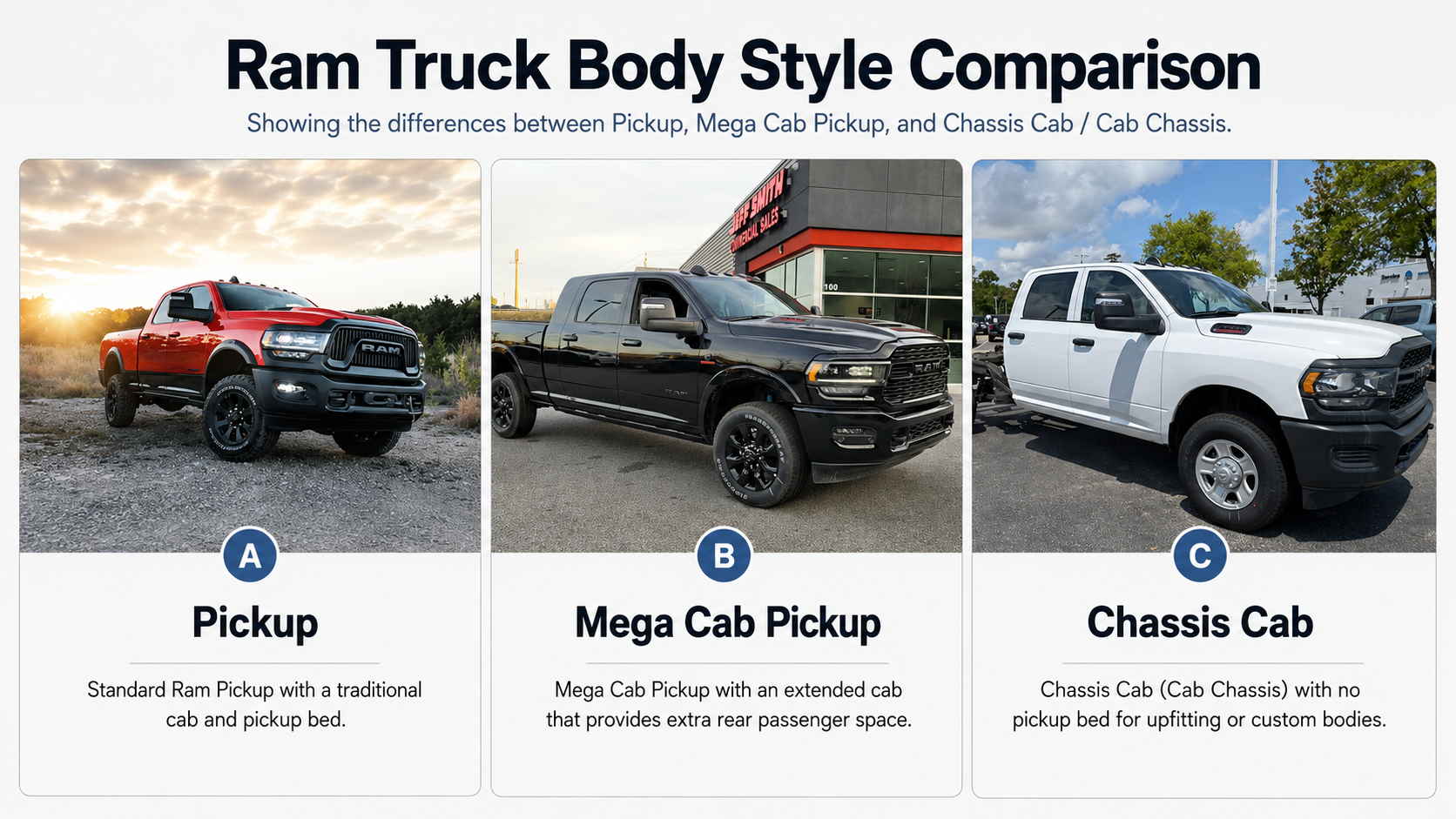
Ram 2500 curb weight can range from about 6,100 lbs to more than 8,100 lbs, depending on engine, cab style, drivetrain, bed length, and chassis configuration. A 6.7L Cummins diesel truck is usually much heavier than a 6.4L HEMI gas truck, and a 4x4 model normally weighs more than a comparable 4x2 truck.
Use the reference table below as a starting point, then enter your real-world cargo, trailer, and tongue weight into the calculator to estimate payload remaining, loaded truck weight, gross combined weight, and overall load status.
Ram 2500 Reference Weight Table
Use this table to estimate Ram 2500 curb weight by architecture, engine, cab, bed, and drivetrain. These are planning numbers only. Your actual truck may be heavier or lighter depending on model year, trim, factory options, axle ratio, tires, wheels, aftermarket accessories, and commercial upfit body.
| # | Architecture | Engine | Cab / Bed or Rear Body | Drivetrain | Reference Weight |
|---|---|---|---|---|---|
| 1 | Pickup | 6.4L HEMI V8 | Regular Cab / 8' Bed | 4x2 | ~6,250 lbs |
| 2 | Pickup | 6.4L HEMI V8 | Regular Cab / 8' Bed | 4x4 | ~6,550 lbs |
| 3 | Pickup | 6.4L HEMI V8 | Crew Cab / 6'4" Bed | 4x2 | ~6,700 lbs |
| 4 | Pickup | 6.4L HEMI V8 | Crew Cab / 6'4" Bed | 4x4 | ~7,000 lbs |
| 5 | Pickup | 6.4L HEMI V8 | Crew Cab / 6'4" Bed / Power Wagon | 4x4 | Verify separately |
| 6 | Pickup | 6.4L HEMI V8 | Crew Cab / 8' Bed | 4x2 | ~6,700–6,900 lbs |
| 7 | Pickup | 6.4L HEMI V8 | Crew Cab / 8' Bed | 4x4 | ~7,000–7,100 lbs |
| 8 | Pickup | 6.4L HEMI V8 | Mega Cab / 6'4" Bed | 4x4 | ~7,250 lbs |
| 9 | Pickup | 6.7L Cummins Diesel | Regular Cab / 8' Bed | 4x4 | ~7,350 lbs |
| 10 | Pickup | 6.7L Cummins Diesel | Crew Cab / 6'4" Bed | 4x2 | ~7,500 lbs |
| 11 | Pickup | 6.7L Cummins Diesel | Crew Cab / 6'4" Bed | 4x4 | ~7,800 lbs |
| 12 | Pickup | 6.7L Cummins Diesel | Crew Cab / 8' Bed | 4x2 | ~7,500–7,650 lbs |
| 13 | Pickup | 6.7L Cummins Diesel | Crew Cab / 8' Bed | 4x4 | ~7,800–7,900 lbs |
| 14 | Pickup | 6.7L Cummins Diesel | Mega Cab / 6'4" Bed | 4x4 | ~8,050 lbs |
| 15 | Chassis Cab / Cab Chassis | 6.4L HEMI V8 | Regular Cab / No Factory Bed | 4x2 | ~6,100 lbs |
| 16 | Chassis Cab / Cab Chassis | 6.7L Cummins Diesel | Regular Cab / No Factory Bed | 4x2 | ~6,900 lbs |
| 17 | Chassis Cab / Cab Chassis | 6.4L HEMI V8 | Regular Cab / No Factory Bed | 4x4 | ~6,400 lbs |
| 18 | Chassis Cab / Cab Chassis | 6.7L Cummins Diesel | Regular Cab / No Factory Bed | 4x4 | ~7,200 lbs |
| 19 | Chassis Cab / Cab Chassis | 6.4L HEMI V8 | Crew Cab / No Factory Bed | 4x4 | ~6,850 lbs |
| 20 | Chassis Cab / Cab Chassis | 6.7L Cummins Diesel | Crew Cab / No Factory Bed | 4x4 | ~7,650 lbs |
How to Adjust Your Ram 2500 Weight?
The table gives you a baseline, but your actual truck may not match the reference number exactly. Before using the calculator, adjust curb weight for any factory equipment, upfit body, or aftermarket parts.
| Item | How to Handle It |
|---|---|
| Power Wagon or off-road package | Verify separately because suspension, tires, skid plates, and off-road hardware can change payload. |
| Flatbed, service body, toolbox, rack, bumper, winch, or fuel tank | Add the actual installed weight to the truck. |
| Chassis Cab / Cab Chassis | Final weight depends heavily on the installed rear body and work equipment. |
| Older Dodge Ram 2500 | Verify by exact model year instead of relying on modern Ram 2500 numbers. |
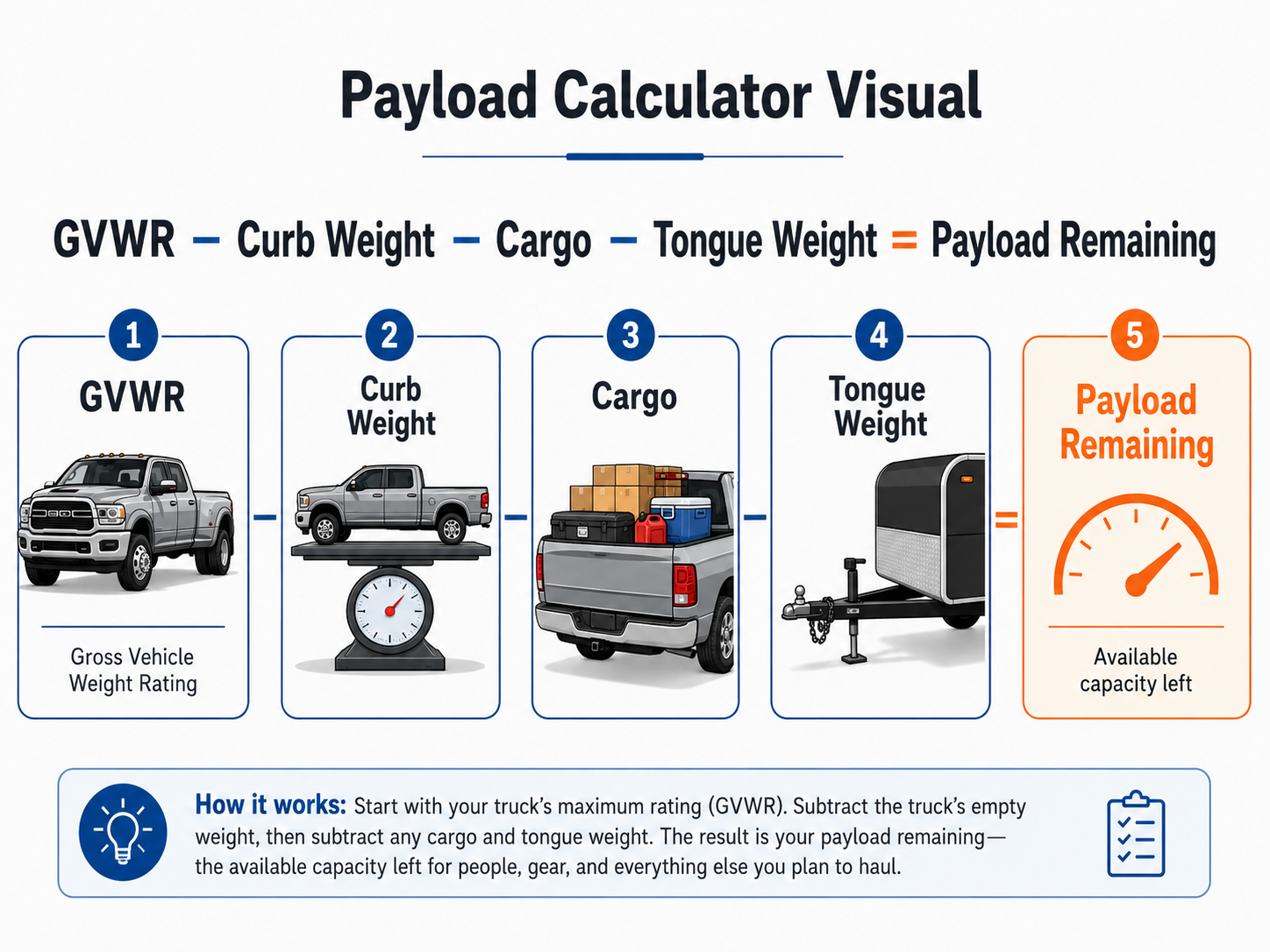
For the most accurate number, weigh your truck with full fuel, normal passengers, tools, installed accessories, and work equipment. This gives you a much better starting point than a generic curb weight estimate.
Ram 2500 Towing Payload Calculator
Select your Ram 2500 configuration, then enter your real-world load details. This calculator estimates available payload, payload remaining, loaded truck weight, gross combined weight, and overall load status.
Green: Estimated Load Is Within Range
Safety and Compliance Red Flags
1. Do Not Ignore Tongue or Pin Weight
Tongue or pin weight is carried by the truck, so it must be counted against payload. Gooseneck and fifth-wheel trailers often place 15%–25% of loaded trailer weight on the truck.
2. GVWR Is the Final Truck Limit
If the loaded truck exceeds the GVWR shown on the driver-side door jamb label, treat the setup as overloaded, even if the engine has enough power to pull it.
3. Check Axle Weight
A truck can be under GVWR but still overload the rear axle. Compare actual axle weights against GAWR to reduce tire, suspension, and axle risk.
How to Read the Calculator Results
Green: Estimated Load Is Within Range
Your setup appears to have remaining payload capacity. You should still confirm the door-jamb label, axle ratings, tire ratings, hitch rating, and actual scale weight before towing near the limit.
Yellow: Near the Limit
Your truck may be close to its practical working limit. Reduce unnecessary cargo, confirm tongue or pin weight, check rear axle weight, and weigh the truck and trailer before long-distance towing or commercial hauling.
Red: Load Limit Exceeded
Do not tow with this setup until it is adjusted and verified. Reduce weight, rebalance the trailer, check tongue or pin weight, and use a certified scale to confirm the setup.
Key Towing Limits You Should Not Ignore
GVWR: The Truck’s Final Weight Limit
GVWR is the maximum loaded weight of the truck itself. It includes curb weight, passengers, cargo, tools, hitch hardware, aftermarket equipment, and trailer tongue or pin weight.
If your loaded Ram 2500 exceeds the GVWR shown on the driver-side door jamb label, the setup should be treated as overloaded.
GCWR: Truck and Trailer Combined
GCWR is the maximum combined weight of the loaded truck and loaded trailer. Do not assume your Ram 2500 can use maximum payload and maximum trailer weight at the same time. More weight in the truck usually means less room for trailer load.
GAWR: Axle Weight Matters
GAWR is the weight limit for each axle. This is especially important because tongue weight and pin weight usually load the rear axle heavily. A truck can be under GVWR overall but still overload the rear axle.
Tongue Weight and Pin Weight
Tongue weight counts against payload. For bumper-pull trailers, tongue weight is often about 10%–15% of loaded trailer weight. For gooseneck or fifth-wheel trailers, pin weight is often about 15%–25%.
Example: a 14,000 lb fifth-wheel trailer with 20% pin weight adds about 2,800 lbs to the truck’s payload and rear axle load.
Commercial Hauling Checklist
If you use a Ram 2500 for construction, agriculture, hotshot hauling, equipment transport, landscaping, or logistics, check these items before towing near the limit.
| Check Item | What to Confirm |
|---|---|
| Truck label | GVWR, GAWR, payload, tire pressure, and tire load rating |
| Towing guide | GCWR and max trailer weight for your exact configuration |
| Trailer | GVWR, axle rating, brake condition, and coupler rating |
| Hitch system | Hitch, ball, gooseneck, fifth-wheel, and safety chain ratings |
| Actual scale weight | Loaded truck weight, trailer weight, front axle, rear axle, and trailer axles |
| Load balance | Tongue or pin weight is within a safe range |
| Tires | Correct pressure and load rating for the actual load |
Simple rule: if one rating is exceeded, the setup is not safe to use. When the calculator shows yellow or red, reduce weight, rebalance the trailer, adjust tongue weight, and weigh the full setup at a certified scale.
Heavy-Duty Use and Diesel Load Management
For Ram 2500 owners who tow often, especially with the 6.7L Cummins diesel, weight management is only one part of the job. Long-distance towing, low-speed jobsite driving, steep grades, heavy trailers, and repeated stop-and-go work can increase heat, soot buildup, and drivetrain stress.
Common heavy-load issues include:
- Higher exhaust gas temperature during long climbs
- More frequent regen cycles during low-speed or short-trip use
- Reduced power when the truck enters protection mode
- Added stress on tires, brakes, suspension, transmission, and cooling systems
For heavy commercial use, consider regular inspections, clean airflow, proper maintenance intervals, EGT monitoring, and load planning. These steps help reduce downtime and protect the truck during demanding work.
Where a Diesel Delete Kit Fits Into Heavy-Duty Use
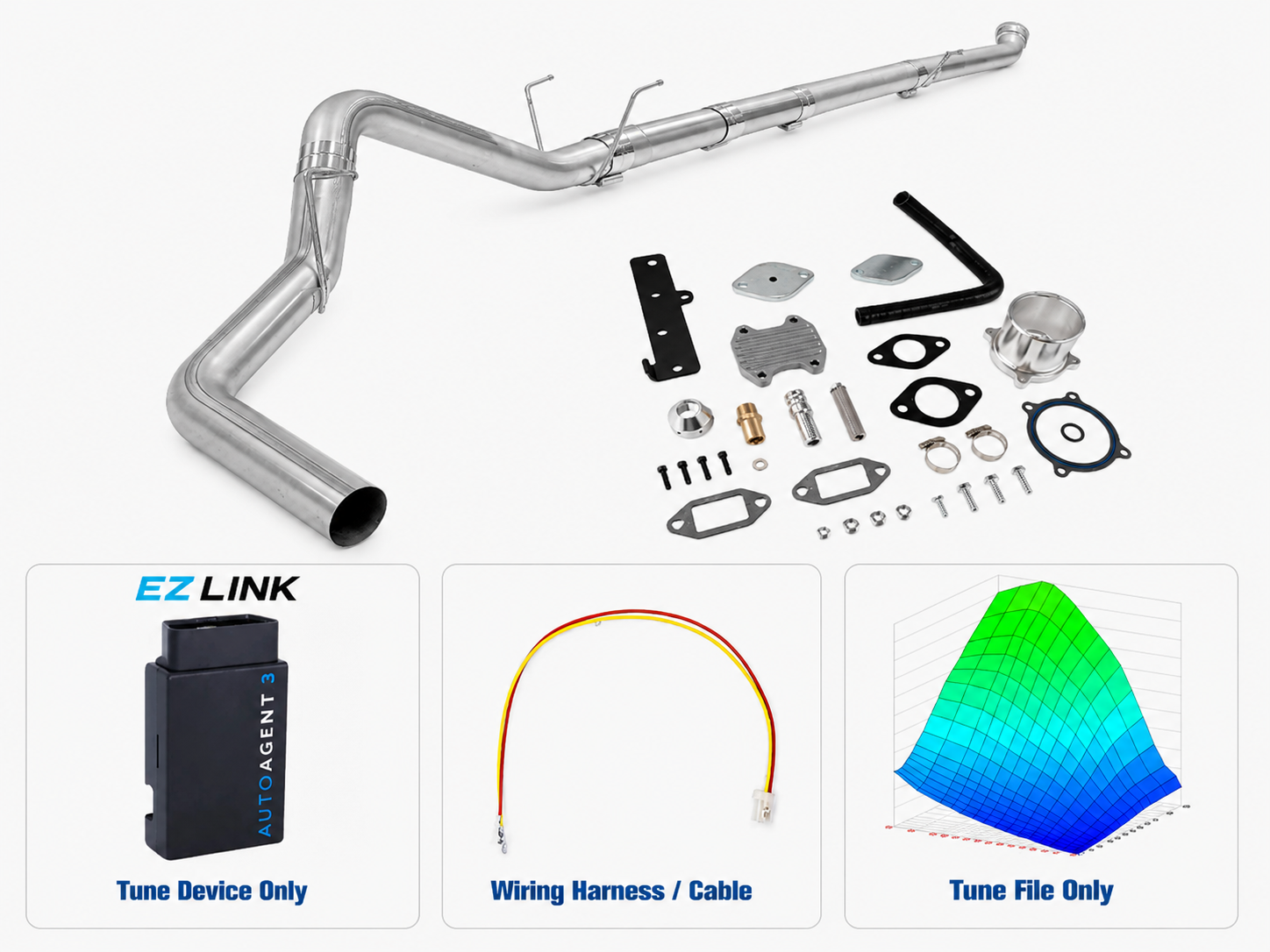
For Ram 2500 owners who regularly tow heavy loads with the 6.7L Cummins diesel, downtime is often caused by heat, soot buildup, and repeated regen cycles during low-speed jobsite driving or long-distance hauling. In off-highway, export-only, or private-property applications, some owners consider a 6.7 Cummins delete kit as part of a broader performance and reliability setup to reduce exhaust restriction, improve airflow, support more consistent power delivery, and lower the risk of forced downtime during demanding work.
However, a diesel delete kit does not increase the truck's legal towing capacity. It does not change GVWR, GCWR, GAWR, payload rating, tire rating, or hitch rating. Even if engine response feels stronger or operating stress is reduced, the truck must still stay within the weight limits shown on the door-jamb label and the official towing guide.
Final Takeaway
A Ram 2500 can be a powerful towing and work truck, but the real limit is not engine power alone. The safe limit is determined by curb weight, payload, GVWR, GCWR, GAWR, tongue weight, tire rating, hitch rating, and actual scale weight.
Use the table as your starting point. Use the calculator for a real-world estimate. Then verify the final setup with the door-jamb label and certified scale weight before towing near the limit.