 Contents
Contents
If you have already read our previous article about straight pipe exhausts, then you should already know what a straight pipe is, what its pros and cons are, and whether it is suitable for your vehicle. But if you have already decided to go with a straight pipe setup, the next question is: what kind of straight pipe exhaust kit should you buy?
There are all kinds of straight pipe kits on the market—different sizes, different materials, different brands, and different prices. Choose the wrong one, and it may not fit, may not sound good, or may even cause a loss of power. This article will help you understand all the key points for choosing a straight pipe kit, including size, material, fitment, installation method, budget, and more.
What Is a Straight Pipe Exhaust Kit?
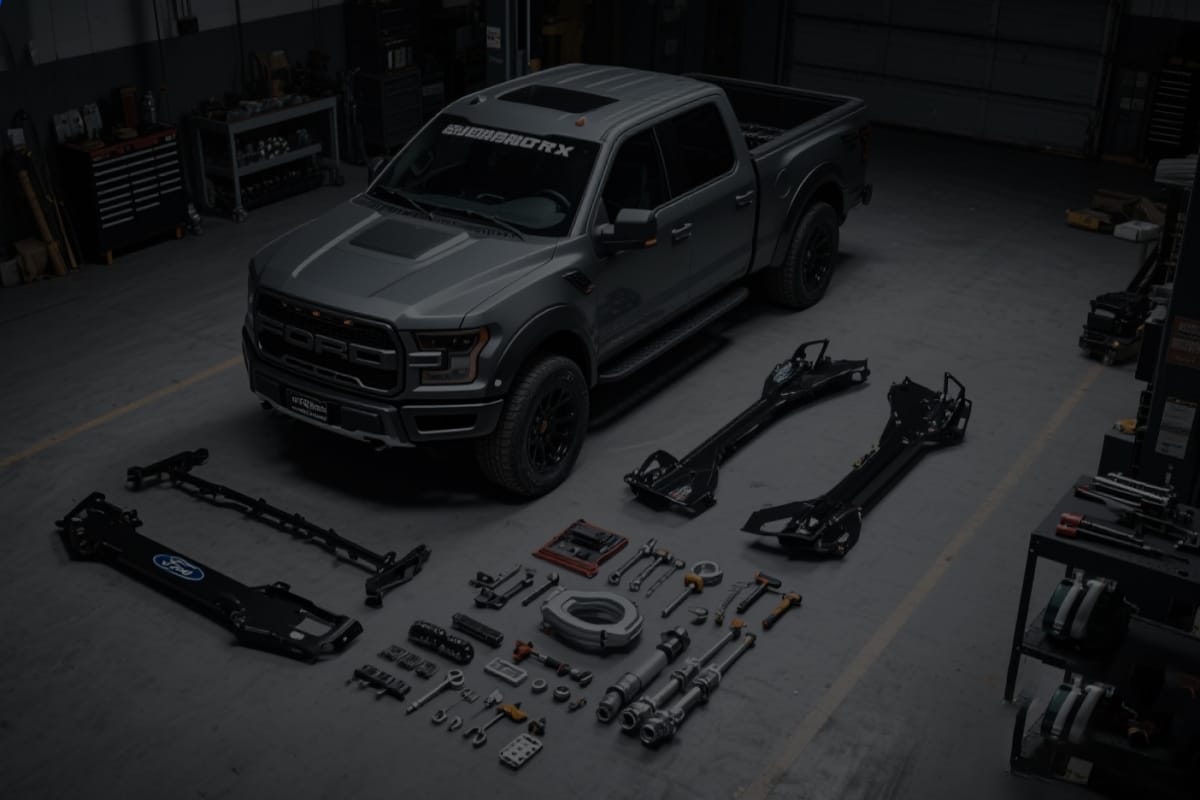
A Straight Pipe Exhaust Kit is a set of exhaust piping components used to replace part or all of the factory exhaust system. Its core function is to replace factory components such as the muffler, resonator, and catalytic converter with straight-through piping, allowing exhaust gases to exit with minimal resistance.
Simply put: buying a straight pipe kit means removing those factory exhaust components that are "heavy and restrictive" and replacing them with a piping system that lets exhaust gases flow straight through.
Core function: significantly reduce exhaust backpressure, allow exhaust gases to exit faster, help the engine improve horsepower and torque at higher RPM, and produce an extremely loud, aggressive race-car exhaust sound.
What Types of Straight Pipe Exhaust Kits Are There?
Based on the range and location of the piping being replaced, straight pipe exhaust kits are mainly divided into the following three common types:
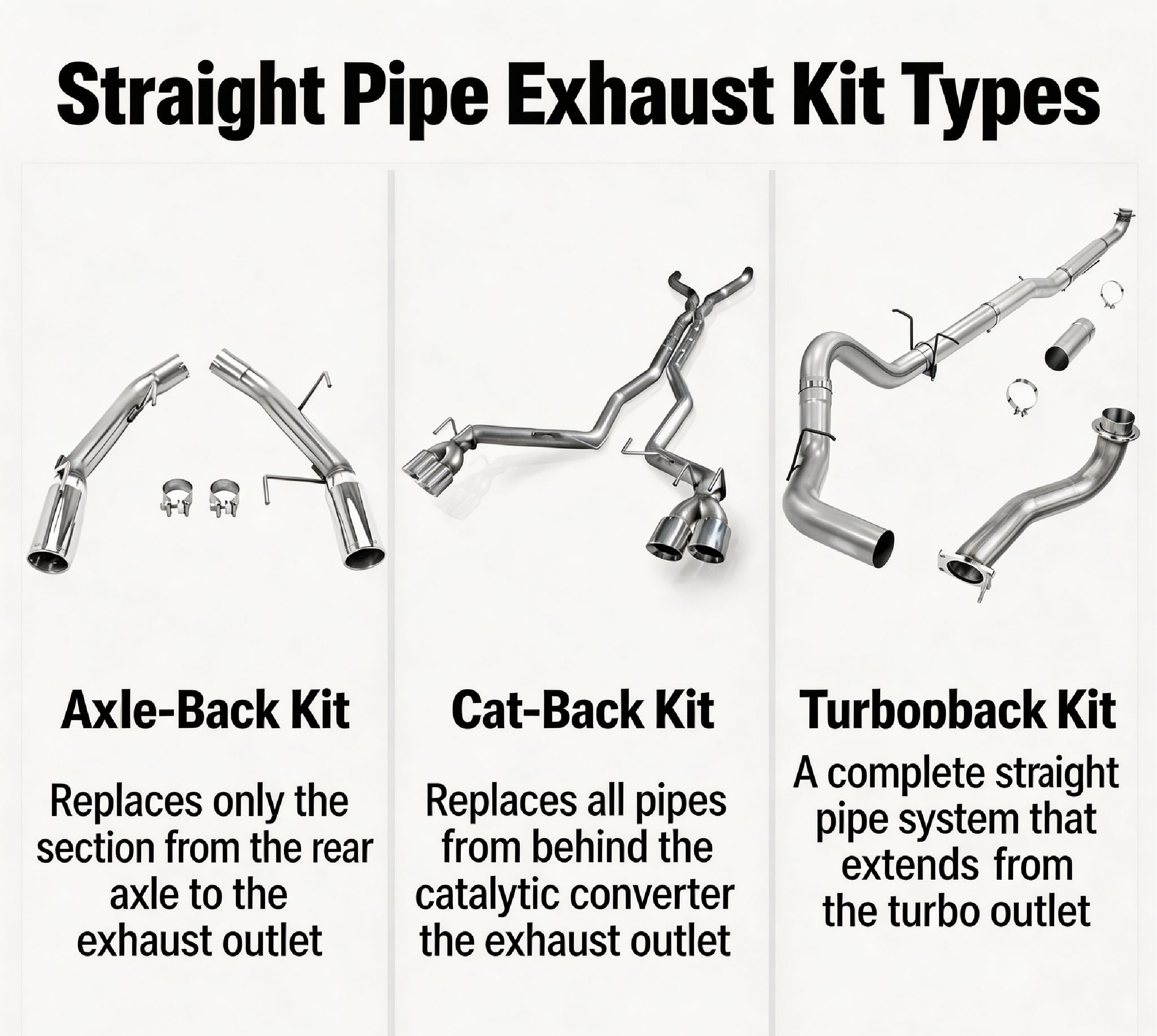
Axle-Back Kit
This replaces only the section from the rear axle to the exhaust outlet, which is essentially the factory muffler section. It has the lowest installation difficulty and the most affordable cost. The exhaust sound becomes noticeably louder, but the effect on horsepower is limited. It is suitable for beginners who want to get a basic taste of a straight pipe setup.
Cat-Back Kit
This replaces all piping from behind the catalytic converter to the exhaust outlet, including the mid-section resonator and rear muffler. It provides a good balance between performance gains and exhaust sound, making it one of the most popular and mainstream modification choices on the market.
Turboback / Header-Back Kit
This is a complete straight pipe system that extends from the turbo outlet, or from the exhaust manifold outlet on naturally aspirated vehicles, all the way to the rear. It usually includes a straight-through front section that removes the catalytic converter. It offers the most extreme performance gains, but it is extremely loud and is generally limited to track or closed-course use, making it unsuitable for normal street driving.
What to Look for Before Buying a Straight Pipe Exhaust Kit?
When choosing a straight pipe kit, several key decision points directly determine the final result. Below is a breakdown of each one.
1. Vehicle Fitment
Straight pipe kits are not universal parts and must precisely match the specific details of your vehicle. Before buying, confirm the make / model / year, drivetrain, single exhaust / dual exhaust, and other relevant information.
Buying tip: Send your VIN (Vehicle Identification Number) to the seller for verification, or use a website with a vehicle fitment filter, such as SuncentAuto, to confirm that the kit is clearly listed as compatible with your vehicle.
2. Pipe Type
As mentioned above, different kits cover different sections of the exhaust system, which directly affects installation difficulty, performance gains, and final exhaust sound.
| Type | Coverage | Installation Difficulty | Performance Gain | Sound Change | Best For |
| Axle-Back | Rear axle to exhaust tip only (muffler section) | Lowest (1–2 hours) | Minimal | Slight increase | Beginners |
| Cat-Back | Catalytic converter to exhaust tip (mid-section + muffler) | Moderate (2–4 hours) | Moderate | Noticeable increase | Mainstream choice, balancing performance and sound |
| Turbo-Back | Turbo outlet to exhaust tip (includes straight-through front section, removes catalytic converter) | Highest (4–6 hours) | Maximum | Extreme | Track/off-road only, for maximum performance |
Recommendation: Daily driver with concern for legality → Cat-Back. Track or off-road-only vehicle → Turbo-Back. Limited budget and mainly want more sound → Axle-Back.
3. Pipe Diameter
| Pipe Diameter | Common Applications | Main Characteristics |
| 2.5-inch | Small-displacement four-cylinder cars, 1.5T–2.0L naturally aspirated engines | Sharp, high-pitched sound; suitable for small engines and helps retain low-end torque |
| 3-inch | Performance cars, 2.0T / V6, light trucks | Requires less space and suits moderate airflow demands |
| 4-inch | Diesel trucks, V8s, daily driving / towing / performance use | Good balance between airflow and chassis clearance |
| 5-inch | Large diesel trucks, high-flow builds (6.7L Cummins/Powerstroke) | Deeper sound and requires more installation space |
Core principle: Pipe diameter should match engine displacement and turbo outlet size. Blindly increasing pipe diameter will not create extra horsepower and may instead make low-speed throttle response feel "hollow" and "sluggish."
4. Material
| Material | Corrosion Resistance | Durability | Cost | Recommended Use |
| T-304 Stainless Steel | ⭐⭐⭐⭐⭐ | Longest lifespan | Highest | Long-term use, rainy/salty areas |
| T-409 Stainless Steel | ⭐⭐⭐⭐ | Long lifespan | Mid-high | Performance builds, good value |
| Aluminized Steel | ⭐⭐⭐ | Moderate | Mid-low | Limited budget, dry regions |
Material recommendations:
- T-304 Stainless Steel: Highly recommended. Contains 18% chromium and 8% nickel, offering corrosion resistance and high-temperature resistance. Although it costs $400–$500 more, it is worth the money and can last for more than a decade without rusting.
- T-409 Stainless Steel: Contains chromium but no nickel. Its corrosion resistance is slightly lower than 304, but much better than aluminized steel. It is a good compromise for value.
- Aluminized Steel: Mild steel coated with an aluminum layer. It is affordable (a full bolt-on kit costs about $250–$350), but once the coating is scratched, it will begin to rust.
5. Installation Method
| Installation Method | Advantages | Disadvantages | Best For |
| Clamp-on | Easy installation, removable, DIY-friendly | Risk of leaks | DIY users, people who may modify the system again |
| Welding | Strong, excellent sealing | Requires professional skills, difficult to remove | Users seeking a perfect seal and no future changes |
Professional advice: If you do not have a vehicle lift or welding experience, it is not recommended to install a full system yourself. Exhaust installation involves high temperatures, gas leaks, and the risk of components coming loose, so safety comes first.
6. Whether All Installation Hardware Is Included
Some kits only include the piping itself, while clamps, hangers, flanges, gaskets, and bolts must be purchased separately—this is a common mistake for beginners. Before buying, confirm that all hardware required for installation is included.
7. Single vs. Dual Exit
- Single Exhaust: Shorter piping, lighter weight, and faster gas velocity, making it suitable for four-cylinder vehicles focused on maximum track performance.
- Dual Exhaust: Offers a fuller, more symmetrical appearance, with better high-RPM flow after the exhaust gases are split, making it suitable for V6/V8 vehicles or owners who care about rear-end appearance.
8. Brand and After-Sales Support
Before buying, confirm whether there is a warranty, a clear return and exchange policy, and whether installation instructions / technical support are provided. It is also recommended to search vehicle forums for real reviews of the brand/model before purchasing to see whether other owners had a smooth installation experience.
How Much Does a Straight Pipe Exhaust Kit Modification Cost?
The price of a straight pipe exhaust kit varies significantly depending on the material, brand, and kit type. The overall cost includes both parts and installation:
- Axle-Back Kit: $150–$400
- Cat-Back Kit: $400–$1,200
- Turboback/Header-Back Kit: $800–$2,500+
Installation Labor Cost: Professional repair shop installation typically costs between $100 and $400, depending on installation complexity.
Often-Overlooked Hidden Cost
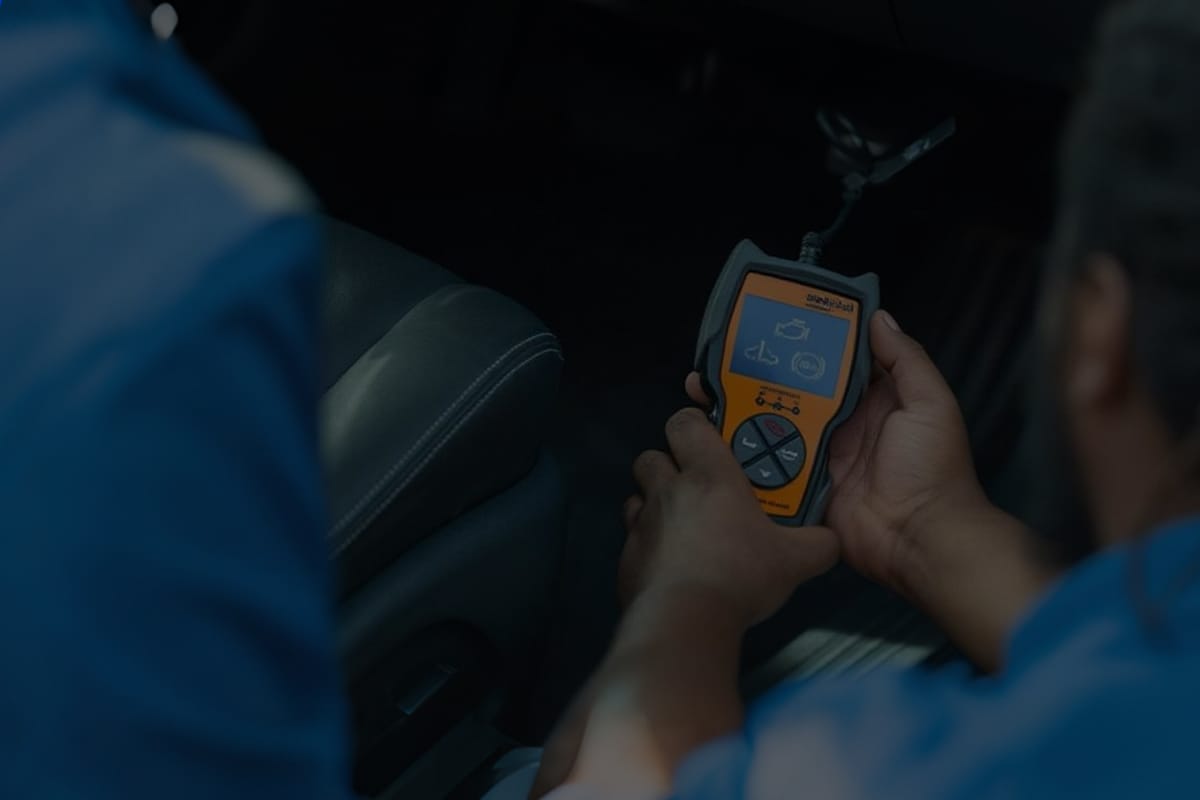
ECU tuning: $300–$600. After removing the catalytic converter, the ECU must be reflashed; otherwise, the Check Engine Light will remain on and performance may actually decrease.
Legality & ECU Tuning Notice
Before making straight pipe exhaust modifications, be sure to understand the relevant laws, regulations, and technical requirements:
Road Legality
In most countries and regions, removing the catalytic converter violates road traffic and environmental regulations, and the vehicle will not be able to pass emissions testing. In addition, excessive exhaust noise may also result in roadside enforcement penalties. Therefore, straight pipe exhausts are usually labeled “Off-Road / Track Use Only.”
If your vehicle needs to be driven on public roads, it is recommended to keep the catalytic converter and only perform Cat-Back or Axle-Back modifications. Straight pipe setups are only suitable for tracks, off-road areas, or closed roads.
ECU Tuning
After removing the catalytic converter or changing exhaust backpressure, the O2 Sensors may detect abnormalities and trigger the Check Engine Light (CEL). To maintain a normal air-fuel ratio, prevent the engine from running too lean, and fully unlock the horsepower potential of a straight pipe exhaust, ECU tuning (Stage 1 or Stage 2) is a very necessary supporting modification.
Why ECU Tuning Is Necessary
If you remove the catalytic converter, ECU tuning is required in almost 100% of cases. After the catalytic converter is removed, the downstream oxygen sensor will detect abnormal exhaust composition and trigger the Check Engine Light. The ECU may force the engine into "limp mode" or enrich the fuel mixture, resulting in reduced power and increased fuel consumption.
Professional ECU tuning can: disable downstream oxygen sensor monitoring, optimize the air-fuel ratio, and unlock the true horsepower gain potential.
Conclusion
A straight pipe exhaust kit is a direct way to improve exhaust sound and high-RPM power output. For owners seeking track performance and an aggressive exhaust note, choosing a straight pipe kit with high-quality materials and the correct pipe diameter can significantly improve the driving experience. However, before modifying the exhaust, you must weigh the noise and drone of daily driving, legal inspection requirements, and the additional cost of ECU reflashing and tuning.