 Contents
Contents
Everything you need to know about catalytic converter removal — plus legal performance upgrades that won't get you fined.
Catalytic converters are a critical part of your vehicle's exhaust system, but some drivers choose to remove them—a process called a "cat delete." While this modification is popular in car enthusiast circles, it comes with legal, environmental, and mechanical trade-offs. Here's what you need to know before considering a cat delete.
Quick Answer:
Is a cat delete legal? No — removing or bypassing your catalytic converter is illegal in all 50 U.S. states under the Clean Air Act.
Should you do it? For a street-driven vehicle, absolutely not. The legal, environmental, and resale risks far outweigh any performance gains.
What Is a Catalytic Converter?
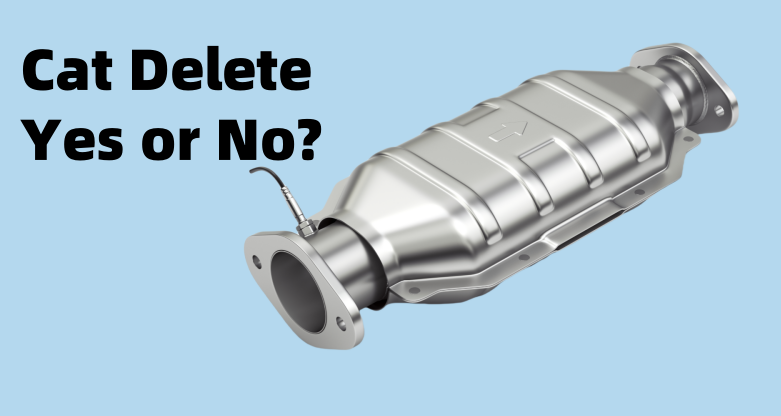
A catalytic converter (commonly called a "cat") is an emissions-control device installed in your vehicle's exhaust system. Its job is to reduce harmful pollutants — carbon monoxide (CO), nitrogen oxides (NOx), and hydrocarbons (HC) — before they exit your tailpipe.
Inside the converter is a honeycomb-like structure coated with precious metals (platinum, palladium, and rhodium). These metals trigger chemical reactions that convert toxic gases into less harmful substances like water vapor (H₂O) and carbon dioxide (CO₂).
Is a Catalytic Converter Needed?
Yes. Your catalytic converter is required by federal law for all vehicles driven on public roads. Beyond legality, it serves critical functions:
- ✅ Protects the environment: reduces smog-forming pollutants
- ✅ Maintains engine performance: modern ECUs expect a functioning cat
Without a catalytic converter, your vehicle will trigger a check engine light, fail emissions testing, and be illegal to drive in all 50 states.
What Is a Cat Delete?
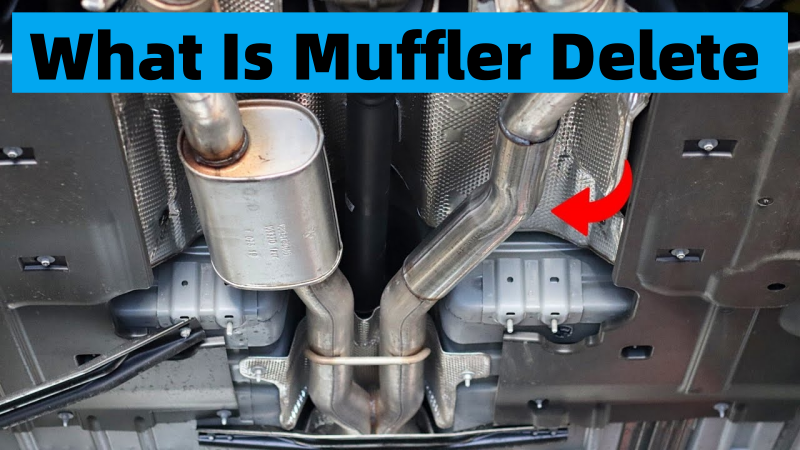
A cat delete is the process of removing or bypassing the catalytic converter. While some drivers do this for performance or sound reasons, it's important to understand the significant legal, environmental, and mechanical trade-offs before making a decision.
Common Methods
| Method | Description | Cost |
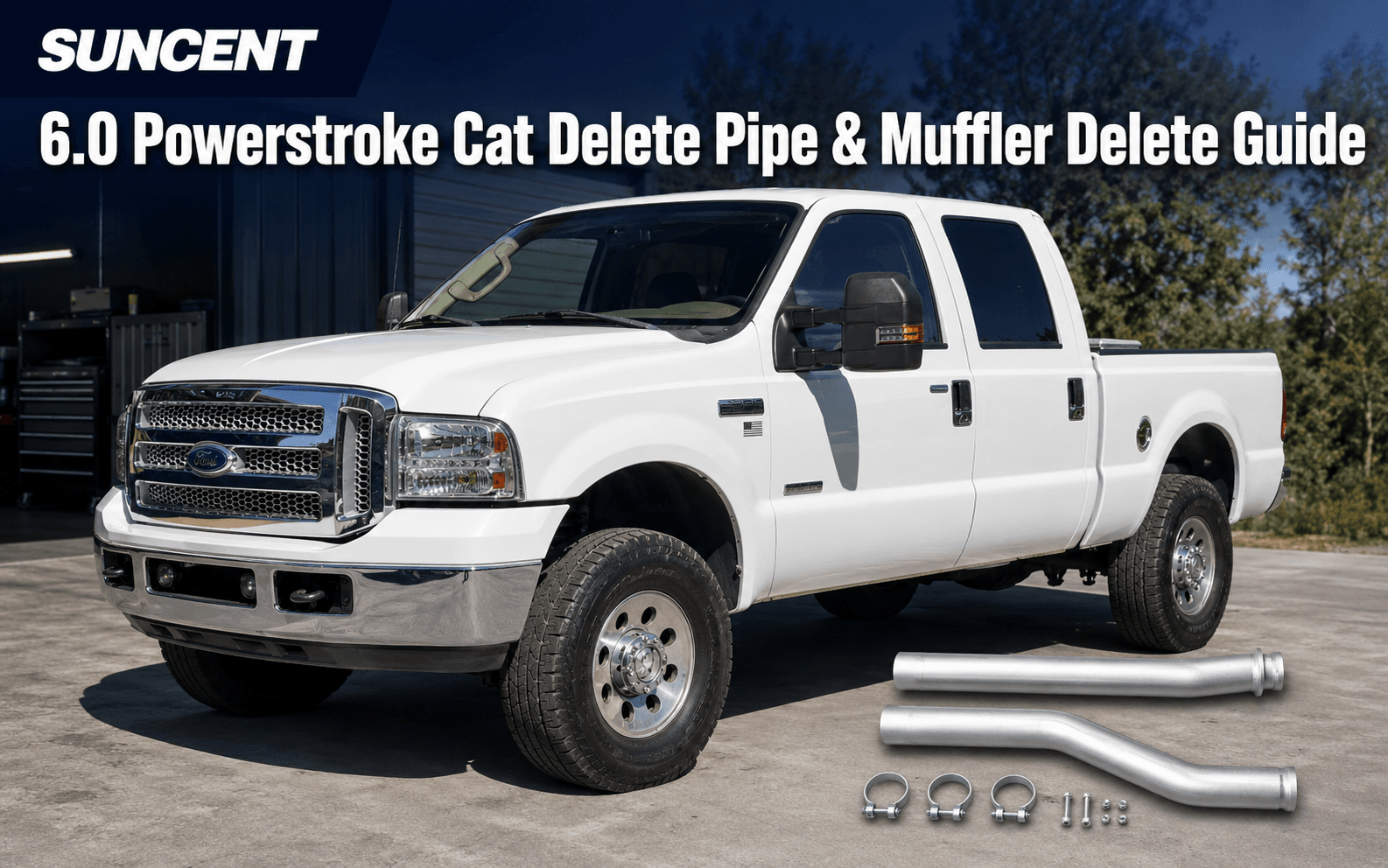
| Delete Kit | Aftermarket pipe (often stainless steel) replaces the catalytic converter. May include O2 sensor spacers ("defoulers") to trick the ECU. | $100–$500 |
| Gutting the Cat | Drilling out the catalyst material leaves an empty shell. Maintains factory appearance but eliminates emissions control. | $0 (DIY) – $200 |
| Custom Straight Pipe | A muffler shop welds a straight pipe in place of the cat. Most reputable shops refuse to do this. | $200–$1,000+ |
Why Do People Remove Catalytic Converters?
1. Performance Claims
Some enthusiasts believe removing the catalytic converter reduces exhaust backpressure, which can free up horsepower. While this might yield minor gains in high-performance or turbocharged builds, most daily drivers see negligible improvements — typically less than 5-10 HP.
2. Sound Preferences
A cat delete amplifies exhaust volume and creates a deeper, raspier tone. This is popular among drivers seeking an aggressive, race-inspired sound.
3. Cost Avoidance
New catalytic converters can cost $1,000+ due to their precious metal content. Some owners consider a delete a cheaper short-term fix for a failing unit.
4. Diesel "Rolling Coal"
In the diesel community, some owners delete the Diesel Oxidation Catalyst (DOC) or DPF to enable "rolling coal" — a practice that's heavily targeted by the EPA and increasingly illegal.
Effects of Cat Delete on Your Vehicle
Engine Performance
| Engine Type | Impact |
| Gasoline | Minimal HP gains unless paired with forced induction or cam upgrades. May actually lose low-end torque. |
| Diesel | Turbo spool may improve slightly; modern diesels require ECU tuning to avoid errors. |
| Both | Unpredictable — depends on engine management and other modifications. |
Fuel Efficiency
- Highway/RPM driving — May improve slightly (reduced backpressure at high RPM)
- City/stop-and-go — May worsen (ECU tries to compensate for missing O2 data)
- Overall — Marginal and inconsistent. Not a reliable way to save fuel.
Exhaust System
- Louder, deeper tone (but may cause cabin drone at highway speeds)
- May require muffler upgrades to reduce drone
- Unused O2 sensors can cause erratic fuel trims and poor drivability
- Increased exhaust smell (raw fuel odor)
Resale Value
A cat delete significantly lowers your vehicle's resale value. Most buyers won't touch a modified emissions system, and dealers won't take it on trade. You'd have to disclose the deletion — or risk legal liability if you don't.
Diesel Trucks and Cat Deletes
Modern diesel trucks (post-2007) are equipped with complex emissions systems:
- DOC — Diesel Oxidation Catalyst (similar to a gas catalytic converter)
- DPF — Diesel Particulate Filter (traps soot)
- SCR — Selective Catalytic Reduction (uses DEF fluid to reduce NOx)
Why Do Diesel Owners Delete?
Some diesel owners delete these components to:
- Improve turbo spool and throttle response
- Gain fuel economy improvements (5-15%)
- Avoid costly DPF regeneration cycles
- Eliminate DEF fluid costs
The Reality
📌 If you own a 6.7L Powerstroke, 6.6L Duramax, or 6.7L Cummins, you've likely heard of delete tuning. But as of 2026, finding a legitimate, road-legal delete solution is nearly impossible — and getting caught carries serious financial penalties. Looking for a legal way to get more power from your diesel truck? Check out our diesel performance tuners for emissions-compliant tuning options that keep your DOC intact.
Is It Legal to Remove a Catalytic Converter?
No. Cat deletes are illegal nationwide in the United States.
Legality
In the U.S., the Clean Air Act prohibits tampering with emissions systems. Cat deletes are illegal nationwide, with fines up to $4,500 for individuals. States like California enforce stricter smog checks, where deleted cars will fail inspections.
Environmental Impact
A deleted cat releases 3–5x more pollutants, contributing to smog, acid rain, and respiratory illnesses. For context, the EPA estimates catalytic converters reduce emissions by 90% compared to pre-1970s vehicles.
Cat Delete Pros and Cons
| Pros | Cons |
| ✅ Cheaper than replacing a faulty cat (short-term) | ❌ Illegal in all 50 states — federal offense |
| ✅ Louder, more aggressive exhaust sound | ❌ Fails emissions tests automatically |
| ✅ Potential minor power gains (5-10 HP max) | ❌ Fines up to $4,500 (individual) |
| ✅ (Diesel) Improved turbo response in some cases | ❌ Fines up to $10,000+ (shops) |
| ✅ (Diesel) Potential 5-15% fuel economy gain | ❌ Environmental harm — 3-5x more pollutants |
| ❌ Voided manufacturer warranty | |
| ❌ Lower resale value | |
| ❌ Check engine light (P0420/P0421) | |
| ❌ Unpredictable engine behavior | |
| ❌ Possible exhaust leaks and cabin fumes |
FAQs
Final Verdict
Removing the catalytic converter (or "three-way catalytic converter removal") removes or bypasses the converter, reducing exhaust drag, but also removes one of the vehicle's main emission control devices.
This modification may result in a louder exhaust note and, in some cases, alter throttle or power characteristics. However, this is not legal.
For legal compliance, you can consider installing a high-flow catalytic converter or a high-performance exhaust system that meets emission standards. Before modifying your vehicle, always consult local regulations and a trusted mechanic.