 Contents
Contents
- What Is a 6.0 Powerstroke Cat Delete Pipe?
- What Is a 6.0 Powerstroke Muffler Delete Kit?
- Cat Delete vs Muffler Delete: Location and Difference
- Cat Delete and Muffler Delete: Why Do Many People Do Both?
- Recommended SuncentAuto 6.0L Powerstroke 3.5" Cat & Muffler Delete Kit
- Conclusion: Should You Do a Cat Delete on Your 6.0 Powerstroke?
- FAQs
If you own a 2003–2007 Ford Super Duty truck equipped with the legendary 6.0L Powerstroke diesel engine, you have probably heard the terms "cat delete" and "muffler delete" on forums. Owners have long debated whether to remove the catalytic converter and muffler - some claim better performance and louder turbo whistle, while others warn about legal risks and potential problems.
So what is the truth? This article will give you a full breakdown of 6.0 Powerstroke cat delete and muffler delete : what they are, how they differ, why many owners do both, the benefits and risks, and whether your truck is actually suitable for this type of modification.
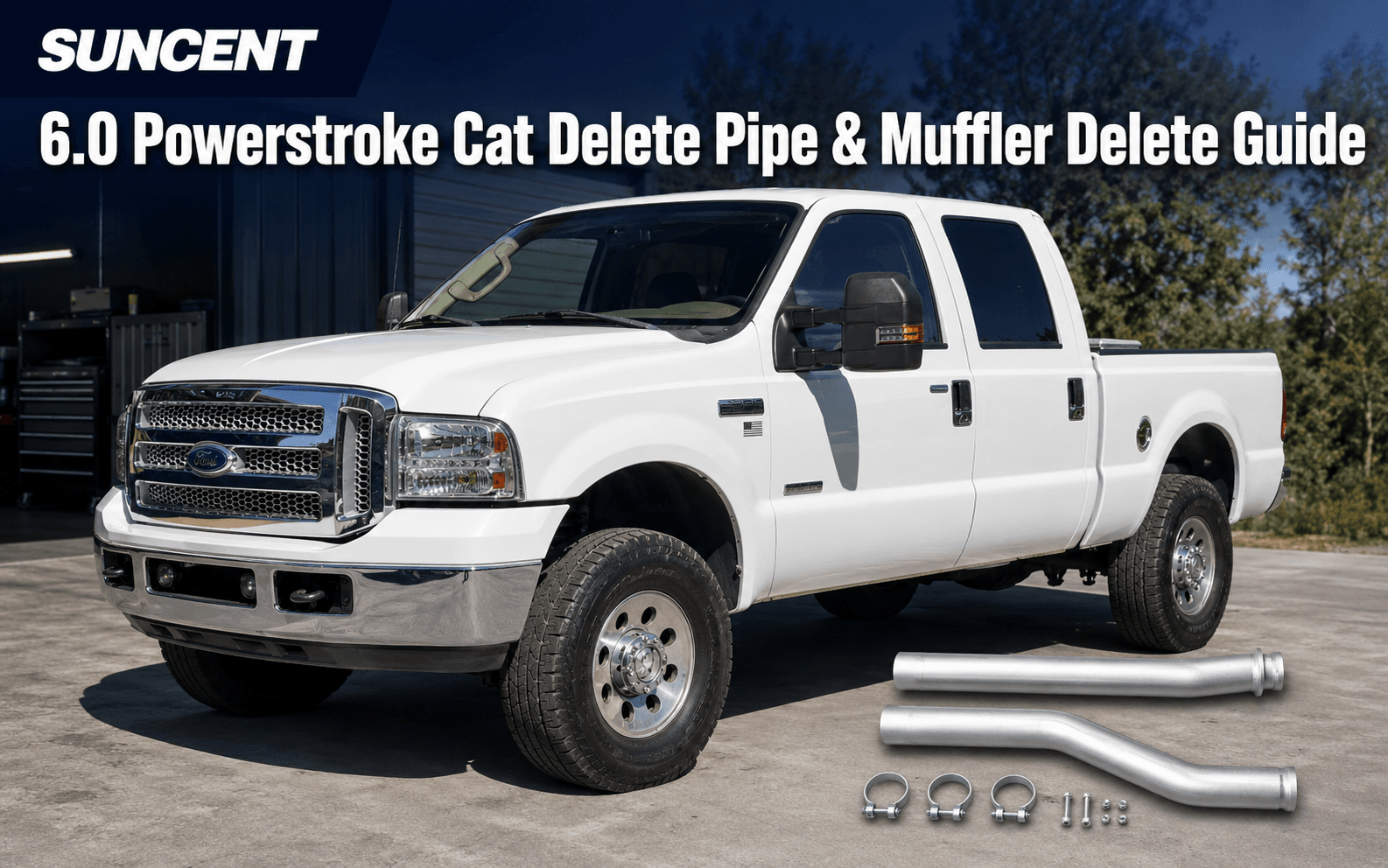
What Is a 6.0 Powerstroke Cat Delete Pipe?
A cat delete means removing or bypassing the catalytic converter in the vehicle's exhaust system, usually replacing it with a straight pipe. The catalytic converter is an emissions-control device designed to reduce harmful exhaust emissions. On a 6.0 Powerstroke, it is located between the turbocharger outlet pipe and the mid-section of the exhaust system. A "cat delete pipe" is a replacement pipe with a similar shape that bolts directly into place, allowing exhaust gases to flow more freely.
Pros and Cons of a Cat Delete
- Reduces exhaust backpressure for better throttle response
- Improves turbo spool-up and boost response
- Lowers EGTs during towing or heavy hauling
- Deepens exhaust tone and makes turbo whistle more pronounced
- May slightly improve fuel economy
- Federally illegal for street use
- Will not pass state emissions inspections
- May void factory warranty
- Increases diesel exhaust smell, especially at idle
- Louder exhaust may draw unwanted attention
What Is a 6.0 Powerstroke Muffler Delete Kit?
A muffler delete means removing the muffler from the exhaust system and replacing it with a straight pipe.
The main purpose of the muffler is to reduce exhaust noise. After removing the muffler, the exhaust note becomes noticeably louder and more aggressive.
Unlike a cat delete, a muffler delete provides almost no performance gain because the catalytic converter is still the biggest restriction in the exhaust system. It mainly changes the sound, and its legal risk is much lower than a cat delete.
Pros and Cons of a Muffler Delete
- Increases exhaust volume for a more aggressive sound
- Simple installation with basic tools
- Low cost compared to cat delete or OEM replacement
- Lower legal risk than cat delete
- Cheap alternative to replacing a worn-out factory muffler
- Negligible performance gain - the cat remains the real bottleneck
- May violate local noise ordinances
- If you want performance, this alone won't deliver it
Cat Delete vs Muffler Delete: Location and Difference
In the exhaust system of a 6.0 Powerstroke, the order is:
Engine / Turbo → Downpipe → Catalytic Converter (Cat) → Muffler → Tailpipe
The effects of deleting each part are completely different:
| Comparison Item | Cat Delete | Muffler Delete |
| Removed Part | Catalytic converter | Muffler |
| Main Effect | Reduces exhaust backpressure, improves power, lowers EGT | Changes exhaust sound |
| Performance Gain | Noticeable, especially under heavy load | Minimal |
| Sound Change | Clearer turbo whistle, more open tone | Louder volume, more aggressive |
| Legal Risk | High — federally illegal | Lower, but may violate local noise laws |
Simply put: deleting the catalytic converter is a "performance-focused" modification, while deleting the muffler is a "sound-focused" modification.
Cat Delete and Muffler Delete: Why Do Many People Do Both?
1. Many owners get into it passively
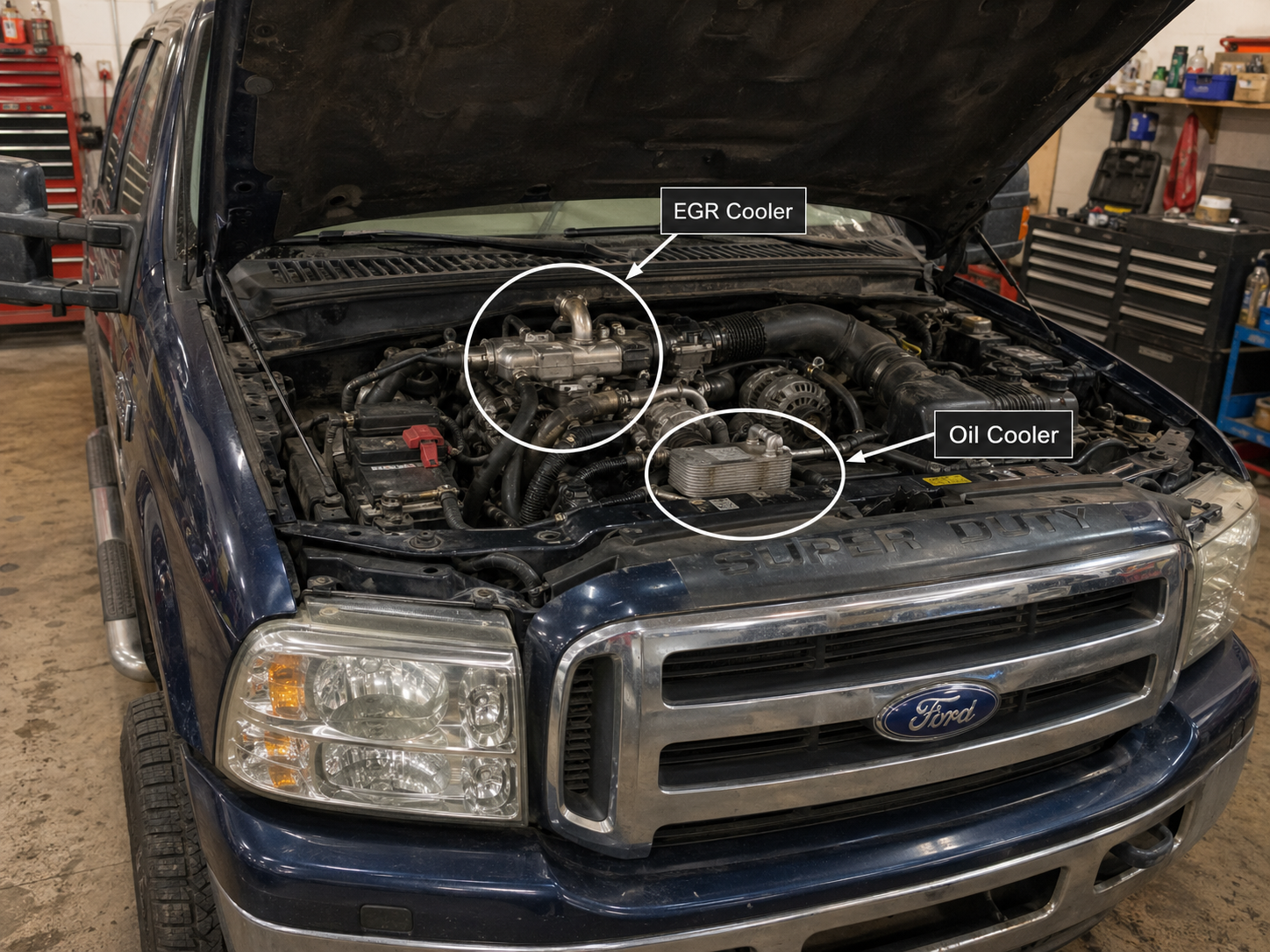
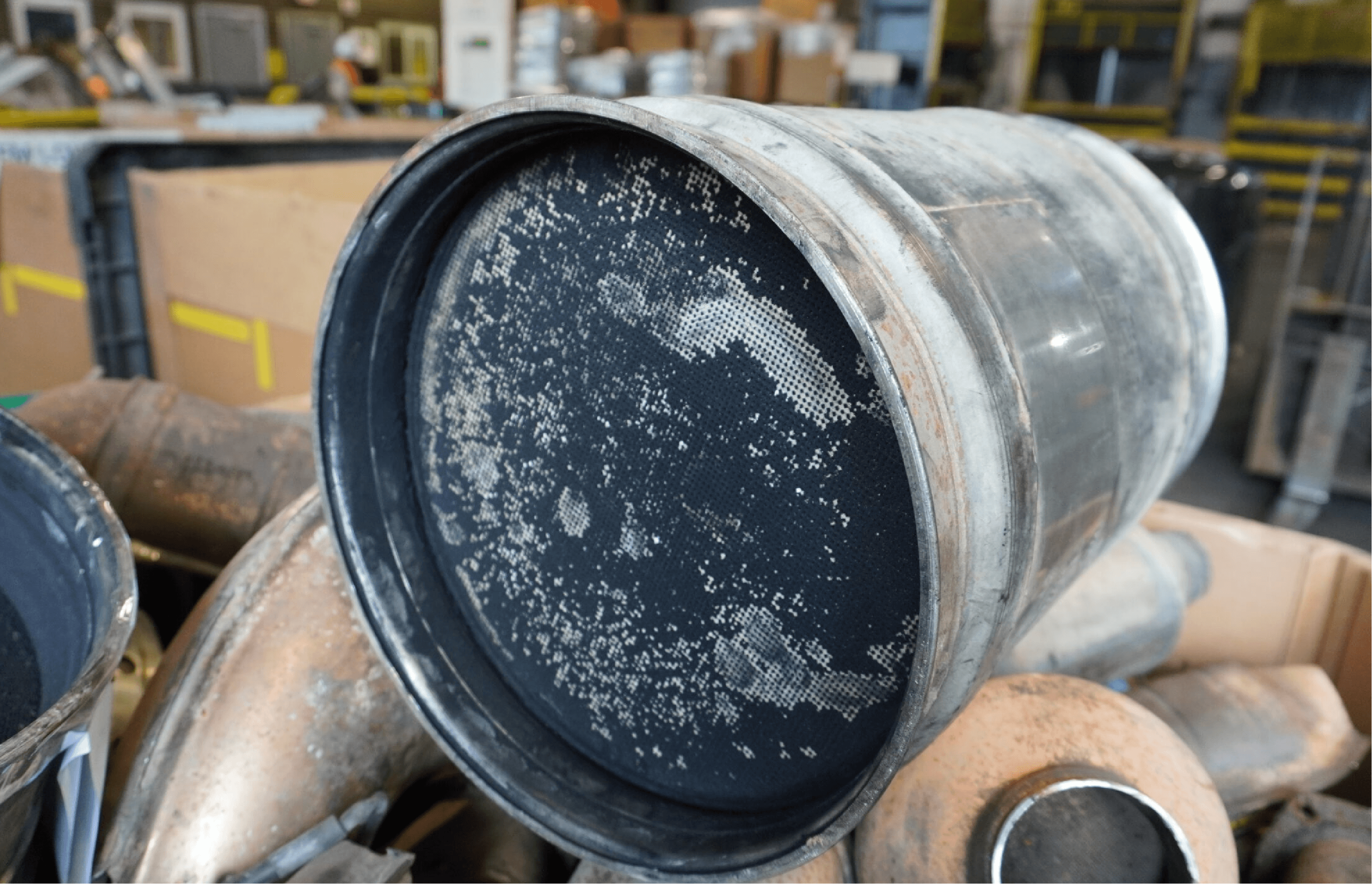
Many 6.0 Powerstroke owners are not actively chasing modifications. Instead, their factory catalytic converter has already become clogged or failed. This is often related to common engine issues — a clogged oil cooler can cause the EGR cooler to crack, allowing coolant to enter the cylinders. At the same time, incomplete combustion creates a large amount of soot, eventually clogging the catalytic converter. Rather than spending a lot of money replacing factory parts, some owners choose to install a delete pipe once and be done with it.
2. If you modify only one part, the other holds back the result
If you only do a cat delete, exhaust gases do flow more smoothly, but the muffler is still there. Its internal baffles and sound-absorbing materials still create noticeable resistance, especially at higher RPMs, where the truck may still feel "choked." On the other hand, if you only do a muffler delete, the sound does get louder, but the most restrictive bottleneck - the catalytic converter - is still there, so performance barely changes.
No matter which one you choose alone, half of the problem remains unsolved. You spend the money, but the result feels incomplete.
3. The sound does not meet expectations, so owners modify again
Many owners initially just want the truck to "sound better." Some start with a muffler delete, and while the sound does get louder, they find that the turbo whistle does not become much clearer and the exhaust tone is not deep enough. Later, they realize that the part truly "muffling" the sound is actually the catalytic converter, not the muffler. After doing a muffler delete and finding that it does not deliver the desired effect, they have to take the truck apart again and install a cat delete, paying extra labor costs.
4. The factory muffler is also due for replacement
Most 6.0 Powerstroke trucks are now 15–20 years old. A clogged factory catalytic converter and aged, broken-down fiberglass packing inside the muffler are common. Replacing the factory parts can easily cost over a thousand dollars, while a delete pipe combo costs far less than factory parts — it is cheaper, more durable, and also comes with performance and sound benefits.
Recommended SuncentAuto 6.0L Powerstroke 3.5" Cat & Muffler Delete Kit
SuncentAuto offers two high-quality delete pipe combinations for 2003–2007 Ford F250/F350 6.0L Powerstroke trucks. They are made from T-409 stainless steel, which provides better heat resistance and corrosion resistance than ordinary aluminized exhaust systems. With a 3.5-inch pipe diameter, they provide smooth straight-through exhaust flow.
The key difference between the two products is whether installation clamps are included:
Version with clamps (includes 3 clamps)
Includes: 1 Cat Delete Pipe + 1 Muffler Delete Pipe + 3 clamps
Advantage: Clamp-on installation, no welding required, suitable for DIY installation, and easier to remove or service later.
Version without clamps (pipes only)
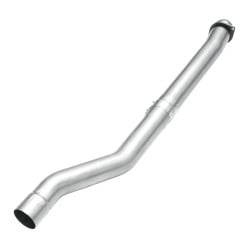
Includes: 1 Cat Delete Pipe + 1 Muffler Delete Pipe
Advantage: Lower price, suitable for users who already have clamps or plan to weld the pipes in place.
Both products deliver the same core benefits: around 20–40 lbs of weight reduction, significantly reduced exhaust backpressure, lower EGT under heavy loads, and a louder, purer exhaust tone.
Conclusion: Should You Do a Cat Delete on Your 6.0 Powerstroke?
| If you... | Recommendation |
| Use the truck only on the track or private property | ✅ Cat delete is a worthwhile performance upgrade |
| Daily drive the truck in a state with emissions inspection | ❌ Legal risk is too high; not recommended |
| Live in a state without emissions testing and want more performance | ⚠️ Weigh the risks before deciding, and keep the factory parts |
| Only want a louder sound | ✅ A muffler delete alone is enough and carries lower risk |
| Want complete performance + sound | ⚠️ Do both, but accept the legal risk |
If you still decide to modify the truck, be sure to properly store the removed factory catalytic converter. If policies tighten in the future, you move to a state with emissions testing, or you plan to sell the truck, you will be glad you kept it.