 Contents
Contents
- 1. What is an EGR System? A Deep Dive into 6.0 Powerstroke Core Components
- 2. 5 Critical Symptoms of 6.0L EGR Cooler Failure
- 3. Why the 6.0L EGR Cooler is the System’s "Achilles' Heel"
- 4. EGR Delete, Upgrade, or OEM Replacement?
- 5. The 6.0L "Golden Pairing": Engineering True Bulletproof Reliability
- 6. Installation and Maintenance: How to Ensure Your Upgrade Stays Effective
- Conclusion
- FAQs
For owners of 2003-2007 Ford Super Duty pickups, the term "EGR" often signals an impending repair bill. However, it’s not just a matter of carbon buildup—frequently, your EGR cooler fails before it even has a chance to clog. Understanding the architecture of the EGR system and identifying early failure warnings is the vital first step toward transforming your truck into a "Bulletproof 6.0." This guide provides an in-depth analysis of 6.0L EGR cooler design flaws, core symptoms, and solutions that will save you a fortune in long-term maintenance.
1. What is an EGR System? A Deep Dive into 6.0 Powerstroke Core Components
1.1 Diesel EGR System Overview
The EGR (Exhaust Gas Recirculation) system is essential for reducing emissions in modern diesel engines. It works by recirculating a portion of the exhaust gas back into the intake manifold to be re-burned. Since exhaust gas is rich in inert gases and low in oxygen, it helps lower the peak combustion temperature within the cylinder. This process significantly reduces Nitrogen Oxide (NOx) emissions, ensuring the vehicle complies with increasingly strict environmental regulations.
1.2 The 5 Core Components of a 6.0 Powerstroke EGR System
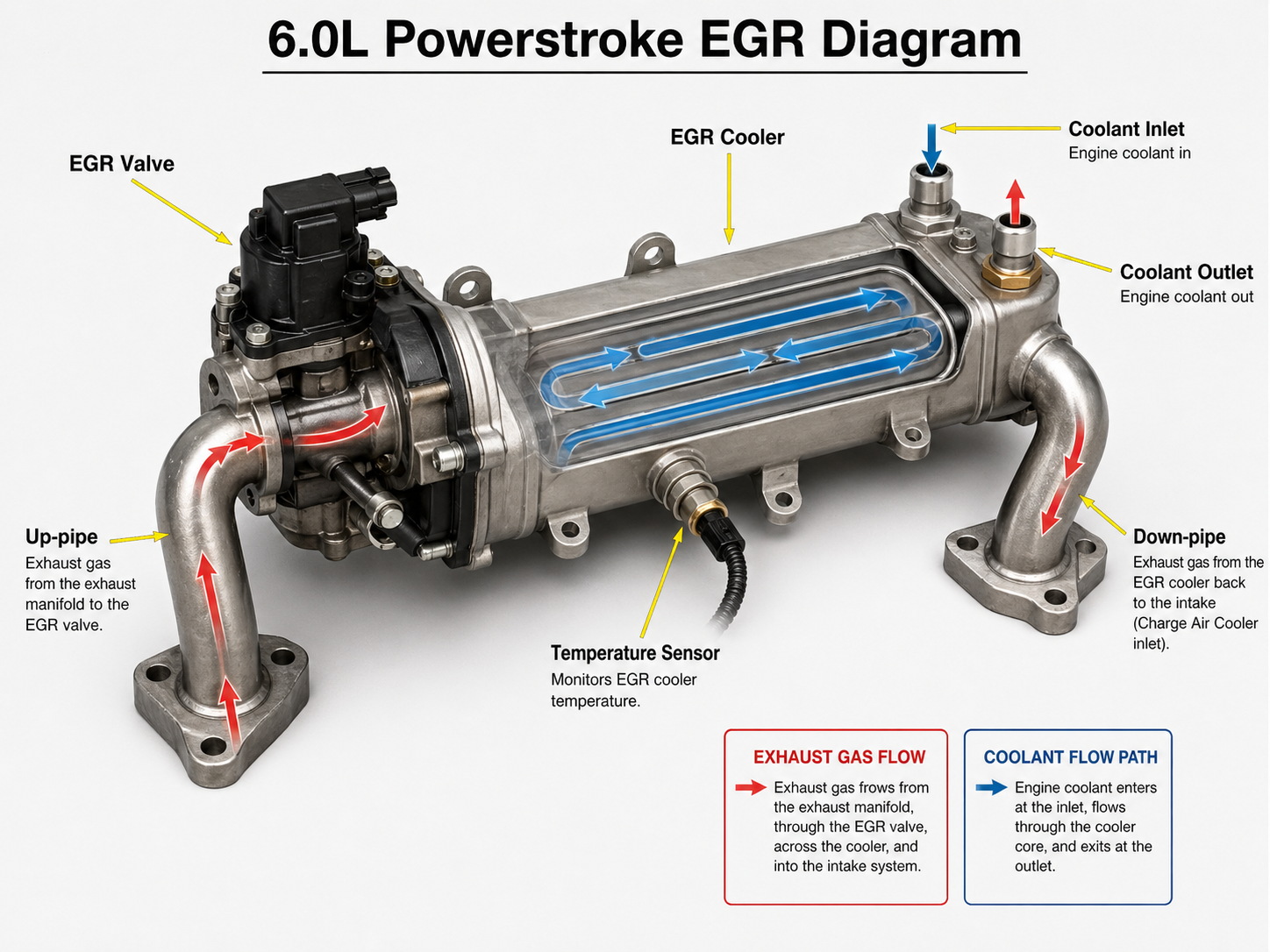
A complete 6.0 Powerstroke EGR system functions as a precision loop, comprised of the following key components:
- EGR Valve: The computer-controlled "gatekeeper" that precisely regulates the volume of exhaust gas entering the engine.
- EGR Cooler: (The focus of this guide) A heat exchanger that uses engine coolant to lower the temperature of scorching exhaust gases—which can exceed 600°C—to prevent valve damage and maintain combustion efficiency.
- EGR Piping: The high-temperature resistant Up-pipe and Down-pipe that transport exhaust between the exhaust manifold and the cooler.
- Sensors: Critical components like the Exhaust Back Pressure (EBP) and Intake Air Temperature (IAT2) sensors that provide real-time pressure and temperature data to the ECU.
- Cooling System Integration: The mechanism where exhaust heat is transferred to the engine coolant, deeply linking the EGR cooler’s performance to the overall engine thermal management.
1.3 Why the 6.0L EGR Cooler is a "Single Point of Failure"
While the 6.0L Powerstroke is celebrated for its raw power, its EGR cooler is widely recognized as the engine’s most vulnerable weak point. This failure is rarely an isolated event; it often triggers a cascade of expensive collateral damage, including blown head gaskets, hydrolocking, or even total engine catastrophic failure.
Identifying the warning signs early is crucial to protecting your investment. The following five symptoms can help you determine if your system is on the verge of collapse.
2. 5 Critical Symptoms of 6.0L EGR Cooler Failure
Diagnosing a 6.0L engine's health requires capturing warning signals early. If your engine is struggling, it will typically manifest through the following five indicators.
2.1 Check Engine Light (DTCs)
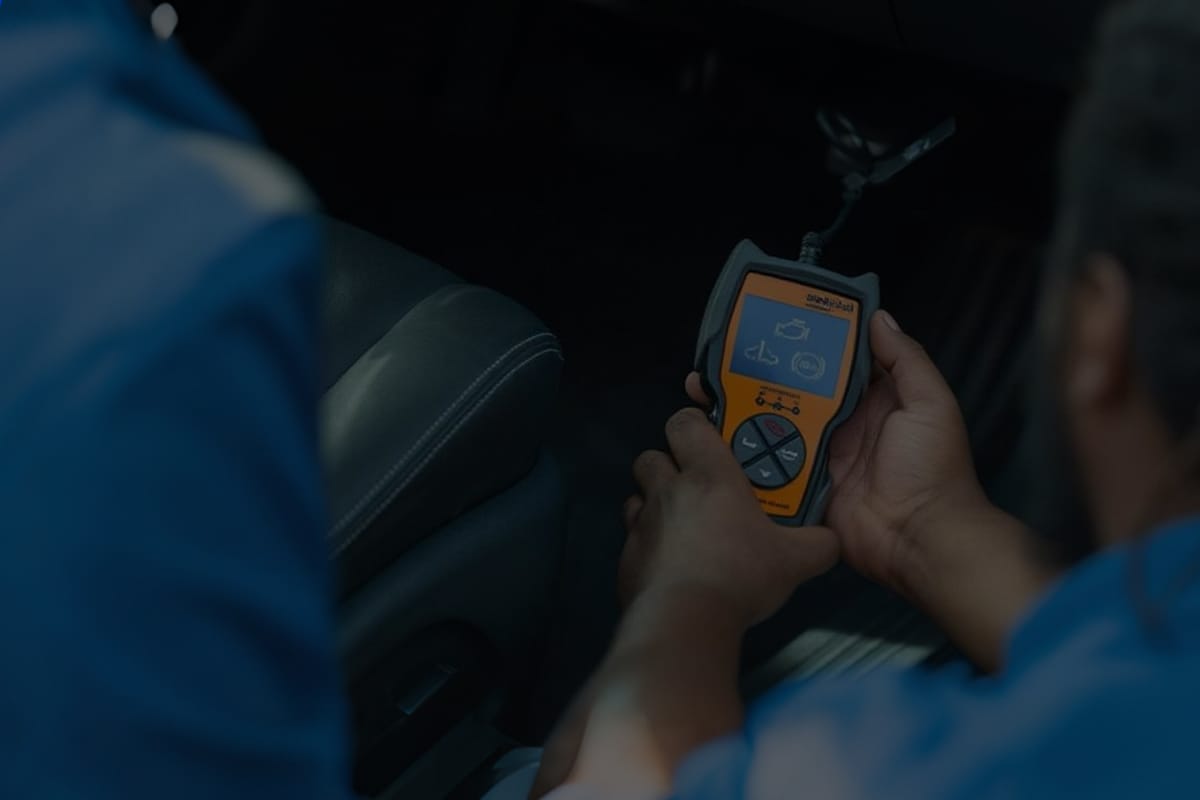
When the EGR system malfunctions, the ECU (Engine Control Unit) is usually the first to sense data anomalies. For 6.0L owners, the most frequent diagnostic trouble codes include P0401 (Exhaust Gas Recirculation Flow Insufficient Detected), P0402 (Exhaust Gas Recirculation Flow Excessive Detected), or P0404 (Exhaust Gas Recirculation Control Circuit Range/Performance). These codes often indicate that the EGR valve is heavily carboned or the actuator can no longer open and close correctly.
2.2 White Smoke from the Tailpipe
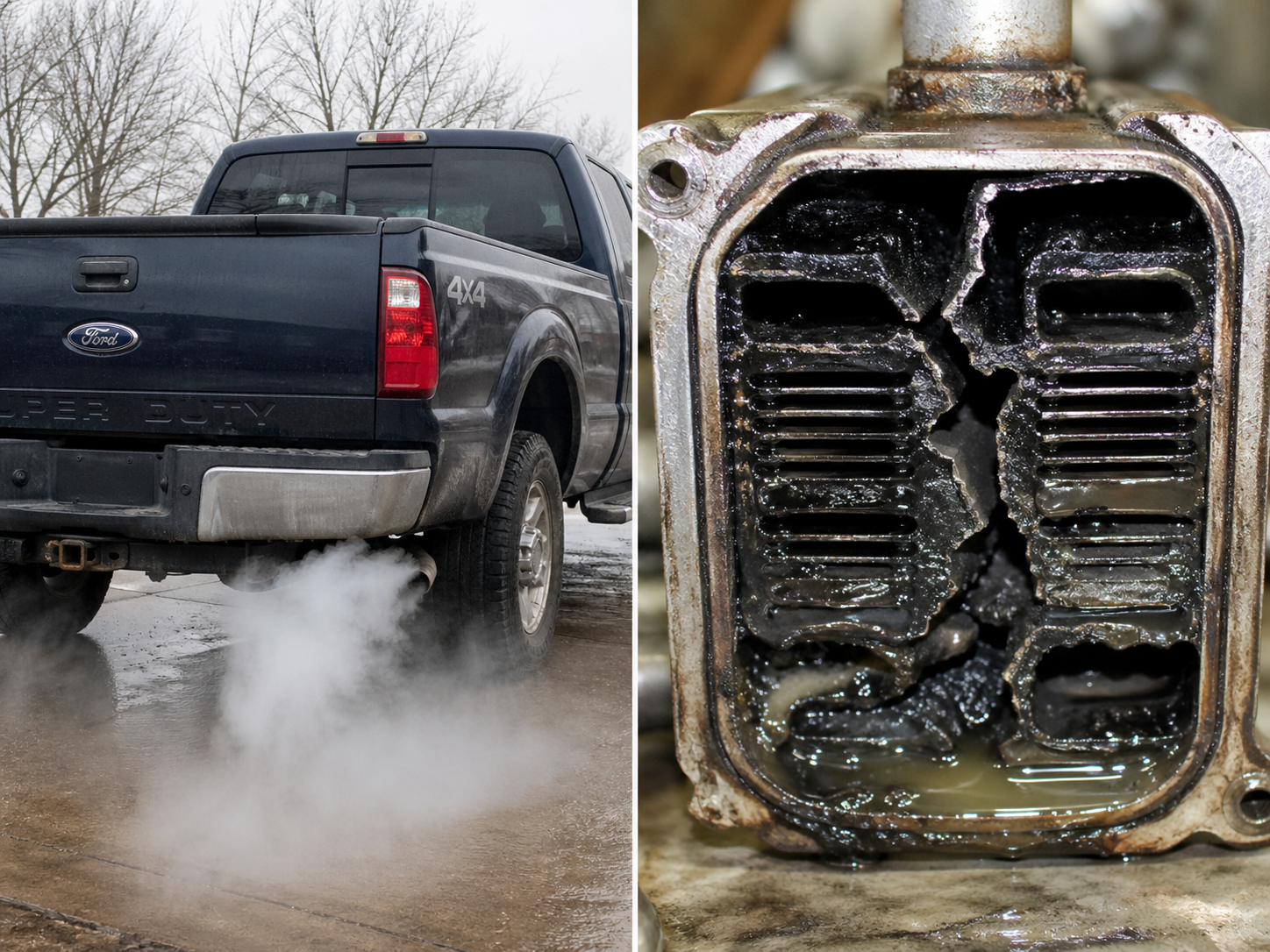
This is the most definitive sign of an internal rupture in the EGR cooler. When micro-cracks form in the cooler, high-pressure coolant leaks into the exhaust stream and vaporizes instantly under extreme heat.
Visual and Olfactory Cues: The tailpipe will emit thick white clouds of steam carrying a distinct, sweet chemical odor characteristic of coolant. This is fundamentally different from the black smoke caused by unburned diesel fuel.
2.3 Abnormal Coolant Loss
If you notice the coolant level in your degas bottle constantly dropping, but there are no visible puddles or leaks on the ground, the coolant is likely "escaping" into the engine via a damaged cooler.
- The "Danger Line": If you find yourself adding more than 1 quart (approx. 0.95L) of coolant every 1,000 miles (approx. 1,600 km) without an external leak, it indicates a severe internal breach.
2.4 Engine Overheating or Excessive Cooling System Pressure
A failed cooler can allow extremely high-pressure exhaust gases to backfeed into the cooling loop, forcing coolant to spray out of the degas cap pressure relief valve.
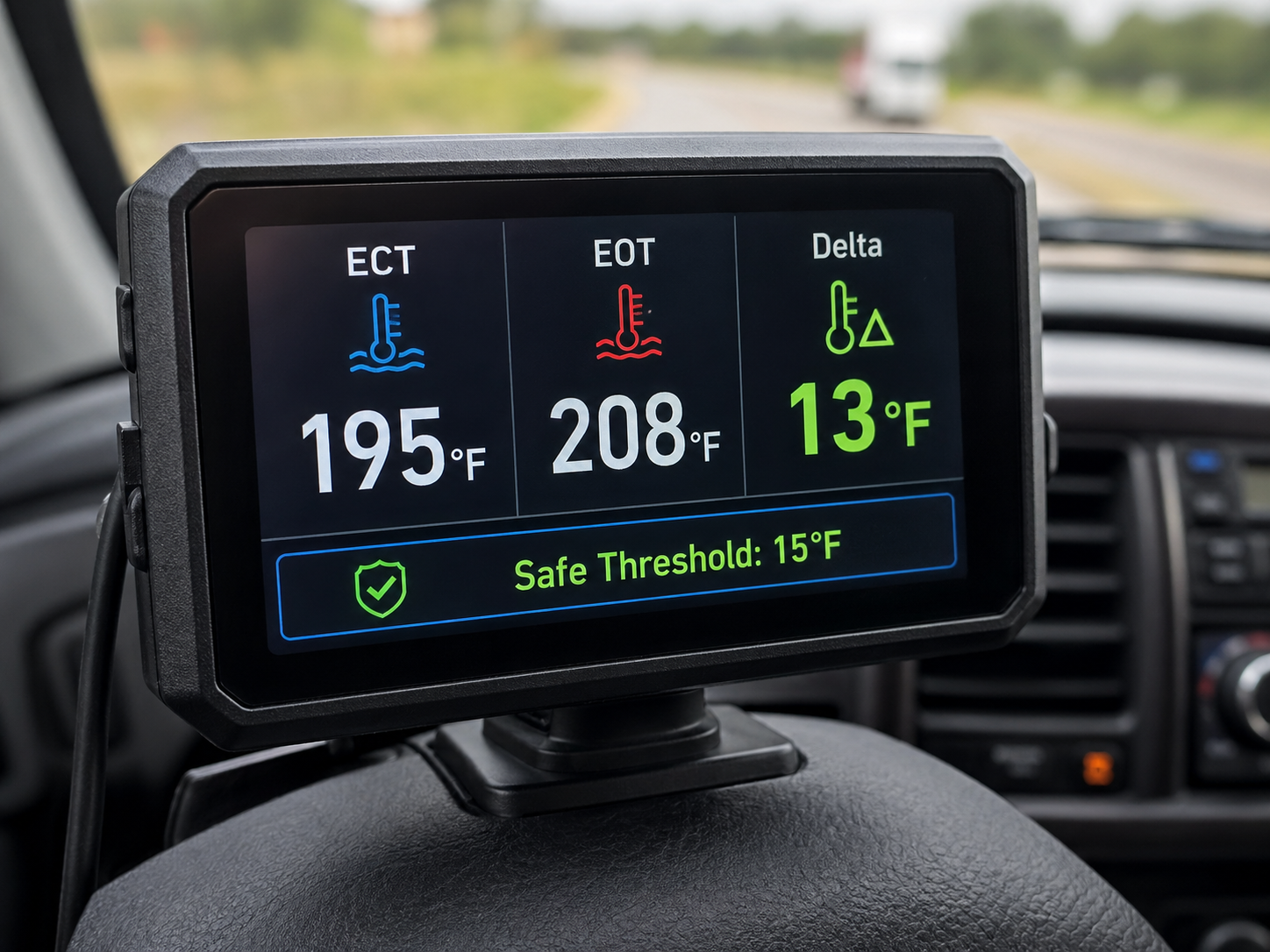
- Temperature Delta Warning: During steady highway cruising, the difference between your Engine Oil Temperature (EOT) and Engine Coolant Temperature (ECT) should stay within 15°F (approx. 8.3°C). If the delta exceeds 15°F, it indicates the oil cooler is clogged—the primary warning that the EGR cooler is on the verge of rupture.
- Critical Redlines: When coolant temperature surpasses 220°F (104°C) or oil temperature approaches 240°F (116°C), the engine is at extreme risk of blown head gaskets or total failure.
2.5 Power Loss and Erratic Idle
When the EGR valve is stuck open or severely carboned, uncontrolled exhaust gas floods the combustion chamber, leading to low oxygen levels in the intake.
- RPM Fluctuations: At idle, the tachometer needle may bounce violently between 500-800 RPM, sometimes resulting in a stall.
- Throttle Lag: The air-to-fuel ratio imbalance leads to sluggish acceleration. You may experience a 1-3 second delay after pressing the pedal, which can be particularly dangerous when towing heavy loads.
3. Why the 6.0L EGR Cooler is the System’s "Achilles' Heel"
The notoriety of the 6.0L Powerstroke engine often boils down to specific engineering choices. Understanding why this component fails requires looking at its structural evolution and its relationship with the rest of the engine.
3.1 The Evolution (and Regression) of Structural Design
Ford modified the EGR cooler design during the 6.0L production run, and this change became a nightmare for later models:
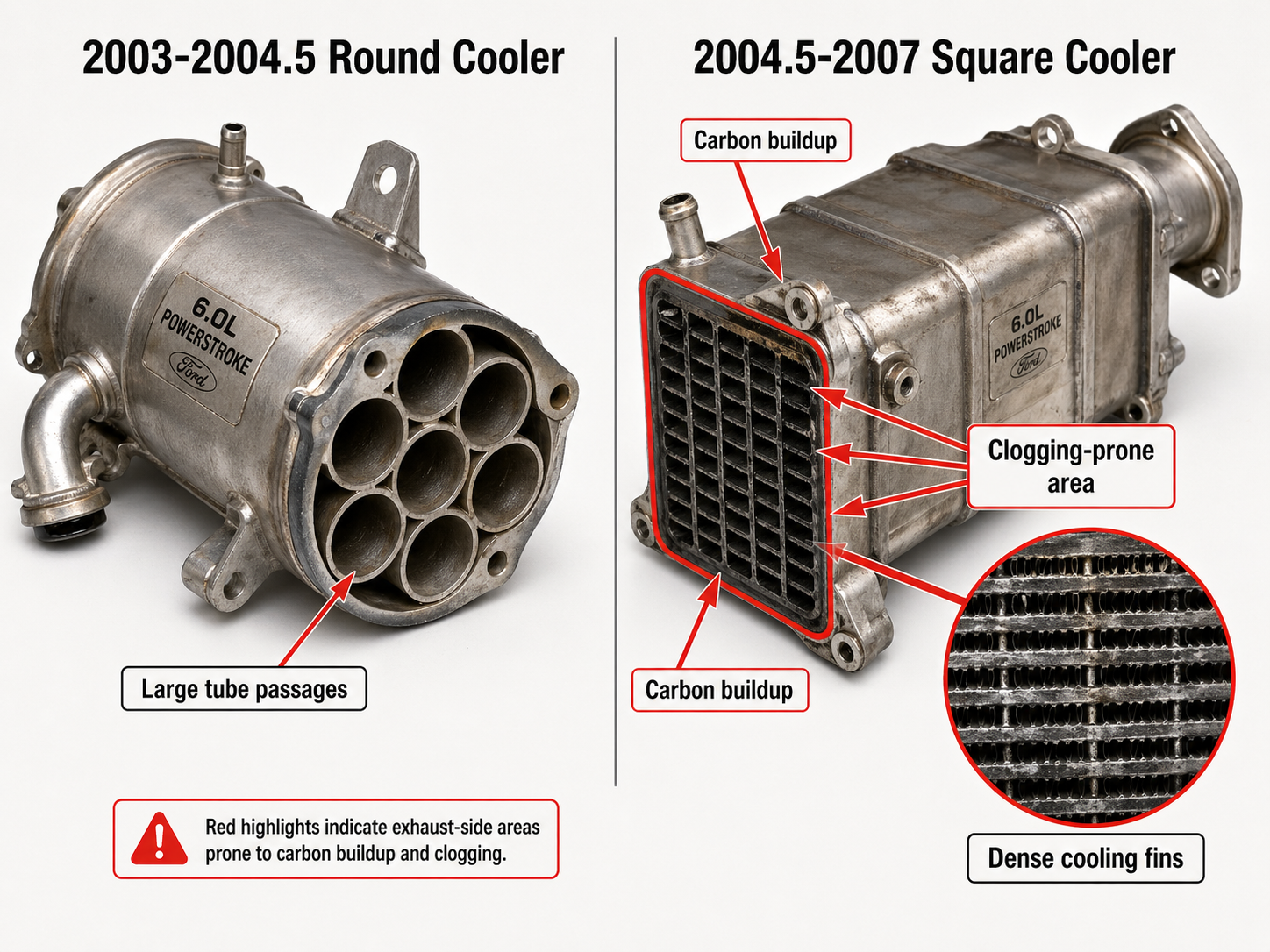
- Round Design (2003 - 2004.5): Early coolers featured a cylindrical structure with thick internal tube-style passages. These were robust enough to handle high thermal stress, resulting in a relatively low failure rate.
- Square Design (2004.5 - 2007): To improve heat exchange efficiency, Ford switched to a rectangular box structure. The interior was filled with tiny radiator-style fins. While this increased surface area for cooling, these narrow passages are extremely prone to becoming completely choked with carbon soot from the exhaust.
3.2 Physical Collapse Triggered by Thermal Expansion
The exhaust inlet of a 6.0 Powerstroke cooler faces extreme temperatures exceeding 1,000°F, while the other end is connected to the cooler intake side. This drastic temperature gradient causes frequent thermal expansion and contraction of the metal:
- Metal Fatigue: The dense weld points and thin internal walls of the square cooler eventually develop fatigue cracks due to this constant stretching.
- Coolant Intrusion: Once a crack forms, high-pressure coolant floods the exhaust side, leading to the "white smoke" phenomenon discussed earlier.
3.3 The True Culprit: Oil Cooler Linkage
This is perhaps the most criticized aspect of the 6.0L engine design. In the coolant flow path, the liquid passes through the oil cooler before it enters the EGR cooler:
- Clogging Chain Reaction: The internal passages of the 6.0L oil cooler are incredibly narrow and easily blocked by silicate fallout from old coolant or casting sand residue.
- Flow Starvation: When the oil cooler clogs, the coolant flow to the subsequent EGR cooler drops significantly.
- Flash Boiling: Without sufficient flow to carry heat away, any coolant remaining in the EGR cooler can instantly boil. The resulting massive pressure spike can literally burst the cooler from the inside out.
This "upstream blockage, downstream failure" architecture is exactly why experienced technicians always recommend checking the oil cooler when installing an EGR Delete Kit.
4. EGR Delete, Upgrade, or OEM Replacement?
When addressing 6.0L maintenance, owners typically weigh three primary directions. In addition to the removal and third-party reinforcement options previously mentioned, many owners consider a direct OEM replacement. However, a rational trade-off must be made here.
4.1 Option A: EGR Delete Kit (Complete Removal)
This is the go-to solution for owners pursuing ultimate reliability. By installing an EGR Valve & Cooler Delete Kit, you physically remove the component most likely to leak.
- Pros: It permanently eliminates the risk of coolant entering the intake tract, significantly lowers intake temperatures, and improves the overall breathing efficiency of the engine.
- Lifespan: This is essentially a "lifetime" solution; there are no moving parts or fragile internal fins that can fail again.
- Legal Considerations: **Important Note:** This solution is generally restricted to "Off-road use only." In certain regions (like California), this modification may prevent the vehicle from passing strict emissions inspections.
4.2 Option B: Heavy-Duty Upgraded Cooler (Reinforced Replacement)
If you live in an area with strict emissions testing or want to maintain the street-legal status of your vehicle, replacing the unit with a reinforced Powerstroke EGR Cooler is the superior choice.
- Design Improvements: These upgraded units typically abandon the fragile radiator-style fins of the original design in favor of thick-walled stainless steel tubes (Bulletproof-style).
- Pros: It maintains the factory appearance and full functionality for legal compliance while drastically increasing durability.
- Lifespan: 100,000+ miles. This is typically 3 to 5 times the lifespan of a standard OEM part, though it is still subject to eventual carbon soot accumulation.
4.3 The "Original OEM Cooler" Replacement: A Structural Risk?
While OEM parts offer perfect fitment, they carry a "structural recurrence" hidden danger for 2004.5-2007 6.0L engines.
- Design Closed-Loop: Because OEM parts must strictly adhere to the original factory specifications, it means a new part still utilizes the exact same dense, clog-prone square fin structure that caused the initial failure.
- Lifespan Expectancy: If the root cause—the clogged oil cooler—is not addressed, a new OEM cooler often faces the risk of thermal fatigue cracking again within just 30,000 to 50,000 miles.
- Price Disadvantage: The retail price for OEM parts is often not cheaper than the stainless steel reinforced versions, yet they remain inferior in terms of durability metrics.
4.4 Comprehensive Comparison Table
| Feature | EGR Delete Kit | Upgraded Cooler | Original OEM Cooler |
|---|---|---|---|
| Leak Prevention | Extreme (100%) | High (Major Improvement) | Moderate (Recurrence Risk) |
| Legal Compliance | Off-Road/Non-Road Only | Fully Street Legal | Fully Street Legal |
| Internal Structure | None (Straight Through Pipe) | Stainless Thick-Walled Tubes | Dense Aluminum Fins |
| Performance Gain | Significant (Lower Temps & More Flow) | None (Maintains Stock) | None (Maintains Stock) |
| Hardware Price (Est.) | Lowest ($150 - $300) | Moderate ($350 - $600) | Mid-High ($400 - $700) |
| Expected Lifespan | Permanent | 100,000+ Miles | Limited (30k - 50k Miles) |
5. The 6.0L "Golden Pairing": Engineering True Bulletproof Reliability
In the 6.0L Powerstroke aftermarket community, the term "Bulletproof" is frequently used to describe a series of targeted upgrades designed to permanently eliminate the engine's inherent factory flaws. Simply replacing or removing the EGR cooler is merely the first step in a larger reliability strategy.
5.1 Why a "Combo" Strategy is Necessary
As detailed in Section 3, an EGR cooler rupture is often a symptom of a clogged oil cooler. If you solve the EGR issue but ignore the root cause, your new components—even the high-quality upgraded ones—will soon be subjected to extreme thermal stress that compromises their integrity.
5.2 The Core Trilogy of a Bulletproof Solution
To achieve genuine "bulletproof" status, three critical components must work in perfect synergy:
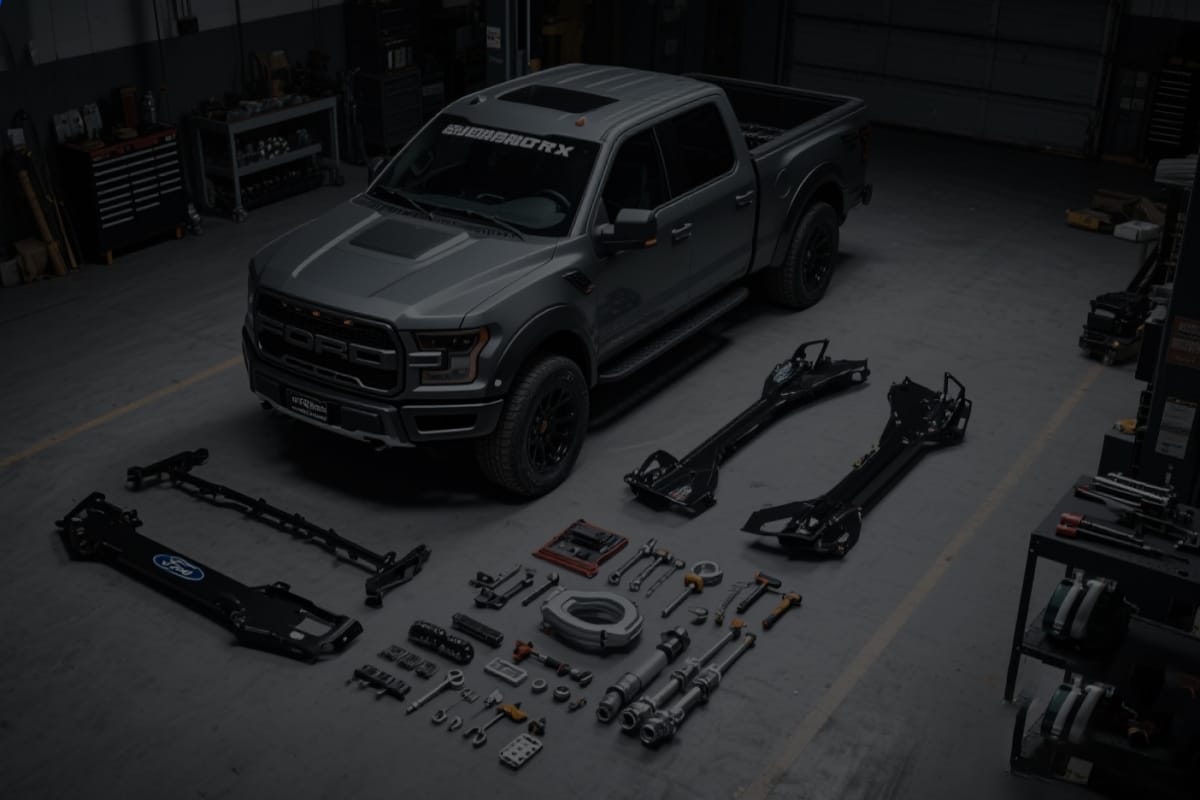
- EGR Solution: Install a high-quality SunCent 6.0 Powerstroke EGR Delete Kit or a reinforced stainless steel cooler to physically cut off the risk of coolant leakage.
- New OEM Oil Cooler: Interestingly, while we advise against the OEM EGR cooler, the Original Equipment Oil Cooler remains the gold standard (provided it is paired with proper filtration). It ensures the temperature delta (EOT vs. ECT) stays within the healthy 15°F range.
- High-Performance Tuner: For those opting for an EGR delete, a programmer is essential. It disables the "Check Engine Light" triggered by the lack of exhaust flow and optimizes injection maps to unlock the engine’s maximum potential safely.

5.3 Advanced Defense: The Coolant Filtration System
This is the finishing touch of any professional Bulletproof build. Residual casting sand from the manufacturing process and chemical precipitates from coolant breakdown are the primary killers of 6.0L oil coolers.
By adding a bypass Coolant Filter, you can intercept these contaminants before they reach the narrow passages of your oil cooler, effectively safeguarding your entire 6.0 Powerstroke upgrade investment.
6. Installation and Maintenance: How to Ensure Your Upgrade Stays Effective
Simply installing a high-quality Powerstroke EGR Delete Kit or an upgraded cooler is not enough. The following monitoring and installation practices will determine the long-term return on your investment.
6.1 Critical Notes During Installation
- Deep Clean the Intake Manifold: During the replacement of the cooler, the intake manifold is typically filled with heavy oil sludge and carbon deposits. Failure to clean these impurities will directly hinder the breathing efficiency of your new system.
- Check EGR Valve Status: Since the engine is already disassembled to this depth, it is highly recommended to inspect or replace the EGR Valve at the same time to ensure precise control on the intake side.
6.2 Long-Term Monitoring Techniques
- Regularly Monitor the Temperature Delta: Develop the habit of checking the temperature difference between your Engine Oil Temperature (EOT) and Engine Coolant Temperature (ECT) monthly. As long as the delta remains within 15°F, your system is operating safely.
- Annual Coolant Concentration Testing: Use test strips to check the pH levels and cavitation protection (SCA/DCA) of your coolant to prevent internal corrosion of your new components.
Conclusion
For owners seeking ultimate performance and lifetime reliability, an EGR Delete Kit is the optimal solution to permanently remove the "disease" from the engine. However, if you need to maintain legal compliance, a heavy-duty upgraded cooler featuring a stainless steel tube structure is the ideal "Bulletproof" alternative.
Always remember: regardless of the path you choose, ensuring smooth flow through the oil cooler is the ultimate key to maintaining the health of your 6.0L Powerstroke system.