



 Contents
Contents
- What Is the P2BAC Code?
- Symptoms of a P2BAC Fault Code
- Common Causes of the P2BAC Code
- How to Fix the P2BAC Code
- Can an EGR Delete Kit Solve the Problem?
- P2BAC Code on 6.7L Cummins: Causes and Diagnosis
- Special Case: Why P2BAC Appears Years After a "Full Delete"
- Conclusion: Should You Worry About P2BAC?
- FAQs
When you see the P2BAC code pop up on your diesel vehicle's dashboard, it's more than just a check engine light. The P2BAC code - "NOx Exceedance – Deactivation of EGR" - indicates a specific emissions issue that can affect performance, fuel efficiency, and your ability to pass inspection. Understanding what triggers this code and how to resolve it is crucial for any diesel vehicle owner, especially those driving heavy-duty trucks like the Dodge/RAM 6.7L Cummins. In this guide, we'll detail everything you need to know about DTC P2BAC, from causes and symptoms to fixes and preventative measures.
What Is the P2BAC Code?
P2BAC is a generic OBD-II trouble code applicable to all diesel vehicles manufactured after 1996. The official definition of this code is: " NOx Exceedance – Deactivation of EGR " – meaning that nitrogen oxide (NOx) emissions have exceeded the limit and the Exhaust Gas Recirculation (EGR) system has been deactivated.
Important: The Cause‑and‑Effect Relationship Must Be Clarified
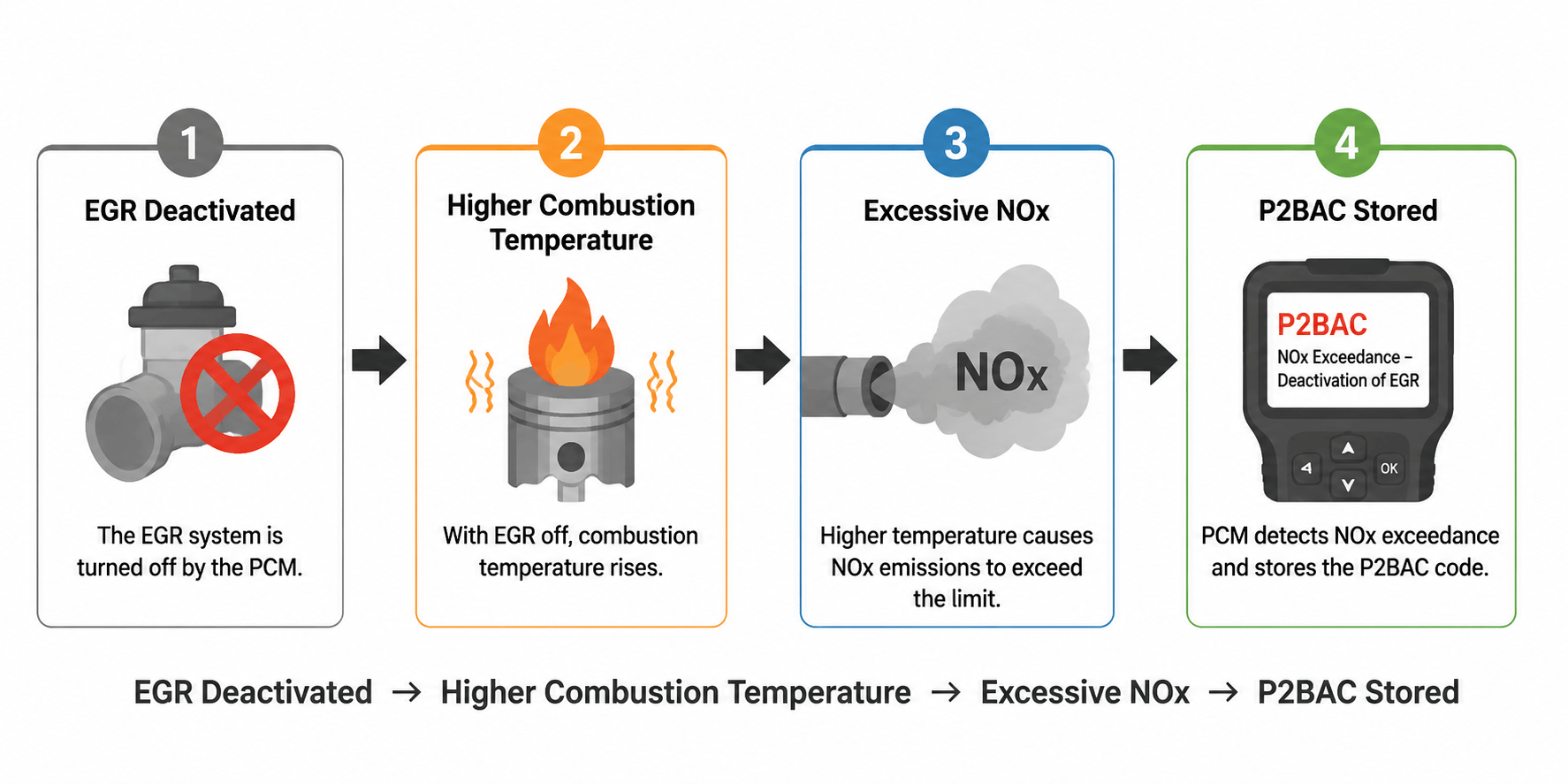
Many sources (including some repair websites) mistakenly interpret P2BAC as "EGR failure causes high NOx." This is a reversed cause‑and‑effect error. The correct logic chain is:
EGR system deactivated → combustion temperature rises → NOx emissions exceed the limit → PCM records P2BAC
The EGR system recirculates a portion of exhaust gas back into the engine combustion chambers, lowering combustion temperature and thereby suppressing NOx formation. When the PCM (Powertrain Control Module) decides to deactivate the EGR system for some reason, NOx emissions inevitably rise, and P2BAC is logged.
Core Characteristic of P2BAC: It Is an "Information‑Only" Code
Unlike most trouble codes, P2BAC is an information‑only code. This means:
- P2BAC itself is not a target that needs to be directly "fixed."
- It tells you the result – that "EGR has been deactivated."
- P2BAC almost always appears together with other emission‑system‑related trouble codes.
- After you repair the accompanying trouble codes, P2BAC will clear itself automatically.
Why Is the P2BAC Code Important?
- Emissions Compliance: This may cause your vehicle to fail emissions testing.
- Performance Loss: Shutting down EGR reduces power and throttle response.
- Decreased Fuel Efficiency: Without EGR, combustion chamber temperatures rise, increasing fuel consumption.
Commonly Affected Vehicles
- Dodge/RAM 6.7L Cummins (heavy-duty diesel trucks);
- Chrysler diesel models;
- Mercedes-Benz diesel engines;
- Volkswagen Crafter (uses similar emissions control technology).

Symptoms of a P2BAC Fault Code
The severity of P2BAC symptoms depends on the degree of NOx exceedance and the root cause. Most vehicles will exhibit several typical symptoms at the same time. Owners can quickly check for the following:
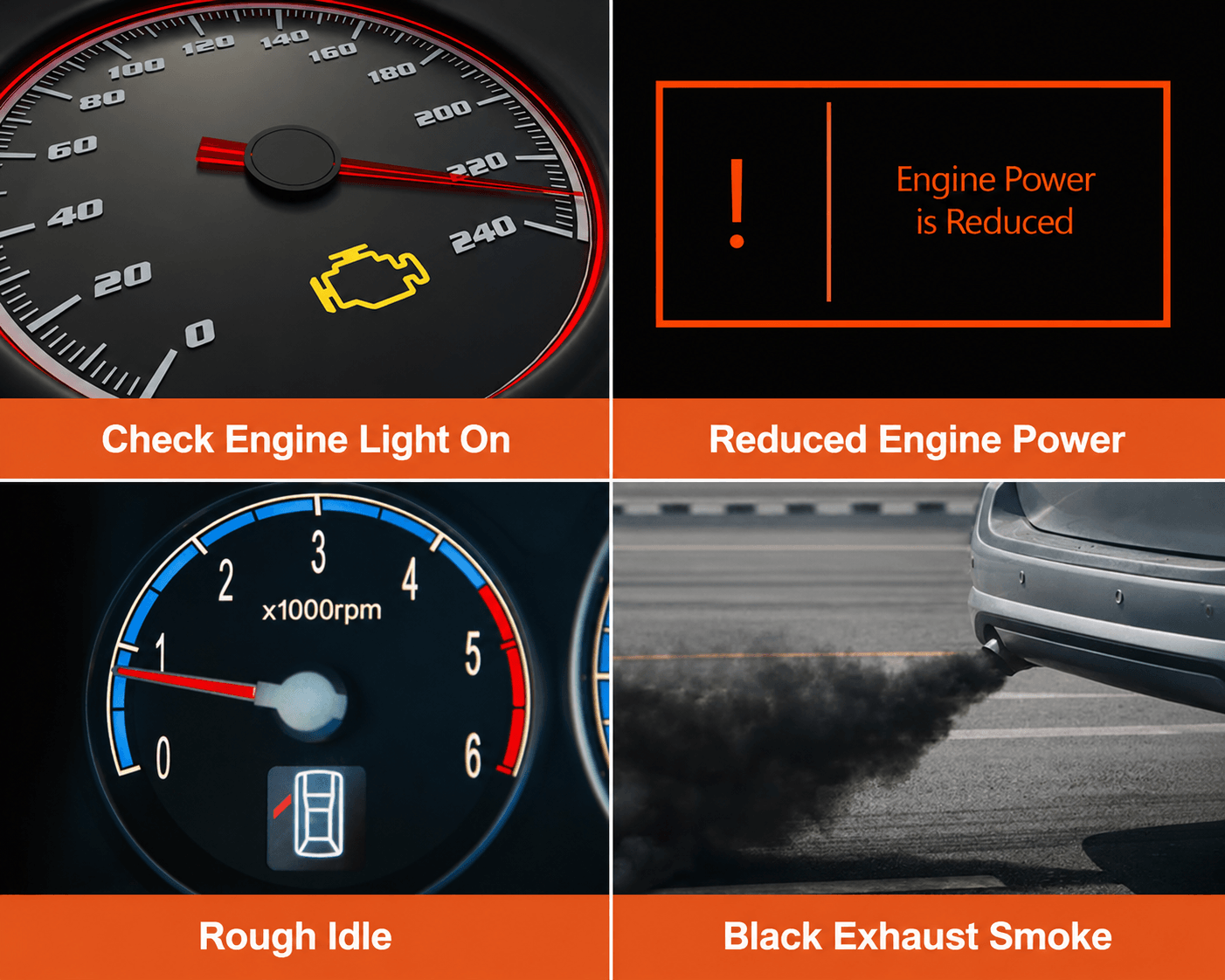
- Check Engine Light (CEL) ON – The malfunction indicator lamp stays illuminated; some models may also show a red emission system warning light.
- Reduced power / Limp mode – Sluggish acceleration, delayed response, poor turbo response, and noticeable power loss under heavy load.
- Rough idle – Engine shakes and runs unevenly at idle; the problem is more pronounced during cold starts.
- Increased fuel consumption – With EGR deactivated, combustion temperature rises, fuel efficiency drops, and fuel consumption per 100 km increases noticeably.
- Abnormal exhaust – Black smoke from the tailpipe accompanied by a pungent odour, caused by incomplete combustion and excessive NOx concentration.
- Failed emissions test – The vehicle will fail the on‑road exhaust inspection and cannot pass the annual inspection.
Common Causes of the P2BAC Code
1. EGR System Malfunction
The most common EGR system malfunction is:
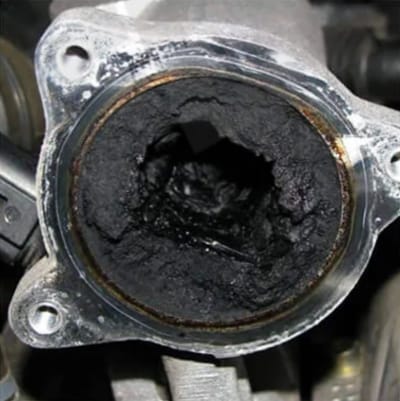
- Clogged or carbonized EGR cooler: Over time, soot buildup can restrict flow.
- Stuck EGR valve: The valve may not open or close properly, often due to carbon deposits or a sensor malfunction.
2. NOx Sensor Problem
NOx sensors can malfunction when exposed to harsh exhaust gases:
- Contamination or performance degradation: Contamination with oil, soot, or diesel exhaust fluid (DEF) can reduce sensor accuracy.
- Electrical problems: Broken, loose, or corroded wires/connectors can cause erroneous signals.
3. Exhaust or Intake System Problems
- Exhaust or intake system leaks: A cracked hose, cracked intercooler pipe, or a leaking EGR cooler can all cause erroneous sensor readings.
- DEF system problems: While less common, problems with DEF injection can cause abnormal NOx levels.
4. Software or Control System Malfunction
- Out-of-date ECM calibration: If the engine's control software is out-of-date, it can misinterpret sensor data.
- Inconsistent control logic: Rare, but may occur after DIY tuning or incomplete software updates.
How to Fix the P2BAC Code
Because P2BAC is an information‑only code, the correct approach is not to fix P2BAC directly, but to identify and repair the root cause that triggered it.
Essential Tools
OBD‑II scanner, multimeter, exhaust smoke leak detector, NOx sensor tester (for the average owner, simple soapy water can replace professional leak‑detection equipment).
Step 1: Read All Trouble Codes
First, use an OBD‑II scanner to read all stored trouble codes. P2BAC is often a companion code, so you need to prioritise the primary root‑cause faults:
- With P2201/P2257 → likely a NOx sensor failure.
- With P0401 → insufficient EGR flow.
- With U010C → communication error with the turbocharger control module.
Step 2: Visual Inspection
Check the wiring harnesses and connectors of the following components:
- NOx sensor harness – for opens, shorts, or damage.
- EGR valve connector – for bent, broken, pushed‑out, or corroded pins.
- Related ground circuits – for open or short circuits.
Step 3: Check for PCM Software Updates
Incorrect control unit programming can cause regeneration process abnormalities. Contact your dealer to see if a newer PCM calibration update is available for your vehicle.
Step 4: Sensor Testing
Use a digital multimeter to measure the resistance and signal output of the DPF/NOx/oxygen sensors, and compare the readings against the manufacturer’s specifications.
Step 5: Clear Codes and Road Test
After all repairs are completed, clear the historical trouble codes with your diagnostic tool. Perform a 10‑15 km normal road test to confirm that the fault has been fully resolved.
Can an EGR Delete Kit Solve the Problem?
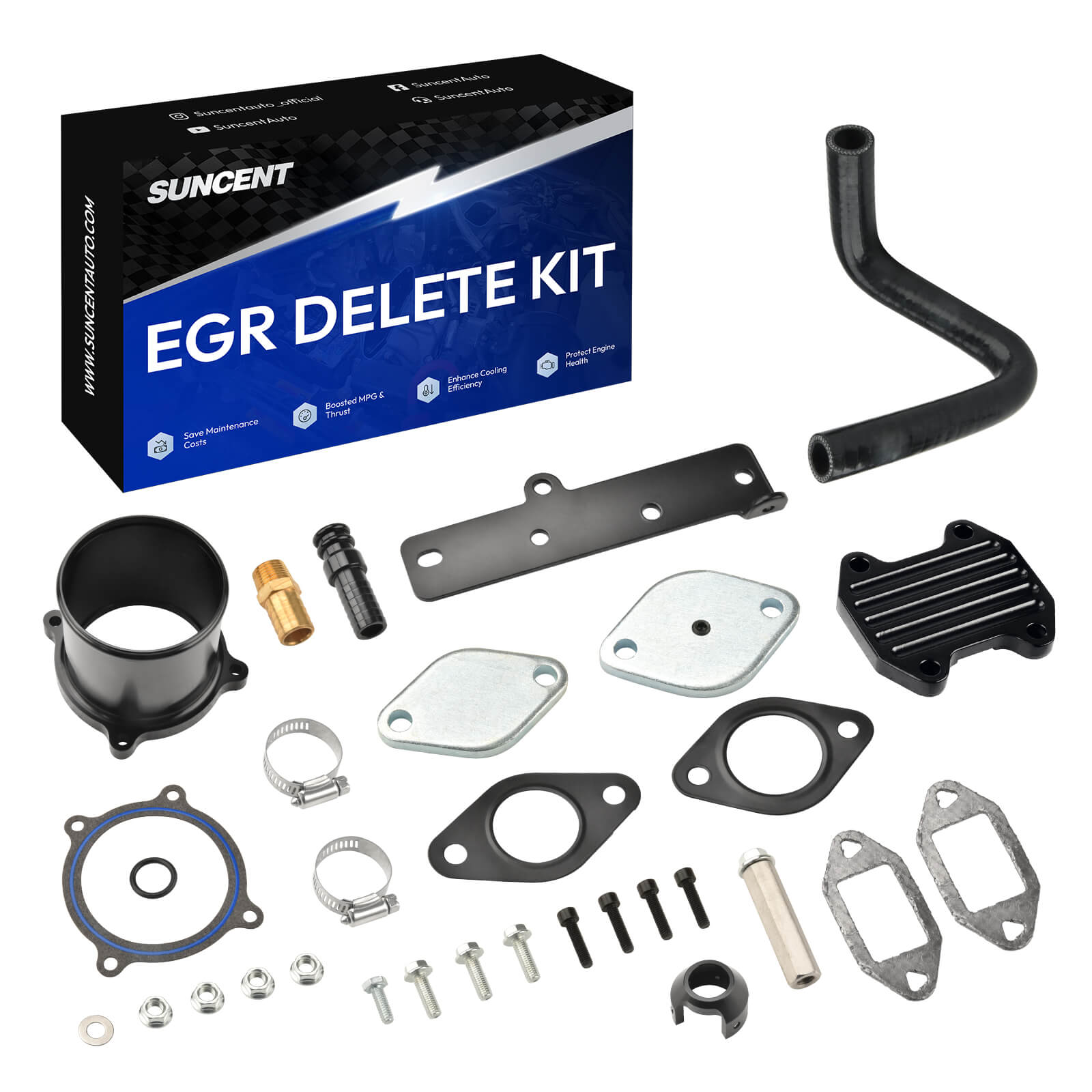
Yes. An EGR Delete Kit physically removes the EGR cooler and EGR valve, and is combined with ECM tuning to disable the EGR monitoring logic, effectively eliminating the EGR system. After modification, it can fundamentally prevent P2BAC issues caused by EGR carbon buildup and EGR system failures, while also reducing carbon accumulation in the intake system – completely solving the problem of recurring trouble codes.
This approach is popular among diesel modification enthusiasts, but there are several important points to consider:
Potential "Benefits"
- Eliminates repeated repair headaches caused by EGR valve blockages.
- Theoretically improves intake airflow and increases horsepower.
- May slightly improve fuel efficiency.
Important Warnings
- Legal risk: In regions such as the United States, removing emission control systems for on‑road use is illegal. EGR deletion is only permitted for racing or off‑road purposes.
- P2BAC will not disappear automatically: Physically removing the EGR system alone will not make P2BAC go away. The ECU will still detect the EGR system anomaly and log the code. To completely eliminate P2BAC, you must combine the hardware removal with ECU tuning that makes the PCM ignore EGR‑related monitoring.
- May create new problems: Even with ECU tuning, if the vehicle has other mechanical issues (such as stuck or damaged injectors), it may still produce excessive NOx, and P2BAC may persist stubbornly.
Recommendations
- EGR deletion should be considered a last resort, not a first‑choice solution.
- First complete the full diagnostic process to rule out repairable issues such as sensors, DPF, and software.
- If you decide to proceed with an EGR delete, always seek support from a professional diesel tuning shop to ensure correct ECU tuning.
- Fully understand your local regulations and confirm that your intended use is legal.
P2BAC Code on 6.7L Cummins: Causes and Diagnosis
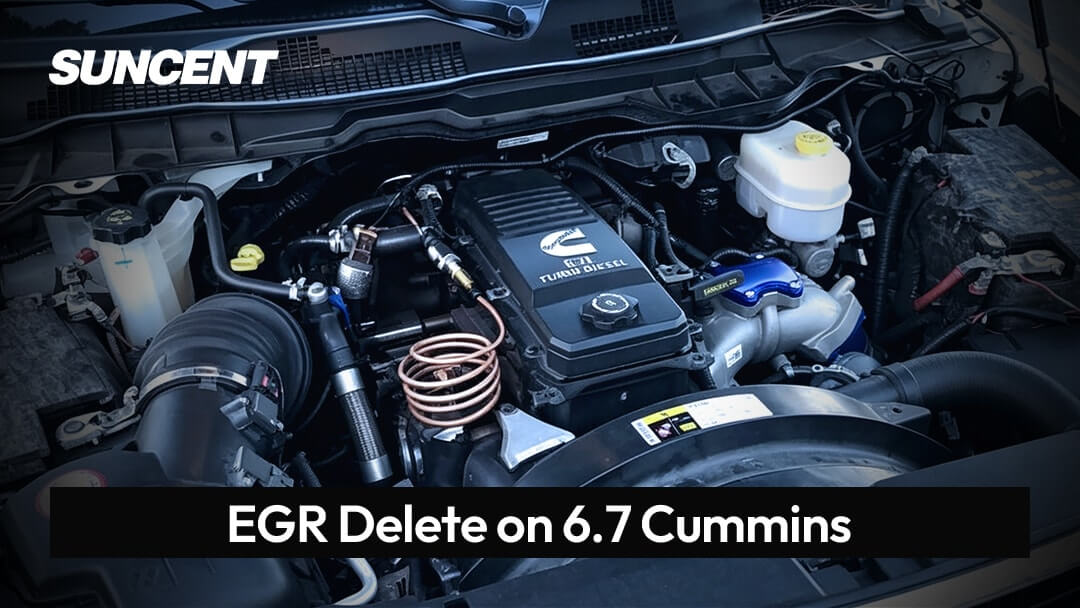
On a 6.7L Cummins engine, the P2BAC fault code is an "informational" alert indicating that the Engine Control Module (ECM) has detected excessive Nitrogen Oxides (NOx) and has disabled or limited the Exhaust Gas Recirculation (EGR) function. This is a common emissions control strategy in Dodge/RAM 2500 and 3500 diesel trucks (2007.5 and later).
Common Causes for 6.7L Cummins
For owners of these heavy-duty trucks, P2BAC is typically triggered by:
- EGR System: Carbon buildup leading to a sticking EGR valve or clogged cooler passages.
- Sensors: Faulty NOx sensors, slow response times, or damaged/corroded wiring.
- Airflow Issues: Exhaust leaks near the NOx sensor or intake boost leaks affecting combustion.
- Software: Outdated ECM calibrations or incomplete software updates following a repair or tune.
Step-by-Step Diagnostic Approach
- Check for Carbon: Inspect the EGR valve and crossover tube for heavy soot accumulation.
- Monitor Live Data: Use an OBD-II scanner to check real-time NOx sensor readings and EGR position.
- Leak Test: Perform a smoke test on the intake and exhaust systems to rule out "ghost" airflow issues.
- Verify Calibration: If the truck has been tuned or modified, ensure the ECM software aligns with the current hardware setup.
Real-World Case Study: The Hidden Fault
- Vehicle: 2011 RAM 2500, 6.7L Cummins.
- Issue: Repeated P2BAC codes with no other obvious MILs. The owner reported significant loss in turbo response and fuel economy.
- The Discovery: A professional-grade scan tool revealed a "hidden" U010C (Lost Communication with Turbocharger Control Module).
- The Fix: Once the communication circuit to the turbocharger was repaired, the combustion efficiency returned to normal, and the P2BAC code cleared automatically.
Note: For daily drivers, always repair components according to OEM specs and local emissions laws. For off-road or racing applications, some owners opt for Cummins EGR Delete Kits to eliminate soot-related issues permanently.
Special Case: Why P2BAC Appears Years After a "Full Delete"
Many diesel owners who have performed a DPF/EGR/SCR delete (hardware removal + ECM software tune) are surprised when a P2BAC code suddenly triggers after 5 or 10 years of trouble-free driving. This usually doesn't mean the "delete failed," but rather that the vehicle's aging electronics or software logic have been unexpectedly triggered.
Core Causes
- Software Logic "Leakage": As batteries age or voltage fluctuates, the masked factory logic within the ECU can re-activate due to Checksum errors or reset adaptation values.
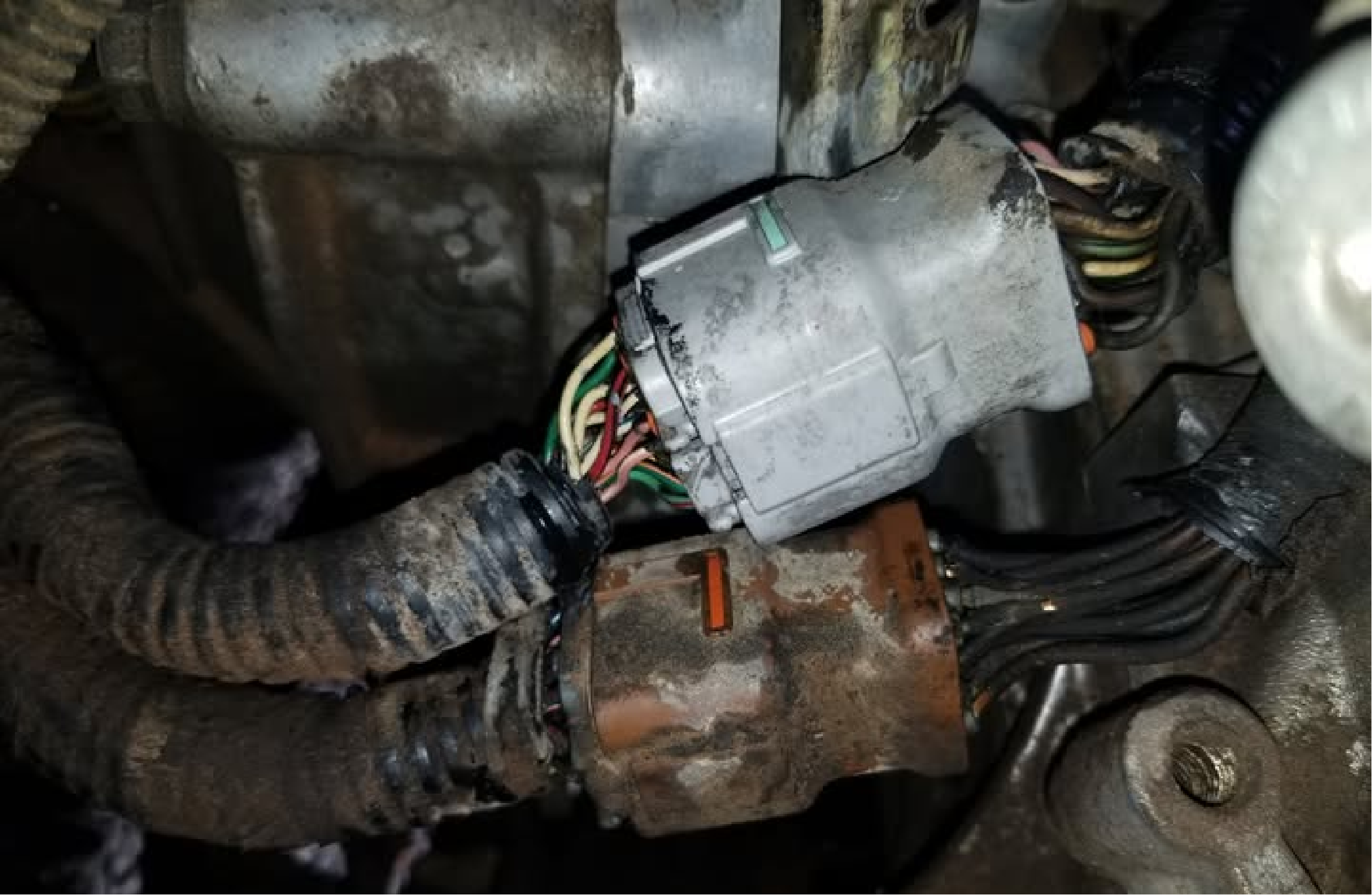
- Ghost Signals from Sensors: Even if hardware is removed, leftover NOx or pressure sensor harnesses can corrode over a decade. These faulty electrical signals (shorts or high resistance) can trick the ECU into triggering P2BAC.
- Unexpected Software Updates: If the vehicle was serviced and a factory diagnostic tool was used, the system may have been partially reset, re-enabling monitoring routines that were previously disabled.
Targeted Solutions (In Order of Priority)
1. Logic Reset (The "Flash-Back" Method)
Try a "Stock-to-Delete" cycle: Flash the vehicle back to the Stock (OEM) file, let it idle for 30 minutes to allow the ECU to complete its self-check, clear all codes, and then re-flash your Delete Tune. This often clears "stuck" ghost codes in the ECU's temporary memory.
2. Advanced Tune Optimization
Contact your tuner to perform a "Deep Disable" for P2BAC, P2BAB, and P2BAD. Ensure that the Regeneration Imbalance Monitoring routines are completely deactivated within the map (using software like WinOLS), rather than just hiding the Check Engine Light (CEL).
3. Physical Harness Isolation
Inspect the remaining sensor plugs under the chassis. After 10+ years, these connectors often suffer from water intrusion. Disconnect all disabled sensors and seal the plugs with waterproof heat-shrink or termination resistors to prevent signal noise from triggering the ECU.
Conclusion: Should You Worry About P2BAC?
Absolutely – never ignore it and drive for long with the code active. The P2BAC code is by no means a trivial warning. It indicates that the vehicle’s tailpipe NOx emissions are exceeding limits and that the EGR system has been forcibly deactivated by the ECM. Long‑term neglect can lead to multiple hidden dangers.
P2BAC is the result, not the root cause. Repairs should not start with replacing the entire EGR assembly. Follow this logical order:
“Check associated codes → inspect EGR carbon buildup → verify NOx sensors → test for intake/exhaust leaks → update ECM software” to completely eliminate the fault.
- For regular on‑road vehicles, stick with compliant, factory‑recommended repairs.
- For off‑road / racing vehicles, you may consider professional modifications as needed.











Comments