 Contents
Contents
- Quick Answer
- What Is EGR Removal and Removal Kits?
- Is It Legal to Delete EGR?
- EGR Delete Legality by Region
- Regional Laws: Is EGR Delete Legal in My Country?
- On-Road vs Off-Road EGR Delete: What’s the Difference?
- Is EGR and DPF Delete Legal?
- What Can Happen If You Delete EGR Illegally?
- Legal Alternatives to EGR Delete
- Weighing the Pros and Cons: Legal Risks of Removing EGR
- Conclusion
If you're researching the question " Is EGR delete legal ?" or wondering what an EGR delete kit entails, you're not alone. The debate rages between performance enthusiasts and environmental regulations, so understanding the law, technology, and practices of exhaust gas recirculation (EGR) modifications is crucial. This guide provides straightforward answers, clarifies regional laws (US, Canada, UK, Australia), and presents legal options for resolving EGR-related issues.
Updated on Jul 2026 by SuncentAuto Staff with expanded notes on EGR delete legality, public-road use, off-road use, regional rules, EGR and DPF delete concerns, inspection risks, and legal alternatives.
Quick Answer
In most places, an EGR delete is not legal for vehicles driven on public roads. The EGR system is an emissions-control device, and removing, disabling, blocking, or tuning it out can be considered emissions tampering.
Off-road, closed-course, racing, agricultural, private-property, or non-road use may be treated differently depending on the country, state, province, or local rules. However, an "off-road use only" label does not automatically make an EGR delete legal for every vehicle or location. Before installing an EGR delete kit, always check federal, state, provincial, and local emissions laws.
What Is EGR Removal and Removal Kits?
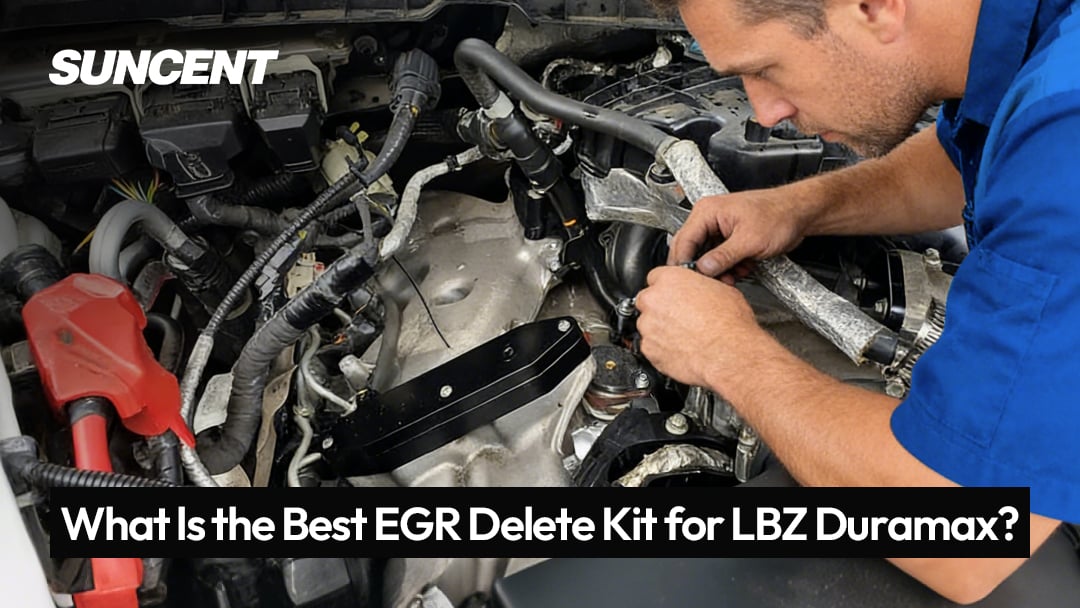
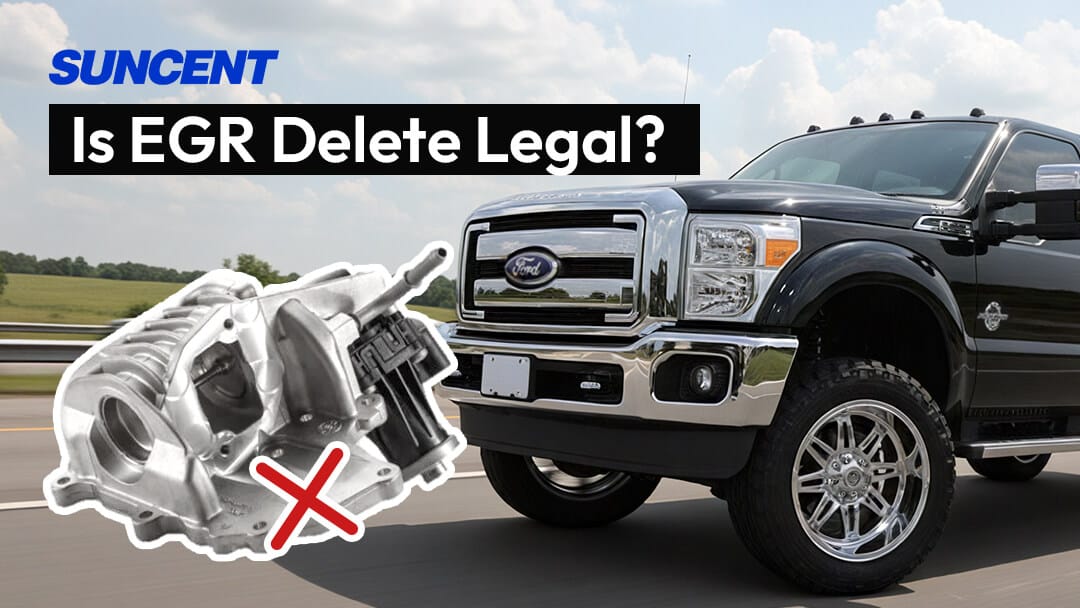
EGR removal refers to disabling, bypassing, or physically removing the EGR valve and related components from a vehicle's engine.
EGR removal kits typically include a blocking plate, tuning software, and sometimes other components.
In simple terms, an EGR delete stops exhaust gas from recirculating back into the intake system. This may reduce intake carbon buildup and EGR-related failures, but it also changes the factory emissions-control setup the vehicle was certified with.
Why Consider EGR Removal?
- Performance improvement : Some drivers report improved throttle response, increased torque, and smoother engine operation.
- Reduced soot buildup : EGR systems can cause carbon deposits, which can clog the intake and restrict airflow.
- Improved fuel economy : Some engines can run more efficiently by eliminating exhaust gas recirculation.
Is It Legal to Delete EGR?
Short answer: In most countries, it is illegal to remove EGR from a vehicle driven on public roads.
Why?
This is because the EGR system is one of the federally mandated emissions devices installed on vehicles. Tampering with, disabling, or removing emission control devices violates environmental laws almost everywhere.
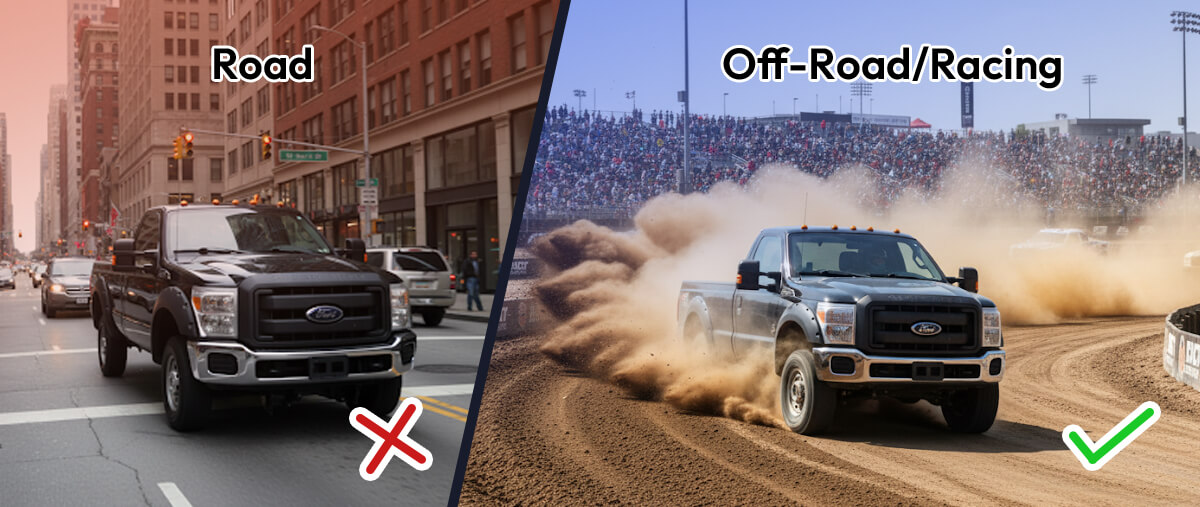
Off-road/racing use: Most EGR removal kits are labeled "Off-road or racing use only." This means the product is not intended for public-road vehicles. It does not mean the modification is automatically legal in every off-road, private, racing, agricultural, or commercial situation.
EGR Delete Legality by Region
Rules vary by country and local enforcement program, but the general pattern is clear: public-road vehicles are usually required to keep factory emissions-control systems installed and working.
| Region | Public-Road Use | Main Risk |
|---|---|---|
| United States | Generally illegal | Clean Air Act tampering, emissions inspection failure, fines, defeat-device concerns |
| Canada | Generally illegal for street vehicles | Federal/provincial emissions compliance, inspection, resale, and enforcement issues |
| United Kingdom | Generally illegal for road use | MOT failure, roadworthiness issues, fines, insurance and resale problems |
| Australia | Generally illegal for road use | ADR emissions compliance, roadworthiness failure, insurance, registration, and penalties |
Regional Laws: Is EGR Delete Legal in My Country?
United States
Federal Law : Removing or modifying emissions equipment is illegal under the Clean Air Act.
State Enforcement: Varies. States like California, Colorado, and New York have very strict inspections and high fines.
Texas : It's still illegal, but enforcement may be less stringent than in California.
Colorado : Due to strict local standards, it's illegal and will inevitably fail an emissions test.
Even in states with fewer emissions inspections, federal emissions law can still apply. If an EGR delete causes readiness monitor problems, visible emissions issues, or a check engine light, the vehicle may also fail state inspection or registration requirements.
Canada
It's illegal nationwide for street vehicles.
Ontario has stricter emissions tests than some other provinces.
In Canada, vehicle and engine emissions are regulated federally and may also be enforced through provincial programs. Removing or disabling EGR equipment on a street-driven vehicle can create compliance, inspection, resale, and enforcement problems.
United Kingdom
Removing EGR on public roads is illegal.
Vehicles with EGR systems removed risk failing an MOT test and facing fines.
In the UK, emissions and roadworthiness rules are especially important at MOT time. If the modification causes warning lights, visible emissions, missing emissions equipment, or a non-compliant exhaust system, the vehicle may fail inspection.
Australia
It's illegal under national emissions regulations.
Authorities will impose significant fines if a vehicle is found driving on public roads with EGR removed.
Australian Design Rules include emissions requirements for road vehicles. Removing or disabling factory emissions equipment can affect compliance, roadworthiness, insurance, registration, and resale.
On-Road vs Off-Road EGR Delete: What’s the Difference?
The biggest legal difference is how the vehicle is used. A public-road vehicle must usually keep its factory emissions-control systems installed and working. A vehicle used only on private property, closed-course racing, farm use, mining, or other non-road applications may be treated differently depending on local rules.
However, "off-road only" is not a magic legal shield. If the vehicle is registered, insured, inspected, sold, or driven on public roads, the EGR delete can still create legal and practical problems.
Is EGR and DPF Delete Legal?
For public-road vehicles, deleting EGR, DPF, DEF, SCR, or other emissions-control systems is generally not legal in many regions. These systems are part of the certified emissions package, and removing one part can affect the compliance of the entire vehicle.
EGR delete and DPF delete are different modifications, but they are often discussed together because diesel emissions systems work as a connected setup. If you are comparing both, read our guide on what DPF delete means on trucks and whether you can delete EGR without deleting DPF.
What Can Happen If You Delete EGR Illegally?
- Failed emissions inspection, smog check, MOT, or roadworthiness test
- Check engine lights or readiness monitor problems
- Registration or resale difficulty
- Warranty or insurance disputes
- Fines or enforcement action from federal, state, provincial, or local authorities
- Higher NOx emissions and environmental impact
Legal Alternatives to EGR Delete
If your main problem is repeated EGR failure, carbon buildup, rough idle, or EGR-related trouble codes, deletion is not the only option. These legal repair paths may solve the problem while keeping the vehicle compliant for road use:
- Diagnose the full EGR system before replacing parts.
- Clean the EGR valve and intake passages if the problem is carbon buildup.
- Replace a failed EGR valve, sensor, vacuum line, gasket, or EGR cooler.
- Use OEM-quality or emissions-compliant replacement parts.
- Repair DPF, DEF, SCR, or sensor issues instead of disabling them.
For troubleshooting before making a decision, see our guides on bad EGR valve symptoms, EGR valve replacement cost, and how to replace an EGR valve.
Weighing the Pros and Cons: Legal Risks of Removing EGR
Potential Advantages (Off-Road/Racing Only)
- Improved fuel economy under certain driving conditions.
- Better throttle response and increased torque.
- Reduced carbon deposits in the intake system.
- Lower long-term maintenance costs.
Legal and practical disadvantages
- Voiding the manufacturer's warranty.
- Inspection failure (MOT, smog, or emissions check).
- Environmental damage from increased nitrogen oxide emissions.
- Resale/trade-in issues due to difficulty legally selling modified vehicles.
- Fines and penalties from the EPA or local authorities.

Conclusion
So, is removing the EGR system legal?
For almost all vehicles driven on public roads, the answer is no - whether you live in the US, Canada, the UK, or Australia. Tampering with emissions equipment is strictly prohibited by law, and violators face severe consequences.
However, if you're a racing enthusiast or use your vehicle solely for off-roading, removing the EGR system can offer performance advantages. Before making any modifications, be sure to confirm the regulations in your area and weigh the legal risks.