 Contents
Contents
- Can You Delete EGR and Keep the DPF?
- Why Some Owners Want to Keep the DPF
- What Happens If You Delete EGR Without Deleting DPF?
- Why Forum Answers Are So Mixed
- Why EGR and DPF Are Usually Better Handled Together
- What EGR, DPF, and SCR Actually Do
- Why a Solo EGR Delete Often Leads to DPF Problems
- Emissions-Intact Tuning Is Not the Same as Delete Tuning
- Before You Delete: Make Sure It Is Really an EGR Problem
- Which Trucks Can Run EGR-Only, and Which Ones Should Delete EGR and DPF Together?
- If You Want a Quiet, Smoke-Free Setup
- How to Choose the Right Tuner
- Why EGR Delete + DPF Delete + Tuner Is the More Complete Solution
- Conclusion: EGR-Only Can Work Sometimes, But EGR + DPF Together Is Usually Smarter
- FAQs
If you own a diesel truck, you have probably heard someone say the first thing to deal with is the EGR system. It is not hard to understand why. Over time, the EGR can send soot and exhaust residue back through the intake, which may lead to carbon buildup, sticky components, EGR cooler issues, and a truck that just does not feel as clean or responsive as it should.
That is why many owners start looking at an EGR delete kit. But once the truck has a DPF, the question gets more complicated. If you are still learning what an EGR delete does, start with our complete EGR delete guide before deciding whether an EGR-only setup makes sense for your truck.
Updated on Jul 2026 by SuncentAuto Staff with clearer notes on EGR-only setups, keeping the DPF, regeneration risks, tuning mismatches, and common owner questions from recent search data.
Yes, you can delete EGR and keep the DPF on some diesel trucks, but it is usually not the best long-term setup. The DPF still needs correct soot-load calculation, pressure monitoring, exhaust temperature data, and regeneration control.
If the tune is not written for an EGR-only setup, the truck may develop irregular regens, DPF full warnings, check engine lights, reduced power, or Limp Mode. For most modern DPF/SCR trucks, EGR, DPF, exhaust, and tuning are better planned together.
Can you delete EGR without deleting DPF?
The honest answer is: sometimes it can be done, but on most modern diesel trucks, it is usually not the best long-term plan. The EGR and DPF are tied together more than many owners realize. If you change one and leave the other working like nothing happened, the truck may run into regen problems, DPF warnings, fault codes, reduced power, or Limp Mode.
For most DPF-equipped trucks, especially newer SCR/DEF trucks, the better route is usually to plan the EGR delete, DPF delete kit, exhaust setup, and tuner together. For legal off-road or competition-only use where emissions removal is allowed, a matched setup is usually cleaner, easier to tune, and more reliable than doing the job halfway.
Can You Delete EGR and Keep the DPF?
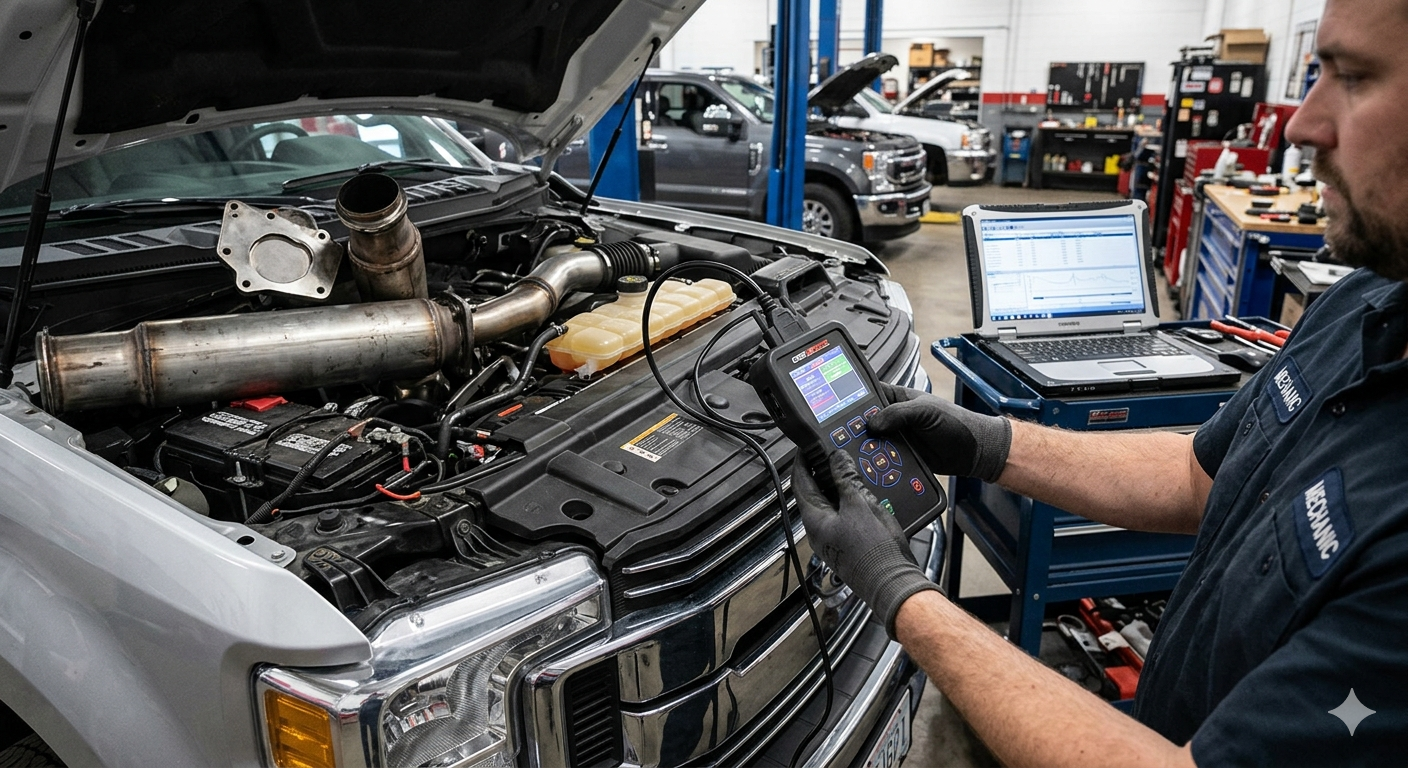
Yes, it may be possible on some trucks to disable, block, or remove the EGR without deleting the DPF. Some owners try it because they want the intake cleaner but do not want to make the truck louder, smellier, or harder to return to stock later.
The problem is that the DPF does not stop working just because the EGR is gone. It still has to trap soot, monitor pressure, calculate soot load, and regenerate when needed. If the tune and sensors are not set up correctly, the DPF may still be collecting soot while the truck is no longer managing it the right way.
That is where many EGR-only setups start to go wrong. The truck may feel fine at first, but later you may see more regen issues, DPF full messages, check engine lights, or power reduction.
Why Some Owners Want to Keep the DPF
Most owners asking this question are not trying to build a race truck. A lot of them are daily-driving their truck, towing with it, or just trying to solve EGR problems without changing everything at once.
They Want the Truck to Stay Quiet
A stock DPF-equipped truck is usually much quieter than a straight-piped truck. If the truck is used for commuting, towing a camper, or driving around town, that matters. Not everyone wants more exhaust sound, drone, or smell.
This is one reason many owners ask whether they can delete the EGR and keep the stock exhaust. They want fewer EGR-related problems, but they do not want the truck to become loud, smoky, or unpleasant to drive every day.
They Want Less Soot in the Intake
This is the main reason owners look at the EGR first. The EGR sends exhaust back into the intake, and that can leave a mess over time. Many owners want to stop that soot from going back into the engine while leaving the rest of the truck close to stock.
That goal makes sense. The issue is that the DPF and the truck’s ECM still expect the rest of the emissions system to behave a certain way. Once the EGR is disabled, the intake side may be cleaner, but the exhaust side still has work to do.
They Want to Avoid a Big Job All at Once
An EGR-only delete can look like the cheaper first step. But if the truck later needs a tuner, DPF pipe, exhaust work, or more troubleshooting, the “small first step” can turn into doing the whole job twice.
That is why many owners who start with only the EGR eventually move toward a complete setup. It is not always because the EGR-only idea made no sense. It is usually because the truck works better when the hardware and tune are planned together from the start.
What Happens If You Delete EGR Without Deleting DPF?
The truck may still run, but the emissions system is no longer working the way the factory designed it. The EGR affects combustion temperature and exhaust behavior. The DPF depends on exhaust temperature, flow, pressure, and ECM logic to know when and how to regenerate.
Once the EGR is removed or disabled, the DPF may still be trying to operate based on stock expectations. That can lead to several common problems:
- More frequent or less predictable regens
- Higher DPF differential pressure
- DPF full warnings
- Check engine lights
- Reduced power or Limp Mode
- More troubleshooting later
Some owners report running an EGR-blocked truck with the DPF still installed and not seeing immediate issues. Others get codes almost right away. Both can be true, because the result depends heavily on the truck, tune, DPF condition, sensors, and how the truck is driven.

Why Forum Answers Are So Mixed
If you read diesel forums, you will see completely different answers. One owner says, “I blocked my EGR and my DPF is still there with no problems.” Another says, “I unplugged the EGR and got codes and reduced power.” That is why this topic gets confusing fast.
Some Trucks Tolerate It Better Than Others
An early 6.7 Cummins, an LMM Duramax, an LML Duramax, and a newer SCR/DEF truck do not all monitor emissions hardware the same way. Some trucks are more sensitive to missing EGR flow, unplugged connectors, pressure readings, or temperature values.
A setup that seems fine on one truck can cause warnings on another. That does not mean one owner is wrong and the other is right. It usually means the trucks, sensors, model years, or tune files are different.
The Tune Makes a Huge Difference
A truck with the wrong tune can have problems even if the hardware seems simple. If the tune expects the EGR to work but the EGR is blocked or unplugged, codes are likely. If the tune disables aftertreatment logic but the DPF is still installed, the filter may not be managed correctly.
This is one of the biggest risks with an EGR-only approach. The DPF may still be physically on the truck, but the tune may not be set up to keep the DPF operating correctly. That can turn a partial delete into a DPF problem.
The DPF’s Condition Matters Too
A clean DPF on a truck that sees highway miles may act very different from an older DPF on a short-trip daily driver. If the filter is already loaded with soot or ash, an EGR-only setup has less room for error.
Short trips, long idle time, stop-and-go driving, and towing can all affect regen behavior. That is why EGR-only should be treated as a compromise, not the preferred long-term plan.
Why EGR and DPF Are Usually Better Handled Together
An EGR-only delete sounds simple because it focuses on one problem: keeping exhaust soot out of the intake. But once a DPF is involved, the exhaust side still has to be dealt with. Leaving the DPF in place while changing the EGR can leave the truck half stock and half modified.
The DPF Still Needs Proper Regen Control
If the DPF stays on the truck, it still needs accurate soot-load calculation, pressure feedback, exhaust temperature data, and regen control. A mismatched tune can leave the DPF collecting soot without being cleaned or monitored correctly.
That is why the tune has to match the actual hardware. If the DPF is still installed, the truck still needs a working plan for pressure monitoring, temperature feedback, soot load, and regen behavior.
Partial Deletes Can Create Sensor and ECM Confusion
Modern diesel trucks rely on a lot of sensor feedback. EGR flow, DPF pressure, EGT, NOx readings, and regen status all matter. When one part of the system is changed and the rest is left stock, the ECM may see values that no longer make sense.
This is why a small hardware change can still trigger big headaches. The truck is not only reacting to the part you removed. It is reacting to the signals it expected to see but no longer can.
A Matched Setup Saves Trouble Later
When the EGR, DPF, exhaust, and tuner are planned together, the truck has one clear setup instead of a mix of stock and modified parts. For legal off-road or competition-only applications, that usually means fewer codes, less guesswork, and a cleaner install path.
Instead of changing one part now, chasing warnings later, and paying for labor twice, a matched setup gives the truck one hardware direction and one tune strategy from the beginning.
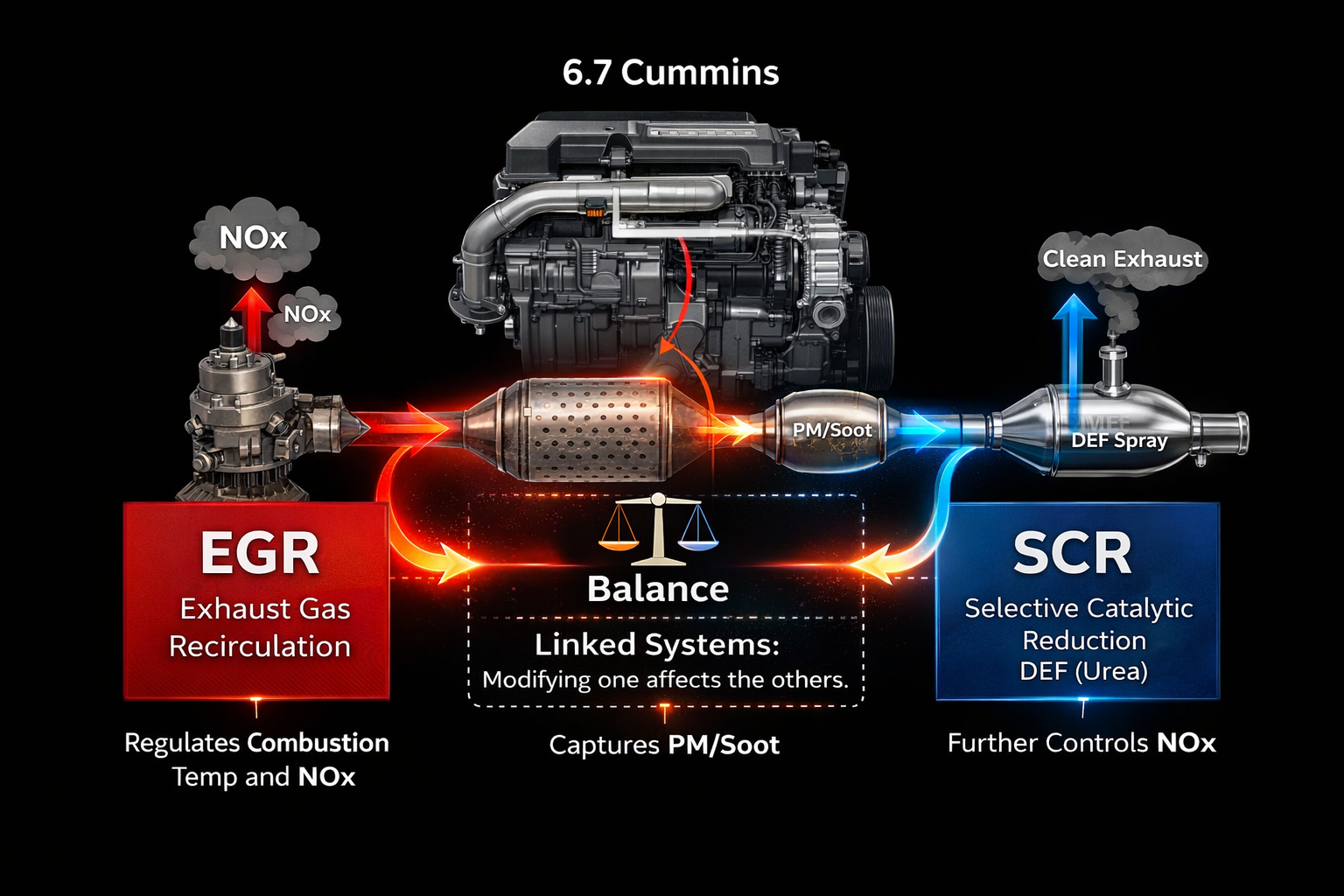
What EGR, DPF, and SCR Actually Do
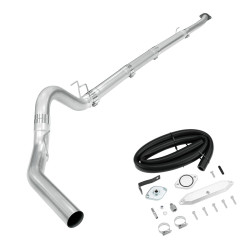
You do not need to be an engineer to understand the basic relationship. The EGR affects what happens inside the engine. The DPF handles soot after combustion. The SCR/DEF system, on newer trucks, helps clean up NOx after the exhaust leaves the engine.
EGR: Keeps Combustion Temperatures Down
The EGR routes a portion of exhaust gas back into the intake to reduce NOx. If you want a deeper breakdown of the valve itself, read our guide on what an EGR valve does. The downside is that soot and residue can build up in the intake system over time. That is why many owners see the EGR as the first problem area.
DPF: Traps and Burns Soot
The DPF catches soot before it leaves the tailpipe. When enough soot builds up, the truck performs a regeneration cycle to burn it off. Regen depends on the right temperature, pressure, flow, and ECM logic.
SCR/DEF: Handles NOx on Newer Trucks
Many newer trucks also use SCR and DEF to reduce NOx. That makes the whole system even more connected. On these trucks, removing or disabling one part can affect more than just that one component.
Why a Solo EGR Delete Often Leads to DPF Problems
At first, an EGR-only change may feel like a win. The intake is cleaner, the engine may feel sharper, and the truck may seem normal. But if the DPF is still in place, the exhaust side can become the next weak point.
1. Regens Can Become Less Predictable
The DPF regenerates based on soot load, pressure, temperature, and driving conditions. If the EGR change affects those conditions, regen behavior may change too.
Some trucks may regen more often. Others may show DPF warnings because the ECM is not seeing the pressure or temperature behavior it expects. Either way, the truck is no longer operating exactly like stock.
2. Backpressure Can Climb
If the DPF loads faster than it can clean itself, backpressure rises. That can make the truck feel sluggish and can put more work on the turbo.
From the driver’s seat, this may feel like the truck has lost its crisp pull. The engine may still run, but it feels like it is working harder than it should.
3. Heat Stress Can Increase
Frequent regens add heat to the exhaust system. Over time, that heat can be hard on sensors, wiring, and nearby components, especially on trucks that tow.
Heat management matters on any diesel truck, but it matters even more when the truck is used for hauling, towing, or long highway pulls.
4. DEF Usage Can Change on SCR Trucks
On SCR/DEF-equipped trucks, changing EGR behavior can change NOx output. Depending on the tune and driving conditions, the DEF system may have to work harder.
That does not mean every truck will react the same way, but it does mean the SCR/DEF side should not be ignored when making EGR changes on newer trucks.
5. Many Owners End Up Doing the Full Setup Anyway
A lot of owners start with only the EGR because it seems cheaper or easier. But after dealing with codes, DPF messages, regen problems, or soft power, many eventually move to a complete EGR delete, DPF delete, and tuner setup.
That is the main reason it is usually smarter to plan the whole system up front instead of treating the EGR and DPF like unrelated parts.
Emissions-Intact Tuning Is Not the Same as Delete Tuning
This is one of the most important points. A tuner is not just a box that adds power. The tune has to match what is actually on the truck. For a deeper look at what can go wrong, read our guide on EGR and DPF delete without a tuner.
Emissions-Intact Tuning
An emissions-intact tune is written for a truck that still has its EGR, DPF, SCR, sensors, and regen system working. It may improve drivability or add mild power, but it still expects the factory emissions hardware to be there and functioning.
That means an emissions-intact tune is not the same thing as a delete tune. If you install a blocker plate, unplug the EGR, or remove parts while running a tune that expects everything to stay active, the truck may set codes or go into reduced power.
Delete Tuning
A delete tune is written for a truck with certain emissions hardware removed or disabled. If you block the EGR while running a tune that still expects EGR flow, the truck may throw codes. If you keep the DPF but run a tune that no longer manages it correctly, the DPF can become a problem.
Some owners also ask about a “DPF delete without removing the DPF.” In most cases, that means tuning out part of the emissions logic while leaving the physical filter installed. That kind of mismatch can be risky because the DPF may remain on the truck but no longer receive proper regeneration control.
This is why an EGR-only setup can be risky. It needs a very specific tune strategy. The tune must know the EGR has changed while still allowing the DPF to monitor soot, pressure, temperature, and regeneration correctly.
Big Tunes and Stock Emissions Hardware Do Not Mix Well
If the factory DPF and SCR are still installed, aggressive power files are usually not a good idea. More fuel and more heat can mean more soot and more regen demand. For a daily driver or tow rig, a mild setup is usually smarter than chasing the biggest horsepower number.
For trucks that still have stock emissions hardware, clean drivability, controlled exhaust temperature, and predictable regen behavior matter more than peak power.
Before You Delete: Make Sure It Is Really an EGR Problem
Not every EGR-related code means the whole system needs to come off. Sometimes the problem is a clogged passage, a bad sensor, a sticking valve, a wiring issue, or soot-packed pressure ports. If you are still diagnosing the truck, compare your symptoms with this guide to bad EGR valve symptoms first.
Check the Simple Failure Points First
Before changing the whole emissions setup, it is worth diagnosing the basics. A restricted EGR passage, clogged pressure port, bad connector, failed sensor, or sticking valve can cause drivability problems and codes.
On some trucks, cleaning or replacing a failed part may solve the issue without changing the DPF, SCR, or tuning strategy. That is especially important for owners who still use the truck on public roads.
Repair May Make More Sense for a Road-Use Truck
If the truck is still used as a normal road vehicle, repairing the failed emissions component may be the better and more compliant choice. You can also compare the repair route with this EGR valve replacement cost guide before deciding whether repair or modification makes more sense.
If the truck is used on public roads, always check local emissions laws before removing or disabling emissions equipment. For more detail, see our guide: Is EGR delete legal?
Which Trucks Can Run EGR-Only, and Which Ones Should Delete EGR and DPF Together?
The answer depends heavily on the emissions generation of the truck. A pre-DPF truck is one thing. A DPF-equipped truck is another. A newer SCR/DEF truck is the most complex of all.
Phase 1: EGR-Only Trucks With No Factory DPF
These trucks are the simplest case. If the truck never had a DPF, then an EGR delete does not create DPF regen issues.
| Brand | Engine Platform | Year | Common Models | DPF | SCR/DEF |
|---|---|---|---|---|---|
| Ford | 6.0 Powerstroke | 2003–2007 | F-250 / F-350 / F-450 Super Duty | No | No |
| Ford | 6.0 Powerstroke Van | 2003–2010 | E-Series Van | No | No |
| Dodge/Ram | 5.9 Cummins | 2004.5–2007 | Ram 2500 / 3500 | No | No |
| GM | LB7 Duramax | 2001–2004 | Silverado / Sierra 2500HD / 3500 | No | No |
| GM | LLY Duramax | 2004.5–2005 | Silverado / Sierra 2500HD / 3500 | No | No |
| GM | LBZ Duramax | 2006–2007 | Silverado / Sierra 2500HD / 3500 Classic / New Body | No | No |
On these older platforms, a solo EGR delete is a much simpler conversation because there is no DPF to regenerate, monitor, or clog.
Phase 2: EGR + DPF Trucks
These trucks already have a DPF, so EGR-only changes become more complicated. The DPF still needs proper regen control and pressure monitoring.
| Brand | Engine Platform | Year | Common Models | DPF | SCR/DEF |
|---|---|---|---|---|---|
| GM | LMM Duramax | 2007.5–2010 | Silverado / Sierra 2500HD / 3500HD | Yes | No |
| Ford | 6.4 Powerstroke | 2008–2010 | F-250 / F-350 / F-450 / F-550 Super Duty | Yes | No |
| Ram | 6.7 Cummins | 2007.5–2012 | Ram 2500 / 3500 / 4500 / 5500 | Yes | No* |
*2007.5–2012 Ram 6.7 Cummins trucks are mainly DPF-based platforms and did not use the same consumer DEF setup seen on later trucks.
For these trucks, deleting both EGR and DPF together is usually the cleaner long-term plan than leaving the DPF to work under changed conditions. If you own a Ram platform, see our 6.7 Cummins EGR delete guide for platform-specific notes before choosing parts.
Phase 3: Modern EGR + DPF + SCR/DEF Trucks
These trucks are the most sensitive to partial changes. The EGR, DPF, SCR, DEF system, sensors, and ECM are all tied together.
| Brand | Engine Platform | Year | Common Models | DPF | SCR/DEF |
|---|---|---|---|---|---|
| Ford | 6.7 Powerstroke | 2011–2024 | F-250 / F-350 / F-450 / F-550 Super Duty | Yes | Yes |
| Ram | 6.7 Cummins | 2013–2024 | Ram 2500 / 3500 / 4500 / 5500 | Yes | Yes |
| GM | LML Duramax | 2011–2016 | Silverado / Sierra 2500HD / 3500HD | Yes | Yes |
| GM | L5P Duramax | 2017–2024 | Silverado / Sierra 2500HD / 3500HD | Yes | Yes |
On these newer trucks, EGR-only is rarely the cleanest answer. A matched EGR, DPF, exhaust, and tuner plan is usually more stable. Ford owners can compare the tradeoffs in our 6.7 Powerstroke EGR delete pros and cons guide. For 2011–2016 GM trucks, this LML Duramax EGR delete kit guide can help narrow down the correct platform-specific setup.
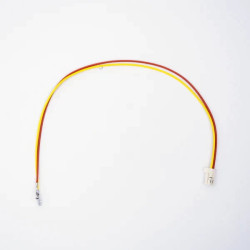
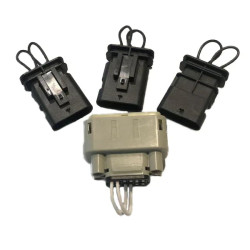
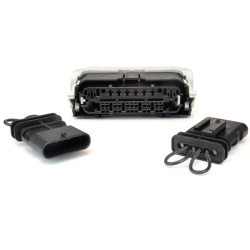
If You Want a Quiet, Smoke-Free Setup
One reason owners hesitate to remove the DPF is because they do not want the truck to be loud, smoky, or unpleasant to drive. That is fair. A daily driver or tow rig should still be comfortable to use.
Sound and Smell Depend on the Whole Exhaust Setup
A full straight pipe, aftermarket downpipe, or unmuffled exhaust can make a big difference in sound and odor. A more conservative setup with a catalytic converter and muffler is usually easier to live with.
In other words, “DPF delete” does not automatically mean the truck has to be as loud or harsh as possible. The final sound depends on the full exhaust configuration.
Daily Drivers Need a Different Approach Than Race Trucks
A truck used for commuting, family use, towing, or long highway trips should be built differently from a competition-only truck. Comfort, heat control, clean drivability, and reliability matter just as much as flow.
For many owners, the right setup is not the loudest one. It is the one that keeps the truck predictable and easy to live with.
Towing Setups Should Prioritize Heat Control
A tow rig needs steady turbo response, controlled EGT, predictable shifting, and stable exhaust behavior. Any EGR, DPF, or tuning change should be planned around how the truck is actually used.
For towing, a matched conservative setup is usually better than a piecemeal approach that causes fault codes, heat problems, or regen issues later.
How to Choose the Right Tuner
The tuner is what makes the hardware work correctly. Before choosing a device, the real question is what kind of tune the truck needs.
For an EGR and DPF setup, the tuner is not just about adding power. It is about making sure the ECM understands the hardware on the truck. That is why the tune type matters more than the logo on the device.
| Tuner Type | Representative Product | Core Features | Best For |
|---|---|---|---|
| Older handheld-style tuning | Mini Maxx | Simple flashing, familiar older-platform workflow | Older diesel platforms and simple flash-and-run setups |
| Custom diesel tuning | EFI Live | Custom tune files, strong diesel tuning ecosystem | Owners working with an experienced diesel tuner |
| Advanced calibration control | HP Tuners | Flexible data and calibration control | Advanced users, DIY tuners, and shops |
| Cloud-based tuning | EZ Lynk AutoAgent | App-based monitoring, cloud file delivery, remote support | Modern diesel owners who want app-based monitoring and remote support |
Mini Maxx: Simple Flashing for Older Diesel Platforms
Mini Maxx-style devices are familiar to many older diesel owners because they offer a straightforward flash-and-run experience. Their strength is simplicity, especially on older supported platforms.
The tradeoff is that they are not always the most flexible choice for newer trucks or owners who need a more customized tuning workflow.
EFI Live: Proven Custom Tuning for Supported Trucks
EFI Live has a strong reputation in the diesel world because it supports custom tuning through experienced tuners. It can be a very good option when the truck, platform, and tuner are all properly matched.
As with any tuning platform, the quality of the tune file matters. A good device with the wrong file is still the wrong setup.
HP Tuners: Flexible Control for Advanced Users and Shops
HP Tuners gives advanced users and shops deeper access to data and calibration control. It can be powerful, but it is not usually the easiest path for a beginner.
This type of tool makes the most sense when the person using it understands the platform and knows how to build or manage the correct calibration.
EZ Lynk: Cloud-Based Tuning and Remote Support
EZ Lynk is popular on newer platforms because it supports app-based monitoring, cloud file delivery, and remote tuner support. For many modern diesel owners, that workflow is easier than older handheld-only systems.
It can also make support easier when the truck owner and tuner are not in the same location.
Important rule: do not change hardware first and figure out tuning later. Confirm the legal use case, choose the correct tune, flash the truck as instructed, and then complete the hardware work according to that setup.
Why EGR Delete + DPF Delete + Tuner Is the More Complete Solution
The point of a complete setup is not just removing more parts. The point is making the truck work under one clear plan.
With only an EGR delete, the intake side may be cleaner, but the exhaust side can still be stuck dealing with DPF regen, backpressure, and factory aftertreatment logic. With a matched EGR delete, DPF delete, exhaust setup, and tuner, the hardware and tune are working toward the same goal.
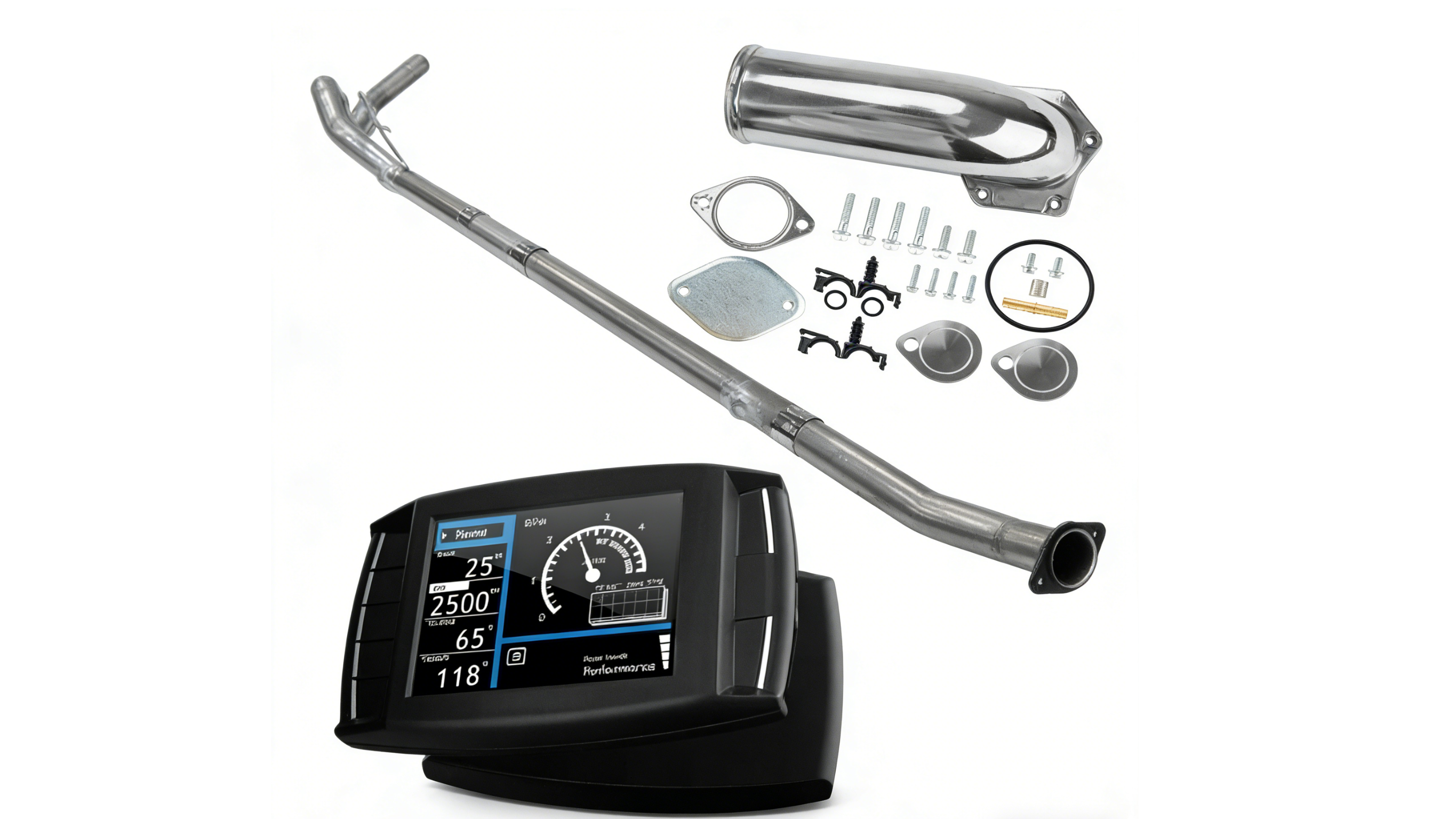
The Truck Has One Clear Hardware Direction
A complete setup avoids the half-stock, half-modified problem. The intake, exhaust, sensors, and tune are all planned around the same goal instead of fighting each other.
The Tune Matches the Parts on the Truck
When the tune is written for the actual hardware configuration, the ECM is not trying to manage parts that are missing or ignore parts that are still installed. That makes the truck easier to diagnose and easier to live with.
It Reduces Repeat Labor and Troubleshooting
A piecemeal approach often means buying one part now, chasing codes later, then paying for more parts, more labor, and more downtime. A matched setup can reduce that back-and-forth.
For legal off-road or competition-only applications where emissions removal is allowed, planning the EGR, DPF, exhaust, and tuner together is usually more stable than changing one piece at a time.
Conclusion: EGR-Only Can Work Sometimes, But EGR + DPF Together Is Usually Smarter
So, can you delete EGR without deleting DPF? On some trucks, yes, it may be possible. Some owners try it because they want a cleaner intake while keeping the truck quiet, smoke-free, and close to stock.
But for most DPF-equipped diesel trucks, EGR-only is usually a compromise. The DPF still needs proper regen control, pressure monitoring, and tuning support. If the truck’s hardware and tune do not match, the result can be codes, DPF warnings, reduced power, or more troubleshooting later.
If your truck never had a DPF, a solo EGR delete is a much simpler conversation. But if your truck has a DPF or SCR/DEF system, the better plan is usually to handle the EGR, DPF, exhaust, and tuner together. Done correctly and legally for the right use case, a matched setup is usually more stable than doing the job one piece at a time.