 Contents
Contents
- What Is a 6.4 Powerstroke DPF Delete Kit?
- Is the DPF Actually the Problem?
- Could Cleaning or Repair Make More Sense First?
- Why Do 6.4 Powerstroke Owners Focus on the DPF System?
- What Changes Can You Realistically Expect?
- Race Pipe vs. Downpipe-Back: Which One Makes More Sense?
- 4-Inch vs. 5-Inch Downpipe-Back: Which Fits Your Truck Better?
- Aluminized vs. 409 vs. 304 Stainless: Which Material Is Worth Paying For?
- Fitment Questions to Answer Before Installation Day
- Before Buying the Pipe, Understand the Tuning Cost Structure
- What's Actually Included in the Price?
- How Long Should You Plan for Installation?
- How Much Does the Whole DPF-Side Project Cost?
- Suncent 5-Inch Downpipe-Back DPF Delete Exhaust
- Suncent 4-Inch DPF & CAT Race Pipe
- Quick Decision: Race Pipe, 4-Inch, or 5-Inch?
- What a DPF-Side Exhaust Change Will Not Fix
- Check Every Part Before Installation Day
- Legal and Inspection Considerations
- Which 6.4 Powerstroke DPF Delete Kit Makes the Most Sense?
- FAQs
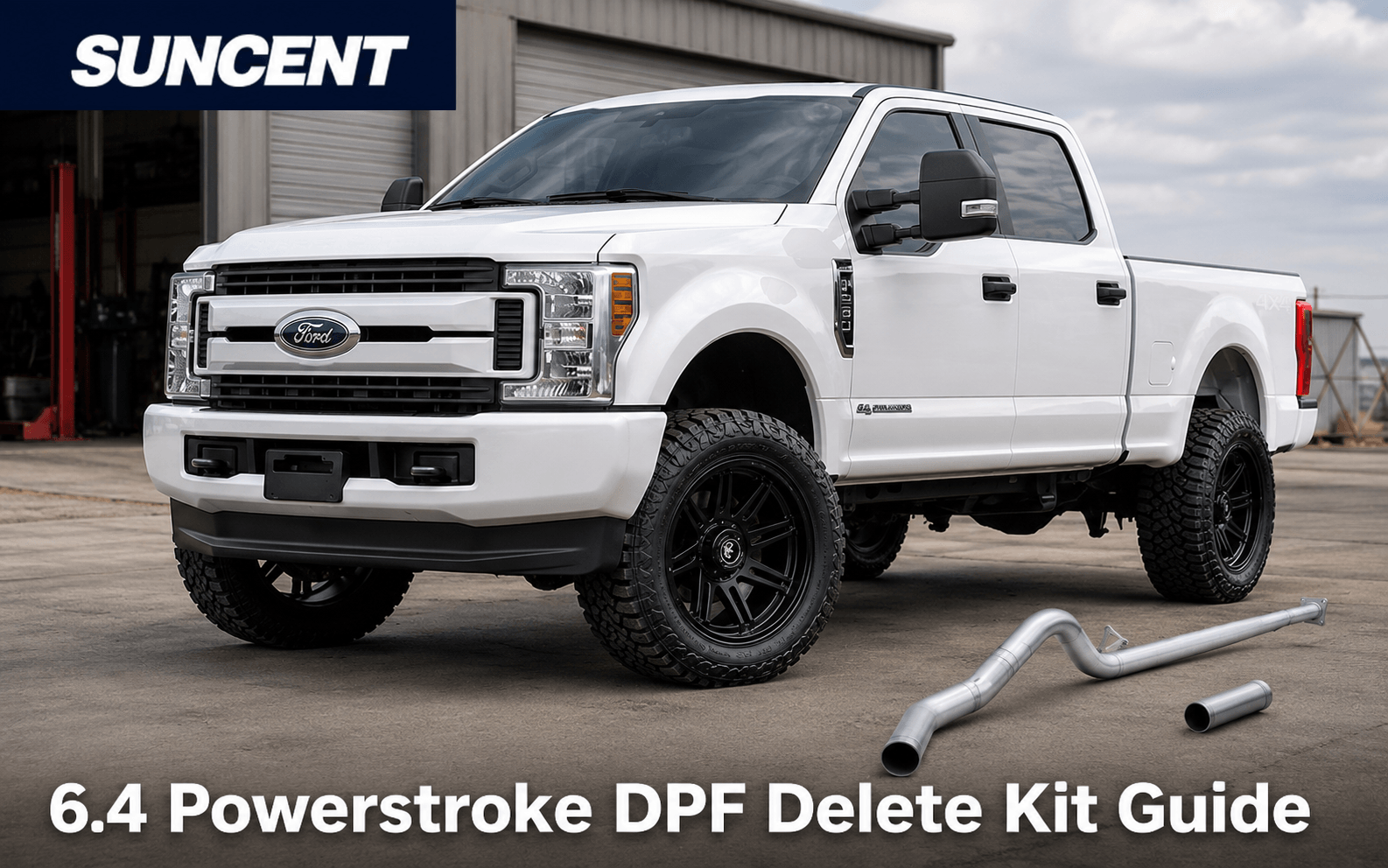
If you're shopping for a 6.4 Powerstroke DPF delete kit, you've probably already narrowed the project down to the DPF and exhaust side of your 2008–2010 Ford Super Duty. The next decision is more specific: Do you need a race pipe, a full downpipe-back exhaust, a 4-inch system, or a 5-inch system?
Pipe diameter is only part of that decision. The condition of the exhaust already on your truck, cab and bed configuration, available clearance, highway noise, installation access, tuning platform, and what is included in the kit can all change which option makes the most sense.
This guide focuses specifically on the DPF/exhaust side of the 6.4L Powerstroke . If you're still deciding between DPF, EGR, and complete-kit options, start with the 6.4 Powerstroke delete kit comparison .
What Is a 6.4 Powerstroke DPF Delete Kit?
The factory diesel particulate filter traps particulate matter in the exhaust. As soot accumulates, the truck uses regeneration cycles to raise exhaust temperature and burn part of the soot stored in the filter.
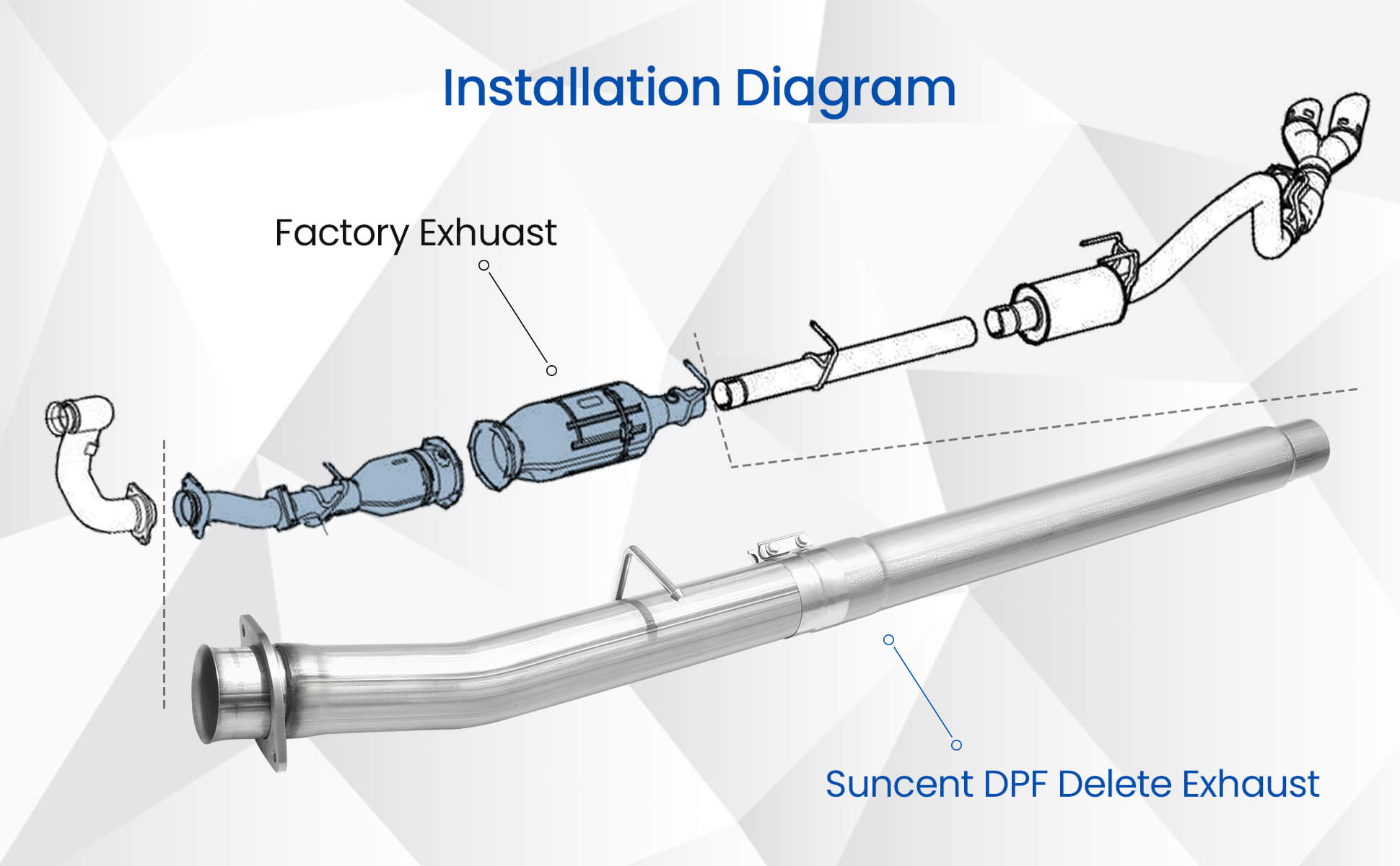
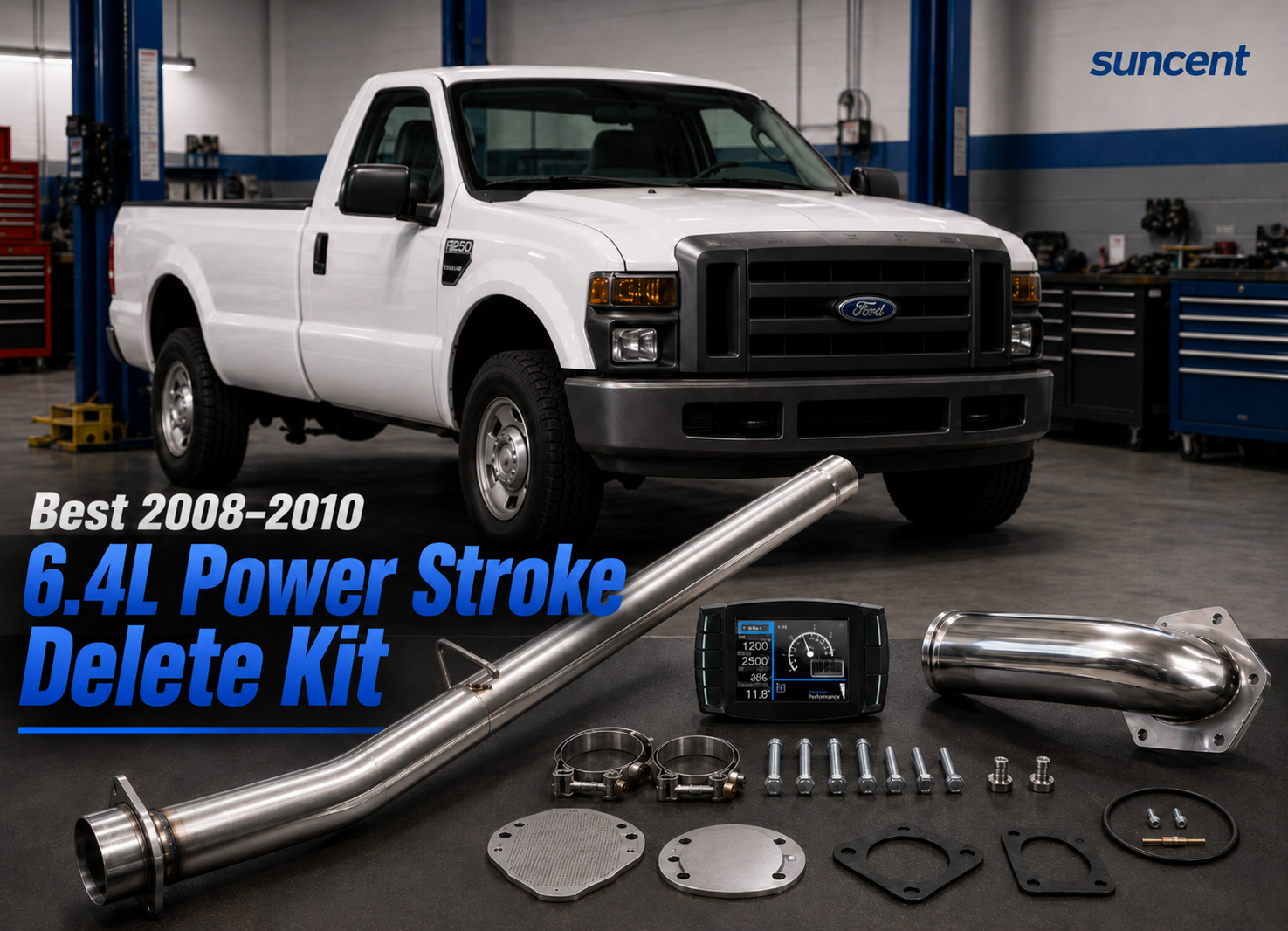
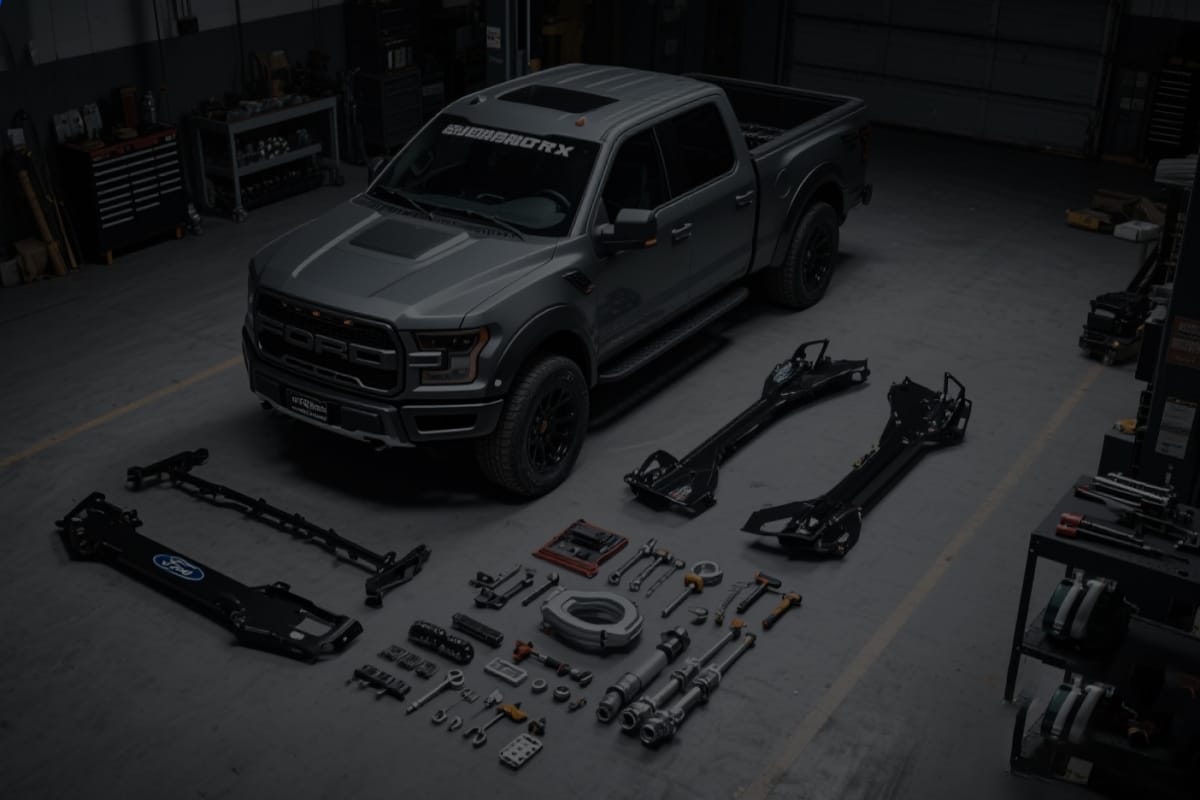
A 6.4 Powerstroke DPF delete kit generally refers to aftermarket exhaust hardware that replaces either the factory DPF/CAT section or a much larger section of the exhaust.
Replaces primarily the DPF/CAT mid-section while retaining more of the existing exhaust.
Retains the factory downpipe but replaces most of the exhaust behind it toward the rear outlet.
Is the DPF Actually the Problem?
Many 6.4 owners begin researching DPF hardware after repeated regeneration, restriction warnings, reduced power, expensive filter-service quotes, or recurring aftertreatment-related faults.
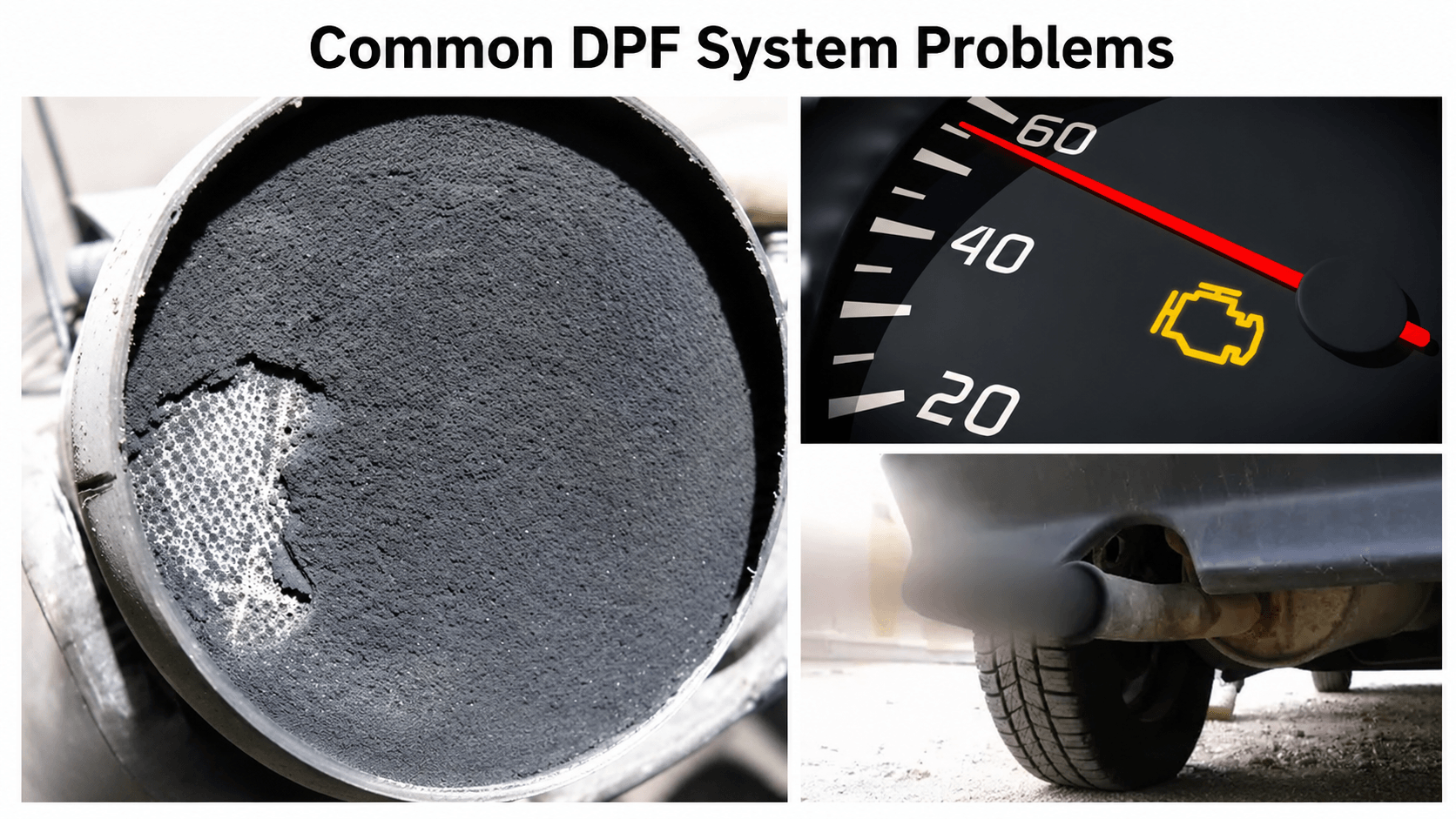
But a DPF warning or weak acceleration does not prove that the filter itself is the root cause. Pressure and temperature sensors, exhaust leaks, turbo issues, fueling problems, cooling-system faults, and other common 6.4 Powerstroke problems can create overlapping symptoms.
- Active trouble codes that have not been identified
- Coolant loss or overheating
- Hard starting, misfires, or abnormal smoke
- Turbo or upstream exhaust-leak symptoms
- An unknown tune or unknown previous-owner modifications
- An exhaust system that has already been cut, welded, or repaired
Could Cleaning or Repair Make More Sense First?
A DPF-related fault does not automatically mean the filter is beyond recovery. If the filter itself is still serviceable, professional cleaning or repairing the problem that caused excessive soot loading may cost less than replacing major exhaust components.
If you're still comparing those options, see the DPF cleaner vs. professional cleaning vs. delete kit guide .
Why Do 6.4 Powerstroke Owners Focus on the DPF System?
Short trips, low-speed driving, interrupted regeneration cycles, and heavy soot loading can increase how often the truck needs to regenerate.
Repeated diagnosis, professional cleaning, failed sensors, and eventual filter replacement can become a significant expense on an older 6.4L truck.
A heavily restricted DPF increases exhaust-side resistance and can become more noticeable while towing, climbing grades, or operating under sustained load.
DPF pressure sensors, exhaust-temperature sensors, wiring, and related faults can trigger warnings that still need diagnosis before assuming the filter failed.
What Changes Can You Realistically Expect?
Fuel economy, throttle response, exhaust temperature, and power are often discussed when owners compare DPF exhaust systems. The amount of change depends heavily on the truck's condition and the calibration being used.
How Much Can MPG Improve?
Some 6.4 Powerstroke owners report roughly 1–3 MPG of improvement, while others see little or no measurable fuel-economy change.
A truck that previously regenerated frequently or had substantial DPF restriction has more opportunity for a noticeable before-and-after difference than a truck whose factory aftertreatment system was already operating normally.
Better fuel economy should therefore be treated as a possible benefit rather than a guaranteed return on investment.
How Much Power Comes From the Exhaust Itself?
Reducing a severe exhaust restriction can change turbo and throttle response, but the large horsepower increases commonly associated with modified 6.4 trucks are heavily influenced by the engine calibration.
A pipe-only exhaust change and a truck running a much more aggressive calibration should not be compared as though the exhaust pipe created the entire horsepower difference.
What Happens to DPF-Related Maintenance?
On applications where the modification is legally permitted, removing the DPF removes that filter's regeneration, cleaning, and eventual replacement from the maintenance equation.
It does not eliminate turbo, injector, fuel-system, cooling-system, valvetrain, or other 6.4 Powerstroke maintenance.
Race Pipe vs. Downpipe-Back: Which One Makes More Sense?
Before comparing pipe diameter, look underneath the truck and decide whether the existing rear exhaust is worth keeping.
| Your Situation | Race Pipe | Downpipe-Back |
| Rear exhaust is still in good condition | Usually the more efficient choice. You keep usable exhaust hardware instead of replacing it. | More parts and labor without much benefit if the remaining exhaust does not need replacement. |
| Rear exhaust is heavily rusted or damaged | May leave another exhaust repair for later. | More logical. More of the aging exhaust is replaced in the same project. |
| Previous owner modified the exhaust | Both connection points need to match the remaining system. | Can eliminate more questionable old pipe, but fitment still needs verification. |
| Downtime matters | Fewer sections normally mean less exhaust work. | More pipe sections must be positioned, aligned, and supported. |
| You want to change the exhaust sound | Retains more of the existing system, so the change is more limited. | Replacing most of the rear exhaust creates a more noticeable change in exhaust character. |
4-Inch vs. 5-Inch Downpipe-Back: Which Fits Your Truck Better?
A larger pipe changes more than theoretical airflow. It also changes the space required under the truck, exhaust tone, potential cabin noise, and the amount of clearance available around nearby components.
Suncent's 4-inch downpipe-back exhaust uses approximately 101.6 mm (4-inch) main tubing, while the 5-inch downpipe-back exhaust uses approximately 127 mm (5-inch) main sections.
The 5-inch tubing is therefore 25.4 mm (1 inch) wider overall. If both systems follow a similar pipe centerline, that means roughly 12.7 mm (0.5 inch) less clearance on each side of the main pipe.
| What Matters | Suncent 4-Inch Downpipe-Back | Suncent 5-Inch Downpipe-Back | What the Difference Means |
| Main pipe diameter | 101.6 mm / 4" | 127 mm / 5" | The 5-inch main tubing is 25.4 mm wider overall. |
| Space around the pipe | Gives more room around nearby chassis components. | Uses about 12.7 mm more radial space on each side when routed on a similar centerline. | The difference matters most in tight routing areas or on trucks that already have non-stock exhaust or chassis modifications. |
| Front connection | Nominal 4-inch system. | The front connection section is approximately 101.6 mm before transitioning into the larger 127 mm main sections. | A 5-inch system does not mean every point in the exhaust path is 5 inches. |
| Material | T409 stainless steel, 2 mm wall. | T409 stainless steel, 2 mm wall. | Material is essentially a tie between these two Suncent systems, so pipe size and fitment should drive the decision instead. |
| Listed vehicle fitment | 2008–2010 F-250/F-350 Super Duty 6.4L; not Cab & Chassis. | 2008–2010 F-250/F-350 Crew Cab short-bed or long-bed; not Cab & Chassis. | The 5-inch product has a more specific cab/bed requirement. Verify the exact truck before ordering. |
| Exhaust character | Deep, aggressive straight-through diesel sound, but generally less low-frequency volume than a comparable 5-inch system. | Deeper and lower-frequency exhaust character. | Buyers choosing 5-inch primarily for sound should consider how much highway driving and towing they actually do. |
| Long-distance comfort | More conservative starting point when you want exhaust sound without making it as dominant during long highway trips. | Better suited to buyers who intentionally want a deeper exhaust presence. | Cabin comfort also depends on engine RPM, load, cab/bed length, exhaust exit, and whether a muffler is used. |
| Future modifications | Suitable for many trucks without the extra packaging requirements of a 5-inch pipe. | Gives a larger main exhaust section if future power and airflow changes provide a real reason to use it. | Do not choose 5-inch only because the number is larger. Match the exhaust to the complete build. |
| Best fit for | Daily use, highway mileage, tighter clearance, and buyers who still want a complete downpipe-back exhaust. | Buyers who specifically want a larger exhaust layout and deeper sound and have confirmed vehicle fitment. | The better choice depends on how the truck is actually used. |
Will 4-Inch vs. 5-Inch Affect Driving Comfort?
It can affect sound comfort, but it does not change suspension ride quality.
A larger exhaust tends to produce a deeper, lower-frequency note. During long highway drives or towing under sustained load, that sound can become more noticeable inside the cab.
If your truck regularly spends hours at 65–75 mph and you prefer a quieter cabin, the 4-inch option is the more conservative starting point. If a deeper diesel exhaust tone is one of the main reasons you're replacing the entire exhaust, the 5-inch system becomes easier to justify.
Aluminized vs. 409 vs. 304 Stainless: Which Material Is Worth Paying For?
Exhaust material matters most when you connect it to climate, corrosion exposure, and how long you plan to keep the truck.
| Material | Where It Makes Sense | What You Are Paying For |
| Aluminized Steel | Dry climates, lower-budget projects, or shorter ownership plans. | Lowest initial cost, with less corrosion resistance than stainless options. |
| T409 Stainless | Strong value choice for many daily, tow, work, and off-road trucks. | Better corrosion resistance without moving all the way to premium T304 pricing. |
| T304 Stainless | Long-term ownership, coastal environments, heavy humidity, or frequent road-salt exposure. | Higher corrosion resistance at a higher purchase price. |
If you live where winter roads are heavily salted and expect to keep the truck for years, paying more for corrosion resistance has a stronger financial argument than it does for a dry-climate truck that may be sold soon.
The Suncent 4-inch and 5-inch downpipe-back systems compared above both use 2 mm T409 stainless steel, so material does not need to decide between those two products.
Fitment Questions to Answer Before Installation Day
These trucks are now more than 15 years old, and many no longer have a completely factory exhaust system. Verify the actual truck rather than relying only on “2008–2010 6.4 Powerstroke” in the product title.
Before Buying the Pipe, Understand the Tuning Cost Structure
Tuning can become one of the largest parts of the project budget, and the price depends heavily on which tuning route you choose.
| Tuning Route | What You Are Paying For | What to Confirm Before Buying |
| Mini Maxx V1 / V2 | A physical tuner/display with its supported tuning ecosystem. | Confirm V1 vs. V2, 6.4L compatibility, what calibration capability is already included, and whether additional service is required. |
| EZ LYNK | AutoAgent hardware plus separately delivered vehicle-specific tuning files and support. | Check whether the advertised price is device-only or includes tune files, support duration, revisions, and transmission tuning where applicable. |
| Custom / Remote Tuning Provider | Vehicle-specific calibration work and tuner support rather than simply another dashboard device. | Ask whether the quote includes the first file only or also revisions, data review, transmission calibration, and continued support. |
If the exhaust hardware and ECU configuration do not match, the truck can experience warning lights, fault codes, or drivability problems. Read what can happen when emissions hardware and ECU calibration do not match before ordering.
What's Actually Included in the Price?
A lower advertised price can become an expensive project if important parts or tuning services are still missing.
- Is it a race pipe or full downpipe-back exhaust?
- How many exhaust sections are included?
- Are clamps, gaskets, flange hardware, and hangers included?
- Is tuner hardware included or separate?
- Are the actual tune files included?
- How long does tuning support last?
- Does the kit match the truck's current exhaust configuration?
If you've already decided you want exhaust, EGR components, and tuning bundled into one larger package, compare those options in the 2008–2010 6.4 Powerstroke complete kit guide .
How Long Should You Plan for Installation?
A clean factory truck on a lift and a rust-belt truck on jack stands can turn the same exhaust installation into very different projects.
A reasonable planning range when factory-compatible connections are accessible and old hardware comes apart normally.
More pipe sections need to be positioned, aligned, clamped, and supported. Leave additional time for cutting or previous exhaust work.
What Can Turn It Into an All-Day Job?
Check the SuncentAuto installation guides before ordering so you can review the required tools, exhaust layout, and expected workload before taking the truck apart.
How Much Does the Whole DPF-Side Project Cost?
The exhaust pipe is only one part of the total budget.
The tuning route can change the total significantly. Mini Maxx V1/V2, EZ LYNK hardware plus tune files, and custom remote tuning are different products and services, so comparing only the device price is misleading.
Shop labor can also increase quickly if the exhaust has seized hardware, previous welding, damaged hangers, or requires additional fitting work. This is why an inexpensive race pipe can still become a much larger project once tuning and labor are included.
For broader cost ranges, see the diesel delete cost guide .
Suncent 5-Inch Downpipe-Back DPF Delete Exhaust
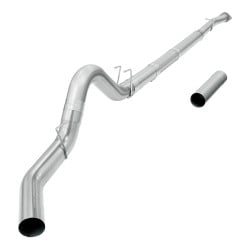
The 5-inch downpipe-back configuration makes the most sense when you already want to replace most of the exhaust behind the factory downpipe and specifically want the larger 5-inch main exhaust sections and deeper exhaust character.
Pay particular attention to fitment before ordering because the 5-inch version has specific cab and bed requirements. The larger main tubing also uses more physical space under the truck than a 4-inch system.
Suncent 4-Inch DPF & CAT Race Pipe
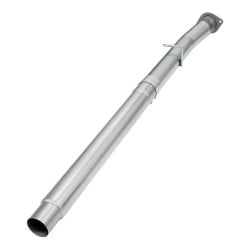
The 4-inch race pipe solves a different problem from either downpipe-back system. It replaces the DPF/CAT section while allowing more of a healthy existing exhaust to remain in place.
That makes it attractive when the rear exhaust is still usable, lower parts cost matters, and there is no reason to replace the rest of the system during the same project.
Quick Decision: Race Pipe, 4-Inch, or 5-Inch?
The existing rear exhaust is still healthy and you only need to address the DPF/CAT section.
You want to replace most of the exhaust but still value additional clearance, a more conservative exhaust character, and simpler packaging.
You deliberately want the larger exhaust layout and deeper sound, and your exact truck configuration provides the required fitment and clearance.
What a DPF-Side Exhaust Change Will Not Fix
DPF-side hardware does not repair an unrelated turbo problem, injector fault, cooling-system issue, damaged piston, valvetrain problem, upstream exhaust leak, or another mechanical failure.
This is particularly important on a high-mileage 6.4. Diagnose existing engine problems before assuming a new exhaust system will solve them.
Keep the Original Hardware If Reversibility Matters
If future resale, inspection, registration, legal compliance, or returning the truck to factory configuration could matter, decide how the original components will be stored before work begins.
Check Every Part Before Installation Day
Open every parcel and compare the contents with the order before taking the truck apart. Multi-section exhaust systems can arrive as several pieces, and discovering a missing clamp or pipe after installation has started can create unnecessary downtime.
Review SuncentAuto's warranty and return conditions before installation. Return eligibility can change once a product has been used or partially installed.
If the truck is already booked into a shop, check the shipping and delivery policy before scheduling the work.
Legal and Inspection Considerations
Removing or disabling required emissions-control equipment on a vehicle operated on public roads can violate U.S. federal law, and state inspection or registration requirements may create additional restrictions.
Confirm how and where the truck will be used before purchasing hardware or tuning. For a detailed explanation, see the current diesel delete legality guide .
Which 6.4 Powerstroke DPF Delete Kit Makes the Most Sense?
The right 6.4 Powerstroke DPF delete kit starts with the condition of your truck rather than the largest pipe available.
If the rear exhaust is still healthy, a race pipe avoids replacing usable parts. If the existing exhaust is rusted, damaged, modified, or already needs replacement, a downpipe-back system becomes easier to justify.
Between 4-inch and 5-inch downpipe-back systems, the 4-inch option gives you more clearance and a more conservative exhaust character. The 5-inch option provides larger main tubing and a deeper sound, but also takes up more room and has more specific fitment requirements.
Finally, compare the complete project—not just the pipe: fitment, exhaust condition, tuning path, included hardware, installation time, total cost, and how the truck is actually used.
Browse SuncentAuto's DPF delete kit and verify your exact truck configuration before ordering.