 Contents
- Before Cleaning: Is Your DPF Clogged with Soot or Ash?
- Stage 1: Light Blockage and Routine Prevention (Fuel Additive Method)
- Stage 2: Moderate Blockage (On-Car Chemical Cleaning)
- Stage 3: Severe Blockage and Professional Service (Deep Off-Car Cleaning)
- Cost and Decision Guide: DIY vs. Professional Service
- How to Choose a Reliable Local DPF Cleaning Service
- Daily Maintenance and Best Practices
- Conclusion
- FAQs
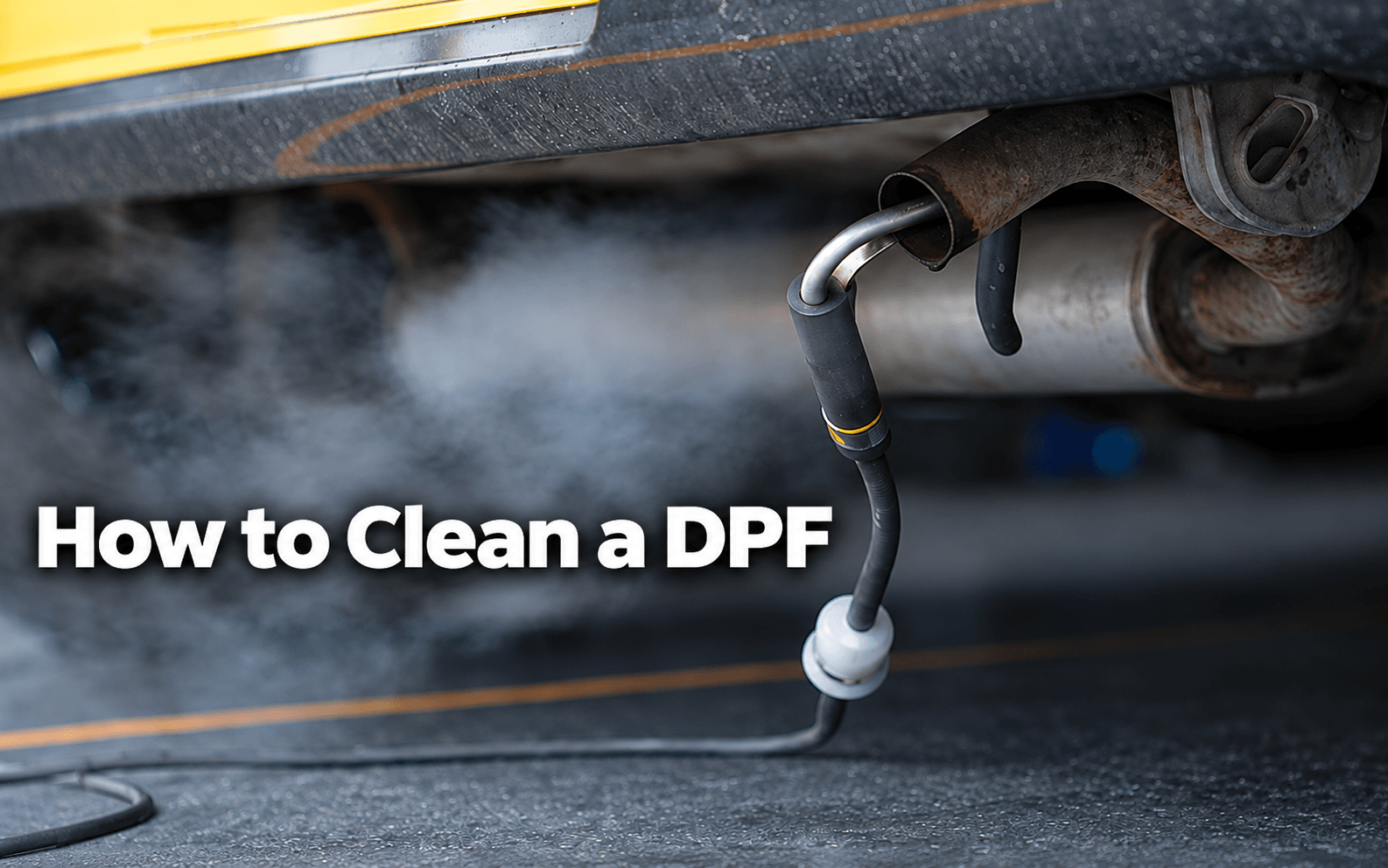
Modern diesel vehicles are commonly equipped with a Diesel Particulate Filter (DPF) to capture harmful particles in the exhaust. However, many owners frequently make short trips or commute in the city, so the exhaust may not reach the high temperature of 600°C required for normal soot combustion. As a result, the DPF can become clogged, the dashboard warning light may come on, engine power may drop, and fuel consumption may rise sharply.
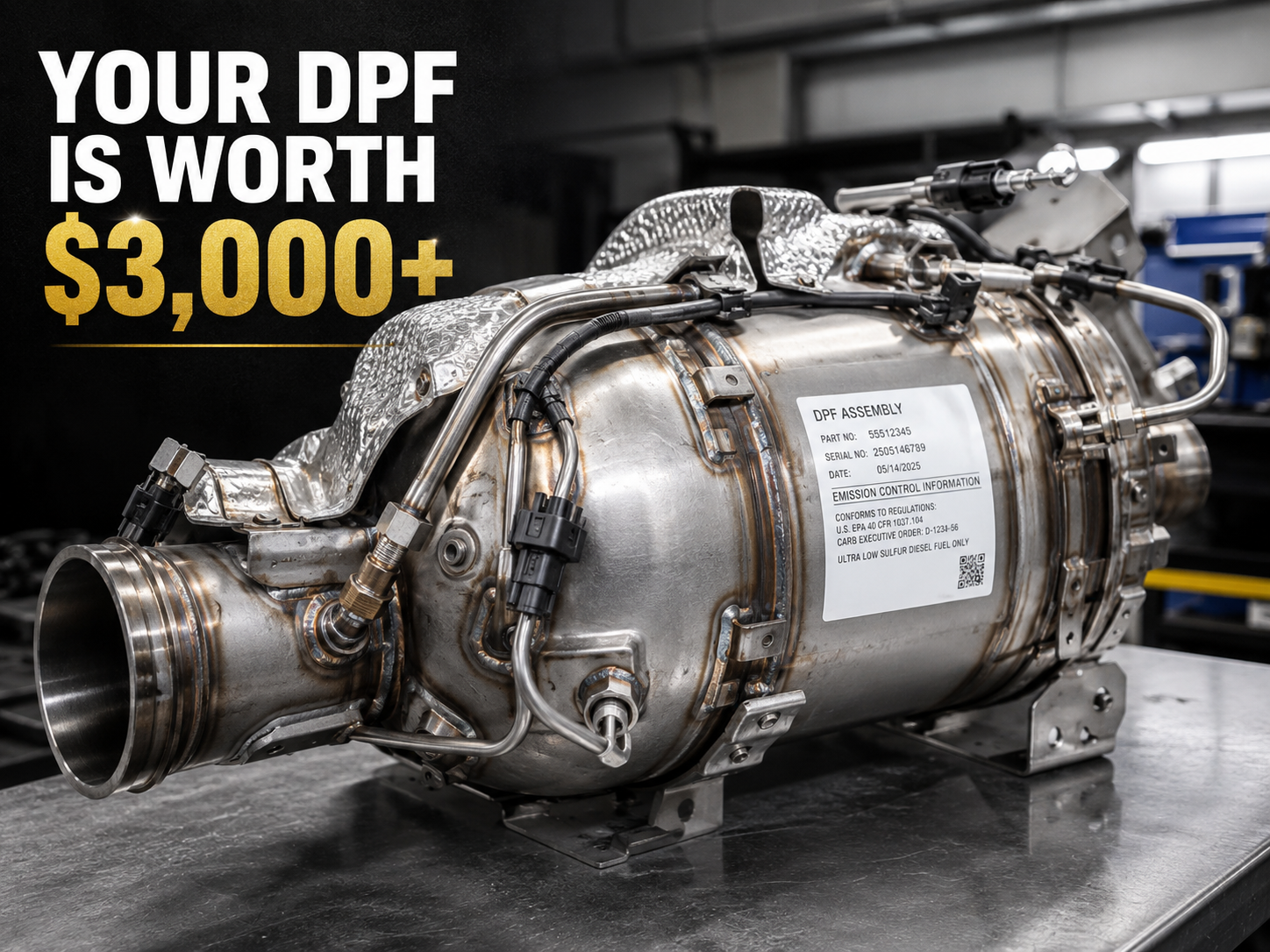
When a DPF becomes clogged, blindly replacing it may cost as much as $1500 - $4000+. This article explains how to choose the most effective and cost-efficient DPF cleaning and maintenance solution based on the severity of the blockage.
📌 Executive Summary
A clogged DPF does not necessarily need to be replaced with an expensive new part. Depending on the severity of the blockage, there are three main solutions: additive-based prevention (light blockage), chemical cleaning without removal (moderate blockage), and deep off-car cleaning after removal (severe blockage). Regular maintenance and timely intervention can eliminate the need to replace the filter in more than 90% of cases.
Comparison of 3 DPF Cleaning Methods
| Method | Severity / Signs | How It Works | Estimated Cost | Difficulty |
|---|---|---|---|---|
| Fuel Additive | Light (0%–40%); warning light off or newly on | Add to fuel to lower soot combustion temperature to 400°C–450°C | 15–30 | Easy; add to fuel tank |
| On-Car Chemical Flush | Moderate (40%–70%); warning light stays on or regeneration fails | Inject cleaner through a sensor port, then drive to regenerate the filter | 50–150 | Moderate; requires sensor removal or a repair shop |
| Off-Car DPF Cleaning | Severe (>70%); limp mode or heavy ash buildup | Remove the DPF for professional cleaning | 250–600 | Professional service |
Before Cleaning: Is Your DPF Clogged with Soot or Ash?
If you are searching for how to clean a DPF, first determine whether the filter has accumulated soot or ash.
The Difference Between Soot and Ash
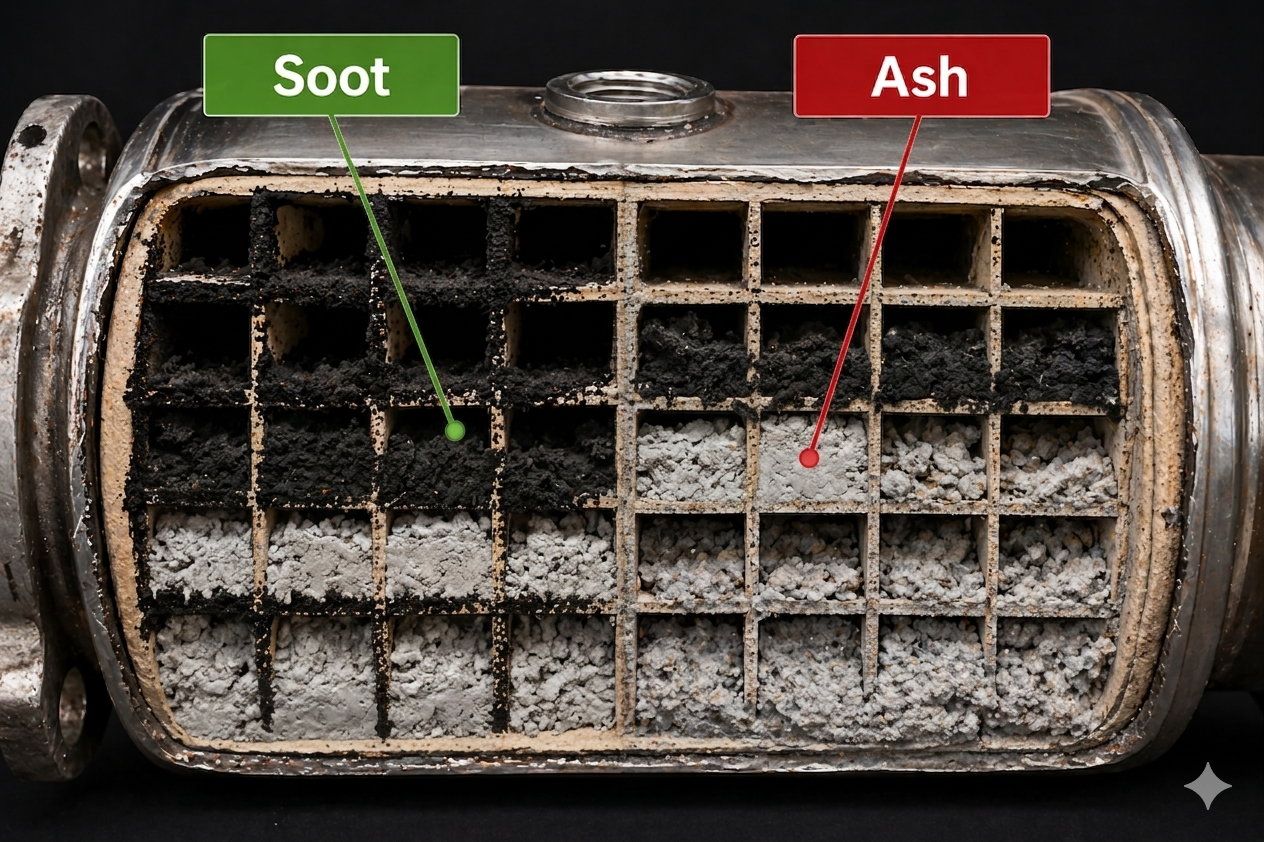
DPF blockages mainly consist of two types of deposits:
- Soot: Unburned carbon particles produced by incomplete diesel combustion. High-temperature combustion, or regeneration, can convert soot into harmless carbon dioxide.
- Ash: Noncombustible metal residue left after engine oil additives burn. It cannot be burned off through regeneration and must be removed through physical or machine cleaning once it reaches a certain level.
Common Early Signs of a Clogged DPF
- The DPF warning light or Check Engine Light illuminates on the dashboard.
- The vehicle enters limp mode, with weak acceleration and limited engine speed.
- Fuel consumption increases noticeably, or the automatic start-stop function stops working.
- Regeneration is triggered frequently, sometimes accompanied by an unusual exhaust odor or black smoke.
Stage 1: Light Blockage and Routine Prevention (Fuel Additive Method)
Suitable for: A DPF blockage level of 0%–40%, when the warning light is off or has just come on. This method is suitable for routine preventive maintenance.
How Fuel Additives Work
Fuel additives commonly contain active ingredients based on cerium or iron compounds. Their catalytic ingredients can lower the natural soot combustion temperature from around 600°C to 400°C–450°C, making passive regeneration more likely at lower exhaust temperatures or helping regeneration finish more completely. This means the vehicle may be able to trigger and complete “passive regeneration” during ordinary stop-and-go or moderate-speed driving.
When an Additive May Help
- Preventive maintenance for vehicles used for frequent short trips: It can help passive regeneration complete more consistently before soot builds up significantly.
- After cleaning: Once foam cleaning or professional cleaning has addressed an existing blockage, an additive may help slow the next buildup of soot.
- For vehicles already experiencing significant torque limitation or persistently high backpressure, an additive should not be the first step. Determine the type of blockage first.
Detailed Steps
Step 1. Add before refueling: Following the product's stated ratio—typically 100 ml for every 50 liters of diesel—pour the additive directly into the fuel tank.
Step 2. Fill the tank with diesel: This helps the additive mix thoroughly with the fuel.
Step 3. Drive to support regeneration: Drive at a steady engine speed of 2,000–2,500 RPM on a highway for 20–30 minutes to encourage soot to burn inside the filter.
Stage 2: Moderate Blockage (On-Car Chemical Cleaning)
Suitable for: A DPF blockage level of 40%–70%, when the warning light stays on and driving at highway speeds alone can no longer trigger regeneration.
Method 1: DIY Foam Spray
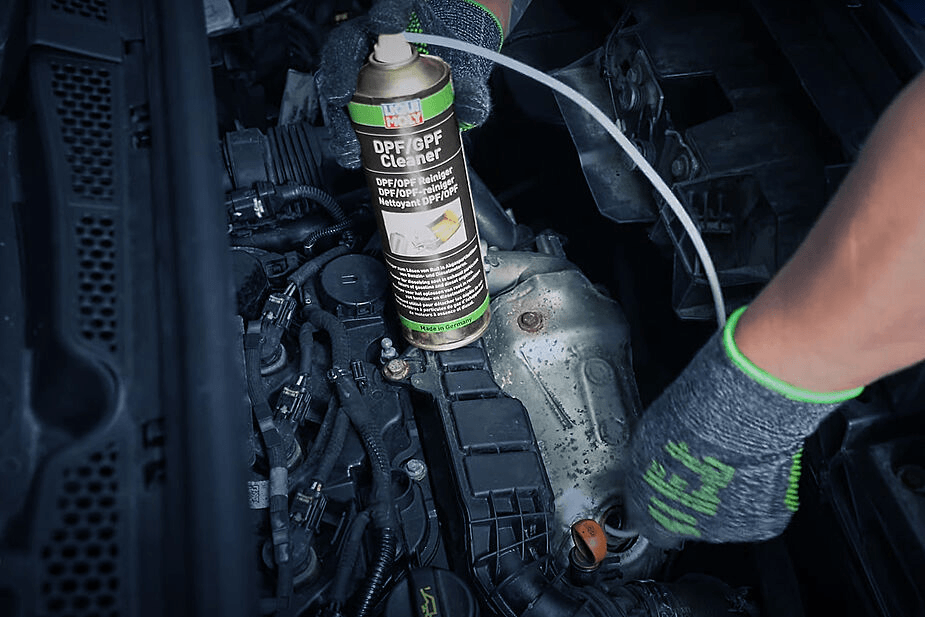
Foam cleaner penetrates the honeycomb channels to loosen soot and some organic deposits. A subsequent regeneration cycle burns off the loosened soot. This method does not require removing the entire DPF assembly and is suitable for owners with some hands-on experience.
Step 1: Let the engine cool. Locate and carefully remove the pressure sensor or temperature sensor at the front of the DPF.
Step 2: Insert the special spray tube and spray a high-concentration DPF cleaning foam directly into the filter housing.
Step 3: Let it sit for 15–30 minutes so the chemicals can soften and dissolve the carbon deposits.
Step 4: Reinstall the sensor, start the engine, and complete a forced regeneration according to the instructions.
⚠️ Common reasons for failure: Regeneration is not performed after spraying; the wrong sensor port is selected (use the larger upstream port).
Method 2: Professional On-Car Chemical Flush
At a professional shop, technicians typically use a professional two-fluid flushing system. It is more thorough than a DIY spray but still does not require removing the DPF. Its limitation is that it cannot address the root problem if the filter is saturated with ash or has cracks or melting damage. When choosing a service, confirm that the provider compares backpressure before and after cleaning rather than simply reinstalling the filter after washing it.
Two-Fluid Flushing Steps
Step 1. Apply the cleaning fluid: Inject a concentrated solvent into the DPF. Keep the engine running at 2,000–3,000 RPM so exhaust pressure helps accelerate the chemical reaction.
Step 2. Flush with the second fluid: Then inject about 1.5 liters of flushing fluid to carry the dissolved contaminants out through the exhaust as foam.
Step 3. Reset the system with diagnostic software: Use a diagnostic computer to clear the fault codes and initiate a parked regeneration or road test.
Note: On-car chemical flushing is suitable for moderate soot blockages. If backpressure remains high or the fault returns after cleaning, move to Stage 3 instead of repeatedly buying sprays or additives.
Stage 3: Severe Blockage and Professional Service (Deep Off-Car Cleaning)
Suitable for: A DPF blockage level above 70%, severe ash buildup, or a vehicle that cannot be started.
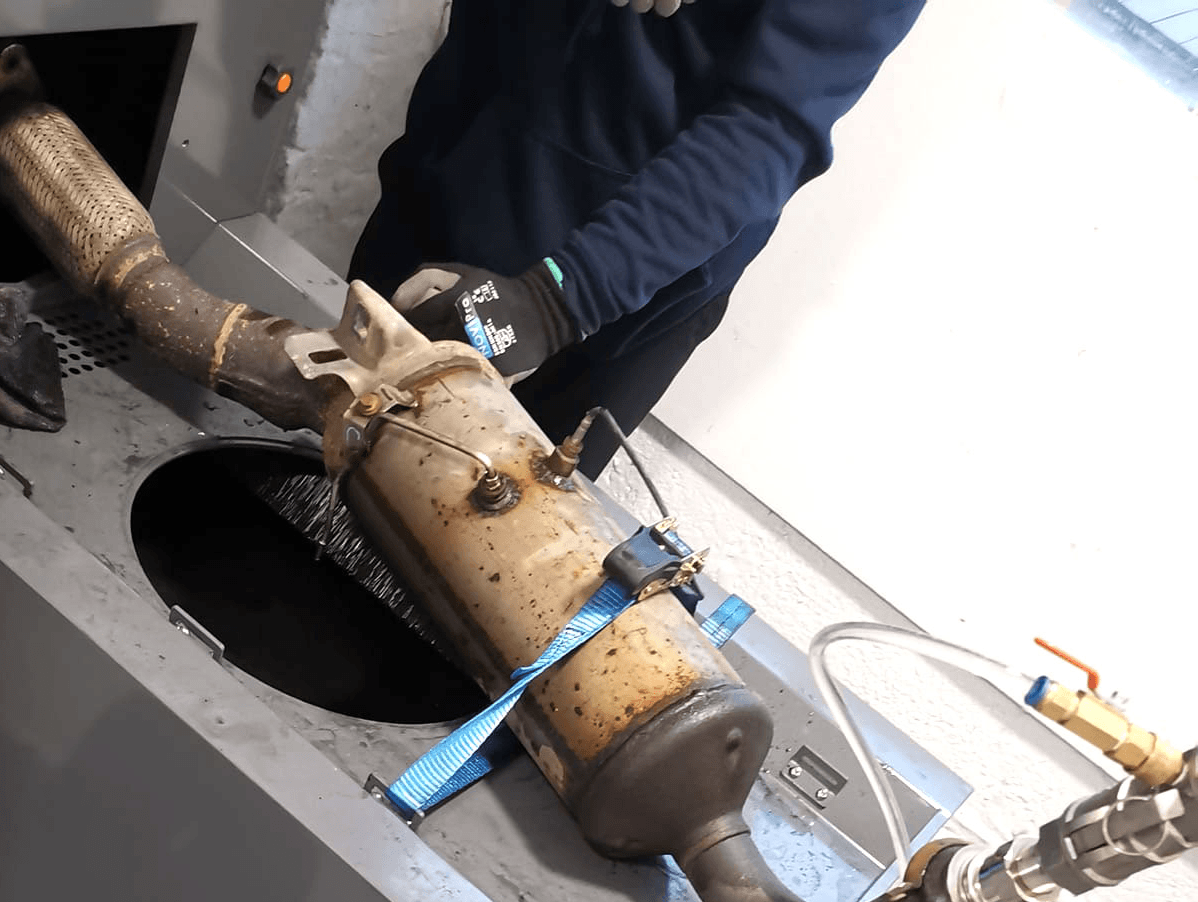
When a large amount of noncombustible ash has accumulated inside the DPF, on-car cleaning and additives will no longer be effective. At this point, deep off-car cleaning is required.
The Off-Car Cleaning Process
Step 1. Removal: Completely remove the DPF assembly from the exhaust system.
Step 2. Borescope and flow testing: Use a borescope to check whether the internal ceramic honeycomb is damaged or melted, and record the pressure difference or airflow before cleaning (flow test).
Step 3. High-temperature baking and ultrasonic soaking: Place the DPF in a specialized oven for high-temperature baking to carbonize residual soot, or soak it in an ultrasonic cleaning tank.
Step 4. Pneumatic / hydraulic back-flushing: Flush repeatedly in the direction opposite to the exhaust flow using high-pressure water and air to remove deep, hardened ash deposits.
Step 5. Drying and retesting: Dry the filter completely, then perform another flow test to confirm that performance has recovered to more than 95% of its new-vehicle level.
⚠️ Important: Chemical soaking is not a cure-all. If the ceramic substrate has cracked or melted, or the catalytic coating has failed, soaking can remove deposits but cannot repair structural damage. Verify the results with a backpressure test after cleaning.
Cost and Decision Guide: DIY vs. Professional Service
1. Overall Cost Comparison
| Solution | Estimated Cost | Suitable Condition | Advantages and Disadvantages |
|---|---|---|---|
| DIY fuel additive | 15–30 | Light blockage / routine prevention | Very low cost and easy to use; cannot remove ash. |
| DIY / shop on-car flush | 50–150 | Moderate blockage / warning light on | Relatively quick (1–2 hours); can resolve most soot blockages. |
| Professional deep off-car cleaning | 250–600 | Severe blockage / heavy ash buildup | Most thorough; can completely remove ash; the vehicle may need to stay at the shop for 1–2 days. |
| Direct replacement with a new DPF | 1,500–4,000+ | Cracked or melted ceramic core | Very expensive; usually considered only when the part is damaged. |
2. Decision Matrix
| Decision Factor | DIY / Routine Maintenance Recommended | Local Professional Service Recommended |
|---|---|---|
| Warning light status | Warning light is off or the yellow light has just come on | Red dashboard warning light, multiple fault codes, or limited engine power |
| Type of blockage | Mainly unburned soot | Mainly long-term ash buildup |
| Vehicle mileage | Under 80,000 miles | Over 100,000 miles with no previous deep cleaning |
| Budget | Limited budget (15–80) | Seeking results and willing to pay for professional service ($250+) |
How to Choose a Reliable Local DPF Cleaning Service
When your vehicle enters limp mode and you need to find a local repair shop by searching for dpf cleaning service near me, keep the following in mind to avoid a poor service experience:
- Confirm that the shop has flow-testing equipment: A reliable provider found through a search for dpf cleaning near me should be able to provide before-and-after backpressure or flow-test data.
- Watch out for low-cost services that only clear codes: Some dishonest shops use an OBD computer to clear fault codes without actually cleaning the filter. The warning light may come back on within a few days.
- Ask whether the service addresses ash: If a shop only offers on-car flushing and your vehicle has more than 100,000 miles, consider finding a specialist with a professional off-car DPF cleaning machine.
Daily Maintenance and Best Practices
Preventive maintenance is essential if you want to avoid expensive DPF cleaning or replacement:
1. Use the correct oil (Low-SAPS oil): You must use low-ash diesel engine oil (Low-SAPS: Low Sulphated Ash, Phosphorus, and Sulfur), such as oil meeting ACEA C1/C2/C3/C4 specifications. Ordinary engine oil produces a large amount of noncombustible ash when burned, accelerating permanent DPF blockage.
2. Drive at highway speeds regularly to support passive regeneration: Every 500–800 kilometers, plan a highway drive of more than 30 minutes while keeping the engine speed above 2,000 RPM to ensure the exhaust reaches the high temperature required for regeneration.
3. Repair related engine faults promptly: A clogged DPF is often the "result" of a problem with another component. A faulty EGR valve, leaking injector, leaking turbocharger, or faulty throttle valve can all lead to incomplete combustion and produce several times more soot than normal.
4. Use preventive additives regularly: We recommend adding a bottle of preventive DPF maintenance additive to the fuel tank every 3,000–5,000 kilometers to lower the soot ignition temperature in advance and prevent deposits from hardening in the small honeycomb channels.
5. Avoid prolonged low-speed, short-distance driving: If the vehicle is used for frequent stop-and-go trips around town, the system may never trigger automatic regeneration. In this type of driving, owners need to intervene with maintenance more frequently.
Conclusion
The key to cleaning a DPF is not to "find the strongest method,"but to use the right level of treatment for the right type of blockage. Use fuel additives regularly to help prevent problems; when the warning light comes on, first try on-car cleaning; and seek professional local off-car cleaning only when ash buildup is severe. A well-planned maintenance strategy can keep your diesel vehicle performing at its best while saving you thousands of dollars in repair costs.