 Contents
Contents
- Introduction
- Why Do Cummins Owners Do a 2nd Gen Swap?
- 2nd Gen Swap vs. Drop-In VGT vs. Compound Turbo
- T3 vs. T4 Manifold: Which One Makes Sense?
- The "Golden Partner": The Importance of Turbo-back Exhaust
- The Ultimate Solution: What’s Included in a Complete "All-in-One" Conversion System?
- Performance & Driving Experience: What Does the Swap Feel Like?
- Buying Advice & Installation Tips: Avoiding Expensive Mistakes
- FAQs
Introduction
In the world of diesel performance, the "2nd Gen Swap" has evolved from a niche racing modification into a mainstream solution for 6.7 Cummins owners seeking reliability, lower Exhaust Gas Temperatures (EGTs), and that authentic exhaust note. But what does this term actually represent?
For 2003+ Cummins engines, it is essentially a complete redesign of the exhaust path, turbocharger placement, and overall hot-side layout. A 2nd Gen Swap is not just a simple part replacement; it is a total architectural overhaul of the engine's "breathing system." By relocating the turbocharger from the factory "bottom-mount" position to the iconic "center-mount" location found on the 1994-1998 12-valve 5.9L Cummins, you are effectively eliminating the complex, high-backpressure, and failure-prone Variable Geometry Turbo (VGT) in favor of a higher-flowing, more reliable S300 or S400 series fixed-geometry turbo.
However, the success of a conversion project depends entirely on "completeness." Many novice enthusiasts mistakenly believe that just buying a manifold and a turbo is enough. The reality is: to truly unlock the potential of this layout, you need a synchronized system. Only with a complete kit can you build a performance beast capable of 600 to 800+ horsepower, running at cooler temperatures with that mesmerizing, hollow turbo whistle.
Why Do Cummins Owners Do a 2nd Gen Swap?
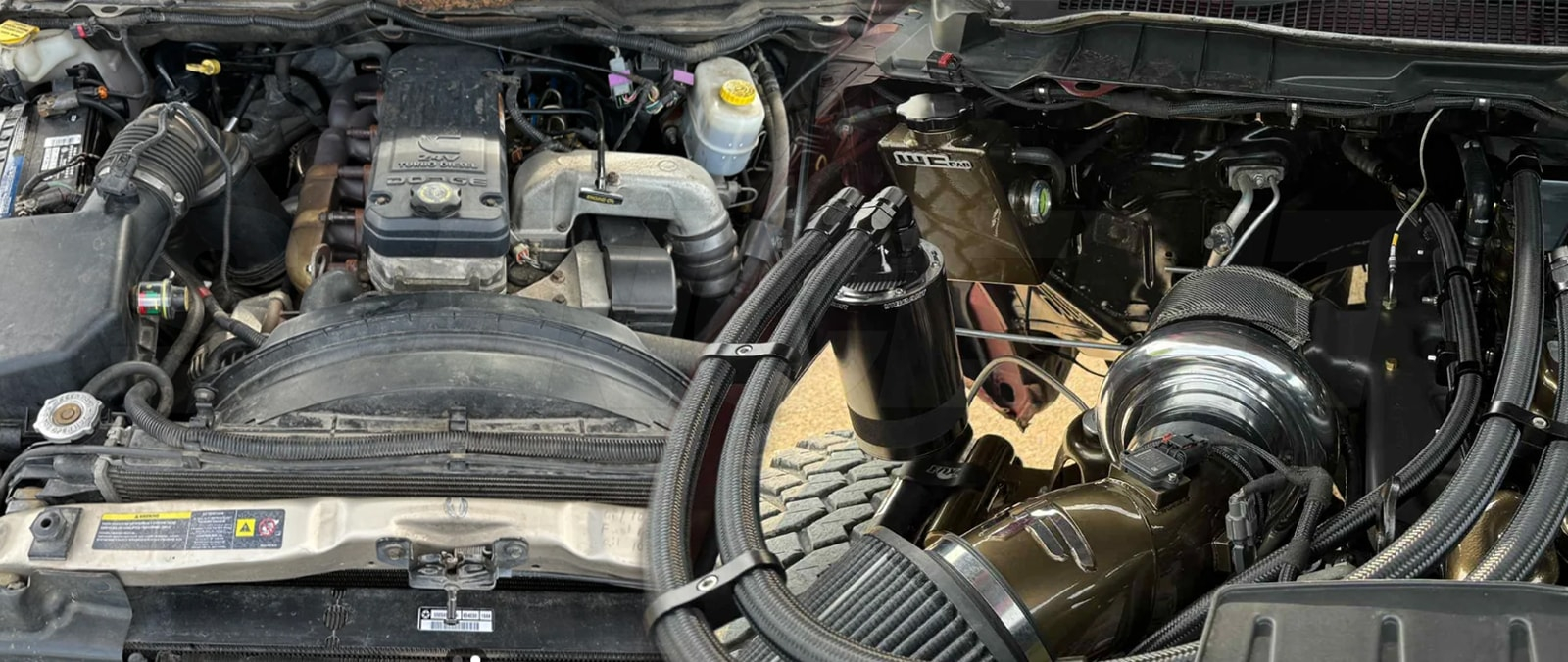
If the factory 6.7 Cummins turbo system is a compromise designed for emissions, low-end response, and mass-production logic, then the 2nd Gen Swap represents a completely different philosophy: liberating the engine from its factory constraints and allowing it to breathe based on performance and scalability.
In addition to these physical airflow and turbo-system changes, completing a 2nd Gen Swap on a 6.7L engine typically requires a full cummins delete kit and VGT-delete custom software to prevent Limp Mode and ensure the intake, exhaust, and engine controls work together efficiently.
1. Breaking the Backpressure Shackles to "Cool Down" the Engine
The factory VGT might offer quick response, but its complex internal vane structure acts as a bottleneck at high RPMs, leading to extreme drive pressure ratios. Factory exhaust gas "jams up" within the manifold, causing heat to build up rapidly at the rear of the cylinder head. This pushes EGTs toward the redline, limiting power and prematurely wearing out head gaskets and valves.
By switching to a center-mount manifold and a fixed-geometry turbo, the exhaust path is transformed from a "maze" into a "high-speed straightaway." This airflow liberation can drop EGTs by 150°F to 250°F under the same load, allowing your engine to finally "stop running a fever."
2. Replacing "Electronic Anxiety" with Hardcore Mechanical Reliability
The factory VGT turbo relies heavily on a precise yet fragile electronic actuator. Under constant heat and carbon soot buildup, these electronic components are notorious for sticking or failing. A 2nd Gen Swap utilizing an S300 or S400 turbo showcases pure mechanical beauty—no sensors, no complex vane-adjusting mechanisms. This "return to the classics" allows owners to say goodbye to the annoying turbo fault lights on the dashboard in exchange for ultimate stability and reliability.
3. Reclaiming the Cummins "Soul Whistle"
This is the moment that resonates most with Cummins purists. The factory 6.7L exhaust note is muffled by the VGT vanes, sounding muffled, muddy, and often accompanied by a "hairdryer-like" hiss. Once you switch to a 2nd Gen layout paired with a turbo-back straight-pipe exhaust, that legendary clean, hollow turbo whistle—unique to the 12-valve legacy—instantly awakens. When you hit the throttle, the sound of exhaust gases hitting the large turbine blades creates a sharp, clear scream—the true BGM of a diesel enthusiast.
4. The "Balance of Airflow"
The factory bottom-mount manifold design often causes the cylinders closest to the firewall to endure higher pressure and temperatures. The center-mount manifold used in a 2nd Gen Swap ensures a more equalized exhaust flow from all six cylinders to the turbo. This balance not only improves combustion efficiency but also lays a solid foundation for high-tier upgrades targeting 600 to 800+ horsepower.
5. It’s Not for Every 6.7 Cummins Owner: Exhaust Brake Trade-Off
We must be clear: just because the 2nd Gen Swap is popular doesn't mean it’s the standard answer for everyone. If your truck is primarily used for heavy towing, frequent mountain hauling, or if you heavily rely on the factory exhaust brake and OEM-like low-end spool, the factory VGT architecture still has its advantages.
Because the factory VGT turbo uses sliding vanes to restrict exhaust flow and create engine braking force, swapping to a fixed-geometry single turbo means you will lose the factory integrated exhaust brake function. Owners who tow heavy downhill loads often pair their 2nd Gen Swap with an aftermarket downpipe inline mechanical exhaust brake (such as a Pacbrake) to retain downhill control.
2nd Gen Swap vs. Drop-In VGT vs. Compound Turbo
A common dilemma for 6.7 Cummins owners is deciding whether to execute a full 2nd Gen Swap, stick with a Drop-In VGT upgrade, or add a Compound "Add-A-Turbo" kit. Here is how they stack up side-by-side:
| Feature / Metric | 2nd Gen Swap (Single Turbo) | Drop-In VGT Upgrade | Drop-In + Compound Twin Turbos |
|---|---|---|---|
| Low-End Spool / Response | Snappy (T3) to Moderate (T4) | Instant / OEM-like | Exceptional (VGT + Atmosphere Turbo) |
| Factory Exhaust Brake | Lost (Requires aftermarket inline unit) | Retained | Retained |
| EGT & Backpressure Reduction | Exceptional (Unrestricted exhaust flow) | Moderate Improvement | Excellent (Massive total air volume) |
| Mechanical Simplicity | Maximum (No VGT electronic actuators) | Moderate (Relies on actuator) | Complex (Twin turbos & tight plumbing) |
| Peak Horsepower Ceiling | 600 - 850+ HP | 500 - 650 HP | 650 - 900+ HP |
T3 vs. T4 Manifold: Which One Makes Sense?
When choosing a 2nd Gen Swap kit, the first major decision you’ll face is the flange size of the exhaust manifold: T3 or T4? Simply put, this choice determines the size of your engine's "throat" for exhaling exhaust gases.
T3 Manifold: The Balanced Choice for Daily Driving and Towing
The T3 flange has a smaller opening, which means exhaust gases enter the turbo at a higher velocity, allowing boost pressure to build earlier.
- Best for: Daily commuters, heavy towing, or owners seeking snappy throttle response in city driving.
- Common Setup: Usually paired with S300 series turbos (such as the S363 or S366).
- Pros: Turbo lag is minimal—power is delivered almost instantly, very similar to factory VGT response, but with significantly cooler EGTs at high load.
T4 Manifold: The "Entry Ticket" for Horsepower Junkies
The T4 flange features a larger surface area, capable of handling much higher exhaust flow rates without generating excessive backpressure.
- Best for: Performance enthusiasts chasing maximum horsepower (600hp+), high-speed highway pulls, or street competition builds.
- Common Setup: The standard standard for S400 series turbos (like the S464 or S467.7).
- Pros: While low-end response requires higher RPMs than T3, it dramatically drops drive pressure at peak boost, unlocking explosive top-end power.
Transmission Dynamics: 68RFE & Aisin 6th Gear Lugging
With Chrysler's 68RFE or Aisin AS69RC transmissions, 6th gear features double overdrive (0.63:1 ratio). Cruising at 65 MPH with 3.42 axle gears drops engine RPM to around 1,400 RPM. Fixed-geometry turbos need sufficient exhaust flow to build boost; thus, rolling onto the throttle at low RPMs in 6th gear can cause lag and heavy engine lugging. We recommend using Tow/Haul mode or applying TCM tuning to adjust shift points between 1,800–2,100 RPM for optimal spool.
The "Golden Partner": The Importance of Turbo-back Exhaust
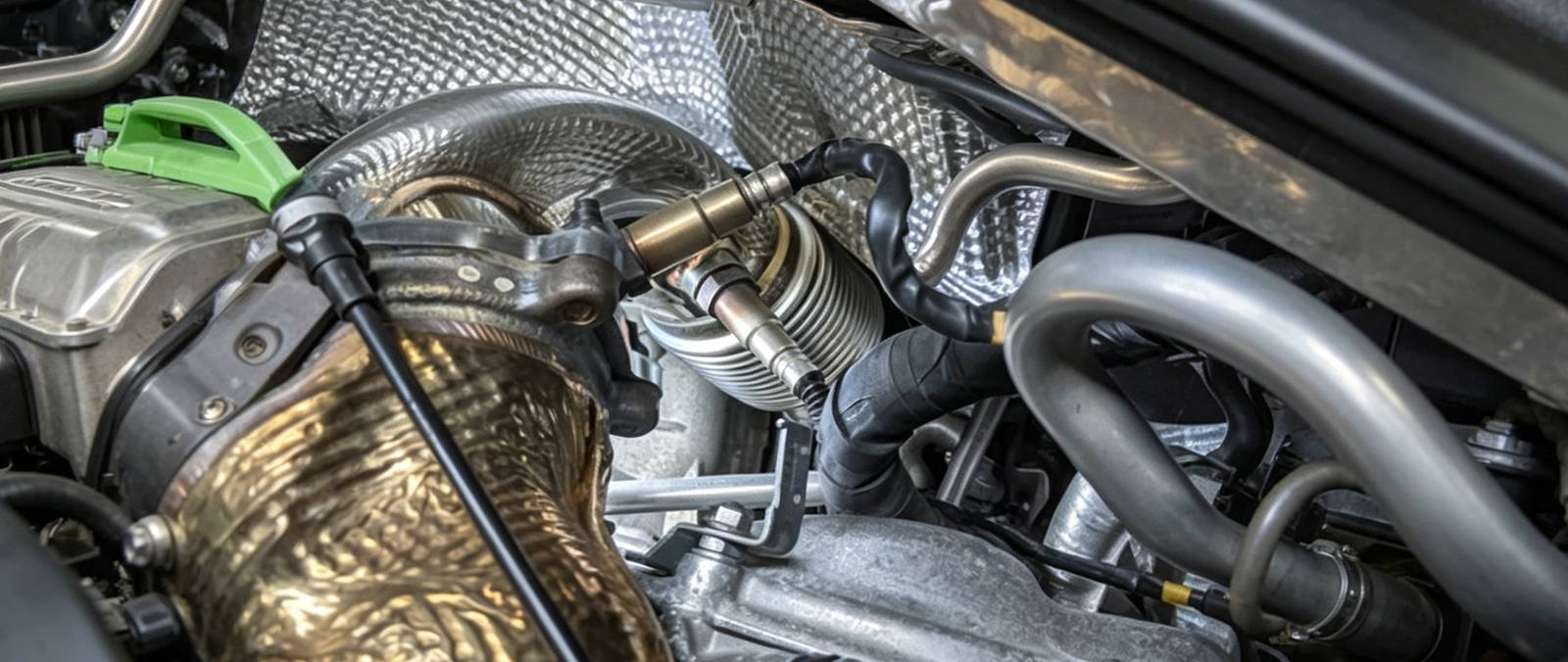
If the manifold and turbo are the "lungs," then the Turbo-back Exhaust is the "windpipe." In a 2nd Gen Swap project, this is absolutely not an optional accessory—it is the critical link that completes the entire system.
The "Only Bridge" for Physical Connection
Once you relocate the turbo to the 2nd Gen center-mount position, the factory exhaust plumbing will no longer align.
- Essential Matching: You must use a Downpipe specifically designed for the 2nd Gen layout. This pipe features unique bends to clear the tight space between the 6.7L engine, the firewall, and the A/C lines.
- System Integration: This 2nd Gen Swap-specific downpipe must connect directly to a compatible 4-inch or 5-inch downpipe-back exhaust system to create a continuous exhaust path from the turbo outlet to the tailpipe.
Fully Unleashing the Potential of the S300/S400
The primary goal of switching to a fixed-geometry turbo is to reduce restriction. If you keep the restrictive factory exhaust behind your new turbo, the larger unit will not be able to maintain an efficient pressure drop. A 5-inch Turbo-back exhaust reduces post-turbo backpressure to near zero, allowing large turbos to spool 10%-15% faster while driving down EGTs.
The Ultimate Solution: What’s Included in a Complete "All-in-One" Conversion System?
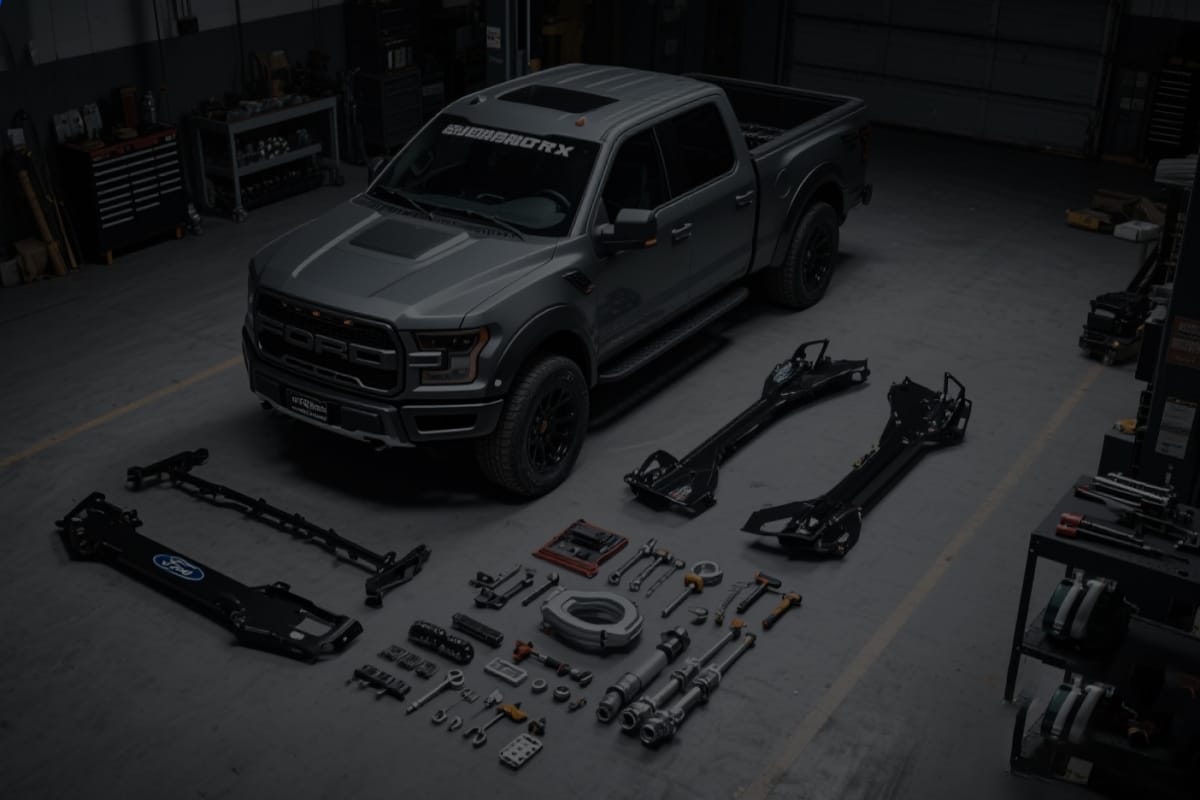
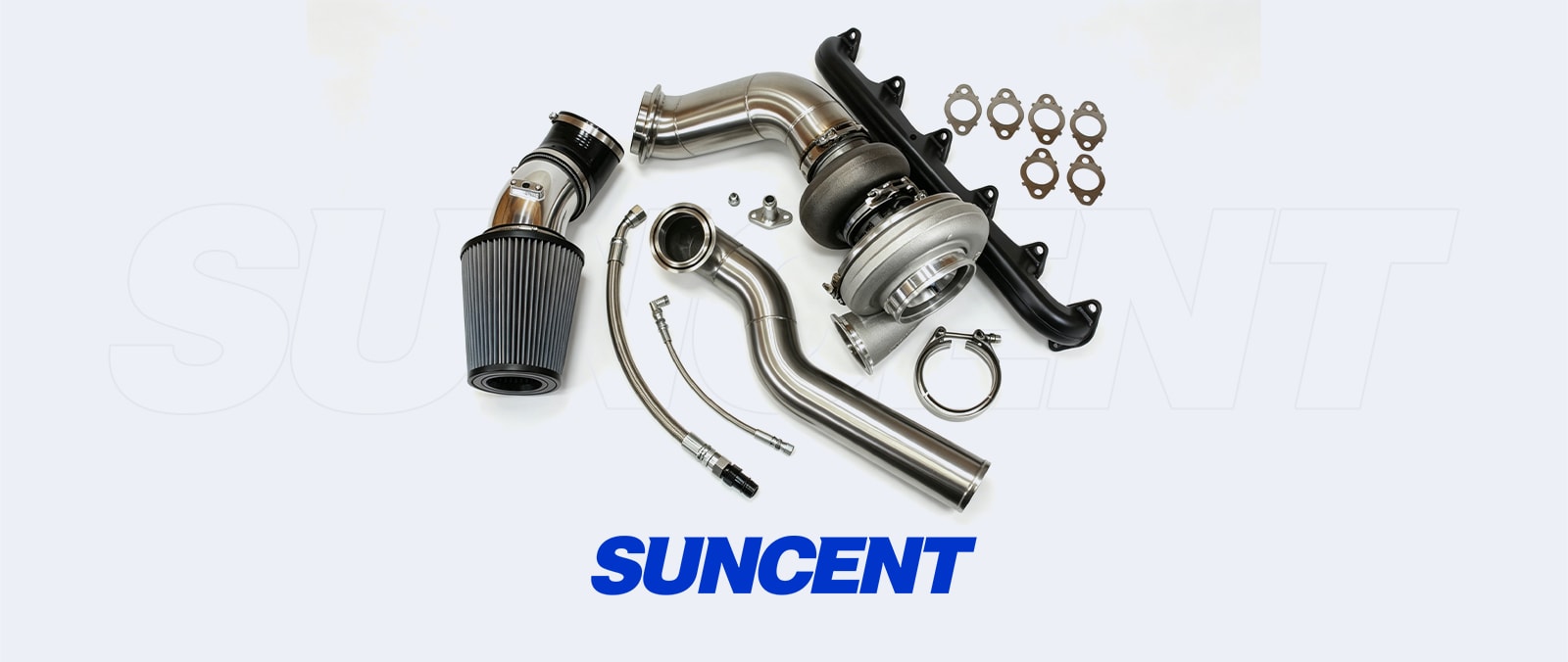
Many owners who attempt to piece together their own parts often get stuck on minor details like a "missing bolt" or "misaligned piping." To achieve peak performance and installation efficiency, a complete 2nd Gen Swap solution must cover these core pillars:
For owners looking for a comprehensive performance overhaul, pairing the turbo swap with an all-in-one diesel delete kit helps ensure that the intake, exhaust, and engine electronics operate in complete synchronization.
1. The Foundation: Center-Mount Exhaust Manifold
This is the physical bedrock of the entire project. We recommend choosing a Ductile Iron manifold in either T3 or T4 flange. A multi-piece design with expansion joints absorbs extreme heat cycles, preventing manifold cracking or broken cylinder head bolts.
2. The Heart of Power: S300 or S400 Turbocharger
Select based on your specific horsepower goals:
- Daily Driving/Towing: Recommended S363 or S366 (T3).
- Racing/High Horsepower: Recommended S464 or S467.7 (T4).
3. The Exhaust Outlet: Matching Downpipe & Turbo-back Exhaust
Custom 4-inch downpipes negotiate the tight gap along the firewall and connect directly to a 4-inch or 5-inch Turbo-back exhaust to completely open the exhaust flow behind the turbine housing.
4. The Lubrication System: Specialized Oil Feed & Drain Lines
Do not attempt to bend factory oil lines! OEM lines are rigid and positioned for a bottom-mount turbo. A complete kit includes extended flexible braided stainless steel feed lines and high-flow billet drain lines to ensure continuous lubrication and proper gravity oil return.
5. The Intake Cycle: Cold-Side Piping & Intake
Since the turbo location changes completely, both the charge-air piping and air intake require specialized matching:
- Intercooler Pipe: Custom mandrel-bent aluminum or stainless steel pipe bridges the gap between the new compressor outlet and the intercooler inlet.
- Intake Kit: Requires a matching high-flow air filter and intake horn to keep intake air temperatures low and airflow unrestricted.
6. Final Touches: Seals & Fasteners
Never underestimate the importance of seals. A high-quality kit provides high-temperature gaskets, heavy-duty studs, and stainless steel T-bolt clamps capable of holding 40+ PSI of boost without blowing boots.
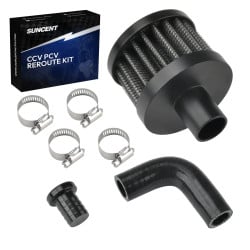
7. Essential Accessory: CCV Reroute Kit
On 6.7L Cummins engines, the factory Crankcase Ventilation (CCV) routes oil mist back into the intake. Installing a CCV Reroute Kit relocates these breather lines, keeping your engine bay clean and preventing soot and oil sludge from coating your new turbo compressor wheel.
Performance & Driving Experience: What Does the Swap Feel Like?
Once you’ve completed the installation and flashed proper custom Tuning, your 6.7 Cummins will feel entirely transformed:
- Sustained Pulling Power: Unlike the sharp initial burst and rapid drop-off of the factory VGT, the 2nd Gen layout delivers smooth, linear power that continues pulling hard into upper RPMs.
- Ultimate Cooling Performance: Under heavy towing, EGTs stay significantly cooler. Your engine breathes naturally without fighting extreme exhaust backpressure.
- Addictive Cummins Whistle: Paired with a 5-inch straight pipe, that clean, hollow 12-valve whistle echoes on every acceleration.
Performance Comparison: Factory VGT vs. 2nd Gen Swap
Performance Comparison: Factory VGT vs. 2nd Gen Swap
| Feature | Factory 6.7L VGT Layout | 2nd Gen Swap (S400/5" Exhaust) | Improvement Logic |
|---|---|---|---|
| Drive Pressure Ratio | Usually 2:1 or higher | Near-ideal 1.1:1 | Dramatically reduces exhaust restriction. |
| Average EGTs | Can exceed 1450°F under load | Dropped by 150°F - 250°F | Protects head gaskets and exhaust valves. |
| Fuel Economy (MPG) | Baseline (High pumping losses from backpressure) | +1.5 to +3.0 MPG Improvement | Dramatically reduced engine pumping losses increase thermal and volumetric efficiency during cruising. |
| HP Limit | Approx. 500 - 550 HP | 750 - 850+ HP (Turbo dependent) | High power ceiling for custom performance mods. |
| Exhaust Diameter | 4" (Restricted by DPF/SCR) | 5" Turbo-back Straight Pipe | Eliminates post-turbo backpressure. |
| Reliability | Actuators prone to soot/sticking | Pure mechanical; Zero electronic failure risk | No more electronic VGT fault codes. |
| Sound Profile | Muffled, muddy "hairdryer" hiss | Crisp, Hollow Whistle | Restores the iconic Cummins sound. |
Data Doesn't Lie: Why Drive Pressure Ratio is Critical
Many owners only focus on Boost pressure, but seasoned diesel technicians analyze the Drive Pressure Ratio (Exhaust Manifold Pressure vs. Intake Boost Pressure). At higher RPMs, the factory VGT creates a tight choke point, causing drive pressure to double boost pressure (2:1). This means your engine wastes horsepower attempting to push exhaust gases out, soaking the head gasket in excess heat.
By switching to a T4 Manifold, S400 Turbo, and 5-inch exhaust, this ratio drops to near 1.1:1. Exhaust gases exit freely, protecting internal engine hardware and stabilizing engine temperatures.
Investment vs. Return
- Single Repair Cost: Replacing a failed OEM VGT Actuator costs $800 - $1,200 with no guarantee against future soot buildup.
- 2nd Gen Swap Investment: Permanent elimination of the VGT failure point, higher vehicle resale value, and typically a 1 to 2 MPG boost in fuel efficiency.
Buying Advice & Installation Tips: Avoiding Expensive Mistakes
A 2nd Gen Swap is a systematic engineering project. To ensure long-term durability, observe these installation rules:
Firewall & Line Clearance
Because the swap repositions the turbo higher and further back, large S400 turbos sit close to the firewall. Verify clearance for the 4-inch downpipe around A/C lines and the firewall, and apply thermal heat wrap around surrounding hoses. Always remember to prime the new turbo with clean oil before the initial engine startup.
Tuning is Mandatory
Removing the factory VGT causes the ECM to immediately throw Diagnostic Trouble Codes (DTCs) and enter Limp Mode because it cannot locate the VGT actuator.
- Key Requirement: You must use custom tuning platforms like EFI Live or EZ LYNK to flash a VGT-delete calibration that recalculates fuel tables and disables actuator error codes.

Be Prepared for Minor Trimming
On certain model years (especially 2013+ RAM 2500/3500 trucks), minor adjustments may be needed during installation, such as trimming CCV breather lines or slightly repositioning mounting brackets to fit the custom intercooler pipes.