 Contents
Contents
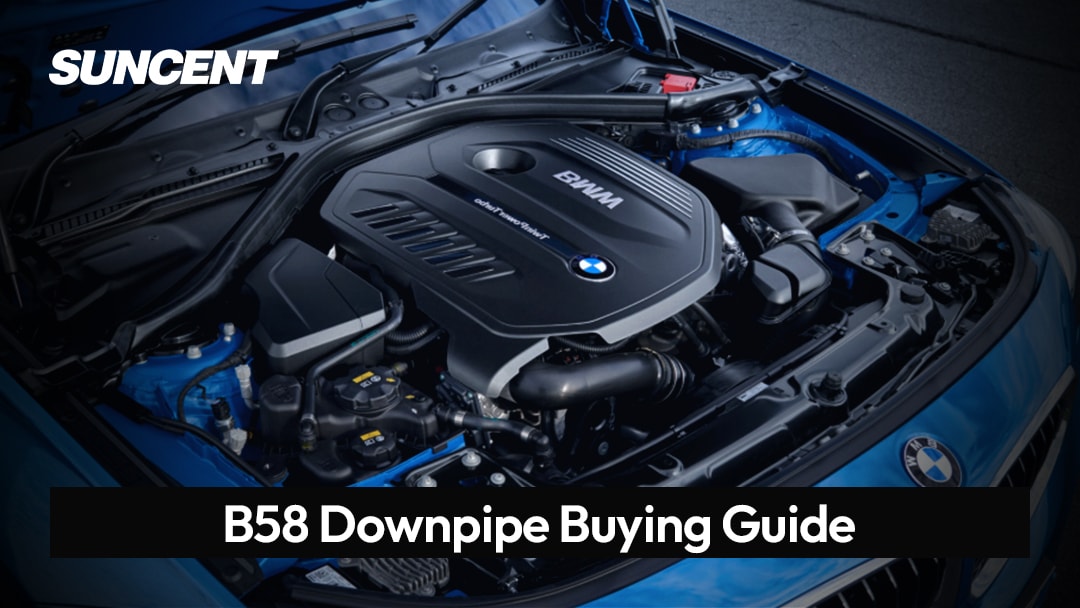
As the legendary successor to BMW’s inline-six engine lineup, the BMW B58 engine has won the favor of a large number of tuning enthusiasts thanks to its outstanding power potential and reliability. Among the many upgrade options available, replacing the B58 downpipe is often the first step in improving performance. This article will systematically explain the function, types, horsepower gains, generational differences, and buying tips for the B58 downpipe to help you make a smarter modification decision.
What Is a B58 Downpipe?
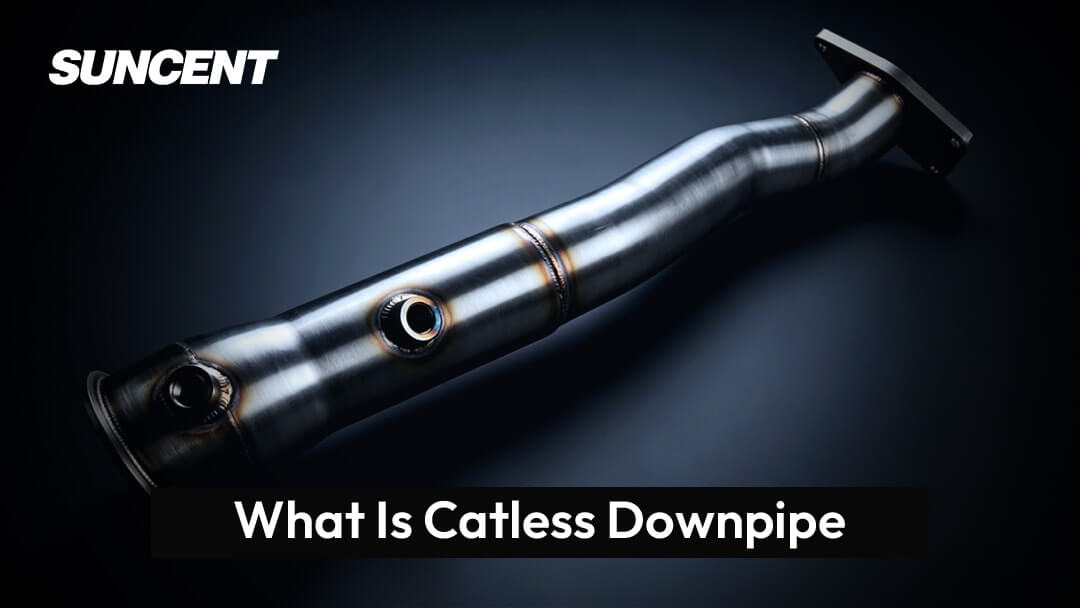
The downpipe is the section of piping that connects the engine’s turbocharger outlet to the rest of the exhaust system. Because it sits directly after the turbo outlet, it is one of the most common bottlenecks in the entire exhaust system.
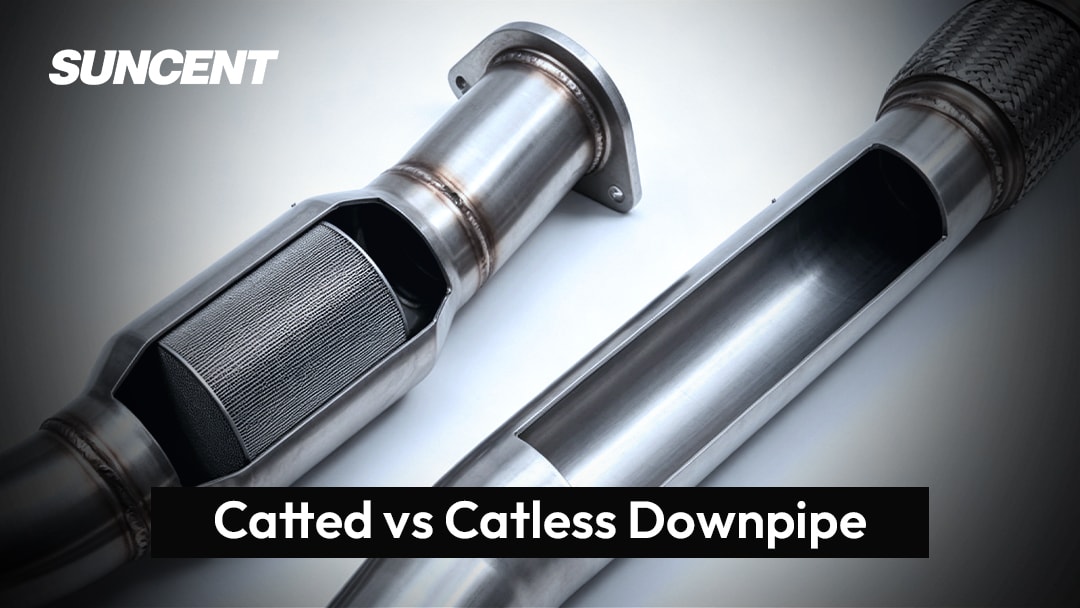
In the factory setup, the B58 downpipe contains an extremely dense catalytic converter designed to filter exhaust gases and reduce emissions. Although the stock downpipe is environmentally friendly, its tightly packed honeycomb structure creates significant exhaust backpressure, slowing the exhaust flow out of the turbo and limiting the engine’s breathing efficiency. That is why many users look for a high-performance B58 downpipe.
Pros and Cons of Upgrading a BMW B58 Downpipe
Every modification has two sides. Before deciding to replace the BMW downpipe, it is best to understand its real-world effects on performance, sound, emissions, and daily drivability.
Pros
Power Gains
After upgrading to a high-flow B58 downpipe, the exhaust flows more smoothly, allowing turbo pressure to build more quickly (spool-up), which makes the power delivery more noticeable. In real driving, many owners can feel sharper throttle response, lighter mid-range acceleration, and more eager power delivery during re-acceleration.
Exhaust Sound
The B58 is known for its deep exhaust tone. After upgrading the downpipe, the cold start sound becomes deeper and more aggressive, the metallic note at high RPM becomes more pronounced, and because of the increased exhaust flow, the burbles during deceleration also become crisper and louder.
Lower Exhaust Gas Temperature (EGT)
Because the exhaust flows more freely, it reduces the buildup of hot exhaust gases around the turbocharger. This helps lower the engine’s thermal load and protect turbo longevity.
Cons
Emissions and Inspection Issues
A catless downpipe cannot pass any standard emissions inspection, and even a high-flow catted downpipe may fail in some regions.
Check Engine Light
After upgrading the downpipe, especially with a catless setup, catalyst efficiency-related fault codes may be triggered. This usually needs to be addressed through tuning.
Strong Exhaust Smell
A catless downpipe can make the exhaust smell like unburned fuel and sulfur compounds. This is especially noticeable during cold starts, idling, or reversing with the windows open, and may be uncomfortable for sensitive people.
Drone and Noise
Although the exhaust may sound better, an improper setup can produce low-frequency drone during highway cruising, which can become tiring over long drives.
For this reason, whether or not to upgrade the downpipe should not be judged by power figures alone. It should also be considered in relation to your driving environment. For track users or performance-focused drivers, these drawbacks may be acceptable; but for street car owners who commute daily and need to balance comfort and emissions inspections, the decision requires more caution.
Catless Downpipe vs High-Flow Catted Downpipe
This is the first major choice every B58 owner faces. Both types of downpipes have their own advantages and disadvantages, as shown below:
| Feature | Catless Downpipe | Catted Downpipe |
| Catalytic Converter | None, straight-pipe design | Equipped with a high-flow catalytic converter |
| Performance | Strongest | Slightly less than catless, but far better than stock |
| Sound | Very loud, with obvious pops and bangs | Moderate volume, deeper and richer tone |
| Smell | Typical fuel smell in the exhaust | Smell is basically similar to stock |
| Price | Relatively cheaper | Slightly more expensive due to catalyst material costs |
| Legal Compliance | Track use only in most regions; illegal for road use | Depends on local emissions regulations; generally legal |
If you only drive on the track, are not concerned about emissions regulations, and are pursuing maximum performance, catless is the best choice. If the car is your daily driver, needs to pass inspections, or you do not want it to be overly loud or smelly, a high-flow catted downpipe is the more balanced option.
How Much HP Can a B58 Downpipe Add?
This is a question almost every owner asks: how much HP can a B58 downpipe actually add?
Without tune
If you only replace the downpipe without flashing a tune and without adding supporting mods like an intake, a common reference is about 5–15 hp in gains. These gains come more from reduced exhaust backpressure and improved turbo efficiency and response. In other words, what you often notice first is not a huge jump in peak horsepower at high RPM, but rather smoother revving and more direct throttle response.
With tune
When the downpipe is used together with a tune, the gains are usually more noticeable. In publicly available data, a common reference range is around 15–40 hp or even more. The reason is that ECU tuning increases the engine's demand for airflow, making the limitations of the stock downpipe more obvious, while a higher-flow downpipe can better show its value.
"B58 downpipe and tune HP" should be viewed rationally. Different models, different engine generations, and different fuel grades can all affect the final number. So these figures should be understood as common reference ranges rather than fixed promised values.
See also: How Much Horsepower Can a Downpipe Add?
Gen 1 vs Gen 3 B58 Downpipe Differences
Many people see the term "B58" and assume that all models can use the same downpipe. This is often one of the easiest mistakes to make when shopping. Since its launch in 2015, the B58 has gone through continuous evolution, including Gen 1, B58TU (often regarded as the second phase), and B58TU2 (often regarded as the third phase). Different stages brought changes to the fuel system, turbocharger, thermal management, and emissions architecture.
What this means for downpipe selection is: not all B58 downpipes are interchangeable. Therefore, when buying, you must also confirm:
- Your model year
- Chassis code
- Engine generation
- Whether it is a G-series platform
- Whether it is the corresponding Supra version
Before placing an order, it is best to check the complete B58 downpipe vehicle fitment list to avoid issues such as incompatible flanges or insufficient installation space later on.
How to Choose the Best B58 Downpipe
With so many products on the market featuring different materials, catalyst options, and fitment platforms, the so-called "best B58 downpipe" is not necessarily the most expensive one, but the one that best suits your needs, budget, and tuning goals.
1. Confirm Exact Vehicle Fitment
Different B58 platforms, model years, and engine generations may have different downpipe flange designs and installation environments. Before buying, make sure to confirm the model, year, chassis code, and engine generation instead of relying only on broad descriptions like "Fits B58."
2. Choose Catless or Catted
If you want more aggressive exhaust flow, a more noticeable sound change, and can accept stronger odor and greater legal risk, catless is usually more in line with a performance-oriented setup.
If you care more about daily commuting, comfort, lower odor, and a more balanced street driving experience, a high-flow catted setup is usually the safer option.
3. Material and Build Quality
A quality downpipe should use T-304 stainless steel for high-temperature resistance and corrosion resistance. The welds should be clean and even, and the flange surface should not be warped. Poorly made products may not only affect installation efficiency, but can also lead to exhaust leaks, rattles, or even cracking over time.
4. Brand and Price
A higher price is not always better; the key is to choose what fits you best. In terms of brand, it is better to choose one with reputation, after-sales support, and technical assistance. When shopping, many users also prioritize sellers that can provide complete specification information and after-sales support. For example, SuncentAuto provides complete technical support before, during, and after purchase, as well as a 45-day worry-free return policy.
Quick Buying Guide:
If you care about inspections and street use → choose catted.
If you want maximum flow and a stronger exhaust sound → choose catless.
If you are preparing for Stage 2 → prioritize flow and fitment.
If you do not want a noticeable exhaust smell → try to avoid catless.
Conclusion
Overall, the B58 downpipe is one of the most worthwhile performance upgrades to prioritize for the BMW B58 platform. It not only improves exhaust flow and turbo response, but also significantly enhances driving enjoyment and tuning potential.
When choosing one, it is recommended that you first clarify your driving scenario, emissions requirements, and tolerance for noise and odor, then determine whether catted or catless is more suitable for you, and whether more precise fitment confirmation is needed for your specific generation and model.
If you plan to continue with Stage 2 or deeper performance upgrades, using a downpipe together with the proper tune will usually make it easier to unlock its full value. At the same time, do not overlook practical factors such as local regulations, inspection requirements, and installation support.