 Contents
Contents
If you are the owner of a Ford F250 or F350 6.7L Powerstroke, or if you are considering buying one, then you have probably heard the term "delete kit" countless times. Some people say it can make the truck "come alive," some say it is illegal, and others say it is the only way to make this engine reliably run for 200,000 miles. So what is the truth? This article will not make the decision for you, but it will put all the facts - including real owner experience - on the table.
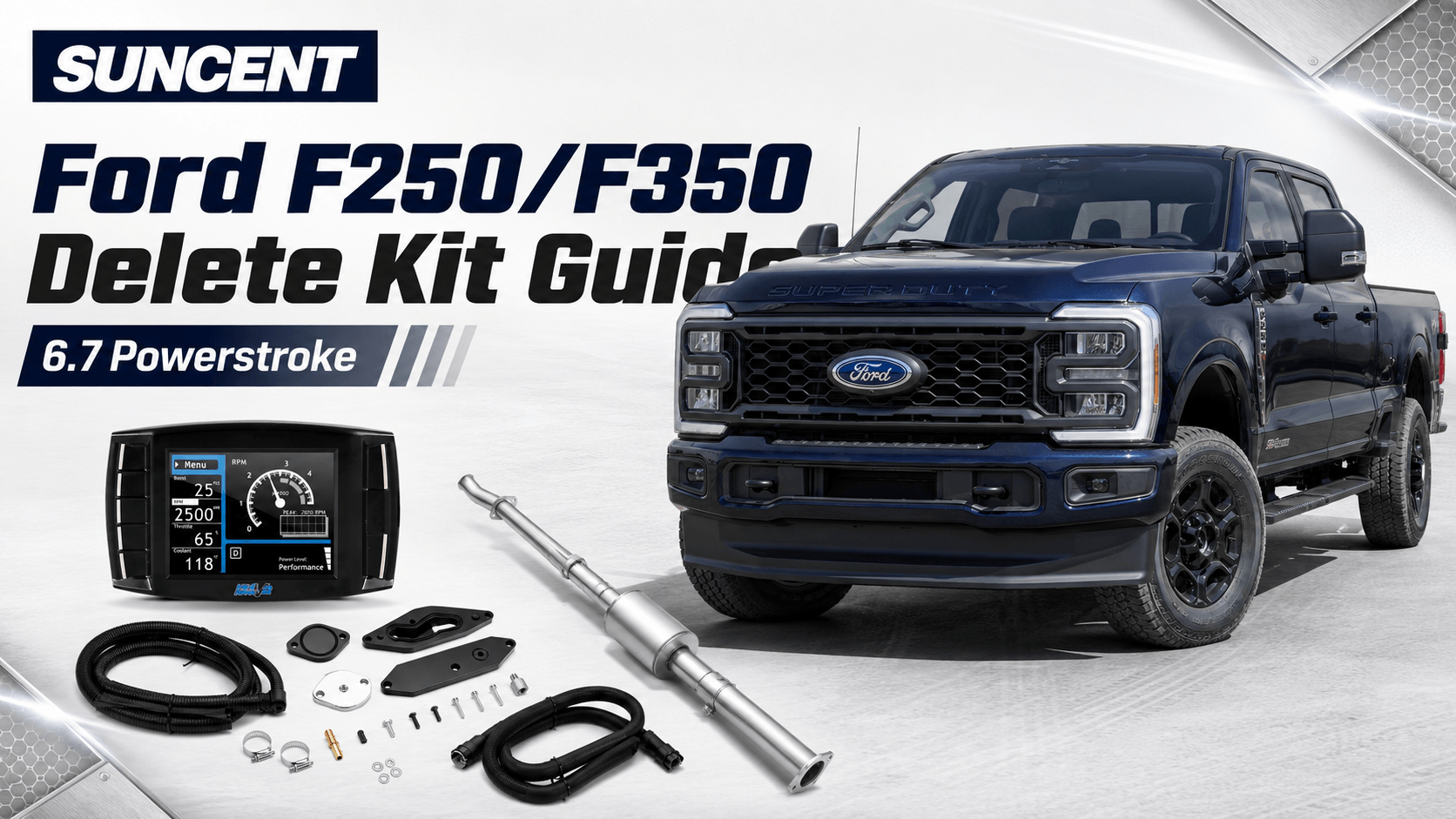
What Is a 6.7 Powerstroke F250/F350 Delete Kit?
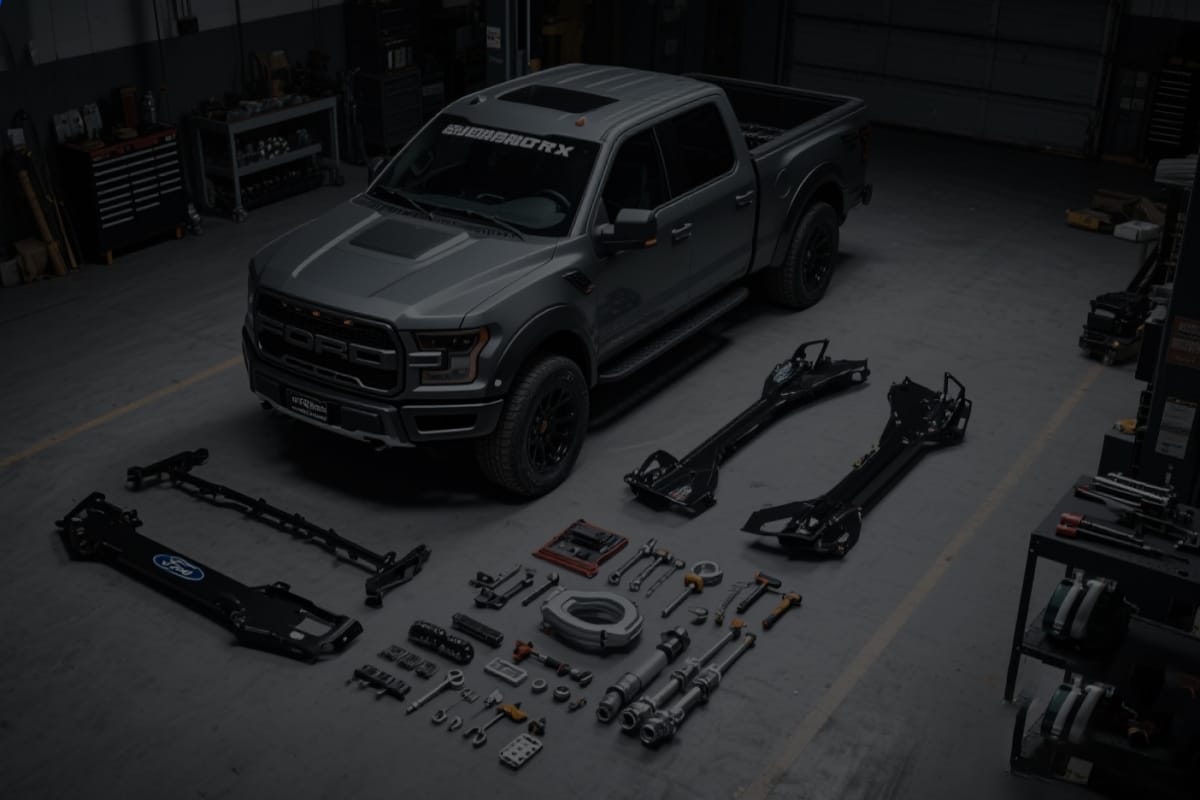
A delete kit is a common term used by diesel truck owners. It usually refers to parts or kits related to removing, bypassing, or disabling the factory emissions system on a diesel engine. A complete "delete kit" is not just one single part. It usually consists of three core components:

1. Tuner
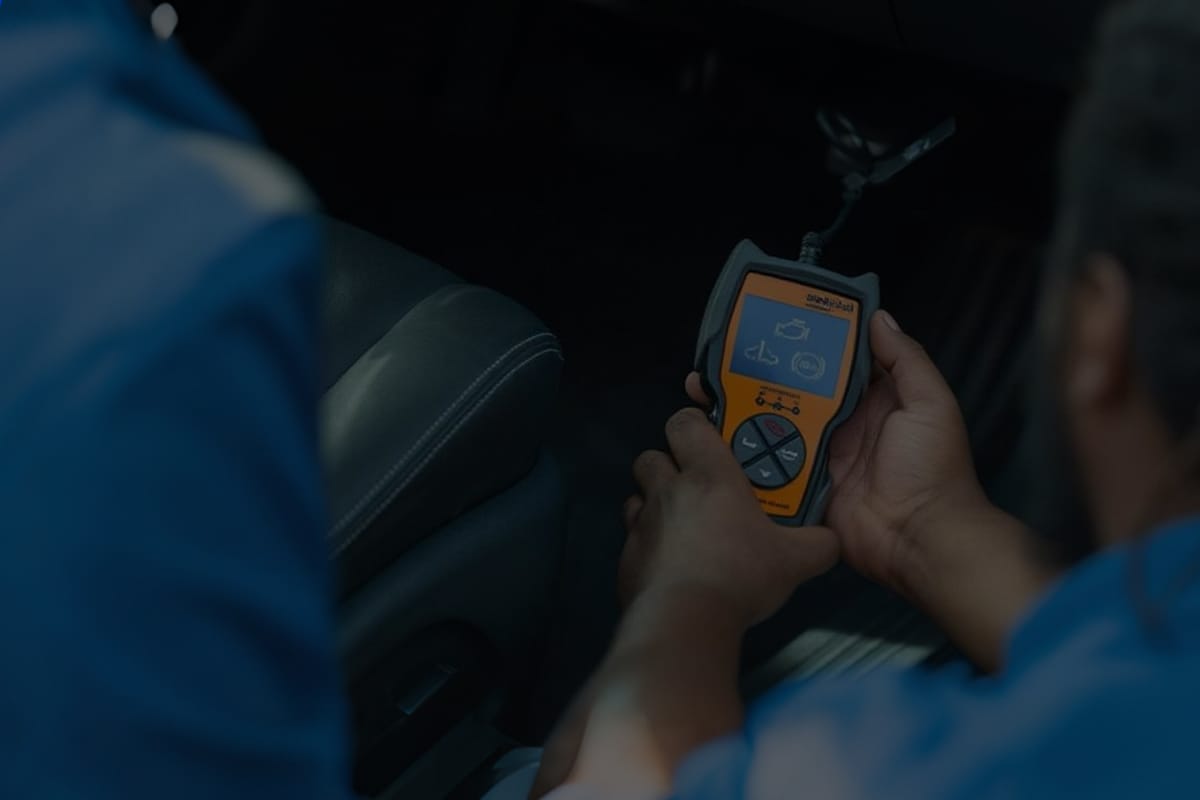
This is the brain of the entire kit. In essence, the tuner tells the engine computer (ECU): "Those emissions systems are no longer there, so stop throwing errors." Without a tuner, even if you physically remove the DPF and EGR, the vehicle will immediately enter limp mode, limiting speed and power to the point where you may not even be able to get on the highway.
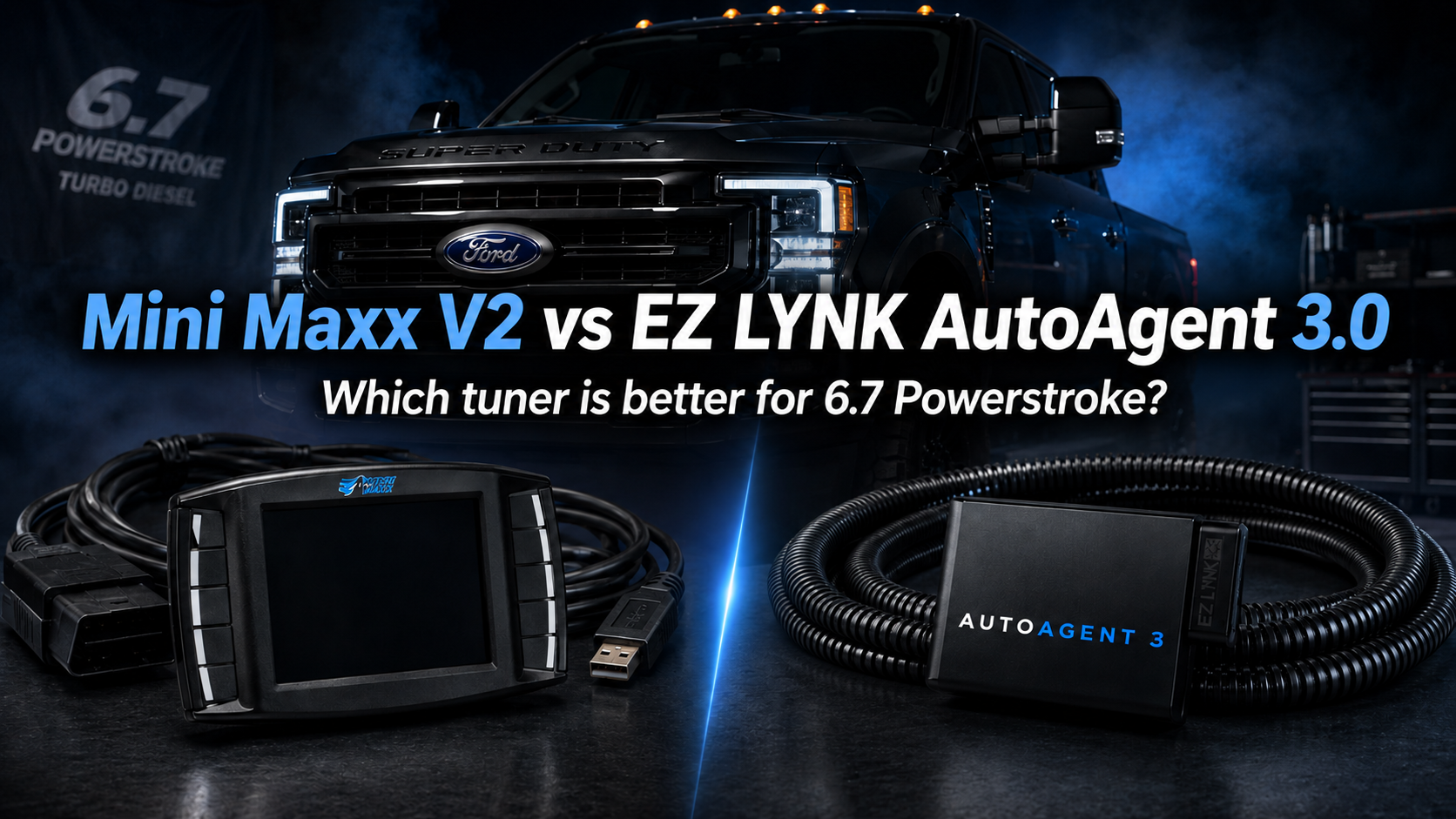
The most mainstream and well-regarded tuner on the market today is the EZ Lynk Auto Agent. It allows cloud-based tune delivery and mobile app selection, making the flashing process much easier than older tuners that required connecting to a computer and downloading files.
2. DPF/DEF Delete Pipe
A DPF Delete kit is a straight-through exhaust pipe that physically replaces the factory DPF and catalytic converter, usually made of stainless steel. It can significantly reduce exhaust backpressure and allow exhaust gases to flow out more smoothly.
3. EGR Delete Kit
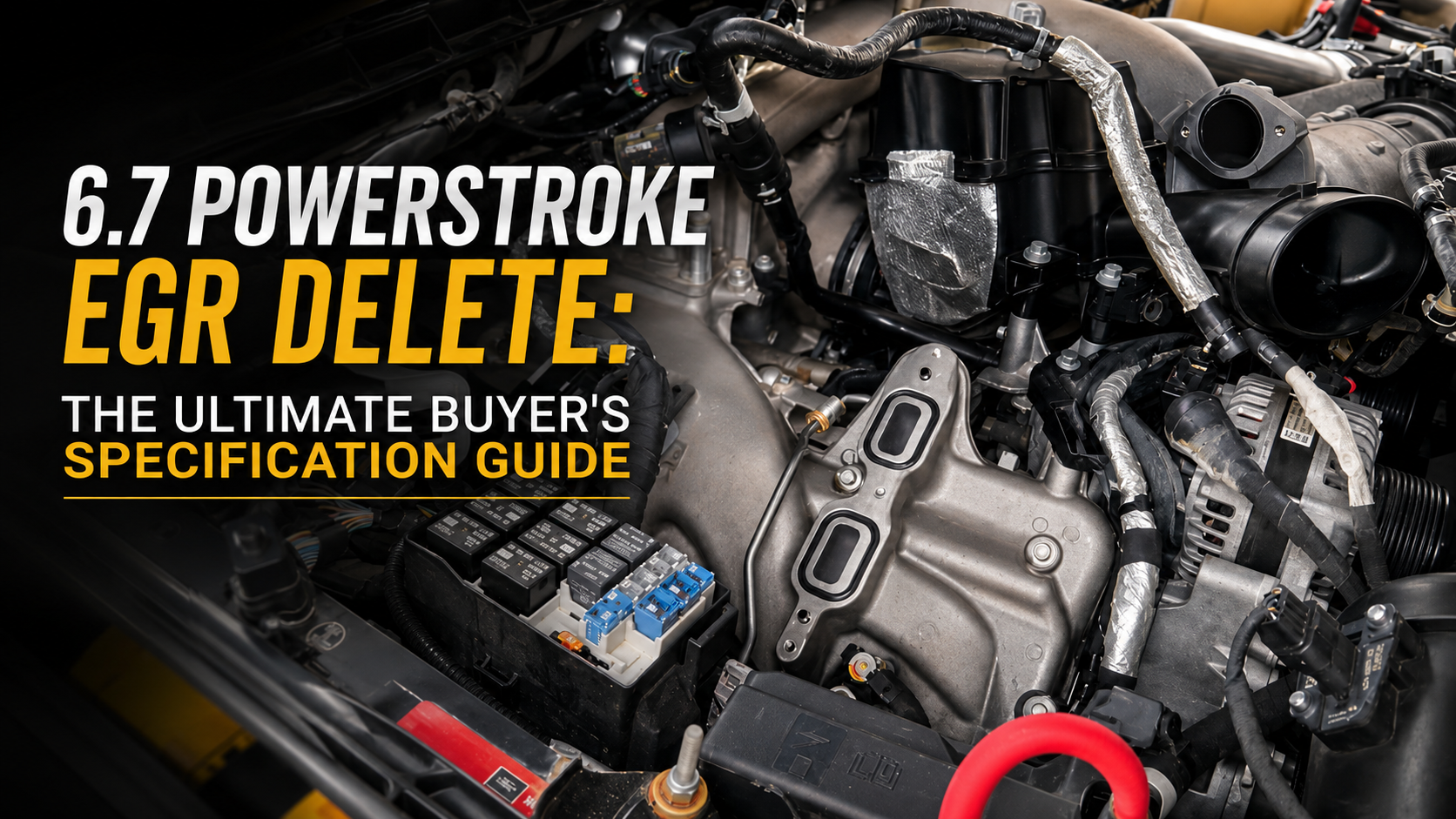
The EGR system, or exhaust gas recirculation system, routes soot-rich exhaust gases back into the engine intake. Over time, this can lead to severe carbon buildup and intake valve clogging. An EGR delete kit physically removes or blocks this system, allowing the engine to breathe only fresh air.
Important Reminder: These three components do not necessarily have to be purchased together. However, if they are purchased separately, it is easy to run into problems - for example, buying a tuner alone without tune files, then having to pay extra later for a tuner professional to flash the truck. When purchasing, be sure to check whether the product page clearly states "tunes included."
Why Do F250 and F350 Owners Search for Delete Kits?
F250 and F350 owners usually search for delete kits not simply because they want a louder exhaust, but because they face real-world pain points: repair costs, towing reliability, emissions system failures, and downtime during long-distance or commercial use.
1. EGR Cooler Failure: Expensive to Repair and May Happen Repeatedly
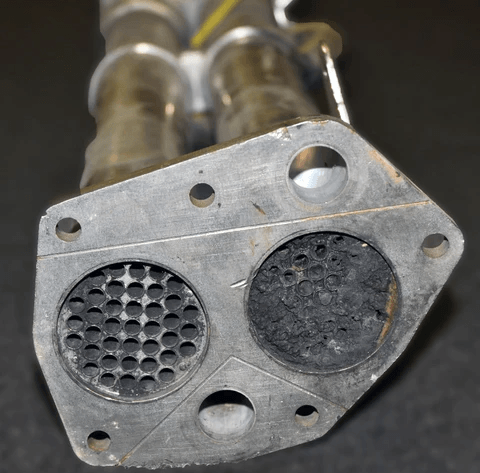
The EGR cooler on the 6.7L Powerstroke is widely known as a weak point. The inside of the cooler can become clogged, cracked, or even leak coolant due to high heat and soot buildup. Once it fails, the repair bill is usually between $2,000 and $3,000. Even worse, many owners report that it can fail again one or two years after replacement because the underlying design issue has not truly been solved. A large portion of people searching for "delete kit" have simply been driven crazy by repeated repair bills.
2. DPF Clogging Causes Limp Mode: A Disaster in the Middle of Nowhere
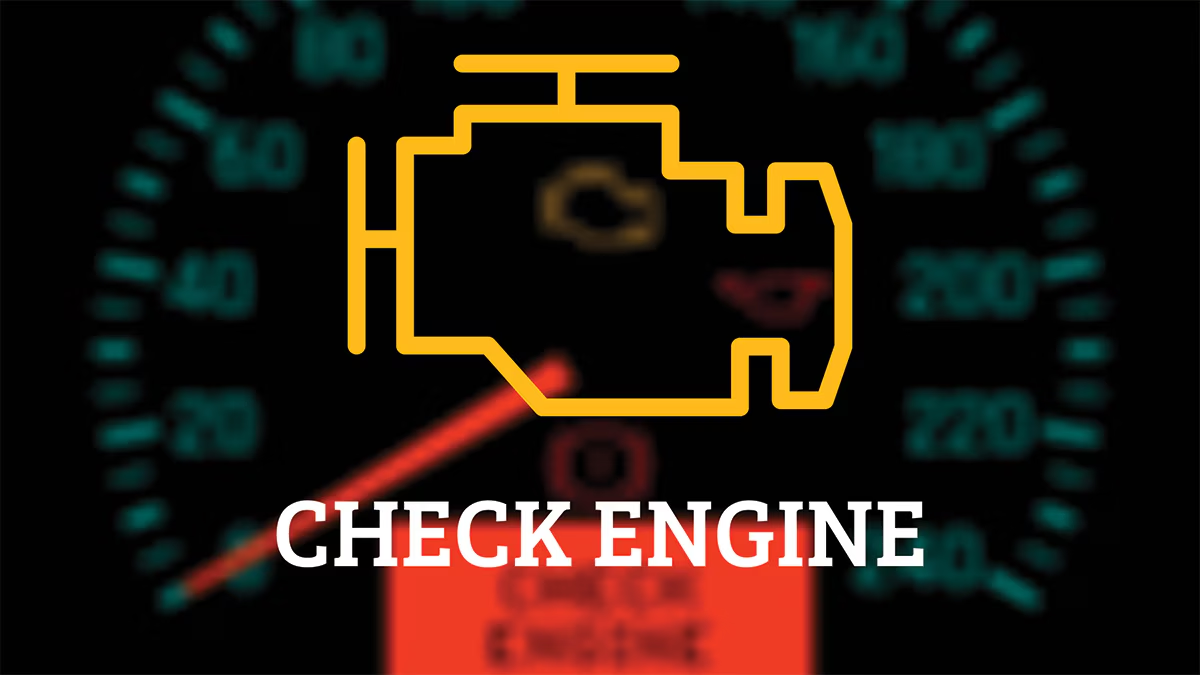
The DPF, or diesel particulate filter, captures soot and burns it off during regeneration cycles. But if your driving pattern involves short trips, frequent idling, or low-speed towing, regeneration may not complete properly, causing soot to build up over time.
The final result is:
warning light → reduced power → limp mode
On the highway, you may only be able to limp to the nearest repair shop at 20–30 mph. For owners who tow heavy loads over long distances, this is not just an inconvenience - it is a safety risk.
3. Fuel Economy: The Expectation Exists, but Results Vary
Many owners report a 10–20% improvement in fuel economy after a delete, which could mean saving several hundred dollars in fuel each year. But some owners, such as Josh in the case below, report almost no fuel economy change.
The difference mainly depends on driving habits, road conditions, and tune quality. However, even if fuel economy does not improve, many owners are still willing to delete because the improvements in throttle response and reliability feel worth the cost.
Real Owner Insight: 2016 Ford F-250 6.7L Powerstroke Owner Case
We interviewed Josh, a 2016 Ford F-250 6.7L Powerstroke owner from Florida. He is a firefighter who decided to tune and delete the truck the same day he bought it. His reason was simple: "If the DPF clogs in the mountains, I'm done."
He is extremely price-sensitive. After comparing five brands, he chose SuncentAuto for one reason only: it was the cheapest after shipping. He does not read product descriptions at all, saying that "everything online is AI-generated and exactly the same."
He did run into one problem: he did not notice that there were bundles with tunes included, so buying separately ended up costing him more. His purchasing logic is clear: for exhaust and EGR parts - things that "can be fixed if they break" - he goes with the price point; for something like a Cold Charge Pipe, where failure means being stranded, he insists on buying an American brand.
Buying Considerations Before Choosing an F250/F350 Delete Kit
Based on real owner experience and common market issues, when choosing an F250/F350 delete kit, be sure to pay attention to the following points to avoid purchase and modification mistakes.
1. Verify the Model Year and Rear Wheel Configuration
The 6.7 Powerstroke engine details and chassis fitment dimensions vary slightly by model year, so you must choose the corresponding kit based on your truck's model year.
At the same time, strictly distinguish between single rear wheel and dual rear wheel, or Dually, versions. Mixing parts can lead to misalignment, poor sealing, and other fitment issues.
2. Confirm Whether the Kit Includes a Tuner and Tunes
This is the most common mistake, without question.
Many owners see " Delete Kit" and place an order, only to find out after receiving the package that it only contains the exhaust pipe and EGR delete hardware, while the tuner has to be purchased separately. An even more hidden trap is this: some kits include tuner hardware, but the tuner does not come preloaded with tune files - you then have to pay a tuner separately to flash it.
The correct approach is to carefully read the product description and confirm whether the tune is included.
3. Look at the Final Total Price, Not Just the Product Price
Some sellers list the product at a low price but charge high shipping fees. When comparing prices, do not look only at the listed product price. Instead, compare the final total price after shipping. SuncentAuto offers free shipping within the US and is a brand you can consider.
4. Pay Attention to Installation Instructions and After-Sales Support
Many brands do a very poor job with installation guidance. Before buying, you can do two things:
- Check whether there is a PDF installation guide download link at the bottom of the product page.
- Search YouTube to see whether there are installation videos for that brand's kit.
5. Return Policy
Read the return policy carefully. This is very important.
Tuner: Once activated or flashed, almost all sellers do not support returns. This is an industry norm.
Hardware, such as exhaust pipe and EGR kit: There is usually a 30–45 day return window, but the item must remain in its original packaging and must not have been installed. Some sellers may deduct shipping costs or charge a 15–20% restocking fee.
Who pays return shipping: If the wrong model was shipped, the seller should cover it. If you bought the wrong item yourself, such as buying a Non-Dually version for a Dually truck, you may have to pay return shipping yourself.
6. Are You Planning to Install It Yourself or Have a Shop Install It?
This question directly determines the kit type you choose and how you allocate your budget.
Self-installation: You need to confirm that the kit comes with clear installation instructions.
Shop installation: First ask whether a local performance shop is willing to take on a "delete" project — some shops refuse directly due to legal risks. If they are willing, ask about labor costs. Also confirm whether the shop requires you to provide a complete kit, including tunes, or whether they have their own tuner partner.
A compromise suggestion: if you are unsure, you can first buy the hardware kit and have a reliable shop install it; buy the tuner, including tunes, yourself and flash it yourself — because flashing a tuner is actually very simple. This can save part of the labor cost while also avoiding mistakes from a shop that is not familiar with diesel trucks.
7. How to Choose Your Delete Kit Configuration
A delete kit is not a modification with "only one correct answer." Your choice depends on your budget, performance expectations, tolerance for sound, and willingness to do the work yourself. The comparison tables below can help you quickly find the most suitable setup.
Delete Setup Comparison
| Configuration | Performance Gain | Fuel Economy | Reliability Improvement | Cost | Legal Risk | Recommendation Rating |
| Stock | Baseline | Baseline | High risk of EGR/DPF failure | $0 | None | ⭐⭐ |
| Tune Only, No Hardware Delete | +20–40 HP | +5–10% | Slight improvement, still clogs | $500–1,000 | Low, disables fault codes | ⭐⭐ |
| Hardware Delete Only, No Tune | Not workable ❌ | Not workable ❌ | Vehicle enters limp mode | $500–1,000, hardware | High | Not Recommended |
| Full Delete, Tune + DPF Pipe + EGR Delete | +50–150 HP | +10–20% | Completely solves emissions-system failures | $1,300–3,400 | High, varies by state | ⭐⭐⭐⭐⭐ |
Tune only: Some owners only flash the ECU to disable DPF/EGR fault codes without physically removing the hardware. The benefit is lower cost and no change in appearance, but the DPF can still gradually clog and will eventually need to be addressed.
Exhaust Pipe Diameter Comparison: 4 Inch vs 5 Inch
| Comparison Factor | 4-Inch Exhaust Pipe | 5-Inch Exhaust Pipe |
| Exhaust Flow | Enough to support 500–600 HP | Suitable for 600+ HP or larger turbo setups |
| Sound Level | Moderate to low | Deeper and louder |
| Price | Lower, 4-inch kits are usually cheaper | Higher, 5-inch tubing costs more |
| Recommended Use | Daily driving, light towing | Heavy towing, pursuit of maximum performance |
Muffler Choice: Muffler vs Straight Pipe / No Muffler
| Comparison Factor | With Muffler | Straight Pipe / No Muffler |
| Sound Level | Slightly louder than stock, but acceptable for daily use | Very loud; may cause drone at highway cruising speeds |
| Driving Comfort | High, not tiring on long trips | Low, may become annoying during long drives |
| Performance Difference | Almost no difference, <5 HP | Almost no difference |
| Price | Slightly higher, because of the muffler | Slightly lower |
| Recommended Use | Daily driving, family use, long-distance towing | Pure off-road use, sound-focused builds, noise not a concern |
Recommended F250/F350 Delete Kits by SuncentAuto
SuncentAuto provides delete solutions for different model years of the 6.7L Powerstroke. Below are specific recommendations by year range.
Why Choose SuncentAuto?
After comparing multiple brands on the market, SuncentAuto has clear advantages in the following areas:
Strong price competitiveness: As Josh said, SuncentAuto is often the lowest when it comes to “final total price after shipping,” which is very friendly to price-sensitive owners.
High all-in-one kit completeness: For 2011–2019 models, SuncentAuto offers all-in-one kits that include the Mini Maxx V2 tuner, ready to use out of the box without the need to purchase tunes separately.
Wide year coverage: Hardware solutions are available from 2011 to 2022, with clear separation between the 2011–2014, 2015–2016, 2017–2019, and 2020–2022 generations, helping users avoid buying the wrong kit.
Official EZ Lynk partnership: The EZ Lynk tuner and tune files paired with the 2020–2022 models are properly authorized, with stable and reliable cloud-based flashing.
Customer service contact available: SuncentAuto provides online customer service and email support. Before ordering, customers can send their VIN to confirm fitment.
We are now offering different discounts on all products. See the discount code page for details. Plus, an exclusive 12% discount for our readers:
2011–2014 F250/F350 All-in-One Delete Kit
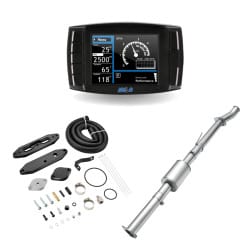
Applicable Years: 2011–2014 F250/F350 6.7L Powerstroke
Included: 4-inch DPF/DEF delete pipe with muffler + EGR delete kit + Mini Maxx Tuner V2 tuner
Are tunes included: Yes. The Mini Maxx V2 comes preloaded with tune files from the factory and is ready to use out of the box.
Features: This is the complete all-in-one solution for the earliest generation of the 6.7L Powerstroke. The 4-inch exhaust pipe with muffler balances performance improvement with daily-driving noise control. The EGR delete kit removes both the EGR valve and cooler, and also includes the CCV modification kit required for pre-2014 models.
2015–2016 F250/F350 All-in-One Delete Kit
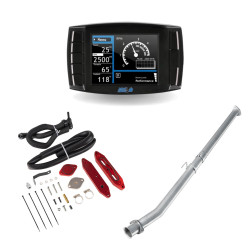
Applicable Years: 2015–2016 F250/F350 6.7L Powerstroke
Included: 4-inch straight-through DPF delete pipe without muffler + EGR delete kit + Mini Maxx Tuner V2 tuner
Are tunes included: Yes. The tuner comes preloaded from the factory with tune files for the corresponding model years.
Features: The main differences compared with the 2011–2014 kit are twofold: the exhaust pipe does not have a muffler, making the sound louder and more aggressive; and the EGR delete kit hardware is optimized for the slight engine changes in the 2015–2016 models and cannot be mixed with earlier models.
2017–2019 F250/F350 All-in-One Delete Kit
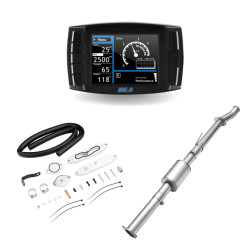
Applicable Years: 2017–2019 F250/F350 6.7L Powerstroke
Included: 4-inch DPF delete pipe with muffler + EGR delete kit + Mini Maxx Tuner V2 tuner
Are tunes included: Yes. The tuner and hardware are bundled together, with no need to purchase tunes separately.
Features: 2017 was a mid-cycle update year for the Ford Super Duty, and the ECU strategy and sensors are completely different from the previous generation. Therefore, the tune files in this kit are specifically written for 2017–2019 models.
2020–2022 F250/F350 Delete Kit
Starting with this generation, things become more complicated. SuncentAuto provides a hardware kit for 2020–2022 models, but the hardware and tuner/tune files are sold separately. Below are the three required items.
Hardware: 5-Inch DPF/EGR Delete Kit
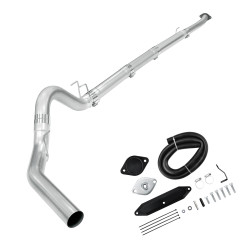
Applicable Years: 2020–2022 F250/F350 6.7L Powerstroke
Included: 5-inch downpipe-back DPF delete pipe without muffler + EGR delete kit
Are tunes included: No. ⚠️ This is a hardware kit. It does not include a tuner or tune files. Be sure to understand this before purchasing.
Features: The 5-inch pipe diameter is larger than the 4-inch pipe used on earlier models, allowing greater exhaust flow and forming the foundation for higher power output. Because this generation has a stricter ECU locking mechanism than earlier models, old-style tuners such as Mini Maxx cannot be used. Cloud-based tuning platforms such as EZ Lynk must be used.
Tuner Hardware: EZ Lynk Auto Agent 3
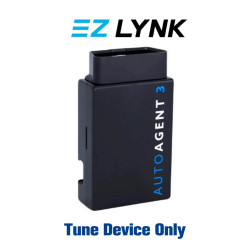
Applicable Years: Compatible with multiple diesel engines from 2011–2026, including Powerstroke, Cummins, and Duramax
Product Description: EZ Lynk Auto Agent 3 is one of the mainstream cloud-based tuners on the market today. There is no need to connect a computer or insert/remove an SD card. After downloading the mobile app and connecting to the OBD port, tune files can be flashed directly through the cloud.
Are tunes included: No. The tuner hardware itself does not include tune files. Tunes need to be purchased separately.
Tune Files: 2020–2022 EZ Lynk Custom Tuning File
Applicable Years: 2020–2022 F250/F350/F450/F550 6.7L Powerstroke
Included: 30+ tune files, including emissions on/off modes, supports both engine and transmission tuning, and allows switching files freely within 4 weeks.
Is the tuner included: No. This is tune files only and must be used with EZ Lynk Auto Agent 3 hardware.
⚠️ Important: After 4 weeks, the tuner will be locked to the last file you selected, and you will no longer be able to switch freely. You can purchase an SOTF switch separately for about $60, or upgrade to lifetime access.
Is a Ford F250/F350 Delete Kit Legal?
Regulations are a core issue every owner must take seriously before modifying. U.S. federal regulations and state enforcement standards vary greatly.
At the federal level, the U.S. EPA, or Environmental Protection Agency, explicitly prohibits removing or modifying factory exhaust emissions control systems. DPF and EGR are both legally regulated emissions components. Removing them without authorization is considered an illegal modification, and driving the vehicle on public roads carries legal risk.
However, enforcement varies widely by state. In places such as Florida, Texas, and Tennessee, where there are no mandatory vehicle inspections or emissions testing, delete kits are very common in the local truck community, and daily street use is usually not actively checked. In states with strict inspections and emissions testing, modified vehicles may fail inspection and may also face fines.
Installation and Practical Guide
Estimated Installation Time
Before you begin, first understand the time budget. Different sources give slightly different time ranges. Below is a combined reference:
| Installation Method | Estimated Time | Notes |
| DIY Installation | 6–12 hours | Owners with proper tools and experience can complete it in one day; beginners should reserve an entire weekend |
| Professional Shop Installation | 4–8 hours | Shops usually ask you to leave the truck for the whole day |
| EGR Delete Only | 4–8 hours | The EGR portion takes the longest and requires draining a large amount of coolant |
| DPF Delete Pipe Only | 1–3 hours | Relatively simple; mainly involves removing and installing exhaust piping |
Key factors affecting time: vehicle age and rust level, whether tools are complete, and whether you have diesel truck modification experience.
Installation Order, Core Four Steps
⚠️ Golden Rule: Tune first, then turn the wrench!
- Flash the tune: Disconnect the negative battery terminal, then follow the tuner instructions to flash the file into the ECU, about 15–45 minutes.
- Remove DPF/DEF hardware: Remove the exhaust pipe, disconnect sensors, and cut off rusted bolts if necessary. Josh used an angle grinder.
- Remove the EGR system: Drain coolant → remove the EGR valve and cooler → install block-off plates. Tighten strictly to torque specs; aluminum intake side: 18 ft-lb.
- Install the new exhaust pipe: Install the delete pipe, connect sensors, refill coolant, and test-drive to check for leaks.
Detailed Installation Instructions
SuncentAuto Official Guide: https://www.suncentauto.com/installation-guides
Conclusion
For Ford F-250 and F-350 6.7L Powerstroke diesel truck owners, delete kits are a popular modification solution for addressing factory emissions system failures and improving vehicle reliability. Note that a complete kit = tuner + DPF delete pipe + EGR delete. None of these can be missing. Pay special attention to whether the tuner includes tune files.
SuncentAuto provides multiple delete kits covering 2011–2025 models at competitive prices, but before purchasing, be sure to confirm whether the kit includes tunes and whether shipping costs are transparent.
We hope this article helps you make an informed and rational decision. Whether you ultimately choose to keep or delete the system, understanding the full picture is the most important thing.