





 Check if this fits your vehicle


 Notes
Deeper, Louder 5.9L Cummins Sound
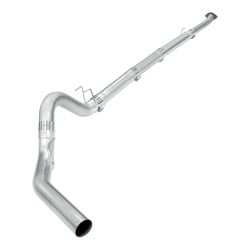
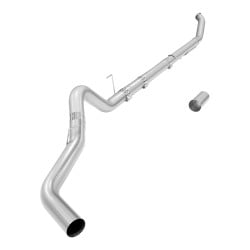
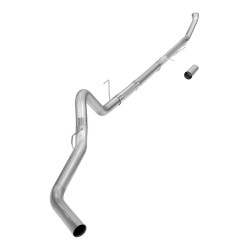
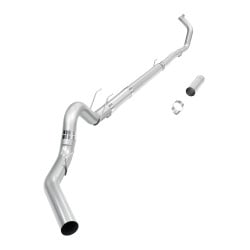
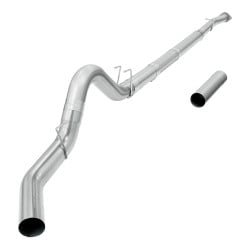
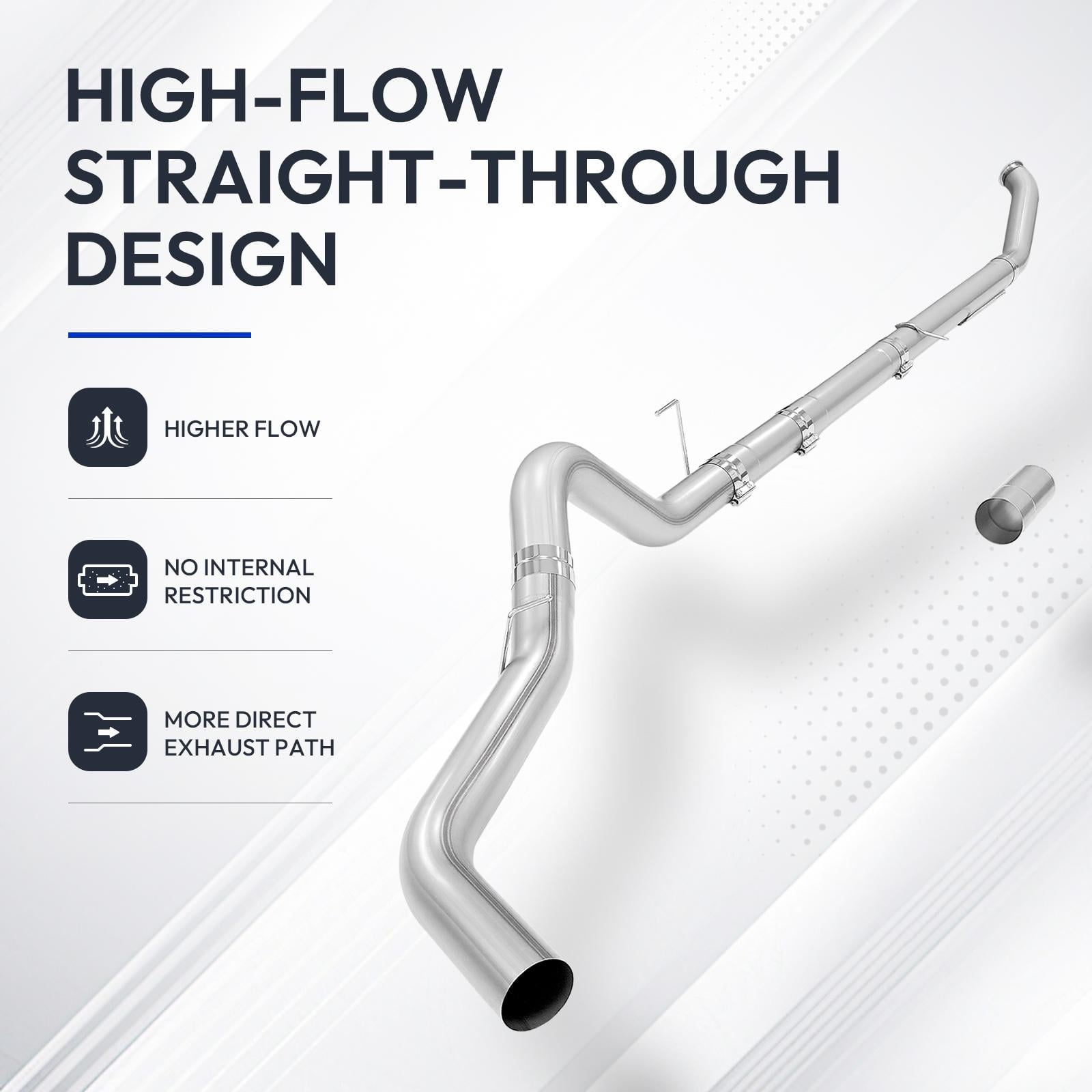
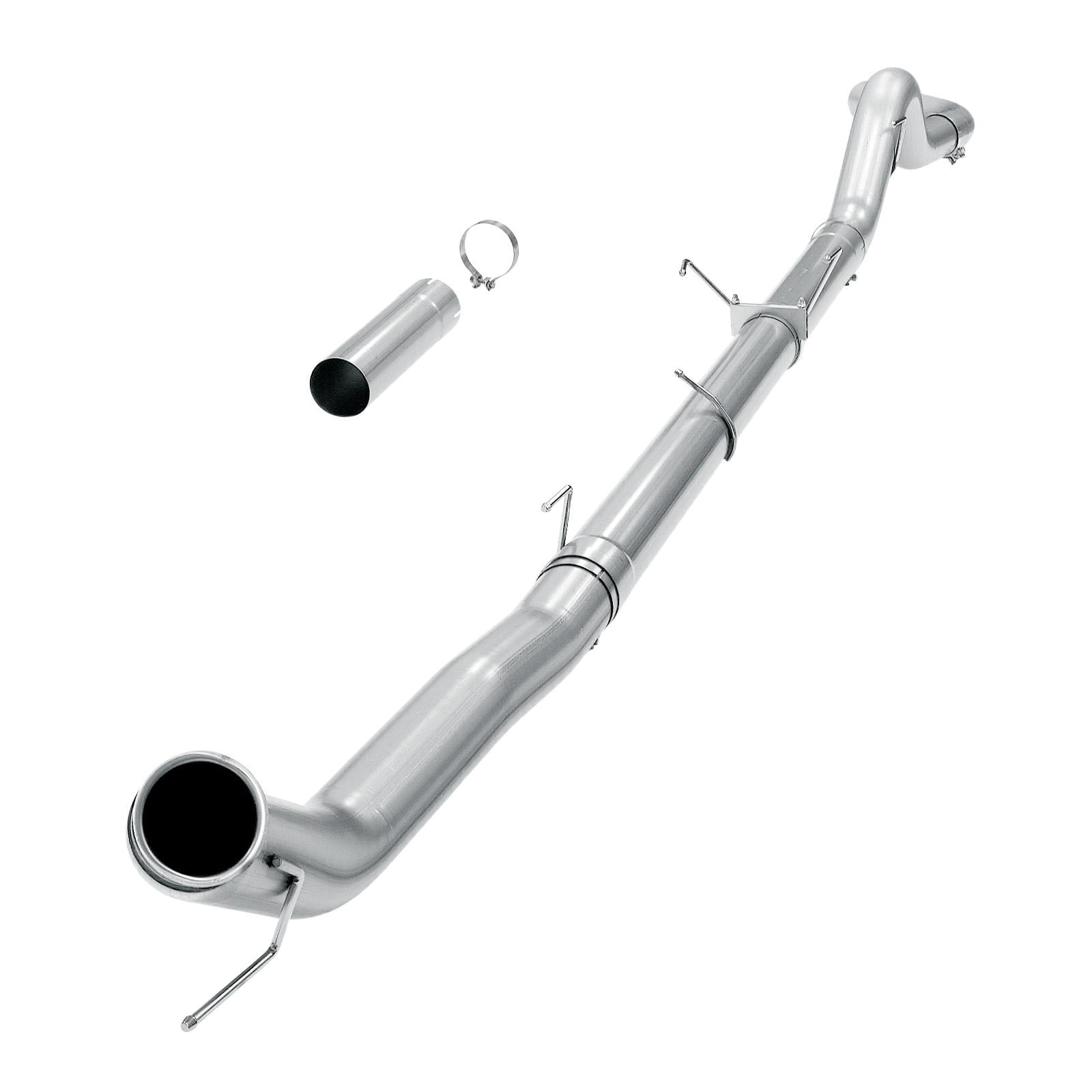
The 5-inch no-muffler layout gives the 5.9L Cummins a deeper exhaust tone with a stronger diesel note and more noticeable turbo sound under acceleration. It is a direct choice for owners looking for the classic straight-pipe 3rd-Gen Cummins sound.
56% More Pipe Area Than a 4" Exhaust
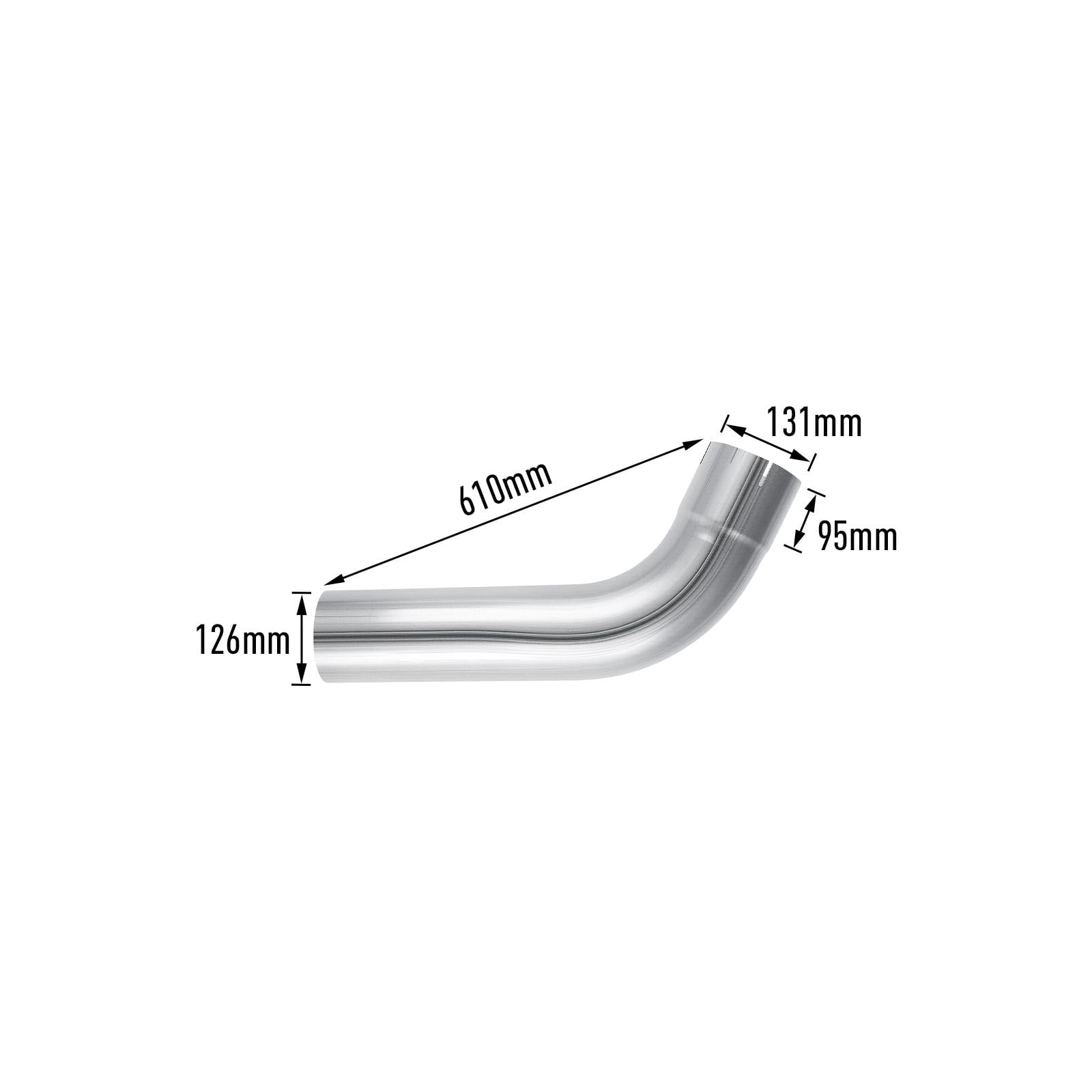
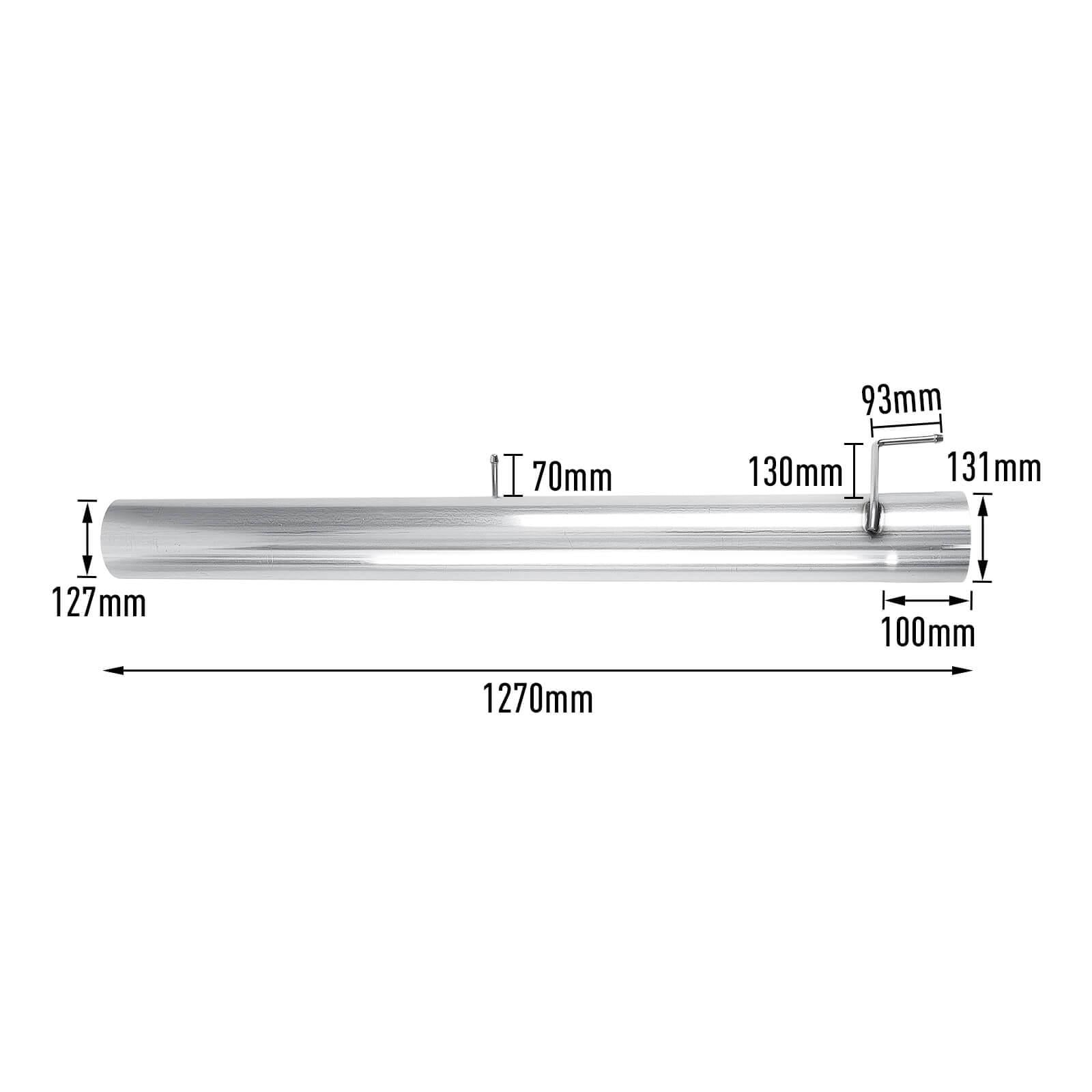
A 5-inch pipe has about 56% more cross-sectional area than a 4-inch pipe, giving the main exhaust section more flow capacity. That extra capacity is especially useful when the truck is being built around a larger turbo, upgraded injectors, additional fueling, or other higher-flow modifications.
A Full Turbo-Back Upgrade for the Early 3rd-Gen
2003–early 2004 5.9L Cummins trucks originally use approximately 3.5-inch exhaust ahead of the muffler and 4-inch tubing behind it. A turbo-back system replaces much more of that factory exhaust path than a simple rear-section or cat-back upgrade.
2 mm T409 Stainless for Long-Term Truck Use
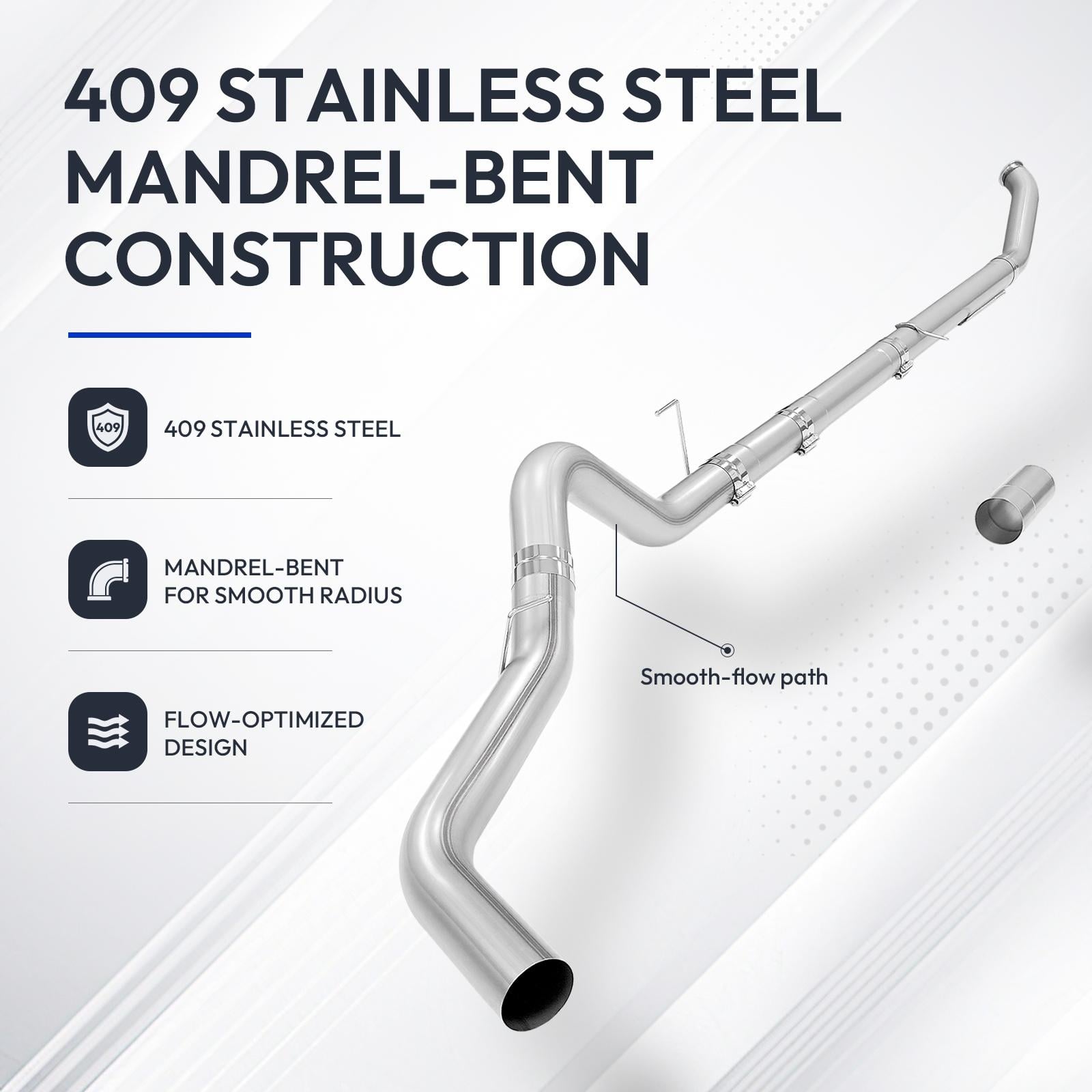
The system uses 2 mm T409 stainless-steel tubing, giving an older 3rd-Gen Ram a stronger, more corrosion-resistant replacement for an aging factory or aluminized exhaust. These are confirmed specifications of this Suncent system.
Check if this fits your vehicle
Will not fit regular cab
Will not fit the Cab & Chassis
A 5-inch system without a muffler allows more of the exhaust note to reach the cabin than a factory-style or muffled exhaust. At steady highway speeds, the exhaust will remain more noticeable, while acceleration and engine load bring out more of the 5.9L Cummins engine and turbo sound.
The exact cabin sound varies with engine RPM, transmission gearing, cab and bed configuration, exhaust exit position, and other modifications on the truck. A Quad Cab long-bed truck running at one cruising RPM can sound different inside the cab from another configuration using the same pipe diameter.
One common misunderstanding is that “5-inch turbo-back” means the exhaust is five inches directly at the turbo outlet. That is not how the early 3rd-Gen 5.9L exhaust is configured.
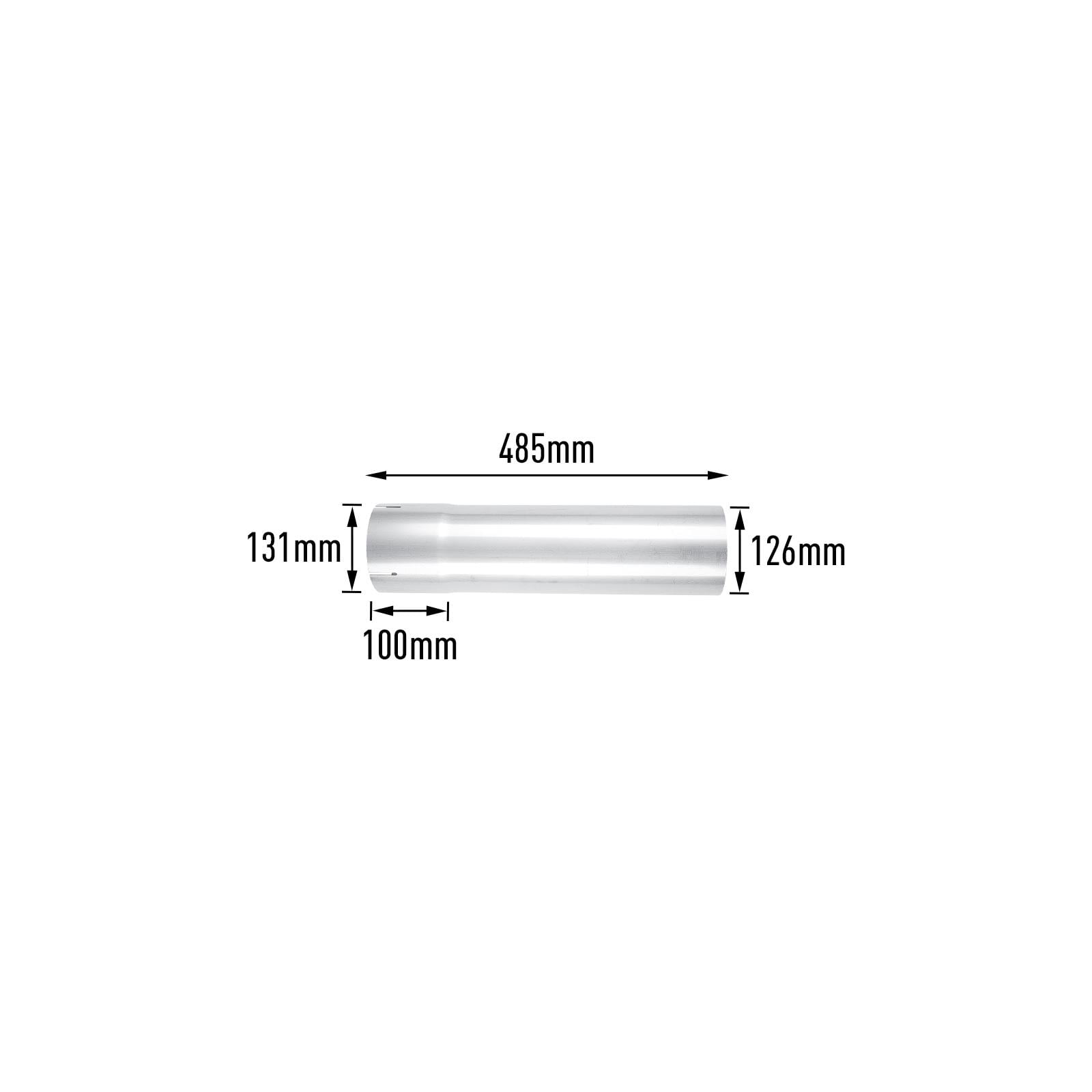
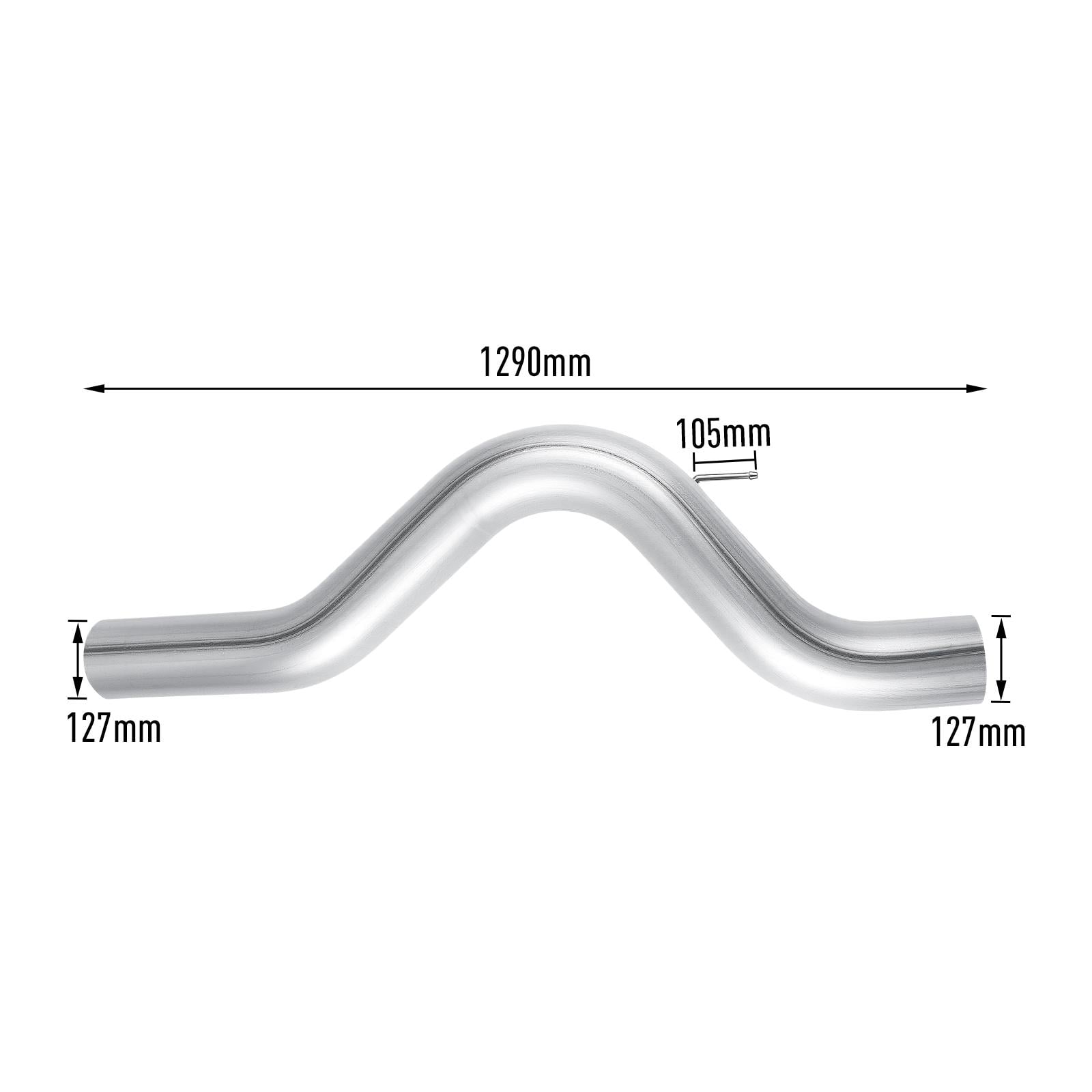
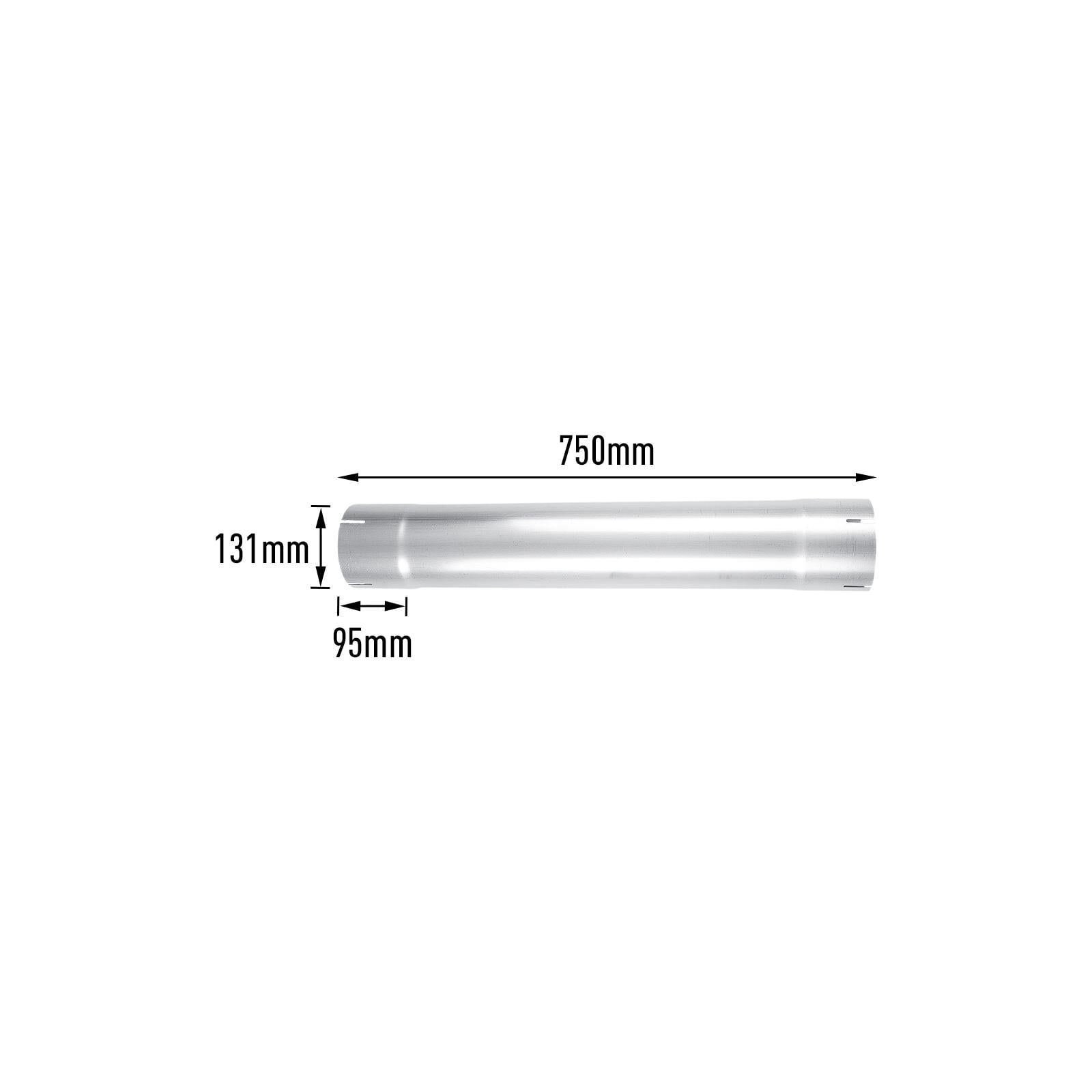
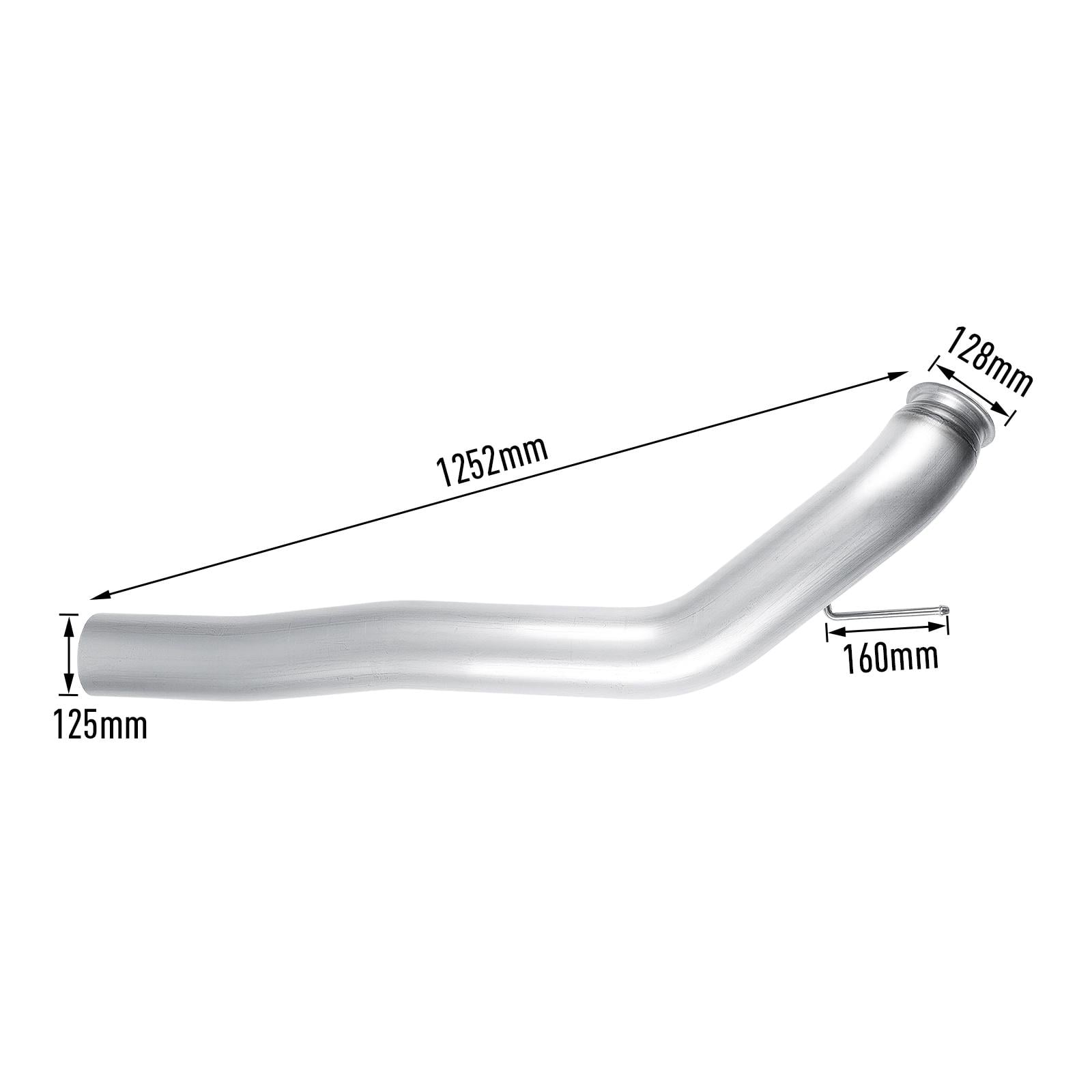
The turbo-side connection and downpipe are smaller than the main 5-inch exhaust section. The system transitions in diameter before reaching the larger tubing farther downstream.
Comparable aftermarket systems for the 2003–2004 305 HP 5.9L Cummins commonly use a smaller front downpipe before transitioning into the 5-inch main exhaust. This is why two systems may both be described as “5-inch turbo-back” even though the connection directly at the turbo is not five inches.
The 2004 model year is an important transition point for the 5.9L Cummins. Early-2004 and 2004.5 trucks both use the 5.9L engine, but they do not use exactly the same turbo and exhaust configuration.
| Specification | Early 2004 | 2004.5 |
|---|---|---|
| Engine | 5.9L Cummins | 5.9L Cummins |
| Factory Power | 305 HP | 325 HP |
| Factory Torque | Approx. 555 lb-ft | 600 lb-ft |
| Exhaust Layout | Earlier 2003–2004 configuration | Revised exhaust configuration |
| Turbo-Side Setup | Earlier turbo/exhaust connection | Updated turbo/exhaust connection |
| Aftermarket Grouping | Commonly listed as 2003–2004 / 305 HP | Commonly listed as 2004.5–2007 |
This is why many aftermarket manufacturers separate 2003–2004 and 2004.5–2007 exhaust applications instead of treating every 5.9L Cummins as the same fitment.
If your truck is a 2004 model, checking the factory engine rating is one of the easiest ways to identify which version you have.
If the engine identification information is unclear, the VIN can also be used to confirm the truck's original configuration. This is especially useful before ordering a turbo-back exhaust because the front exhaust connection changed during the model-year transition.
Installing a larger exhaust does not by itself create a tuning requirement on an otherwise stock early 5.9L Cummins.
The exhaust changes the path through which exhaust gases leave the engine, but simply increasing exhaust diameter does not directly change injector command, fuel quantity, timing, or engine calibration.
Tuning becomes more relevant when other parts of the engine or drivetrain are also changed.
| Truck Setup | Tuning Consideration |
|---|---|
| 5" Exhaust Only | The larger exhaust diameter alone does not create a tuning requirement. |
| Larger Injectors | Calibration may be used to properly manage the added fueling. |
| Upgraded Turbo | Tuning may be used to better match fueling and boost characteristics. |
| Fuel-System Upgrades | Engine calibration should be considered as part of the overall fueling setup. |
| Multiple Performance Upgrades | The tune should match the complete engine combination rather than the exhaust alone. |
| Transmission Modifications | Transmission tuning may be considered separately from the engine exhaust setup. |
The 2003–2004 5.9L Cummins belongs to an earlier exhaust and emissions generation than later 6.7L Cummins trucks. This matters because many terms commonly used for newer diesel exhaust systems do not describe the same hardware on an early 5.9L.
When choosing a turbo-back exhaust for this platform, the more useful questions are:
Answering these questions makes it much easier to match the exhaust to the truck instead of treating every Cummins turbo-back system as the same application.
 IMPORTANT NOTICE
This product is intended for off-road, racing, or competition use only and is not legal for public road use or for vehicles subject to emissions regulations in the United States. Vehicles equipped with this product may fail emissions or state inspections.
Customers are responsible for ensuring compliance with all applicable local, state, and federal laws. Installation of aftermarket parts may also affect your vehicle warranty—please consult your manufacturer for warranty coverage.
International legality may vary; users should confirm local laws before installation.
| 5 Star |
|
|
60% |
| 4 Star |
|
|
35% |
| 3 Star |
|
|
4% |
| 2 Star |
|
|
0% |
| 1 Star |
|
|
0% |