 Contents
Contents
- What Does a Muffler Do? Why Does It Limit Sound and Airflow?
- What Is a Resonator? Why It Is the Ultimate "Drone" Killer
- Diesel vs. Gasoline Exhaust: Why the Rules Change for Cummins, Duramax, and Powerstroke
- DPF-Back Exhaust Guide: Muffler, Muffler-Less, or Exhaust Cutout?
- The Full Release: Why the Muffler Matters More After a DPF Delete
- Final Verdict:
- FAQs
In the world of exhaust modification, Resonators and Mufflers are the two most discussed components. While both are installed within the exhaust system and influence the final sound, they serve entirely different engineering purposes.
Simply put: The Muffler primarily controls the volume, while the Resonator adjusts the tone (sound quality).
Understanding the engineering logic behind these two is the first step in avoiding expensive "modder's remorse." Deleting either one does not automatically make your vehicle sound "better."
What Does a Muffler Do? Why Does It Limit Sound and Airflow?
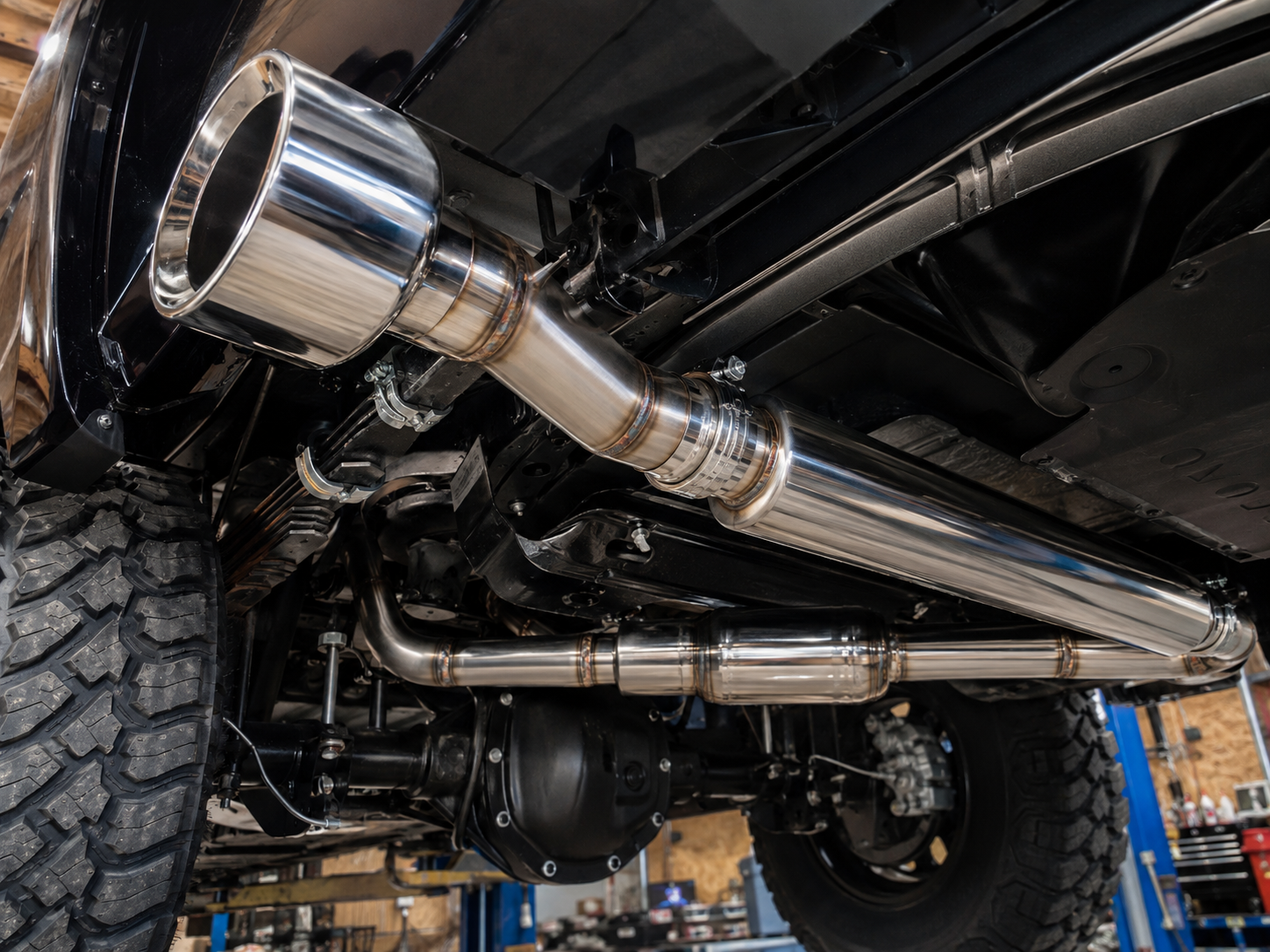
Think of the exhaust muffler as the "volume knob" of your vehicle. Its core mission is to reduce the overall decibels (dB) produced by the engine, ensuring the vehicle meets daily driving comfort standards and local noise regulations.
The Mechanics of Silence
After combustion, exhaust gases exit the engine as high-temperature, high-pressure pulses. Without a muffler, these pulses would result in a direct, raw, and piercingly loud noise. To combat this, a muffler uses several internal features:
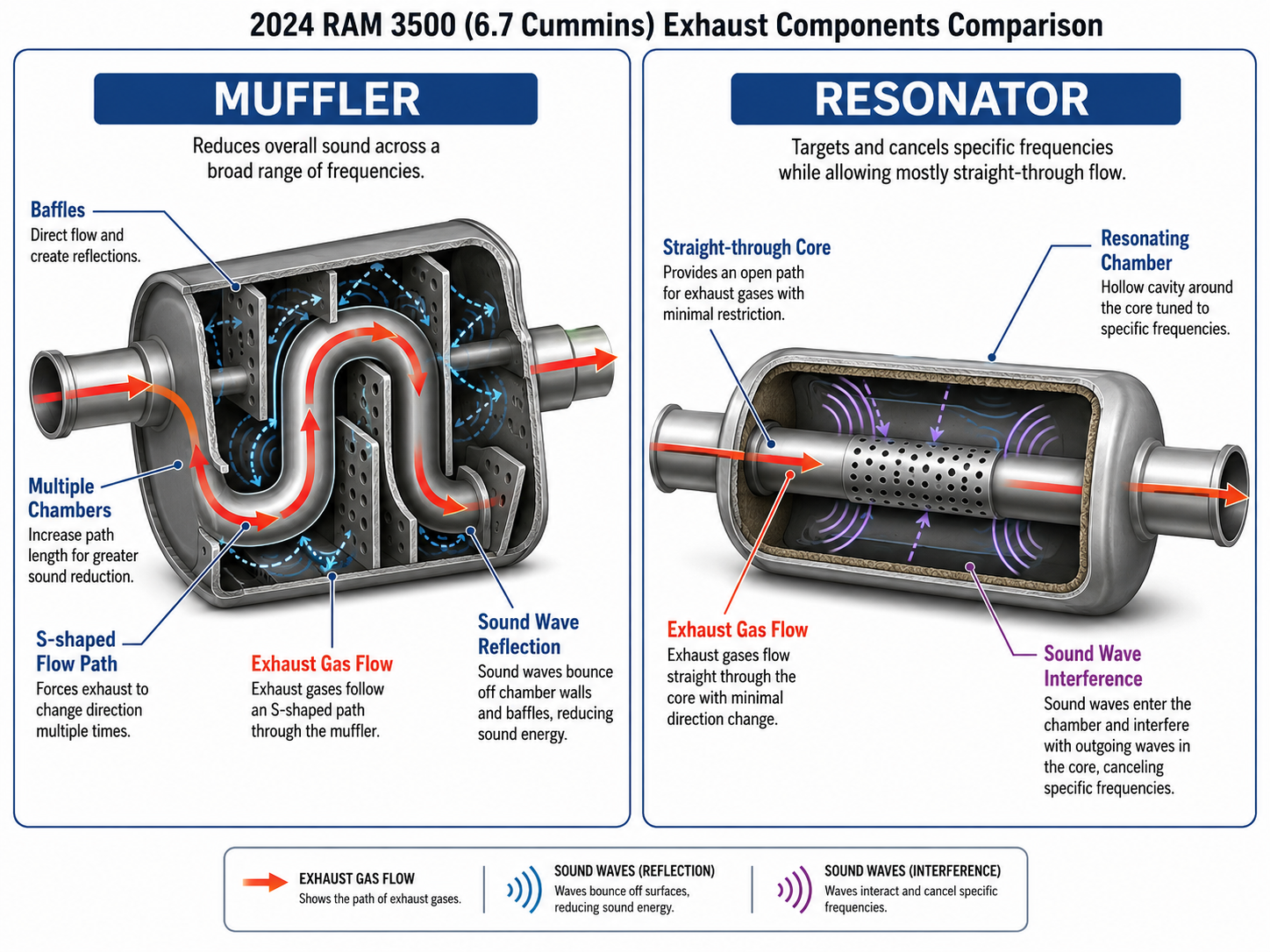
- Perforated Tubes: To disrupt sound waves.
- Baffles: To force sound waves to bounce and cancel each other out.
- Sound-Absorbing Materials: Like fiberglass or steel wool to soak up acoustic energy.
- Multi-Chamber Structures: To trap specific frequencies.
- S-shaped or Redirected Flow Paths: To lengthen the travel distance of the sound.
The Trade-off: Backpressure vs. Quietness
While effective at noise reduction, these internal mazes create backpressure. This resistance forces the engine to work harder to expel waste gases, consuming more energy in the process.
Most factory mufflers prioritize quietness, compliance, and low production costs. In contrast, performance or "straight-through" mufflers use a perforated core wrapped in packing material. This design offers a much more direct exhaust path, significantly improving exhaust flow velocity and power output at high RPMs, though at the cost of a louder exterior note.
What Is a Resonator? Why It Is the Ultimate "Drone" Killer
Unlike the muffler, a resonator isn't designed to lower the total volume of your car. Instead, think of it as a "Frequency Scalpel." Its job is surgical: it identifies and eliminates specific, unpleasant sound frequencies without muffling the raw character of the engine.
The Science of Sound Cancellation
A resonator is a hollow chamber that works on the principle of destructive interference. As exhaust pulses pass through, specific sound waves bounce off the chamber walls and collide with incoming waves. When timed correctly, these waves cancel each other out, leaving behind a cleaner, more refined exhaust note.
Understanding "Exhaust Drone": The Driver's Nightmare
Many owners encounter a frustrating phenomenon after modifying their exhaust: Drone. This isn't just "loudness"; it is a persistent, low-frequency humming that vibrates through the cabin.
- When it happens: Usually during highway cruising at a steady RPM (typically 1,800–2,500 RPM).
- How it feels: It can cause physical discomfort, headaches, and interior rattling, making long-distance driving unbearable.
- The Cause: This occurs when the exhaust frequency matches the natural resonance of the car's cabin.
Why You Might Regret a Resonator Delete
If you remove the resonator purely to increase volume, you often end up with a sound that is "raspy" and "broken," accompanied by intense cabin vibrations. This "cheap" noise quality is often the biggest regret for enthusiasts.
For those debating between a straight pipe and a more tuned setup, check out our comparison on Muffler Delete vs. Straight Pipe to see which path fits your goals.
Diesel vs. Gasoline Exhaust: Why the Rules Change for Cummins, Duramax, and Powerstroke
In the world of performance tuning, many truck owners try to apply gasoline engine logic to their heavy-duty diesels. However, for Cummins, Duramax, or Powerstroke engines, the exhaust game has changed fundamentally due to complex after-treatment systems.
The DPF/SCR System: Your "Chief Silencer"
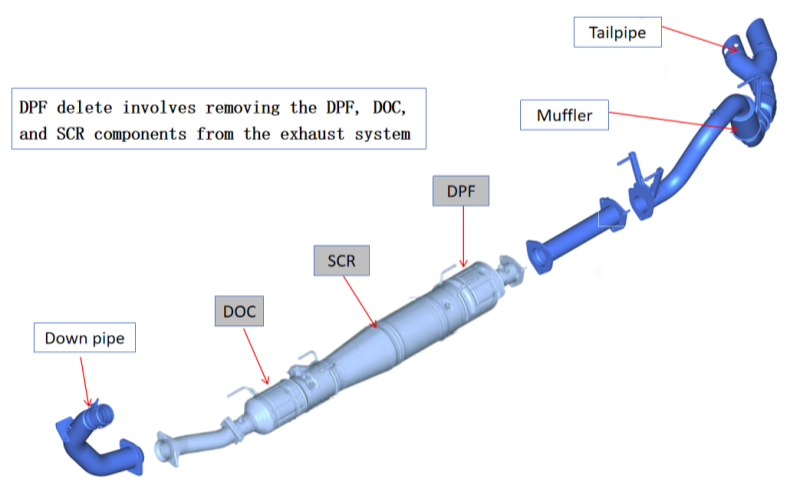
On a gasoline vehicle (like a Mustang or HEMI platform), exhaust pulses hit the muffler with full intensity. Diesel trucks are different. The Diesel Particulate Filter (DPF) contains an incredibly dense ceramic honeycomb structure designed to trap soot.
While its primary job is emissions, the DPF acts as a massive physical sound barrier. By the time exhaust gases pass through the DPF and SCR (Selective Catalytic Reduction) systems, roughly 80% of the raw combustion noise energy has already been absorbed or dissipated.
| Feature | Gasoline Engine | Diesel (with DPF) |
|---|---|---|
| Straight Pipe Sound | Ear-piercingly loud, "raspy" | Deep, muffled, clear turbo spool |
| Primary Focus | Sound decibels & "Pops" | EGT cooling & backpressure |
| Modification Type | Muffler/Resonator swaps | DPF-back or Delete systems |
The "Subtraction Logic" of Diesel Performance
Since the DPF already handles the heavy lifting of noise reduction, a factory-installed muffler often becomes a redundant obstruction to airflow. This is why a "Muffler-Less DPF-Back" setup is the "sweet spot" in the diesel community. It offers:
- Optimized EGTs: Lower Exhaust Gas Temperatures by letting heat escape faster.
- Turbo Spool: Reduced backpressure allows the turbo to spool up quicker under load.
- Quality Over Volume: You get a distinct, muscular diesel growl and a clear turbo whistle without the obnoxious "straight-pipe" crackle of a gas engine.
For diesel owners, optimizing the exhaust isn't just about sound—it's about letting the engine "breathe" under heavy towing or steep climbs.
DPF-Back Exhaust Guide: Muffler, Muffler-Less, or Exhaust Cutout?
Once you understand the unique silencing logic of a diesel engine, the next step is choosing the right DPF-Back configuration (the section of exhaust after the DPF). This decision impacts both your truck's performance and its acoustic character.
Option 1: The Full Muffler Setup – Maximum Stealth
This is the best choice for the Daily Driver. If you use your truck for long-distance highway travel or family trips, a high-performance muffler will filter out the remaining 20% of noise that the DPF misses. It ensures a whisper-quiet cabin environment with zero risk of fatigue from humming sounds.
Option 2: Muffler-Less (Straight-Through) – Unleashing the Turbo
This is currently the most popular balance in the diesel world. By removing the redundant muffler, you create a more direct path for exhaust gases.
- The Benefit: Lower Exhaust Gas Temperatures (EGT) and the unmistakable sound of the turbocharger spooling up.
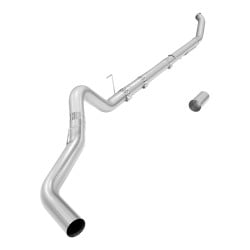
- 4-inch vs. 5-inch: Upgrading to a larger diameter like the KAX 5" DPF-Back Exhaust provides a larger internal volume than factory pipes. This further reduces backpressure and yields a deeper, more resonant tone compared to 4-inch systems.
Option 3: The Advanced "Cutout" Solution – The Best of Both Worlds
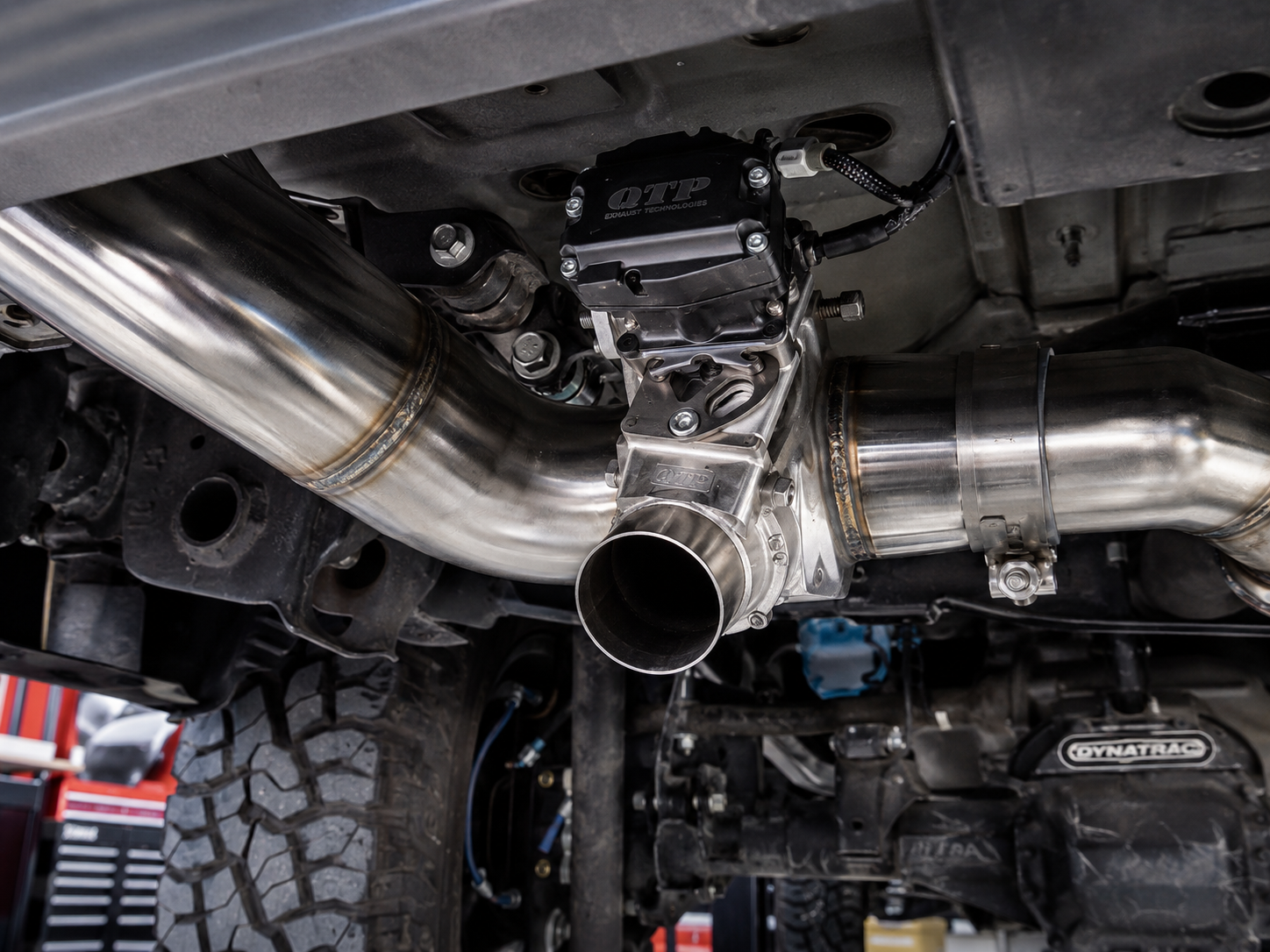
An Exhaust Cutout is a Y-pipe with an electronically controlled valve. It allows you to toggle between "Stealth Mode" and "Beast Mode" at the push of a button.
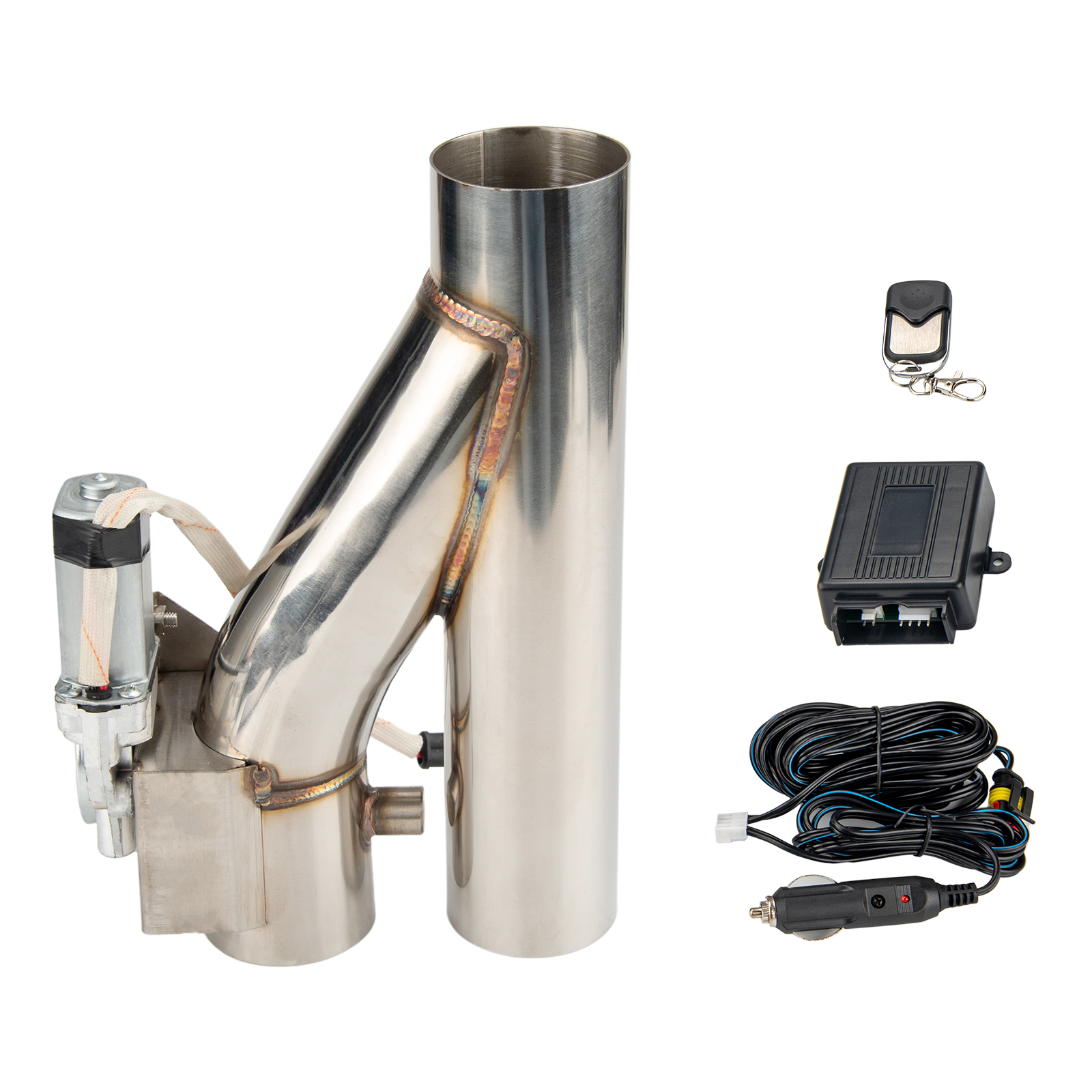
- Open Mode (Race/Towing): Exhaust bypasses the muffler entirely, providing the lowest possible backpressure for extreme power or heavy uphill towing.
- Closed Mode (Street/Home): Exhaust is forced back through the muffler, allowing you to return home late at night without disturbing the neighbors.
The Full Release: Why the Muffler Matters More After a DPF Delete
It is crucial to clarify a common naming confusion in the aftermarket: a standard DPF-Back kit retains the factory emissions system, whereas a setup like the KAX 5" Delete Pipe is designed to remove the DPF entirely. Once the DPF—your "Chief Silencer"—is gone, the logic of your exhaust system flips instantly.
The Raw Reality of the "Beast Mode"
When the DPF is deleted, the violent exhaust pulses that were once filtered by the ceramic honeycomb are now unrestricted. If you opt for a Muffler-Less setup at this stage, your truck enters "Beast Mode." While the performance gains are massive, the sound becomes incredibly loud, often characterized by a sharp, metallic "clatter" that can be polarizing.
The Lifesaver: The Muffler’s Role in a Delete Setup
In a DPF-Delete configuration, the muffler is no longer an obstruction; it becomes your last line of defense for maintaining "neighborly relations" and cabin sanity. A high-flow performance muffler can:
- Filter Harshness: Smooth out the ear-piercing high-frequency "crack" while leaving a deep, muscular diesel roar.
- Preserve Horsepower: Modern high-flow mufflers provide noise reduction without the restrictive backpressure of factory units.
The 5-Inch Logic: Flow is Everything
For high-displacement engines like the Cummins 6.7L, the primary goal of a 5-inch straight pipe (such as professional delete pipes) is to eliminate heat soak. In this extreme flow environment, backpressure drops to near zero, and Exhaust Gas Temperatures (EGTs) see a drastic improvement, directly protecting your turbo and engine life.
Why Delete Players Need a Resonator More Than Ever
Without the DPF to buffer sound waves, Exhaust Drone becomes a major threat.
- The Solution: If you are chasing ultimate performance but still plan on driving long distances, we strongly recommend pairing your delete pipe with a high-performance Resonator to suppress resonance at 2,000 RPM, or installing a Cutout valve. This gives you the freedom of a straight pipe on the track and a muffled note on the highway.
Summary: Modification should be based on use case and tolerance. For street daily use, keep a high-quality muffler. For towing, prioritize large diameters for cooling. For the ultimate enthusiast, a combination of a delete pipe, a high-quality muffler, and a cutout valve offers the most complete control over your rig.
Final Verdict:
Don't just delete parts blindly. Choose based on your vehicle type and your tolerance for noise. For the ultimate setup on a heavy-duty diesel, the SunCent 5" Delete Pipe combined with a high-quality muffler and a cutout valve represents the most complete way to master your exhaust.