 Contents
- Performance Analysis of the 6.7 Powerstroke
- 6.7 Powerstroke Reliability by Model Year (2011–2026)
- 6.7 Powerstroke Reliability and High-Mileage Owner Experience
- Common Problems Affecting 6.7 Powerstroke Engine Reliability
- Improving the Reliability of 6.7 Powerstroke: Maintenance and Upgrades
- Is a Used 6.7 Powerstroke Worth Buying?
- 6.7 Powerstroke vs. 6.6 Duramax: Reliability Comparison
- Conclusion: Is the 6.7 Powerstroke a Good Engine?
- FAQs
Ford's 6.7L Powerstroke is one of the more reliable modern heavy-duty diesel engines, particularly the improved 2015 and later versions. Many owners report exceeding 300,000 miles, but early turbocharger failures, CP4 fuel pump problems, and emissions-system repairs can make certain model years expensive to own.
Introduced in 2011 for Ford Super Duty trucks such as the F-250 and F-350, the 6.7L Powerstroke diesel engine combines strong towing capability with long-term durability. This guide examines 6.7 Powerstroke reliability by model year, major mechanical problems, real owner experiences, and whether a used or new 2026 Powerstroke is worth buying.
Quick take: The 2017–2019 models are among the strongest used-buy choices for their mature design and established service history. The 2020–2022 trucks offer updated performance but require particular attention to fuel-pump recalls. Newer 2023–2026 models offer more power, although they have less long-term mileage history.

Performance Analysis of the 6.7 Powerstroke
Developed in-house by Ford to replace the Navistar-supplied 6.4L Powerstroke, the 6.7L engine was designed to improve durability, fuel economy, and performance. Its power has increased substantially since 2011, making it a strong choice for towing trailers, fifth-wheel campers, and commercial equipment.
Horsepower and Torque Performance
The 6.7 Powerstroke has gained power through several major updates:
- 2011–2014: Originally rated at 390 hp and 735 lb-ft, later increased to 400 hp and 800 lb-ft.
- 2015–2016: 440 hp and 860 lb-ft.
- 2017–2019: Up to 450 hp and 935 lb-ft.
- 2020–2022: 475 hp and 1,050 lb-ft.
- 2023–2026: Up to 500 hp and 1,200 lb-ft with the available High Output engine.
For 2026, the standard 6.7L Powerstroke produces 475 hp and 1,050 lb-ft, while the High Output version delivers 500 hp and 1,200 lb-ft. The extra torque is useful for heavy towing, but greater output does not automatically mean better engine longevity.
Towing Capacity
Properly equipped 6.7 Powerstroke Super Duty trucks can tow well over 20,000 pounds, with certain configurations exceeding 35,000 pounds. Actual capacity depends on model year, axle ratio, cab, drivetrain, and trailer setup. This puts the Powerstroke in direct competition with Ram's 6.7 Cummins and GM's 6.6 Duramax.
Fuel Efficiency
Real-world fuel economy varies with weight, gearing, terrain, and driving conditions. Owners commonly report approximately 15–17 MPG when unloaded and 10–12 MPG while towing heavy loads. These are general owner-reported ranges, not official EPA ratings or guaranteed results.
6.7 Powerstroke Reliability by Model Year (2011–2026)
Which 6.7 Powerstroke years are most reliable? For used-truck buyers, 2017–2019 models are among the best years to consider. They benefit from Ford's earlier turbocharger improvements and years of established ownership experience. The 2015–2016 trucks are also worth considering, while 2011–2014 models deserve closer inspection because of early turbocharger weaknesses.
| Model Years | Reliability Assessment | Main Considerations |
|---|---|---|
| 2011–2014 | Buy with caution | Early turbocharger problems, aging fuel and emissions components, and higher repair exposure. |
| 2015–2016 | Good used option | Improved turbocharger design and power output. Check CP4 condition and service history. |
| 2017–2019 | Top used-buy choice | Mature second-generation design with substantial real-world mileage history. Fuel-system and emissions repairs remain possible. |
| 2020–2022 | Good, but check recalls | Third-generation engine and 10-speed transmission. Certain trucks are covered by high-pressure fuel-pump recalls. |
| 2023–2026 | Promising newer option | Updated engine design and High Output option. Long-term 300k-mile reliability remains less established. |
The 2015 turbocharger update was an important turning point. Ford replaced the earlier turbo arrangement with a revised design that offered improved performance and addressed a significant weakness of the first-generation engine.
The 2020 redesign introduced further engine updates and a 10-speed automatic transmission. However, newer technology also brought different repair considerations. Buyers should evaluate engine reliability, transmission condition, and recall history separately.
Is the 2026 6.7 Powerstroke Reliable?
The 2026 6.7 Powerstroke remains a strong heavy-duty diesel choice, benefiting from years of development since the original 2011 engine. Both Standard Output and High Output versions deliver substantial towing power.
Still, the 2026 model year is too new to demonstrate the same 200,000–300,000-mile ownership history available for older trucks. Buyers seeking maximum towing performance may prefer the High Output engine, but those prioritizing reliability should focus on maintenance requirements, warranty coverage, and long-term operating costs rather than horsepower alone.
6.7 Powerstroke Reliability and High-Mileage Owner Experience
Many 6.7 Powerstroke engines have surpassed 300,000 miles, but 6.7 Powerstroke life expectancy depends heavily on maintenance, operating conditions, and previous repairs. Reaching high mileage without major engine damage is possible, but that does not mean every truck will avoid expensive fuel-system, turbocharger, or emissions repairs along the way.
In a Reddit discussion about 6.7 Powerstroke reliability, owners describe high-mileage examples alongside concerns about fuel-system failures and maintenance costs. The discussion reflects why the condition of an individual truck matters as much as the engine's overall reputation.
A separate Powerstroke owners' discussion on Facebook includes reports of 2012 trucks operating above 300,000 miles, a 2012 model reportedly reaching 400,000 miles, and a 2013 truck claimed to have accumulated over 500,000 miles. However, another owner described a 2013 truck that required a replacement engine after a serious internal failure at relatively low mileage.
What does this tell buyers? High mileage alone does not make a 6.7 Powerstroke unreliable, and low mileage does not guarantee freedom from expensive failures. A 200,000-mile truck with documented maintenance and major repairs already completed may be a better purchase than a lower-mileage truck with an unknown history.
Common Problems Affecting 6.7 Powerstroke Engine Reliability
Despite its strong overall reputation, the 6.7 Powerstroke has several known weak points. The most serious 6.7 Powerstroke problems include CP4 fuel-pump failures, early turbocharger issues, and costly emissions-system repairs. CP4 failures deserve particular attention because one incident can contaminate multiple fuel-system components and leave the truck inoperable.
1. High-Pressure Fuel System (CP4 Pump) Problems
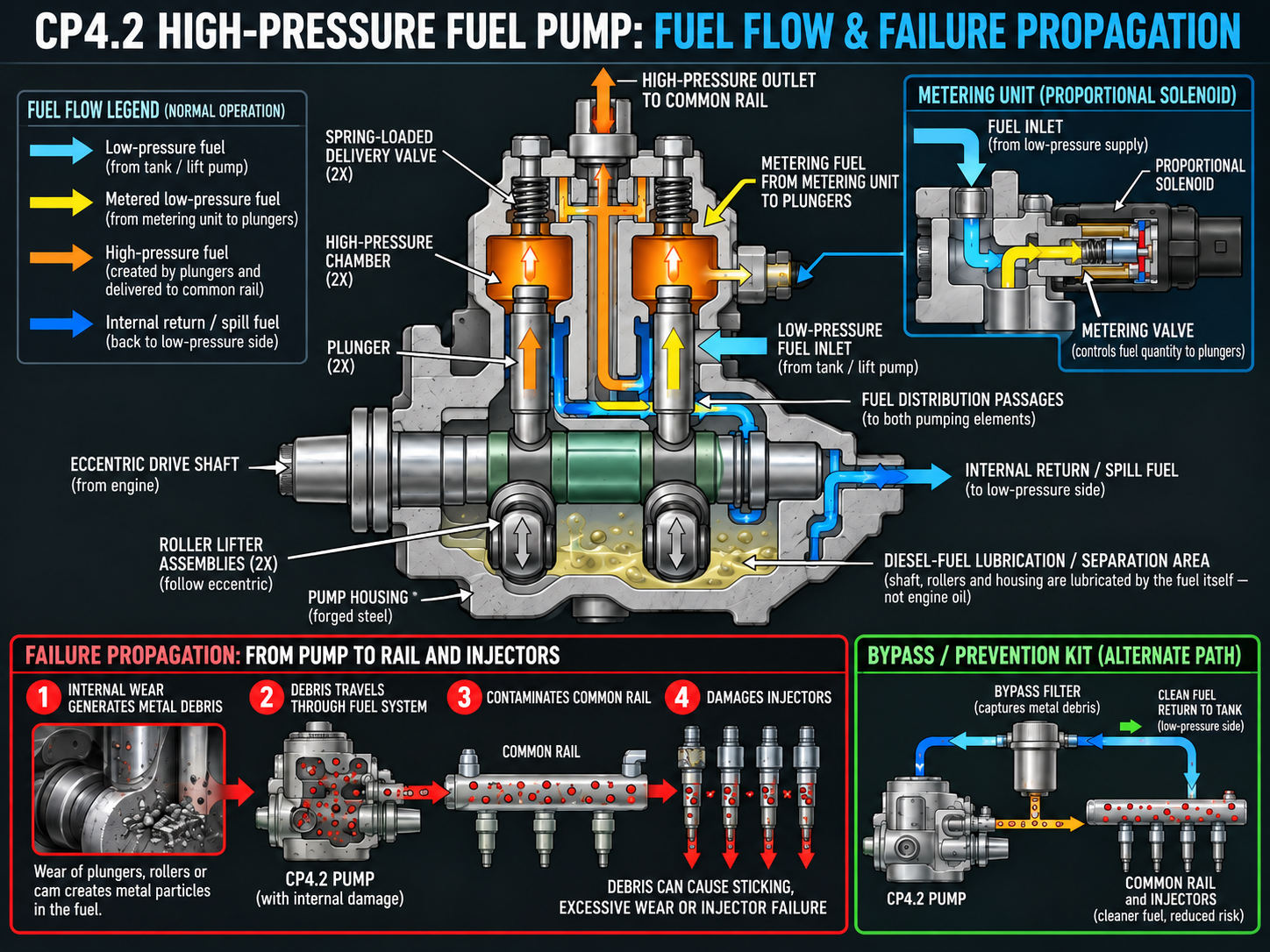
The Bosch CP4 high-pressure fuel pump is one of the most consequential reliability concerns on the 6.7 Powerstroke. Fuel contamination, inadequate lubrication, or internal wear can contribute to pump failure. In severe cases, metal debris spreads through the fuel system, requiring extensive repairs beyond replacing the pump itself.
Why it matters: A failed CP4 can lead to a repair bill running into thousands of dollars, potentially reaching five figures when contamination damages injectors, fuel rails, and other components. Even though failure is not inevitable, the financial consequences make this a critical risk for owners and used-truck buyers.
Preventive measures include using clean, specification-compliant diesel fuel, replacing fuel filters on schedule, draining the water separator as required, and promptly investigating fuel-pressure warnings. Aftermarket disaster-prevention kits may help limit debris contamination in certain failure scenarios, but they do not prevent every pump failure.
2026 Update: Ford CP4 Fuel Pump Recalls
Ford's 6.7 Powerstroke fuel pump recalls continued to receive attention through 2026. The 24S78 / NHTSA 24V957 campaign potentially covered approximately 295,449 vehicles, including certain 2020–2022 Super Duty diesel trucks. Pump failure can cause a sudden loss of motive power, creating a serious safety risk.
In 2026, Ford issued 26S17 / NHTSA 26V158 after discovering that some vehicles previously serviced under 24S78 had not received the correct software. Buyers should check the VIN and confirm that all applicable recall work was properly completed.
2. Turbocharger Problems (Early Models)
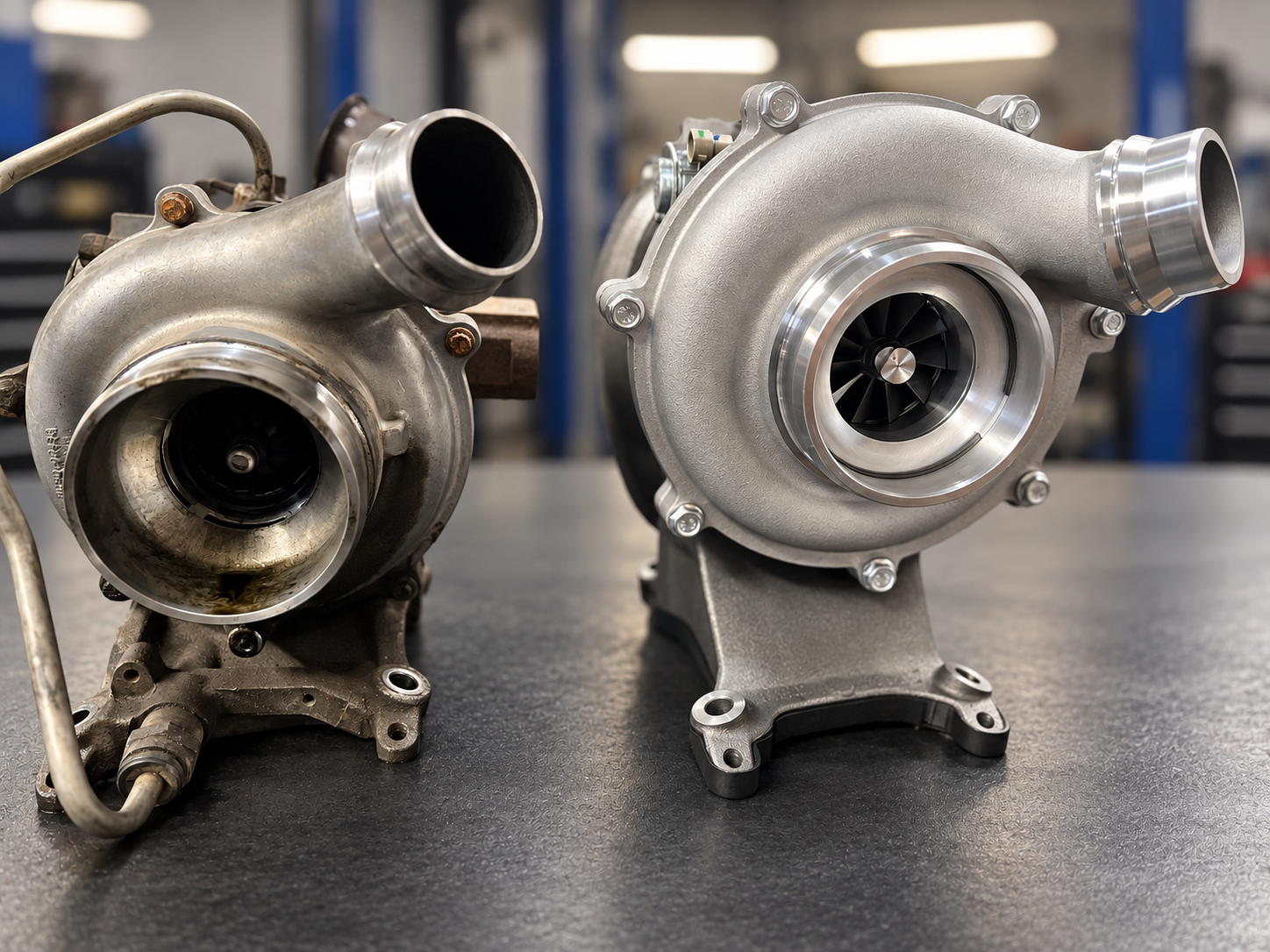
The variable geometry turbocharger (VGT) helps the 6.7 Powerstroke deliver strong low-end torque and efficient power across different engine speeds. However, 2011–2014 models are known for early turbocharger weaknesses, including bearing-related failures.
Ford introduced an improved turbocharger arrangement for 2015, making that model year an important reliability upgrade. This is one reason 2015 and later trucks are generally more attractive to buyers seeking a used 6.7 Powerstroke.
Warning signs include abnormal turbo noise, reduced boost, poor acceleration, and oil leakage. On an early truck, check whether the turbocharger has already been replaced and whether the work was documented.
3. Emission System (DPF, EGR, DEF) Problems
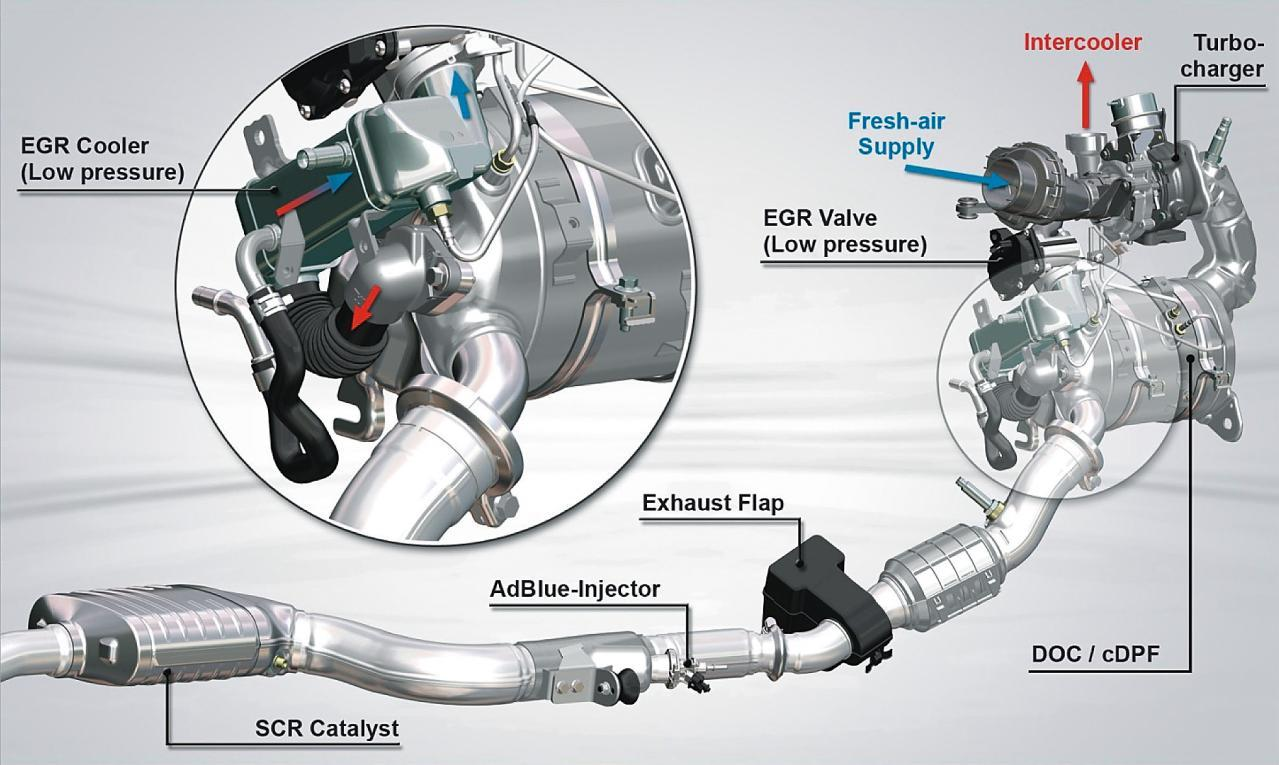
Diesel particulate filters (DPF), exhaust gas recirculation (EGR), and diesel exhaust fluid (DEF) systems allow modern Powerstroke engines to meet emissions standards. As mileage increases, problems such as restricted DPF regeneration, EGR cooler leaks, DEF heater failures, and sensor faults can create expensive repairs and vehicle downtime.
Trucks used mainly for short trips or extended idling can be more vulnerable to DPF regeneration problems than vehicles regularly driven under conditions that allow regeneration to complete.
DEF system faults can trigger warning lights, reduced performance, or restart restrictions. A P20BA code on a 6.7 Powerstroke, for example, indicates a reductant heater control problem, while repeated DPF regeneration warnings may point to exhaust restrictions or sensor faults.
Routine maintenance and timely repairs help prevent smaller emissions-system faults from becoming expensive problems. Some owners also consider EGR delete kits to address recurring EGR-related issues, although disabling required emissions controls is prohibited for road-use vehicles under the U.S. Clean Air Act.
Improving the Reliability of 6.7 Powerstroke: Maintenance and Upgrades
Preventive maintenance is the most practical way to protect a 6.7 Powerstroke from avoidable repairs. The priority is keeping the oil, cooling, and fuel systems in good condition, especially on trucks used for heavy towing or long work cycles.
Preventive Maintenance Tips
- Regular oil changes: Follow Ford's maintenance schedule and oil-life monitor. The recommended 6.7 Powerstroke oil change interval depends on the model year and operating conditions, with heavy towing and extended idling potentially requiring more frequent service.
- Fuel filter changes: Replace filters according to Ford's schedule, use approved parts, and monitor the water separator. Clean fuel is particularly important for protecting the high-pressure injection system.
- Diesel particulate filter care: Allow regeneration to complete when conditions permit and investigate repeated regeneration problems or DPF warnings.
- Cooling and turbocharger inspection: Monitor coolant loss, boost abnormalities, oil leaks, and unusual noises before small problems turn into expensive failures.
Popular Reliability Upgrades
- CP4 disaster-prevention kit: Certain designs aim to reduce the spread of metal debris if the high-pressure pump fails. They limit potential consequences rather than eliminate the chance of failure.
- Fuel filtration improvements: Appropriate filtration and water separation can help protect sensitive fuel-system components.
- Turbocharger replacement or upgrades: Relevant mainly when addressing an existing failure or a known early-model weakness. A performance upgrade does not automatically improve longevity.
- ECU tuning: Calibration changes can alter power delivery and engine stress. Aggressive tuning may increase thermal and mechanical loads, so it should not be treated as a guaranteed reliability improvement.
Is a Used 6.7 Powerstroke Worth Buying?
Yes, a well-maintained used 6.7 Powerstroke can be a smart purchase. For buyers balancing reliability, repair risk, and value, the 2017–2019 trucks are an especially strong starting point. However, the right truck depends on its service history, not just the model year.
| Buying Situation | Recommendation |
|---|---|
| Want a proven used engine | Start with 2017–2019 models. Check fuel-system maintenance and emissions repairs. |
| Considering a lower-priced early truck | Inspect 2011–2014 turbocharger history and budget for age-related repairs. |
| Shopping for a 2020–2022 truck | Check VIN-specific fuel-pump recalls, fuel-system condition, and transmission service history. |
| Want a newer truck with more power | Consider 2023–2026 models, while recognizing that long-term high-mileage evidence is still developing. |
| Buying above 200,000 miles | Prioritize complete service records, prior major repairs, cold-start behavior, and a professional diesel inspection. |
Before purchase, pay special attention to fuel-filter records, outstanding recalls, coolant loss, unusual turbo noise, fault codes, and evidence of major repairs. A truck used for regular highway towing may have a different wear history from one that accumulated excessive idle hours or frequent short trips.
6.7 Powerstroke vs. 6.6 Duramax: Reliability Comparison
Engine Design Comparison
Both Ford's 6.7 Powerstroke and GM's 6.6 Duramax are designed for heavy-duty towing and commercial applications. The Duramax, particularly the LBZ and L5P versions, has a strong reputation for durability and smooth performance. The Powerstroke is equally competitive in modern heavy-duty trucks, offering substantial torque and towing capability.
However, towing ratings depend on the complete truck configuration, not the engine alone. Neither engine is automatically more reliable in every model year.
Reliability Specifications
Both diesel platforms have demonstrated the ability to exceed 300,000 miles with appropriate care. Their most expensive failure points differ by generation.
- 6.7 Powerstroke: Early turbocharger weaknesses, high-pressure fuel-pump failures, and emissions-system repairs are major concerns.
- 6.6 Duramax: Certain older generations have injector-related weaknesses, while different generations carry distinct fuel-system, emissions, and transmission-related repair risks.
For long-term reliability, comparing a specific 6.7 Powerstroke model year against the corresponding Duramax generation is more useful than comparing the two engine names alone.
Conclusion: Is the 6.7 Powerstroke a Good Engine?
The Ford 6.7 Powerstroke is a reliable and powerful diesel engine, especially in the improved 2015 and later versions. Its ability to accumulate high mileage is well established through real-world ownership, making it a strong choice for towing, commercial work, and long-term truck ownership.
For used buyers, 2017–2019 models offer one of the strongest combinations of proven design and ownership history. Earlier 2011–2014 trucks warrant closer inspection for turbocharger problems, while certain 2020–2022 models require careful review of high-pressure fuel-pump recalls. Newer 2023–2026 trucks offer impressive performance, but their full high-mileage reliability record is still developing.
Ultimately, the best 6.7 Powerstroke is not simply the newest or lowest-mileage truck. It is one with a strong maintenance history, no unresolved safety recalls, and a purchase price that reflects its mechanical condition and potential repair costs.