 Contents
Contents
- Why Do F-250 Owners Build Lifted Trucks With 35-Inch and 37-Inch Tires?
- Why Do F-250 Builds Use 35s and 37s?
- How Do 35-Inch and 37-Inch Tires Affect 6.7 Power Stroke Performance?
- Why Do Lifted F-250 Builds Need a 6.7 Power Stroke Delete Kit?
- 6.7 Powerstroke Delete Kit Results: Dyno Testing Before and After
- Does a 6.7 Power Stroke Delete Improve Fuel Economy?
- Choosing the Right 6.7 Powerstroke Delete Kit for a Modified F-250
- What Reliability Upgrades Does a Modified F-250 Need After Adding More Power?
- Building a Reliable 6.7 Power Stroke F-250
- FAQs
A serious Ford F-250 Build is rarely about appearance alone. For many Super Duty owners, installing a lift kit and upgrading to 35-inch or 37-inch tires is about creating a truck that can handle real-world conditions — from towing a Toy Hauler into remote campsites to navigating mud, rocky trails, ranch roads, and rough job sites.
However, once a factory F-250 is transformed into a heavier, taller, and more capable truck, the demands placed on the 6.7 Power Stroke change significantly. The same modifications that improve off-road capability can also reduce acceleration, increase fuel consumption, and make the truck feel less responsive.
That is why many owners eventually move beyond suspension and tire upgrades and start looking into 6.7 Power Stroke upgrades, including exhaust improvements, delete kits, and tuning solutions to restore performance and towing capability.
Why Do F-250 Owners Build Lifted Trucks With 35-Inch and 37-Inch Tires?
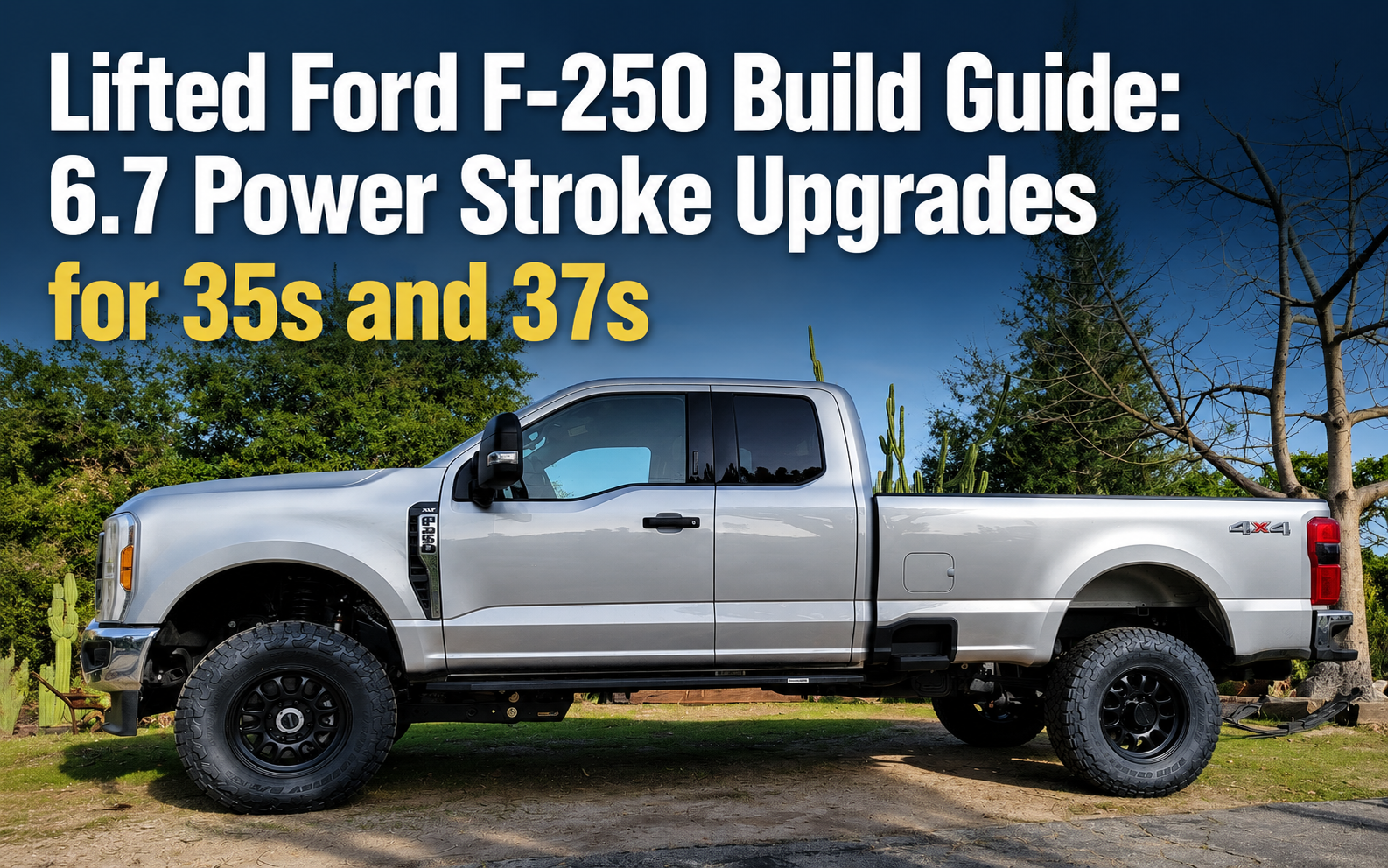
A properly built Lifted F-250 Build is usually designed around a specific purpose, not just a larger stance. Many Ford F-250 owners upgrade their trucks because they need more capability for demanding environments where a stock setup may become a limitation.
Common uses for a lifted Ford F-250 Super Duty include:
- Off-road travel and remote camping
- RV and Toy Hauler towing
- Ranch work and equipment transportation
- Hunting access through dirt roads and trails
- Job sites and unpaved work areas
In these situations, additional ground clearance and tire capability can make a major difference when the truck has to travel beyond paved roads.
More Ground Clearance for Off-Road and Heavy-Duty Use
One of the biggest benefits of installing a lift kit on an F-250 is increased ground clearance.
For owners who regularly drive through:
- Muddy trails
- Rocky roads
- Forest paths
- Washed-out terrain
A lifted suspension helps reduce the risk of:
- Undercarriage impacts
- Exhaust system damage
- Suspension component contact
This becomes even more important when towing into remote locations. A lifted F-250 off-road build provides more clearance and fewer limitations when the terrain becomes unpredictable.
However, for many Super Duty owners, the lift itself is not the final goal. The next step is usually fitting a larger tire package.
Why Do F-250 Builds Use 35s and 37s?
35-inch tires and 37-inch tires have become some of the most common upgrades in the lifted F-250 community. These larger tire setups are not only about aggressive styling — they improve capability for trucks that regularly operate in challenging environments.
Improved Traction
Larger tires provide:
- A larger contact patch
- Improved mud traction
- Better performance on loose and uneven terrain
For trucks traveling through mud, gravel, dirt roads, or soft ground, a larger tire package can provide additional confidence and control.
Better Ground Clearance
A larger tire diameter also increases:
- Axle clearance
- Underbody clearance
- Obstacle-crossing capability
This is why many serious Lifted F-250 Builds choose 35s or 37s when building a truck for off-road and heavy-duty use.
How Do 35-Inch and 37-Inch Tires Affect 6.7 Power Stroke Performance?
While larger tires improve capability, they also change how a 6.7 Power Stroke F-250 performs.
A heavy-duty 10-ply off-road tire combined with deep-dish wheels adds significant rotational mass and rolling resistance. In simple terms, the truck is being asked to move a much heavier tire and wheel package every time it accelerates.
After installing larger tires, many owners notice that their truck no longer feels as responsive as it did from the factory.
Increased Rotational Mass
The larger the tire and wheel package becomes, the more energy the engine needs to overcome rotational inertia.
Even though the 6.7L Power Stroke produces impressive factory torque, a heavily modified F-250 with oversized tires requires significantly more effort during:
- Launches from a stop
- Low-speed acceleration
- Heavy towing situations
- Steep climbs
Changed Effective Gear Ratio
Larger tires also change the truck's effective gearing. The taller tire diameter makes the drivetrain behave as if it has a higher gear ratio.
Common symptoms after installing 35-inch or 37-inch tires on an F-250 include:
- Slower throttle response: The truck feels softer off the line and requires more time to build boost.
- Gear hunting: The 10-speed TorqShift transmission may shift more frequently to maintain speed on grades or during highway cruising.
- Reduced towing performance: More throttle input is required when pulling heavy trailers or equipment.
- Lower fuel economy: Larger tires and increased weight can significantly reduce MPG compared with the factory setup.
Dyno Example: How Much Power Can Big Tires Take Away?
A real-world dyno test shows how much a heavily modified tire setup can affect a 6.7 Power Stroke performance.
The test truck featured:
- 6-inch lift
- 24x14 forged wheels
- 36-inch mud tires
The engine was rated at:
440 horsepower at the crank
Before performance upgrades, the truck produced:
- 340 hp
- 602 lb-ft of torque
This loss was not caused by an engine problem. Instead, the combination of increased vehicle weight, larger rotating mass, and factory emissions hardware created additional limitations for the modified truck.
For many owners, this is the point where a basic tire and suspension build evolves into a complete 6.7 Power Stroke performance upgrade plan.
Why Do Lifted F-250 Builds Need a 6.7 Power Stroke Delete Kit?
After installing 35-inch or 37-inch tires and a lift kit, many Ford F-250 Super Duty owners quickly realize that the factory power configuration is no longer perfectly matched to the truck's new setup.
At this stage, many owners begin looking into 6.7 Power Stroke upgrades to restore the performance lost from the additional weight and rolling resistance of a larger tire package.
A common upgrade path for heavily modified diesel trucks includes:
- Exhaust upgrades
- Diesel delete kit solutions
- DPF and EGR-related modifications
- Custom tuning
The goal is not simply to chase maximum horsepower numbers. For a built F-250, the priority is restoring:
- Low-end torque response
- Towing performance
- Throttle response
- Overall drivability
A properly matched upgrade package helps the truck better handle the additional demands created by larger tires, heavier wheels, and increased vehicle weight.
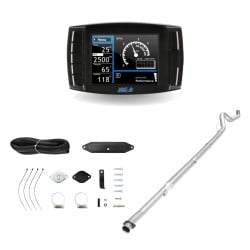
For owners researching complete solutions, a diesel delete kit is one of the common components considered in a full diesel performance build.
DPF Delete: Improving Exhaust Flow for a Modified 6.7 Power Stroke
The factory DPF system is designed to meet emissions requirements on a stock truck. However, many performance-oriented diesel owners focus on how the factory exhaust system affects airflow and exhaust restriction after significant vehicle modifications.
When a truck is running:
- Larger tires
- Higher vehicle weight
- Heavy towing loads
- Performance tuning
reducing exhaust restriction becomes a major consideration for many modified diesel builds.
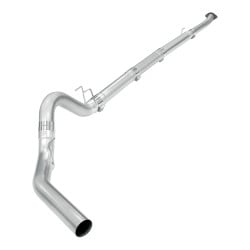
A DPF delete kit replaces the factory DPF section with a freer-flowing exhaust configuration, allowing the exhaust system to better match a modified truck setup.
Learn more about DPF systems and related considerations:
What Is DPF Delete on Trucks: Benefits, Risks and Legality
EGR Delete: Supporting Long-Term Diesel Performance
The EGR system is another area commonly discussed among 6.7 Power Stroke owners who are building higher-mileage or heavier-duty trucks.
Because EGR systems recirculate exhaust gases back through the intake system, many diesel enthusiasts consider EGR-related upgrades when building trucks intended for demanding use.
Common reasons owners research EGR solutions include:
- Reducing intake contamination concerns
- Simplifying emissions-related components
- Supporting long-term heavy-duty use
Related resources:
6.7 Powerstroke EGR Delete Pros and Cons
Why Tuning Matters After Delete and Exhaust Upgrades
Hardware upgrades alone are only one part of a complete 6.7 Power Stroke performance upgrade.
When a truck receives changes to:
- Exhaust flow
- Emissions-related components
- Tire size
- Overall vehicle load
the engine and transmission calibration also need to be optimized for the new setup.
Using tuning solutions such as EZ Lynk allows owners to adjust performance settings and match the truck's new configuration.
With SOTF (Switch-On-The-Fly) tuning, drivers can select different power levels depending on the situation:
- Tow Tune: Designed around towing situations, focusing on usable low-end torque and engine braking.
- Daily / Street Tune: Designed for everyday driving, improving throttle response and overall drivability.
Related information:
Is Tuning Necessary After DPF Delete?
6.7 Powerstroke Delete Kit Results: Dyno Testing Before and After
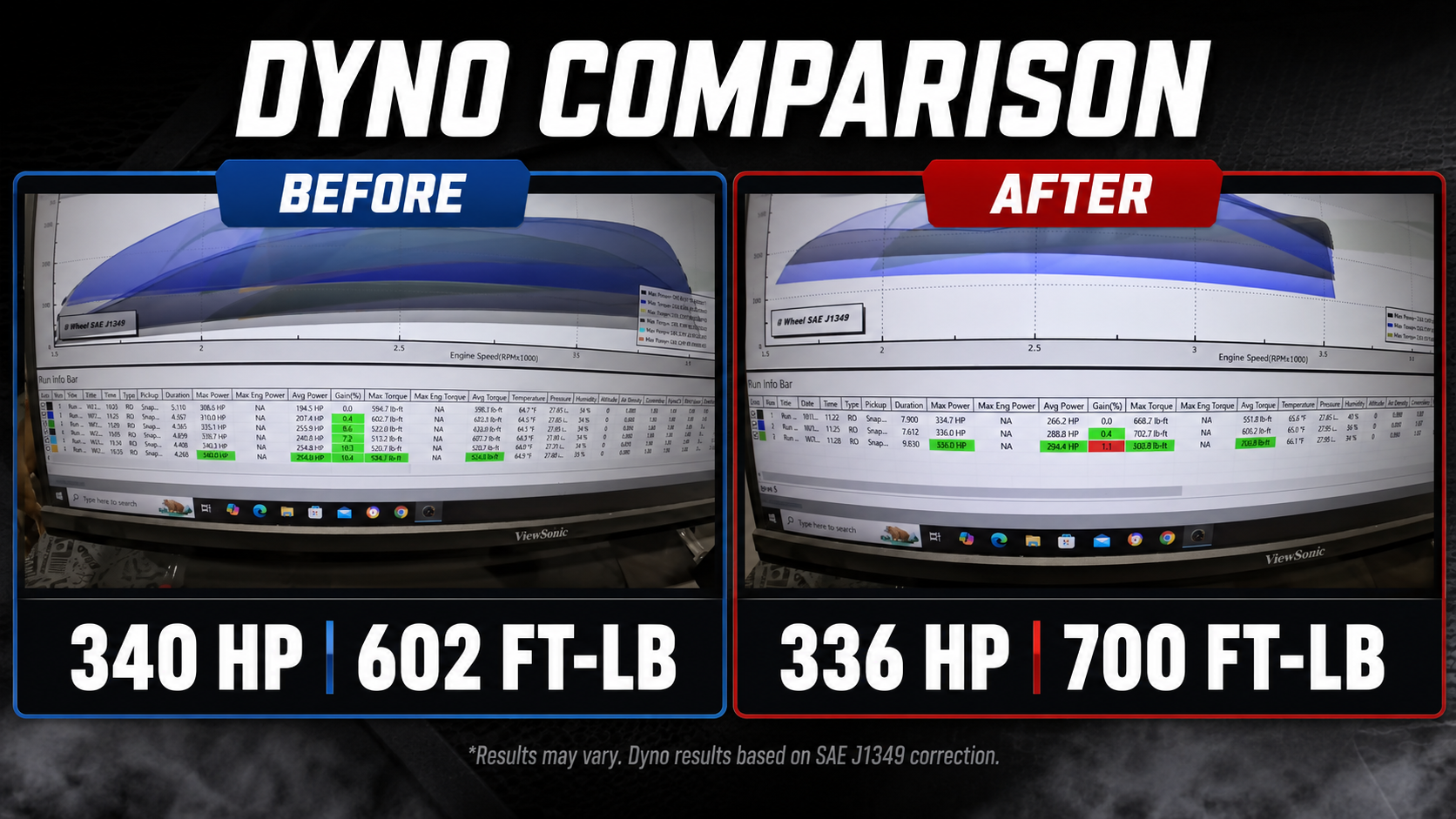
The best way to understand the impact of Delete + Tune upgrades is through real-world testing.
One modified Ford F-250 6.7 Power Stroke build featured:
- 6-inch lift
- 24x14 forged wheels
- 36-inch mud tires
Before upgrades, the truck was tested with the factory emissions system and stock calibration.
| Test Configuration | Wheel Horsepower | Wheel Torque | Notes |
|---|---|---|---|
| Stock emissions system + stock tune | 340 HP | 602 LB-FT | Large tires and added weight reduced throttle response and towing performance. |
| Delete hardware + stock power tune | 336 HP | 700 LB-FT | Improved torque output with factory-style power calibration. |
| 5" straight pipe exhaust + EGR Delete + high-power tune | 461 HP | 996 LB-FT | Maximum tested output with stronger low-end torque response. |
The biggest difference comes from torque.
A diesel truck is not built around peak horsepower alone. Nearly 1,000 lb-ft of wheel torque means the truck can deliver stronger pulling power in the RPM range that matters most for:
- Heavy towing
- Low-speed climbing
- Off-road situations
- Daily driving with larger tires
Does a 6.7 Power Stroke Delete Improve Fuel Economy?
For many owners, fuel economy is just as important as horsepower.
Especially after installing:
- 37-inch tires
- Heavy wheels
- Lift kits
fuel consumption can become a major concern.
One modified truck example showed:
- Before upgrades: Around 13 MPG during daily driving and about 8 MPG while towing a heavy trailer.
- After Delete + Tune: Improved to approximately 17–20 MPG daily and around 13 MPG while towing.
Actual results vary depending on:
- Driving style
- Tire size
- Vehicle weight
- Towing conditions
However, for a heavily modified Lifted F-250 Build, restoring efficiency and drivability is one of the main reasons owners consider these upgrades.
Learn more:
6.7 Powerstroke MPG After DPF Delete
Choosing the Right 6.7 Powerstroke Delete Kit for a Modified F-250
Different F-250 Builds have different requirements. A truck used for daily driving and occasional towing will have different needs compared with a truck running:
- 37-inch tires
- A large lift kit
- Heavy towing applications
When selecting a 6.7 Powerstroke delete kit, owners should consider:
Vehicle Configuration
- Truck year
- 6.7 Power Stroke generation
- Current exhaust setup
- Tire size and intended use
Supporting Components
A complete upgrade package may include:
- Exhaust components
- Tuning solution
- Supporting reliability upgrades
What Reliability Upgrades Does a Modified F-250 Need After Adding More Power?
After completing a Lifted F-250 Build with:
- Lift kit
- 35-inch or 37-inch tires
- Delete upgrades
- Tuning
the truck is no longer operating under factory conditions.
With output approaching 1,000 lb-ft of wheel torque and the additional traction created by larger tires, the stress placed on the drivetrain, suspension, and fuel system increases significantly.
At this stage, many experienced diesel owners shift their focus from adding more power to protecting the investment they have already made.
For a reliable 6.7 Power Stroke Build, supporting upgrades can help the truck handle increased torque, heavier loads, and demanding real-world use.
Traction Bars: Controlling Axle Wrap and Wheel Hop
Problem: Axle Wrap
Large tires combined with high torque output can create significant stress on the rear axle during hard acceleration or heavy towing.
The rear axle can attempt to rotate against the leaf springs, creating axle wrap. This can lead to:
- Wheel hop
- Drivetrain vibration
- Additional stress on driveshaft components
- Premature wear on U-joints
Solution: Traction Bars
Heavy-duty traction bars help control axle movement and keep power delivery more consistent between the engine and the ground.
For a high-torque Ford F-250 diesel build running larger tires, traction bars are one of the most common supporting upgrades to improve drivetrain stability.
CP4 Disaster Prevention Kit: Protecting the Fuel System
Problem: High-Pressure Fuel Pump Failure Risk
The factory Bosch CP4 high-pressure fuel pump used on many diesel platforms requires proper fuel lubrication. If internal wear occurs, metal contamination can potentially spread through the fuel system and damage expensive components.
A fuel system failure can affect:
- Fuel injectors
- Fuel rails
- Fuel lines
Solution: CP4 Protection Upgrade
A CP4 disaster prevention kit is designed to help protect downstream fuel system components by reducing the risk of widespread contamination in the event of pump failure.
For owners investing in a complete 6.7 Power Stroke reliability upgrade, fuel system protection is often considered an important long-term investment.
Heavy-Duty Airbags: Supporting Towing Performance
Problem: Rear Suspension Squat During Towing
Many F-250 owners upgrade their suspension to improve ride quality and off-road capability. However, when attaching a heavy fifth-wheel trailer or Toy Hauler, the rear suspension can experience additional load.
Common concerns include:
- Rear-end squat
- Reduced front-end weight balance
- Reduced steering confidence
Solution: Airbag Support Systems
Heavy-duty airbag systems can help maintain vehicle height while towing and provide additional support when carrying heavy loads.
For owners who use their F-250 for both off-road driving and towing, airbags can help balance comfort, suspension travel, and load support.
10-Speed TorqShift Transmission Tuning
Problem: Increased Torque Load
After adding significant torque through tuning, the factory transmission calibration may not be optimized for the truck's new performance level and tire setup.
Potential concerns include:
- Less efficient shift timing
- Higher transmission workload
- Increased clutch stress
Solution: TCM Tuning
Transmission calibration can optimize:
- Shift points
- Clutch pressure management
- Overall transmission behavior
For a modified 6.7 Power Stroke F-250, matching transmission behavior with increased engine output helps create a more balanced and reliable build.
Building a Reliable 6.7 Power Stroke F-250
A truly capable Ford F-250 Build is not created by simply installing the largest lift, the biggest tires, or the highest horsepower tune.
Once a truck moves beyond the factory configuration, every modification affects the balance between power, weight, traction, and reliability.
A well-planned 6.7 Power Stroke upgrade path typically follows this direction:
- Lift kit for additional clearance
- 35-inch or 37-inch tires for capability
- Performance upgrades to restore power delivery
- Delete kit, exhaust, and tuning solutions
- Fuel system and drivetrain protection
- Towing and suspension support upgrades
The final goal is not just a truck that looks aggressive. It is a Super Duty platform that can:
- Tow heavy loads confidently
- Travel through difficult terrain
- Handle long-distance driving
- Maintain reliability under demanding conditions