 Contents
Contents
- Is the EZ LYNK Lawsuit Over in 2026?
- Did DOJ Get EZ LYNK User Data?
- Is EZ LYNK Cloud-Based?
- Why Did the Government Sue EZ LYNK?
- What Happened in the EZ LYNK Lawsuit From 2021 to 2026?
- Did Right to Repair Change the EZ LYNK Lawsuit?
- Is EZ LYNK Still Reliable in 2026?
- Is EZ LYNK Legal in 2026?
- What Does the EZ LYNK Lawsuit Mean for Diesel Owners?
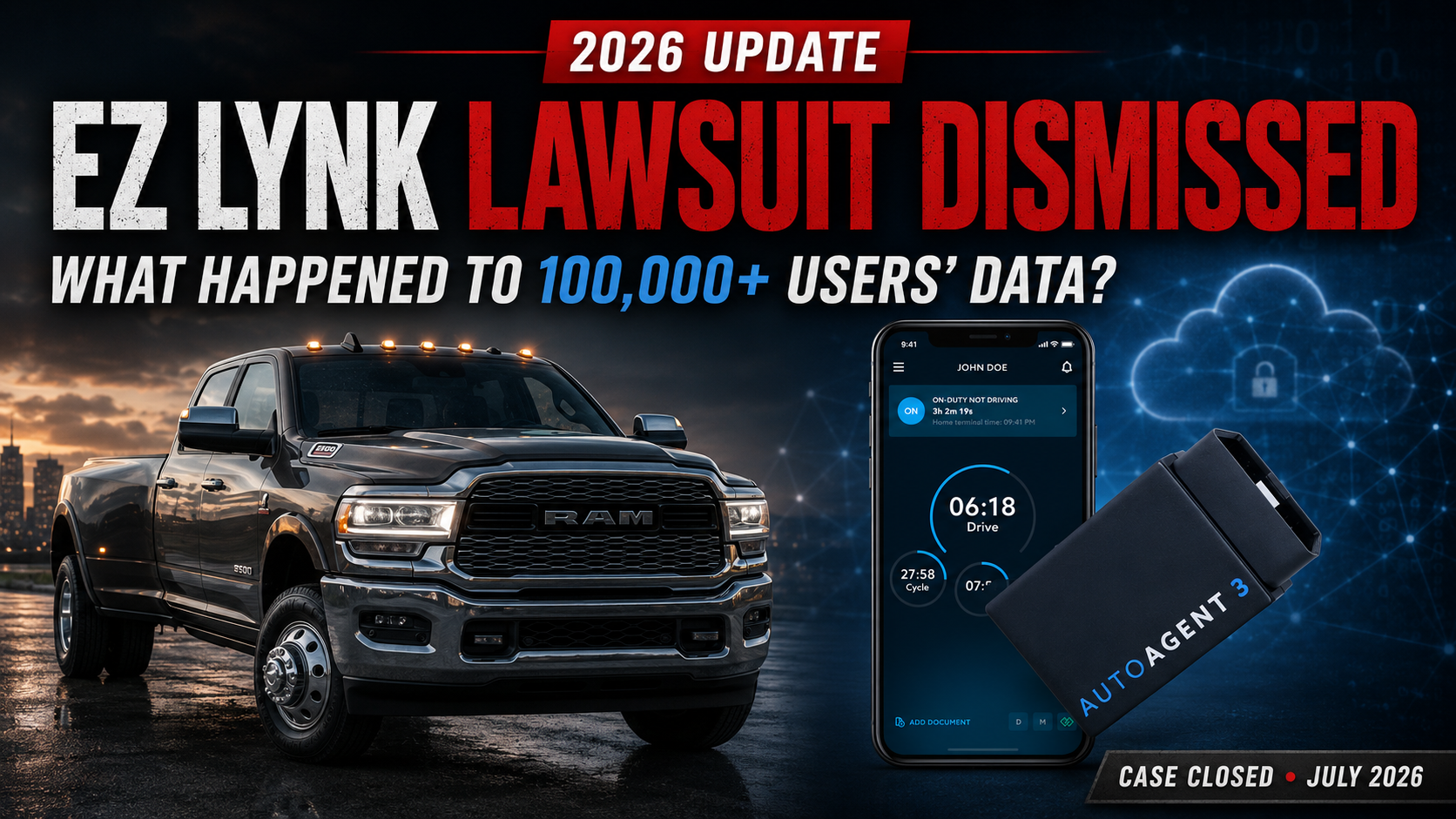
The five-year federal lawsuit against EZ LYNK is over. But for diesel owners, the bigger story is what happened just before it ended: the DOJ tried to obtain identifying information tied to more than 100,000 EZ LYNK users.
A federal court later blocked the broad request for users' personally identifiable information, and the government and EZ LYNK then agreed to end the Clean Air Act lawsuit in July 2026.
There is no public evidence that the full 100,000+ user list was handed over as originally requested. The lawsuit is now over. But the case exposed a bigger issue that will not disappear with the lawsuit: cloud-based tuning creates a data trail that traditional offline tuning devices do not create in the same way.
The government and EZ LYNK agreed to dismiss the federal civil case.
DOJ sought broad identifying information connected to EZ LYNK app users and customers.
The court did not allow the government to obtain the entire user base's PII as requested.
Is the EZ LYNK Lawsuit Over in 2026?
Yes. In July 2026, the federal government and EZ LYNK agreed to end United States v. EZ LYNK, the Clean Air Act civil lawsuit that began in 2021.
InsideEPA reported that the two sides filed jointly on July 10 to dismiss the case. EZ LYNK later announced that the lawsuit had been dismissed with prejudice and described the outcome as a win for drivers and Right to Repair.
That is a good outcome for EZ LYNK and its customers, but it is important not to turn the result into something the court never said.
The case did not end with a trial verdict declaring every EZ LYNK product, tune, or possible use legal. The government and the defendants agreed to end this particular lawsuit.
Did DOJ Get EZ LYNK User Data?
Not in the broad form the government originally requested.
In spring 2026, the DOJ sought identifying information connected to EZ LYNK customers from companies including Apple, Google, Amazon, and Walmart. Forbes reported that the requests covered at least 100,000 Auto Agent app users and sought information such as names, addresses, and purchase histories.
That did not mean 100,000 people were accused of emissions violations. The government said it wanted customers who could help show how the platform was actually being used.
That distinction matters. Downloading the Auto Agent app does not prove someone installed a delete tune. Buying an AutoAgent does not prove someone removed a DPF, EGR, or DEF system.
EZ LYNK can also be used for vehicle monitoring, DTC reading, diagnostics, remote troubleshooting, data logging, and software updates.
In June, the court limited the government's request. According to Forbes' reporting on the order, neither EZ LYNK nor the technology providers had to turn over the personally identifiable information of the entire app-user population.
The order did not guarantee that every EZ LYNK user's identity could never appear in discovery. A user who appeared in relevant communications, for example, could present a different situation. The court also left room for the parties to discuss narrower requests.
But the broadest fear — that the government simply received the complete identity list of 100,000+ app users because they had used EZ LYNK — is not supported by the public outcome.
Is EZ LYNK Cloud-Based?
Yes, and that is one of its biggest strengths.
EZ LYNK is not simply an OBD-II box. The typical workflow connects the vehicle, AutoAgent hardware, mobile app, EZ LYNK Cloud, and a remote technician.
That setup lets a technician work with a truck from hundreds of miles away. Vehicle data can be recorded and shared over the air, and a technician can send software updates back through the EZ LYNK Cloud.
For many newer diesel trucks, that flexibility is useful rather than gimmicky.
A 2020 Ram 3500 Shows Why Cloud Tuning Has Become Useful
Take a 2020 Ram 3500 6.7L Cummins. It is no longer enough to know that the truck has a "6.7 Cummins." Model year, ECM and TCM configuration, security gateway, transmission, wiring, and required bypass hardware can all affect how the truck communicates with a tuning device.
Suncent's EZ LYNK 6.7 Cummins guide notes that 2019–2021 Ram applications use a security-gateway setup that requires the correct bypass hardware before the tuning platform can communicate properly with the vehicle. That is exactly the kind of situation where VIN-specific files, remote support, and technician access become useful.
Owners who want to understand the hardware and app setup itself can also see Suncent's EZ LYNK Auto Agent installation guide . Ford owners have similar year- and configuration-specific considerations covered in the EZ LYNK 6.7 Powerstroke guide .
This is why connected tuning is likely to remain an important part of the diesel aftermarket. As vehicle software becomes more complex, remote diagnostics, data logging, file delivery, and technician support become more valuable.
But the convenience comes with one unavoidable tradeoff:
EZ LYNK's own privacy policy says its services can collect personal information associated with the website, AutoAgent app, and Cloud Services. The policy also describes cloud storage, third-party service providers, and the handling of uploaded information.
That does not mean EZ LYNK voluntarily leaked its customers' information. The 2026 controversy involved government subpoenas and litigation discovery.
But it does show why privacy is now part of the tuner-buying decision: if information exists on a third-party platform, it can potentially become the subject of a lawful data request.
What About Tuning Devices That Do Not Use the Cloud?
Not every tuner follows the connected-platform model.
A standalone device such as a Mini Maxx represents a different architecture. Basic tuning can be stored and performed locally on the device instead of depending on an app account, cloud file delivery, and an online technician connection.
Device + app + account + cloud + technician. More flexibility for remote diagnostics and custom calibration.
Vehicle + local device. Fewer cloud dependencies and fewer cloud-based tuning records.
This is not an argument that one system is automatically better. They solve different problems.
Suncent's Mini Maxx tuner guide shows the local-device approach: preloaded calibrations, an onboard display, and device-based operation without requiring a cloud platform for the normal tuning workflow. A separate Mini Maxx V2 installation guide covers the physical setup.
A local tuner gives up some of the remote flexibility of a connected platform. In return, there are fewer external services that the normal tuning workflow depends on.
For some owners, being connected is a feature. For others, not needing to be connected is a feature.
Why Did the Government Sue EZ LYNK?
To understand why the DOJ eventually wanted information about actual EZ LYNK users, you have to go back to the government's original theory in 2021.
The DOJ did not look at the AutoAgent as a single piece of hardware. Its complaint described an "EZ Lynk System" made up of three connected parts: the AutoAgent hardware, Auto Agent App, and EZ LYNK Cloud.
The government alleged that the system could be used to acquire and install third-party software that disabled vehicle emissions controls, and it sued under the Clean Air Act seeking civil penalties and an injunction.
Look at the whole system
Hardware, app, cloud delivery, technical support, and third-party tunes should not necessarily be viewed as unrelated pieces if the system is being used to defeat emissions controls.
The platform is a tool
EZ LYNK has argued that its products are content-neutral pass-through diagnostic tools connecting vehicle owners with independent technicians, while the technician is responsible for the actual vehicle software or alterations.
EZ LYNK repeated that position after the 2026 dismissal, describing its products as pass-through scan tools and framing the outcome as a Right-to-Repair victory. That is the company's interpretation of the case, not a court ruling that every possible use of the platform is lawful.
Those two very different definitions of the same product explain much of the five-year fight.
The core question became: if a third-party technician creates a tune, but a platform helps connect the customer, vehicle, cloud, and technician, how responsible is the platform for what that tune ultimately does?
What Happened in the EZ LYNK Lawsuit From 2021 to 2026?
The full case is complicated, but diesel owners only need to understand four major turns.
The federal government sues EZ LYNK
DOJ files a civil Clean Air Act case and alleges that the EZ LYNK System functions as an emissions-control defeat device.
EZ LYNK gets the main claim dismissed
The district court concludes that the government's complaint adequately alleges a defeat-device claim, but finds that Section 230 protects EZ LYNK from the main Section 203 claim at that stage.
In plain English: the first dismissal was largely about whether a platform should be held responsible for software created by third parties.
The appeals court revives the lawsuit
The Second Circuit vacates the dismissal. It says the government's allegations go beyond passive file hosting and are sufficient, at the pleading stage, to allege direct and material contribution to the creation of delete tunes.
That did not mean EZ LYNK had been found finally liable. It meant the lawsuit could continue.
Discovery reaches users — then the lawsuit ends
Once the case returned to discovery, the government sought customers who could help show how the platform was actually being used. That led directly to the Apple, Google, Amazon, and 100,000+ user privacy fight.
The court limited the broad PII request in June. In July, the government and EZ LYNK agreed to dismiss the lawsuit.
Did Right to Repair Change the EZ LYNK Lawsuit?
The timing is important, but it should not be overstated.
By the time the EZ LYNK case ended, the federal policy environment around vehicle diagnostics, repairs, and aftermarket parts looked very different from 2021.
On June 29, 2026, the White House issued its Freedom to Fix memorandum , directing EPA to clarify repair rights and encourage alternative compliance pathways for aftermarket parts.
On July 1, EPA followed with Freedom to Fix guidance covering access to emissions-related service information, OBD data, enhanced diagnostics, reprogramming information, training, and manufacturer-specific tools.
EPA also recognized SEMA's Certified Emissions program as an alternative way for aftermarket manufacturers to demonstrate Clean Air Act compliance. The agency still distinguishes compliant repair and modification from bypassing or removing required emissions controls.
EZ LYNK's July statement fits naturally into that broader Right-to-Repair debate, but there is not enough public evidence to say Freedom to Fix directly caused the government to dismiss the case.
For the full 2026 DOJ, EPA, DEF, DPF, and EGR policy picture, Suncent's 2026 diesel delete law update covers those changes in detail.
Is EZ LYNK Still Reliable in 2026?
If by "reliable" you mean, "Is the lawsuit still hanging over the platform?" the answer is now no.
The case is over, and EZ LYNK continues to operate its AutoAgent, mobile app, technician tools, and cloud services.
But connected tuning changes what "reliability" means.
Hardware + firmware + vehicle compatibility
App + account + cloud service + technician ecosystem + data policy
That does not make cloud tuning unreliable. For a truck such as a 2020 Ram 3500, remote technician access and vehicle-specific calibration can be exactly what makes the platform useful.
It simply means you are no longer buying only an OBD device. You are also relying on a service.
Before choosing any connected tuner, it now makes sense to ask questions that older tuner buyers rarely asked:
- What data does the platform store?
- Where are tune files and data logs kept?
- What can a connected technician see?
- Can account data be deleted?
- What happens if the cloud service changes or shuts down?
- How does the company respond to subpoenas or court orders?
The 2026 EZ LYNK case did not prove that cloud tuning is a bad idea. It proved that data policy belongs on the same shopping checklist as compatibility and features.
Is EZ LYNK Legal in 2026?
The 2026 dismissal does not support a simple rule that "anything done through EZ LYNK is legal."
EZ LYNK itself said after the dismissal that customers can continue using its products as intended and consistently with the Clean Air Act. That qualification matters.
A diagnostic or tuning platform can have lawful uses. A particular calibration can raise a separate compliance question depending on what it changes.
The lawsuit was a case against specific defendants under a specific legal theory. Its dismissal did not amend the Clean Air Act.
If your real question is whether a road-going diesel truck can legally have its emissions systems removed, read Suncent's federal diesel delete legality guide instead of treating the EZ LYNK case as a nationwide rule change.
What Does the EZ LYNK Lawsuit Mean for Diesel Owners?
The best takeaway from the EZ LYNK lawsuit is not simply "EZ LYNK won."
In 2021, the government's question was whether hardware + app + cloud + third-party software could be treated as one system for Clean Air Act liability.
By 2026, diesel owners were asking a different question: how much information does that same connected ecosystem hold about me?
The broad 100,000+ user PII request did not go through as originally demanded, and the federal lawsuit is now over.
That is good news for current EZ LYNK users.
But connected tuning will keep growing. A cloud platform can help a technician diagnose and support a 2020 Ram 3500 from hundreds of miles away. The same connection means part of the tuning workflow no longer lives only in the owner's garage.
That is the real tradeoff.
Remote support, data logging, custom files, and faster technician access.
Fewer cloud dependencies and fewer online records tied to the tuning workflow.
The EZ LYNK lawsuit is over. The next question for the connected-tuning industry is just beginning: Where does your tuning data live — and who can access it?